
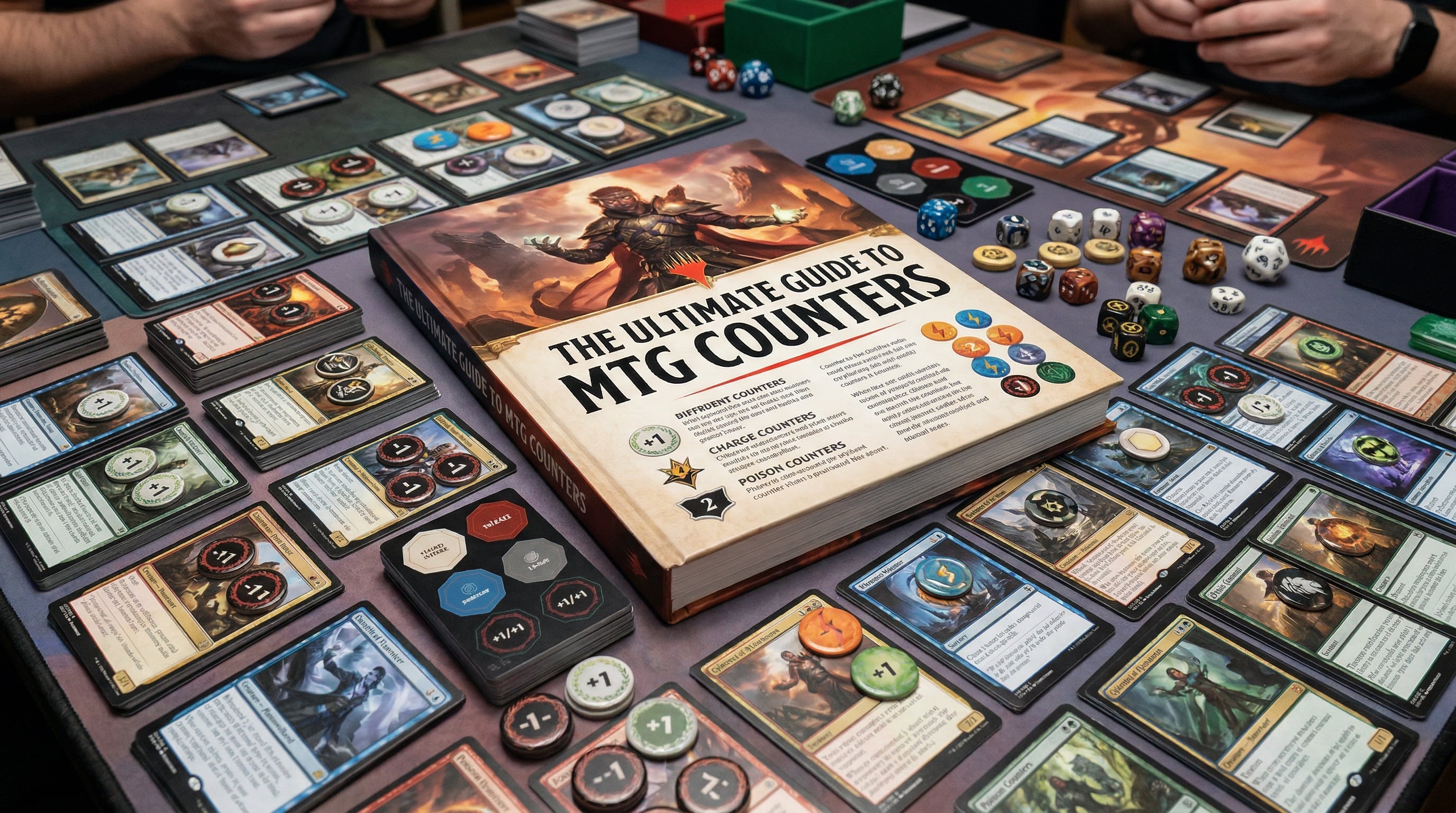
Quick Verdict
Counters are the mathematical backbone of Magic: The Gathering's board state. From the +1/+1 markers of 1993 Alpha to the Mutagen tokens of 2026's TMNT set, understanding how counters interact with state-based actions, replacement effects, and the unprecedented Universes Beyond Standard format is essential for competitive success.
TOP RECOMMENDATIONS
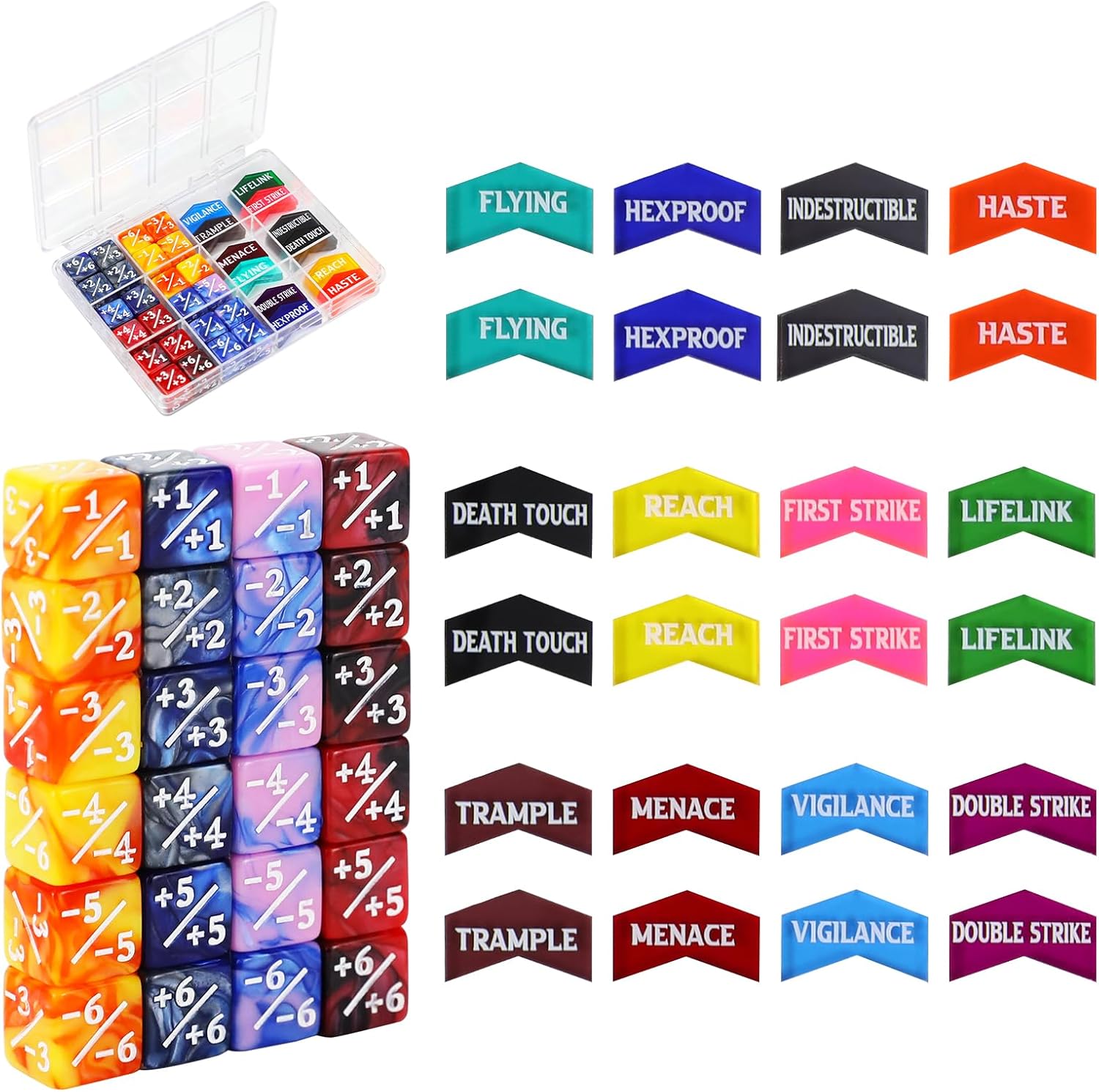
MTG Counter Dice and Keyword Token Set (48 Pieces)
Best overall for tracking counters - the only set that covers both stat counters and keyword counters
- ✓+1/+1 through +6/+6 and -1/-1 through -6/-6 dice, so one die replaces a pile of markers
- ✓Includes 12 of the 15 keyword counters listed in CR 122.1b: flying, hexproof, indestructible, haste, deathtouch, reach, first strike, lifelink, trample, menace, vigilance, double strike
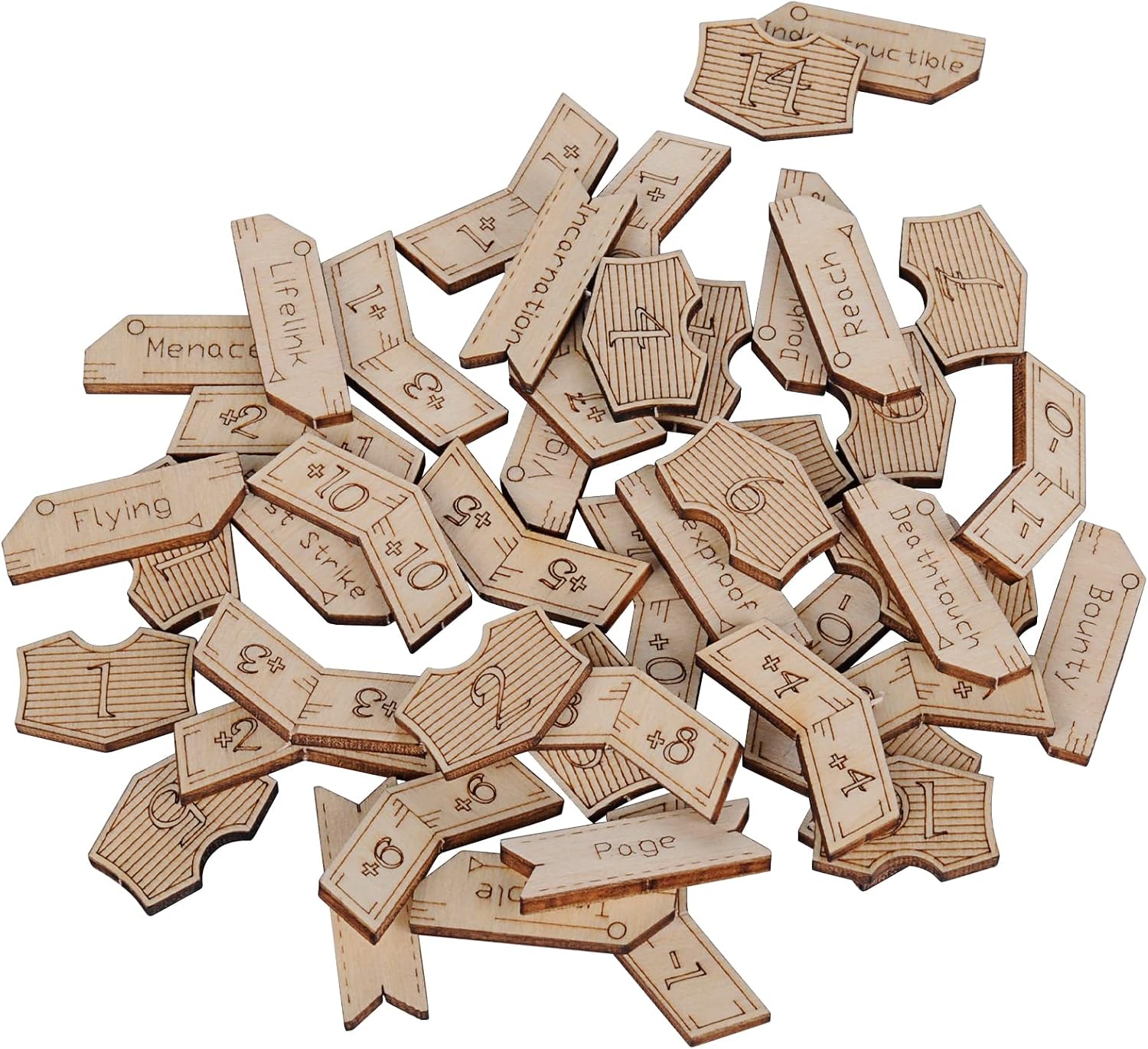
Wooden MTG Counter Token Set (194 Pieces)
Best for Commander - the widest counter-type coverage available, including loyalty and page counters
- ✓194 laser-cut tokens covering +1/+1, -1/-1, loyalty numerals, and keyword counters
- ✓Includes niche types most sets skip, including page counters and bounty counters
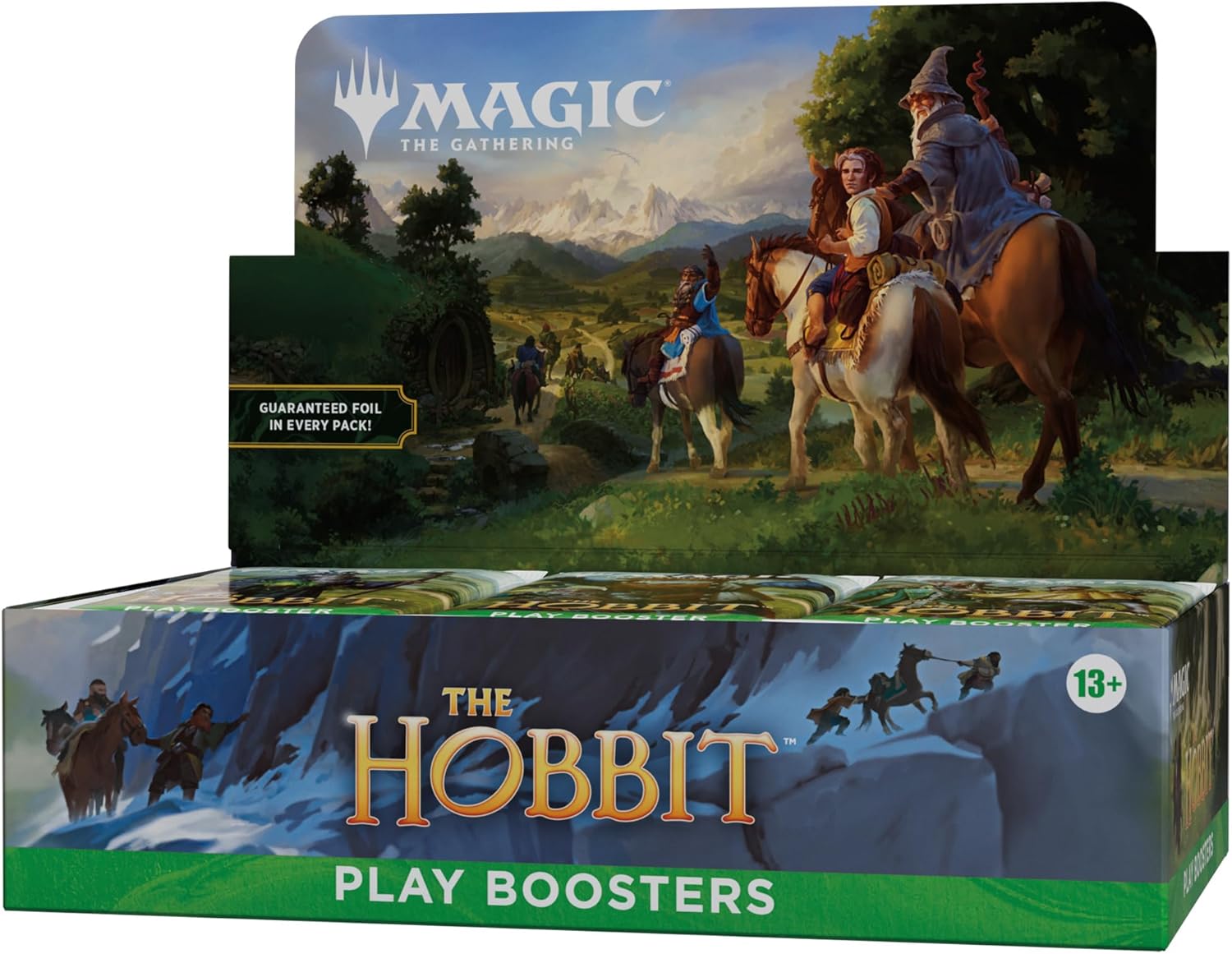
The Hobbit Play Booster Box
The only source of hone counters - the newest counter type in the game, codified at CR 122.1j
- ✓Hone counters are the newest counter type in the Comprehensive Rules (122.1j)
- ✓Hone counters sit on the Equipment, so they survive the equipped creature dying
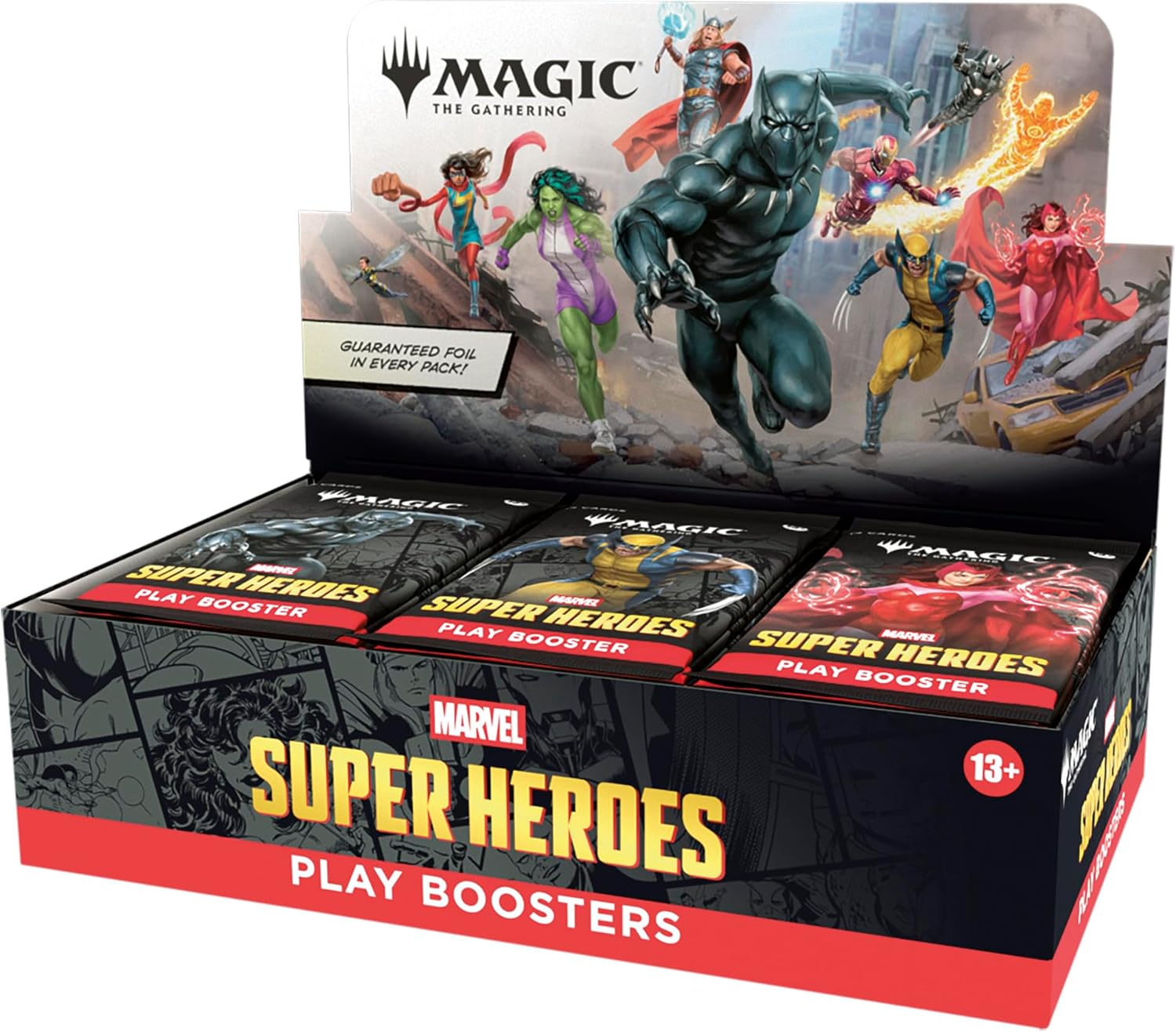
Marvel Super Heroes Play Booster Box
Best value in Standard right now - plan counters and Power-up for under $120
- ✓Plan counters are a full counter type on the new Plan enchantment subtype
- ✓Power-up (CR 702.193) is a once-only ability that places +1/+1 counters at a discount
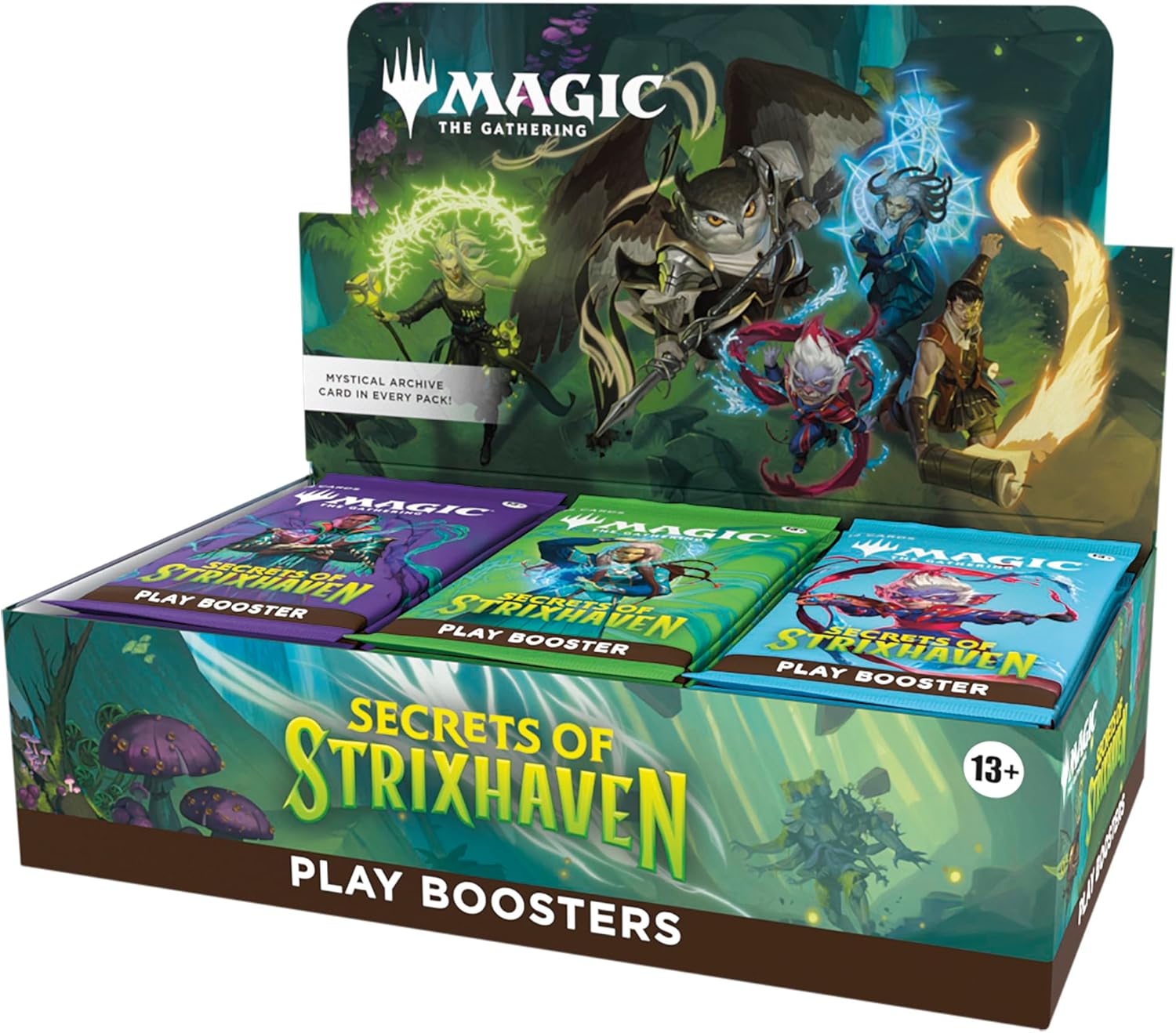
Secrets of Strixhaven Play Booster Box
Best for engine builders - page counters plus Increment, the spiritual successor to Evolve
- ✓Page counters on the new Book artifact subtype scale and discount activated abilities
- ✓Increment (CR 702.191) grows a creature whenever you spend more mana than its stats

Tarkir: Dragonstorm Play Booster Box
Deepest dedicated +1/+1 package - Endure and Renew are still the best pure counter engines
- ✓Endure mechanic places +1/+1 counters as a modal choice on every trigger
- ✓Renew distributes keyword and stat counters from the graveyard

Teenage Mutant Ninja Turtles Play Booster Box
Best repeatable +1/+1 generator - Mutagen tokens turn any board into counter fuel
- ✓Mutagen tokens are dedicated, repeatable +1/+1 counter generators
- ✓Sneak (CR 702.190) pairs with counter-based combat strategies
SAFETY TECHNOLOGY Expert Analysis.
Counters in MTG are markers placed on a permanent or a player that change it for as long as they stay there: +1/+1 and -1/-1 counters change power and toughness, loyalty counters fuel planeswalkers, and newer types like shield counters, finality counters and rad counters each carry their own rule. This guide covers every counter type that matters in 2026.
In the sprawling mechanical ecosystem of Magic: The Gathering, no single system is more fundamental to board state management than counters. Since 1993, these physical markers have served as the game's primary language for persistent modification—tracking everything from raw statistical power to complex keyword abilities, player momentum, and even the destruction of an opponent's mana base. Counters are not merely tokens placed on cardboard; they are the mathematical atoms from which entire competitive archetypes are constructed.
The 2025–2026 era represents the most aggressive expansion of counter mechanics in the game's history. The integration of Universes Beyond properties into the Standard format has created an unprecedented convergence: Mutagen tokens from Teenage Mutant Ninja Turtles collide with the Blight action from Lorwyn Eclipsed, Speed counters from Aetherdrift accelerate alongside Endure triggers from Tarkir: Dragonstorm, and Connive engines from Marvel's Spider-Man thread through it all. In 2026 alone, three brand-new counter types entered Standard — page counters, plan counters, and hone counters.
Whether you're resolving a judge call about Doubling Season and Sagas, building a Commander deck around The Ozolith, or rebuilding after the August 10, 2026 Standard bans, this guide provides the definitive mechanical, strategic, and financial breakdown of every counter type in the modern game.
Updated August 17, 2026
This guide has been re-verified line by line against the Comprehensive Rules effective August 8, 2026. Two things changed materially since the last revision. First, the Doubling Season and Saga ruling is not what most guides still claim — under CR 714.3a the Lore counter a Saga enters with is doubled. Second, the August 10, 2026 Banned and Restricted announcement hit Badgermole Cub, Stormchaser's Talent, and Gran-Gran, reshaping every counter-adjacent archetype in the format. Both are corrected below.
What Are Counters in Magic: The Gathering?
Counters are the persistent memory of a Magic game. Unlike temporary buffs that vanish at the end of a turn, counters physically alter the state of a permanent or player for as long as the conditions for their existence are met. Understanding the precise rules governing counters is the difference between a clean game and a judge call.
The Comprehensive Rules Breakdown (Rule 122)
According to Comprehensive Rule 122.1, a counter is a marker placed on an object or a player that modifies its characteristics and/or interacts with a rule, ability, or effect. The rules further subdivide counters into specific functional categories:
CR 122.1a: +1/+1 and -1/-1 counters permanently alter a card's power and toughness for as long as the counters remain on the permanent.
CR 122.1b: Keyword counters cause an object to gain a specific keyword ability (Flying, Trample, Deathtouch, etc.) as long as the counter remains.
CR 122.1c: Shield counters operate as a replacement and prevention effect, removing themselves to save a permanent from destruction or damage.
CR 122.1d: Stun counters create a replacement effect that prevents a permanent from untapping during the untap step, removing one counter per untap attempt.
CR 122.1e: Loyalty counters on a Planeswalker indicate how much loyalty it has. A Planeswalker at 0 loyalty is put into its owner's graveyard as a state-based action. See our complete guide to planeswalkers for how loyalty abilities are activated and defended.
CR 122.1f: Poison counters go on players. A player with ten or more poison counters loses the game as a state-based action.
CR 122.1g: Defense counters track a battle's remaining defense. A battle at 0 defense is put into its owner's graveyard.
CR 122.1h: Finality counters dictate that if the permanent would be put into a graveyard, it is exiled instead.
CR 122.1i: Rad counters go on players and create an inherent triggered ability (Rule 728): at the beginning of that player's precombat main phase, they mill a card per rad counter, losing 1 life and removing one rad counter for each nonland card milled.
CR 122.1j: Hone counters — added with The Hobbit in August 2026 — sit on Equipment. Each hone counter gives +1/+0 to whatever creature that Equipment is attached to.
CR 122.2: Counters placed on an object are not retained if that object moves from one zone to another (battlefield to graveyard, hand, exile, etc.).
The Zone Change Rule
This is the single most important counter rule for new players to internalize. When a creature with five +1/+1 counters dies and returns to the battlefield via a reanimation spell, it comes back with zero counters. The game treats it as a brand new object with no memory of its previous existence. Cards like The Ozolith exist specifically to circumvent this fundamental limitation.
Temporary Buffs vs. Persistent Counters (Why Words Matter)
A persistent source of confusion—particularly among players who learned the game casually—is the distinction between temporary stat modifications and counter-based modifications.
Temporary Buff: An instant spell reads "Target creature gets +3/+3 until end of turn." This modifies the creature's stats mathematically for the current turn only. No physical marker is placed. At end of turn, the modification vanishes.
Counter-Based Modification: A spell reads "Put two +1/+1 counters on target creature." This places two physical markers on the creature. The +2/+2 increase persists across turns and survives phase changes, turn transitions, and most board effects.
The critical gameplay implication: temporary buffs cannot be interacted with by counter-manipulation cards (like Proliferate or The Ozolith), while counters can. Building a deck around counter synergies requires understanding that only the second category feeds your engine.
Keyword Counters, Shield Counters, and Specialized Markers
The modern era of Magic has expanded counters far beyond simple +1/+1 and -1/-1 markers. Keyword counters, formally introduced in Ikoria: Lair of Behemoths (2020), represent the game's most significant counter innovation in decades.
Rather than tracking numerical stat changes, keyword counters grant persistent abilities. Critically, the list is closed — CR 122.1b enumerates exactly which keywords a counter can grant, and no others qualify:
flying, first strike, double strike, deathtouch, decayed, exalted, haste, hexproof, indestructible, lifelink, menace, reach, shadow, trample, and vigilance — plus any variants of those keywords.
This is a common source of judge calls. There is no such thing as a "ward counter" or a "flash counter," because those keywords are not on the list. If a card appears to grant one, read it again — it is almost certainly granting the ability through a static or triggered effect rather than through a counter.
Shield counters (introduced in Streets of New Capenna) act as defensive insurance. When a permanent with a shield counter would be destroyed or dealt damage, the shield counter is removed instead of the permanent being destroyed or taking damage. This replacement effect is one-time-use per counter.
Stun counters represent the opposite philosophy—offensive disruption. A permanent with a stun counter doesn't untap during its controller's untap step. Instead, the game removes one stun counter per untap attempt, effectively skipping that permanent's turn.
The 2026 Standard format features the most diverse counter ecosystem in Magic's history. Beyond the traditional +1/+1 and -1/-1 markers, players must now track keyword counters, shield counters, stun counters, finality counters, loyalty counters on Planeswalkers, lore counters on Sagas, poison and rad counters on players, defense counters on battles, speed counters, Blight counters on lands, and the three types added during 2026 alone: page counters on Book artifacts, plan counters on Plan enchantments, and hone counters on Equipment. Accurate board state tracking has never been more demanding.
Rad, Finality and Shield Counters
Three counter types carry a rule of their own instead of just a number, and they're among the most searched counter questions in 2026.
Rad Counters
Rad counters arrived with the Fallout Commander decks in March 2024. Unlike most counters, players get rad counters, not permanents. The rule behind them, quoted from the official rulings:
At the beginning of the precombat main phase of a player with rad counters, that player mills cards equal to the number of rad counters they have. For each nonland card milled this way, that player loses 1 life and removes a rad counter.
So rad counters are a slow burn: every nonland card they mill costs you a life and one counter, and lands leave the counters where they are. They never go away on their own at end of turn.
Cards worth knowing:
- Nuclear Fallout — every creature gets twice -X/-X until end of turn, and each player gets X rad counters.
- Glowing One — deathtouch, and gives a player four rad counters when it connects.
- Feral Ghoul — when it dies, each opponent gets rad counters equal to its power.
- The Wise Mothman — gives every player a rad counter when it enters or attacks, then grows your team whenever nonland cards are milled.
Because rad counters are counters, proliferate adds to them. That makes a proliferate shell one of the fastest ways to push rad onto a whole table.
Finality Counters
A finality counter says one thing: if a permanent with a finality counter on it would die, exile it instead. The first cards to use them were in The Lost Caverns of Ixalan Commander decks (November 2023), and since then they have been the standard price of returning something from the graveyard.
You'll almost always see them on reanimation effects:
- Meathook Massacre II — pay 3 life to return a creature that died, with a finality counter on it.
- Kastral, the Windcrested — puts Bird creatures onto the battlefield from your hand or graveyard with a finality counter.
- Yuna, Hope of Spira — returns an enchantment from your graveyard each end step, with a finality counter.
The counter ends the loop: whatever comes back only comes back once. Blink it, bounce it, or remove the counter, and it can die normally again.
Shield Counters
Shield counters were introduced in Streets of New Capenna (April 2022). The rule:
If a permanent with a shield counter on it would be dealt damage or destroyed, remove a shield counter from it instead.
One shield counter blocks one hit: either one source of damage or one destroy effect. It doesn't stop exile, -X/-X, sacrifice or bounce. Unlike hexproof, it doesn't stop targeting at all, so your opponent can still aim removal at the creature. It just wastes their first one.
Cards worth knowing:
- Falco Spara, Pactweaver — enters with a shield counter, and lets you remove counters to cast spells from the top of your library.
- Protection Magic (Final Fantasy Commander) — a shield counter on each of up to three target creatures.
- Diamond City (Fallout) — a land that enters with a shield counter and can move it onto a creature.
The Evolution of Counters (1993 to 2026)
The historical trajectory of counters spans over three decades, evolving from rudimentary statistical tracking to highly complex, specialized game pieces that define entire competitive archetypes.
From Alpha +1/+1s to Deprecated Asymmetrical Modifiers
When Richard Garfield designed Limited Edition Alpha in August 1993, the +1/+1 counter was among the game's most intuitive innovations. A creature could be permanently strengthened, tracked with a physical marker. Arabian Nights followed months later, introducing the -1/-1 counter—the fundamental dichotomy of positive and negative permanent stat tracking that would anchor the game for decades.
In the early years, designers experimented with asymmetrical counters: +0/+1, +2/+0, -0/-1, and other irregular modifiers. While mechanically functional, these proved too cumbersome for players to track efficiently using standard dice. By the release of Coldsnap in 2006, Wizards of the Coast made the deliberate design decision to deprecate asymmetrical counters entirely, centralizing the game on uniform +1/+1 and -1/-1 markers.
This streamlining proved prescient. By reducing the counter vocabulary to two primary types, designers opened space for the keyword counter revolution that would arrive fourteen years later with Ikoria.
The 2025–2026 Explosion: Speed, Endure, and Renew
The 2025–2026 release schedule represents the most aggressive integration of counter mechanics into overlapping set designs in the game's history.
Aetherdrift (February 2025) introduced the Speed mechanic—a player-based counter that caps at 4 ("Max Speed"). Speed counters accumulate when opponents lose life during your turn, and reaching Max Speed unlocks powerful secondary abilities on your permanents. This forced aggressive decks to optimize for rapid life-loss triggers, creating an entirely new axis of deckbuilding.
Tarkir: Dragonstorm (April 2025) pushed counters into the graveyard with two complementary mechanics:
- Endure offers a modal choice upon resolution: place +1/+1 counters on a creature or create a 2/2 Spirit token
- Renew allows exiling a card from the graveyard to distribute a mix of +1/+1 and keyword counters onto a target creature
Together, these mechanics ensured that counter-based strategies had both offensive scaling (Endure) and graveyard recursion (Renew) at their disposal.
Universes Beyond: Mutagen Tokens, Blight, and Connive
The decision to make Universes Beyond sets Standard-legal fundamentally altered how counter mechanics are designed. Because these franchise crossovers must balance against highly tuned competitive environments, their counter implementations carry strict guardrails.
Mutagen Tokens (TMNT, March 2026): Predefined colorless artifact tokens with the text: "{1}, {T}, Sacrifice this token: Put a +1/+1 counter on target creature. Activate only as a sorcery." The sorcery-speed restriction prevents Mutagen from warping the combat phase as instant-speed tricks, a deliberate Play Design decision.
Blight Action (Lorwyn Eclipsed, January 2026): The keyword action "Blight N" requires a player to put N -1/-1 counters on a creature they control. This functions exclusively as a cost—not as targeted removal against opponents. The self-inflicted nature creates an attrition engine that transforms a severe downside into a tactical pseudo-sacrifice outlet.
Blight Counters (Final Fantasy, June 2025): Mechanically distinct from the Blight action. These counters are placed on lands. Read the actual template carefully, because it is narrower than most summaries suggest — Ultima, Origin of Oblivion reads: "put a blight counter on target land. For as long as that land has a blight counter on it, it loses all land types and abilities and has {T}: Add {C}." The land does not stop being a land, and it is not left producing nothing. It loses its subtypes and printed abilities and is downgraded to a colorless mana source — brutal against three-colour manabases, survivable for a mono-coloured deck.
Critical Distinction: Blight Action vs. Blight Counters
The Lorwyn Eclipsed Blight action and the Final Fantasy Blight counters share a name but are completely different mechanics. The Blight action puts -1/-1 counters on your own creatures as a cost. Blight counters are placed on lands to destroy their mana-producing capabilities. Confusing the two during a tournament will result in a game-state error. Always read the card text carefully.
Connive (Marvel's Spider-Man, September 2025): Reintroduced from Streets of New Capenna, Connive draws a card and discards a card. If the discarded card is a nonland card, a +1/+1 counter is placed on the Conniving creature. This creates a card-filtering engine that simultaneously grows threats—a core pillar of Izzet and Dimir strategies in the 2026 Standard metagame.
The Three New Counter Types of 2026
The back half of 2026 did something the game had not done in years: it introduced three genuinely new counter types across three consecutive sets. Any guide still stopping at TMNT is missing all of them.
Page counters (Secrets of Strixhaven, April 24, 2026) ride on the new Book artifact subtype. Page counters are not new to Magic—they debuted on Barrin's Codex back in Urza's Saga—but Strixhaven revived them as a scaling resource. Diary of Dreams is the cleanest example: it accrues a page counter whenever you cast an instant or sorcery, and its {5}, {T}: Draw a card ability costs {1} less to activate for each page counter on it. The counters do not modify stats; they modify cost, which makes them a fundamentally different design axis from +1/+1.
Plan counters (Marvel Super Heroes, June 26, 2026) sit on the new Plan enchantment subtype and are the closest thing Magic has to a progress bar. Each Plan has a triggered ability describing an action you must take—cast a noncreature spell, draw your second card each turn, play a land. Taking that action puts a plan counter on the enchantment and pays a small immediate reward. A second ability triggers when a specific numbered counter arrives, at which point you sacrifice the Plan for the payoff. Claim the Kingdom pairs Landfall with a +1/+1 counter and fires on the fourth plan counter; Construct a Cosmic Cube runs all the way to seven.
Hone counters (The Hobbit, August 14, 2026) are the first new counter type to earn its own subsection in the Comprehensive Rules in some time — CR 122.1j: each hone counter on an Equipment gives +1/+0 to the equipped creature. Sting, Bilbo's Sword enters with a hone counter for each creature the target opponent controls, and Dwalin, Weaponmaster puts a hone counter on every Equipment you control whenever he enters or attacks.
Why Hone Counters Break the Usual Zone-Change Rule in Practice
Hone counters sit on the Equipment, not on the creature. That means CR 122.2 works in your favour for once: when the equipped creature dies, the counters are untouched, because the Equipment never changed zones. Re-equip to a fresh body and the entire accumulated bonus comes with it. This is the opposite of how +1/+1 counters behave, and it is the single most important sequencing insight in Hobbit Limited.
Increment (Secrets of Strixhaven) deserves a mention as a counter engine rather than a counter type. Per CR 702.191a: "Whenever you cast a spell, if this permanent is a creature and the amount of mana spent to cast that spell is greater than this creature's power or this creature's toughness, put a +1/+1 counter on this creature." The comparison is checked twice—once on trigger, once on resolution—so a creature that grows in between can fizzle its own trigger. All mana spent counts, including additional costs, but mana spent outside of casting (ward costs, for instance) does not.
Power-up (Marvel Super Heroes) is a once-only activated ability that typically places +1/+1 counters, with a discount equal to the permanent's own mana cost if it entered the battlefield this turn (CR 702.193a). Because it can only be activated once, many Power-up cards use a physical counter purely as a tracking marker—a reminder that the ability has been spent, not a modifier of anything.
Navigating the 2026 Standard Rotation
The 20-set Standard environment of August 2026 has created a counter ecosystem unlike anything in the game's history. Traditional Magic sets and Universes Beyond properties now share the same competitive space, forcing deckbuilders to synthesize highly disparate counter economies. For a broader breakdown of how Standard sits alongside the other formats, see our complete guide to MTG formats.
The IP Convergence: Final Fantasy, Spider-Man, TMNT, and The Hobbit Enter Standard
| Set Name | Release Date | Mechanic / Token | Counter Type | Gameplay Function |
|---|---|---|---|---|
| Aetherdrift | Feb 14, 2025 | Speed | Speed Counters | Player-based metric accumulating to 4; unlocks Max Speed abilities |
| Tarkir: Dragonstorm | Apr 11, 2025 | Endure | +1/+1 Counters | Modal choice: place counters on a creature or create a 2/2 Spirit |
| Tarkir: Dragonstorm | Apr 11, 2025 | Renew | Various Counters | Exile graveyard card to place +1/+1 and keyword counters on a target |
| FINAL FANTASY | Jun 13, 2025 | Blight | Blight Counters | Placed on lands to remove base card types and mana abilities |
| Lorwyn Eclipsed | Jan 23, 2026 | Blight (Action) | -1/-1 Counters | Cost-based: put N -1/-1 counters on a creature you control |
| Teenage Mutant Ninja Turtles | Mar 6, 2026 | Mutagen | +1/+1 Counters | Artifact token; sorcery-speed sacrifice to place a +1/+1 counter |
| Secrets of Strixhaven | Apr 24, 2026 | Book artifacts | Page Counters | Accumulate on Book artifacts to scale or discount an activated ability |
| Secrets of Strixhaven | Apr 24, 2026 | Increment | +1/+1 Counters | Triggers when mana spent on a spell exceeds the creature's power or toughness |
| Marvel Super Heroes | Jun 26, 2026 | Plan enchantments | Plan Counters | Progress tracker; a threshold counter triggers the payoff and sacrifices the Plan |
| Marvel Super Heroes | Jun 26, 2026 | Power-up | +1/+1 Counters | Once-only activated ability, discounted if the permanent entered this turn |
| The Hobbit | Aug 14, 2026 | Hone | Hone Counters | Each counter on an Equipment gives +1/+0 to the equipped creature (CR 122.1j) |
Standard Rotation Notice
There is no Standard rotation during the calendar year 2026. The next rotation occurs on January 1, 2027, when Wilds of Eldraine, The Lost Caverns of Ixalan, and Murders at Karlov Manor leave the format. Foundations is an exception to the normal cycle and remains Standard-legal through at least 2029. Always verify individual card legality before entering sanctioned events, as Commander-specific cards from preconstructed decks within Universes Beyond products are not Standard-legal.
Top Standard Decks Utilizing Counters (Post-Ban Landscape)
August 10, 2026 Banned and Restricted Update
Three cards were banned in Standard effective August 10, 2026, and all three sat inside the format's top archetypes:
- Badgermole Cub — the primary target. Selesnya Offense was posting a 57%+ win rate on Arena at a high play rate.
- Stormchaser's Talent — a one-mana card giving Izzet Prowess both early- and late-game reach.
- Gran-Gran — the card that made Jeskai Lessons viable.
Wizards stated the goal was to "improve the metagame diversity of Standard and slow down the format." The share figures below are the last clean pre-ban snapshot; treat the top three as displaced rather than dominant, and expect the field to remain unsettled through the September events.
The following data covers over 900 successful tournament decks from July 1–23, 2026 (Magic Online Standard Challenges plus the 135-player Sydney Standard Spectacular 100K), as reported by Wizards' own Metagame Mentor column — the last full sample before the bans landed.
| Deck Archetype | Colors | Core Counter Synergy | Winner's Share (Jul 2026) | Hit by Aug 10 Bans? |
|---|---|---|---|---|
| Izzet Prowess | Blue/Red | Cheap noncreature spells trigger prowess and Connive-based +1/+1 counter accumulation | 21.1% | Yes — lost Stormchaser's Talent |
| Selesnya Offense | Green/White | Wide creature boards converting into +1/+1 counter pumps | 17.7% | Yes — lost Badgermole Cub |
| Jeskai Lessons | Blue/Red/White | Paradigm Lessons chained alongside page-counter Book artifacts | 16.0% | Yes — lost Gran-Gran |
| Izzet Spellementals | Blue/Red | Elemental payoffs scaling off instant and sorcery counts | 10.5% | No |
| Four-Color Control | Four colors | Planeswalker loyalty counters as the primary win condition | 7.5% | No |
| Mono-Green Landfall | Green | Earthbender Ascension piles +1/+1 counters on top of landfall triggers | 6.0% | No |
Izzet Prowess held the largest share of the pre-ban format at 21.1%, leveraging cheap noncreature spells to trigger prowess and accumulate permanent +1/+1 counters through Connive. Losing Stormchaser's Talent removes the deck's most flexible one-mana card; the prowess-plus-counters core survives, but the curve is meaningfully worse.
Selesnya Offense and Jeskai Lessons were the other two pillars, at 17.7% and 16.0%. Both lost their defining one-drop. Wizards' stated reasoning is worth reading literally: current strategies enable "turn-three wins and compress mana curves excessively," so the intent is a slower format. Historically that favours grindy counter accumulation over burst counter payoffs.
Where counter decks go from here. The three archetypes that came through untouched — Izzet Spellementals, Four-Color Control, and Mono-Green Landfall — are all decks that build counters incrementally rather than exploding in a single turn. Mono-Green Landfall in particular stacks +1/+1 counters via Earthbender Ascension on top of its landfall triggers, which is exactly the kind of slow, resilient engine a post-ban format rewards. If you are rebuilding, that is the direction the ban list is pointing. New to constructing a list from scratch? Start with our guide to building an MTG deck.
Complex Counter Rules and Common Misconceptions
The mechanics of counters sit at one of the most technically demanding intersections in the game's rules engine. The following sections address the highest-friction judge calls and persistent community myths.
The Math of Annihilation: +1/+1 and -1/-1 State-Based Actions
Rule 122.3 dictates that if a permanent simultaneously possesses both a +1/+1 counter and a -1/-1 counter, they annihilate each other in pairs as a state-based action. The game removes one of each type until only one counter type remains.
The Edge Case That Matters:
If a creature with two +1/+1 counters receives four -1/-1 counters (net: two -1/-1 counters remaining), and its base toughness is 2 or less, it dies. The state-based action of annihilation and the state-based action of lethal damage (0 or less toughness) are checked simultaneously. However, Rule 704.8 mandates that the game looks back to the exact moment before state-based actions were processed—the creature's "last known information."
In that snapshot, the creature possessed both +1/+1 and -1/-1 counters simultaneously. Any ability that triggers based on a creature dying with a specific counter type (such as Persist, which cares about -1/-1 counters, or abilities of cards like Isilu, Carrier of Twilight) will successfully trigger, because the game confirms the counter existed at the moment of death.
Practical Application
If your opponent's creature has a +1/+1 counter and you need a death trigger that cares about -1/-1 counters, placing even a single -1/-1 counter on it before it dies satisfies the condition. The annihilation happens simultaneously with the death—the game sees both counter types in the creature's last known state.
Doubling Season and Sagas: The Ruling Almost Every Guide Still Gets Wrong
Perhaps the most persistent rules controversy in the MTG community revolves around Doubling Season and its interaction with Sagas versus Planeswalkers. The common answer — "Doubling Season works on Planeswalkers but not on Sagas" — was correct once. It is not correct now, and it has not been for some time.
The Saga Ruling:
Sagas receive Lore counters through two mechanisms, and they are governed by different rules with different answers:
- They enter the battlefield with one Lore counter
- They gain one Lore counter at the beginning of your precombat main phase
Doubling Season reads: "If an effect would place one or more counters on a permanent you control, it places twice that many instead." So the whole question is whether each placement counts as an effect.
Placement 1 — entering the battlefield — IS doubled. Comprehensive Rule 714.3a states that each Saga without read ahead has the intrinsic ability "This Saga enters with a lore counter on it," and that this ability creates a replacement effect. That is an effect, so Doubling Season replaces it. The Saga enters with two Lore counters, and both chapter I and chapter II trigger immediately. (Rule 714.3b applies the same treatment to Sagas with read ahead.)
Placement 2 — your precombat main phase — is NOT doubled. Rule 714.3c states that as a player's precombat main phase begins, that player puts a Lore counter on each Saga they control, and that this turn-based action doesn't use the stack. Turn-based actions are not effects, so there is nothing for Doubling Season to replace. You get exactly one counter.
The Planeswalker Ruling:
Planeswalkers enter the battlefield with Loyalty counters equal to their printed number. Rule 306.5b establishes this as an intrinsic replacement effect—a rule-generated effect that modifies how the Planeswalker enters the battlefield.
Because an effect is placing the initial Loyalty counters, Doubling Season recognizes it and doubles the starting loyalty. A Planeswalker with a printed loyalty of 4 enters with 8 loyalty counters when Doubling Season is on the battlefield.
So the real answer is that Sagas and Planeswalkers now behave identically on entry. CR 714.3a and CR 306.5b are the same construction: an intrinsic ability that creates a replacement effect. Both get doubled. The Saga simply has a second, separate counter source each turn that the Planeswalker does not have, and that one is immune.
Why So Many Sources Still Say Otherwise
Sagas originally received their entry Lore counter as a turn-based action, with nothing intrinsic to the card type — which genuinely did make them immune to Doubling Season. That was changed: entering with a Lore counter became an intrinsic replacement effect, exactly mirroring how Planeswalkers had always worked. A large amount of community content, forum answers, and older guides were written before the change and were never revised. If a source tells you Sagas are entirely immune to Doubling Season, check its date, then check CR 714.3a.
The other exception: If a specific spell or ability instructs you to place a Lore counter on a Saga—for example through Proliferate—that is plainly an effect, and Doubling Season doubles it too.
The distinction that actually governs Doubling Season is not "Sagas versus Planeswalkers." It is effects versus turn-based actions. Intrinsic replacement effects — a Planeswalker entering with loyalty (306.5b), a Saga entering with lore (714.3a) — are effects, and can be replaced. Turn-based actions — the Saga's precombat main phase counter (714.3c) — are not effects, happen because the rules say so, and cannot be replaced by anything. Sort every counter question you meet into one of those two buckets and the answer follows automatically.
Understanding the Blight Action vs. Blight Counters
The 2025–2026 release cycle introduced two mechanically distinct systems that share the word "Blight," creating massive player confusion.
Blight Counters (Final Fantasy, June 2025):
- Physical counters placed on lands
- Placed by specific cards like Ultima, Origin of Oblivion
- Strip the land of its base card types and mana abilities
- Function as oppressive land-disruption tools
- The counters persist until the land is removed from the battlefield
Blight Action (Lorwyn Eclipsed, January 2026):
- A keyword action used as a cost
- "Blight N" = put N -1/-1 counters on a creature you control
- Does not target opponents' permanents
- Functions as a self-contained sacrifice and attrition engine
- You can legally Blight a creature with toughness lower than N (it dies, but the cost is paid)
The competitive innovation lies in the Blight action's pseudo-sacrifice interaction. Experienced players intentionally Blight expendable tokens or creatures with "dies" triggers, converting the apparent downside into a powerful combo enabler.
Sequencing the Sneak and Disappear Mechanics
The Sneak mechanic from the TMNT set introduces a variant of the classic Ninjutsu ability with critical mechanical differences that affect counter strategies.
Sneak Timing:
- Declare blockers step: your attacking creature is unblocked
- You may return the unblocked creature to your hand
- You cast the Sneak card for its reduced cost (it goes on the stack)
- Your opponent can respond with counterspells or interaction
- If the Sneak creature resolves, it enters the battlefield tapped and attacking
Counter Implications:
- Because the original creature returns to your hand, any +1/+1 counters on it are lost (Rule 122.2)
- The Sneak creature enters fresh with no counters
- However, "leave the battlefield" triggers fire for the returned creature, enabling synergies with Disappear and counter-redistribution effects
- Cards like The Ozolith can store the departing creature's counters for later transfer
Sneak vs. Ninjutsu
The critical difference: Sneak casts the spell (it uses the stack and can be countered), while Ninjutsu puts the creature directly onto the battlefield (it doesn't use the stack). This distinction matters for counter strategies because cast triggers, enter-the-battlefield effects, and opponent interaction all function differently between the two mechanics.
Investing in Counter Staples: The 2026 Financial Landscape
The secondary market for counter-related staples reflects a familiar dual-track economy: expensive Commander powerhouses with stable demand versus volatile Standard uncommons that spike and crash with each tournament result.
Commander Must-Haves: Hardened Scales, Branching Evolution, and The Ozolith
| Card Name | Primary Formats | Strategic Function | Market Price (Aug 2026) | Trend |
|---|---|---|---|---|
| The Ozolith | Commander / Modern | Stores counters from dying creatures; transfers them during combat | $62–$88 | Sharply up — no reprint since the 2024 Secret Lair |
| Doubling Season | Commander | Unconditionally doubles both tokens and counters generated by effects | ~$34 (Foundations printing) | Stable — the Foundations reprint anchored it |
| Branching Evolution | Commander | Doubles +1/+1 counters only; the budget Doubling Season substitute | ~$7 | Stable |
| Hardened Scales | Pioneer / Modern | Adds an additional +1/+1 counter per placement event | ~$3 | Down — reprinted in Secrets of Strixhaven Commander |
| Stock Up | Standard / Pioneer | Efficient card selection; former engine for Speed/Prowess archetypes | ~$1 | Crashed from its ~$13 March 2026 spike |
The Ozolith has become the most expensive card in the archetype, and the price moved fast. It now sits between roughly $62 and $88 depending on printing — the Ikoria original around $62, the 2024 Secret Lair near $68, and the Tales of Middle-earth Commander printing pushing $88. Anyone holding a March 2026 guide quoting $20–$35 is working from stale data. It functions as the ultimate counter insurance policy: when a creature with counters leaves the battlefield, The Ozolith absorbs every counter from it, then transfers them to another creature at the beginning of combat. In a format full of board wipes, that turns your accumulated counter investment into something a sweeper can't erase — and the market has repriced it accordingly.
Doubling Season, by contrast, is the stable one. The Foundations reprint anchored it around $34, and because Foundations stays Standard-legal through at least 2029 the supply pressure is not going away. Budget-conscious players still substitute Branching Evolution at roughly $7 — worth understanding that it doubles only +1/+1 counters, not loyalty, lore, page, plan, or hone counters. For a pure +1/+1 deck it is nearly a functional reprint at a fifth of the price. For a Superfriends or Saga shell it is not a substitute at all.
Market Volatility: What the Bans Did to Counter Staples
The uncommon Stock Up is the cautionary tale of the year. It spiked from around $9 to $13 in March 2026 when its synergy with Izzet Prowess was validated at Regional Championships — and it now trades near $1. The Aug 10 ban of Stormchaser's Talent gutted the shell it depended on, and an uncommon with no Commander demand has nowhere to land. If you are valuing a collection, this is the pattern to watch for: format-dependent uncommons carry almost none of their spike price through a ban.
Hardened Scales moved the other direction for a structural reason rather than a competitive one — the Secrets of Strixhaven Commander decks reprinted it in April 2026, and it settled near $3. That is good news if you are building; the Pioneer and Modern counter decks just got cheaper to assemble.
For a broader framework on pricing your own collection, see our guide on how to value Magic: The Gathering cards, and our running list of the most valuable MTG cards in 2026.
Quick Reference: Counter Types in 2026
The following summary covers every major counter type active in the current Standard and Commander environments:
+1/+1 Counters — Permanently increase power and toughness by 1 each. The most common counter type. Annihilate -1/-1 counters (Rule 122.3).
-1/-1 Counters — Permanently decrease power and toughness by 1 each. Annihilate +1/+1 counters. Central to the Blight action in Lorwyn Eclipsed and the Persist mechanic.
Keyword Counters — Grant permanent keyword abilities (Flying, Deathtouch, Lifelink, Trample, etc.). Introduced in Ikoria. Used by the Renew mechanic in Tarkir: Dragonstorm.
Shield Counters — One-time-use protection. Removed instead of the permanent being destroyed or taking damage. Does not prevent -1/-1 counter placement.
Stun Counters — Prevent untapping. One counter removed per untap step instead of untapping the permanent.
Loyalty Counters — Track Planeswalker health. Increased and decreased by activating loyalty abilities. Doubled by Doubling Season on entry.
Lore Counters — Track Saga progression. Added via turn-based actions (not doubled by Doubling Season during normal progression).
Speed Counters — Player-based. Accumulate to Max Speed (4) when opponents lose life during your turn. Unlock permanent abilities.
Blight Counters — Placed on lands. The land loses all land types and abilities and gains {T}: Add {C}. From the Final Fantasy set.
Finality Counters — If the permanent would go to the graveyard, it is exiled instead (CR 122.1h).
Poison Counters — Placed on players. Ten or more and that player loses the game as a state-based action (CR 122.1f).
Defense Counters — Track a battle's remaining defense. A battle at 0 defense goes to its owner's graveyard (CR 122.1g).
Rad Counters — Placed on players. At the beginning of that player's precombat main phase they mill one card per rad counter, losing 1 life and removing a rad counter for each nonland card milled (CR 122.1i, Rule 728).
Page Counters — Sit on Book artifacts. Typically scale or discount an activated ability rather than modify stats. Revived in Secrets of Strixhaven (April 2026).
Plan Counters — Sit on Plan enchantments. Accumulate as you take a specified action; a threshold counter triggers the payoff and sacrifices the Plan. From Marvel Super Heroes (June 2026).
Hone Counters — Sit on Equipment. Each gives +1/+0 to the equipped creature. Survive the equipped creature dying, because the Equipment never changes zones. From The Hobbit (August 2026), codified at CR 122.1j.
Experience Counters — Placed on players (not permanents). Persist even if the source commander leaves the battlefield.
Conclusion: The Expanding Mathematics of the Battlefield
In thirty-three years, counters have evolved from simple +1/+1 dice markers into a sprawling mechanical language that defines how Magic: The Gathering's board state breathes, grows, and decays. The 2026 Standard format—with its unprecedented convergence of traditional Magic design and Universes Beyond franchise integration—represents the most complex counter ecosystem the game has ever produced.
The competitive player who masters this ecosystem holds a decisive advantage. Understanding that +1/+1 and -1/-1 counters annihilate simultaneously (and that death triggers still see both types), that Doubling Season respects the distinction between effects and turn-based actions, and that the Blight action and Blight counters are mechanically unrelated—these are not academic distinctions. They are the margins that separate tournament victories from game losses.
The Rules Lesson:
- Counters are persistent; temporary buffs are not counters
- +1/+1 and -1/-1 counters annihilate in pairs as state-based actions (Rule 122.3)
- Zone changes strip all counters from an object (Rule 122.2) — but hone counters live on the Equipment, so they survive the creature
- Doubling Season doubles counters placed by effects, not by turn-based actions. A Saga's entry counter is an effect (714.3a) and is doubled; its main-phase counter is a turn-based action (714.3c) and is not
- The keyword counter list in CR 122.1b is closed — there is no ward counter or flash counter
- The Blight action (-1/-1 on your creatures) is mechanically distinct from Blight counters (on lands)
The Strategic Lesson:
- The August 10, 2026 bans hit the top three archetypes; incremental counter engines came through untouched and are the safer rebuild
- Mutagen tokens are powerful but strictly sorcery-speed—plan your sequencing accordingly
- The Ozolith and Hardened Scales transform individual counter placement into exponential value — but Ozolith has repriced to $62+, so build around it deliberately
- Format-dependent uncommons like Stock Up do not hold spike prices through a ban; Commander staples do
Whether you're resolving a complex board state at a Regional Championship, building a +1/+1 counter Commander deck, or finally learning that your opponent's Doubling Season doubles their Saga's entry counter after all—the answer is always in the rules. And now, you know the rules.
Keep Reading
- MTG State-Based Actions: Complete Rules Guide — the automatic checks that make counter annihilation work
- MTG The Stack Explained — why Sneak can be countered and Ninjutsu can't
- MTG Persist vs Undying — the two mechanics built entirely on -1/-1 and +1/+1 counters
- The Ultimate MTG Keywords Glossary — every keyword a counter can and cannot grant
- MTG Legend Rule Explained — another state-based action worth knowing cold
- The Complete Guide to MTG Dice and Counters — what to actually track your counters with
- Best Commander Decks 2026 — where counter strategies land in EDH
External References
- Magic: The Gathering Comprehensive Rules (effective August 8, 2026) — Rule 122, Counters
- Banned and Restricted Announcement — August 10, 2026 (Wizards of the Coast)
- Metagame Mentor: The Top Standard Decks of July 2026 (Magic.gg)
- Secrets of Strixhaven Mechanics (Wizards of the Coast)
- The Hobbit Mechanics (Wizards of the Coast)
- Aligning the Universes — Universes Beyond Standard Legality (Wizards of the Coast)
- Lorwyn Eclipsed Mechanics (Wizards of the Coast)
- Teenage Mutant Ninja Turtles Mechanics (Wizards of the Coast)
- Aetherdrift Mechanics (Wizards of the Coast)
- Tarkir: Dragonstorm Release Notes (Wizards of the Coast)
- Scryfall — Search for Counter Cards
- EDHREC — Counter Strategy Articles
Frequently Asked Questions
🔗 Related Resources
More Reviews:
Related Articles
Flashback MTG: What It Means, Rules and Best Cards (2026)
Flashback in MTG lets you cast an instant or sorcery from your graveyard for its flashback cost, then exile it. Full flashback rules and the best cards.

The Ring Tempts You MTG: Rules, 4 Levels, Best Cards (2026)
The Ring tempts you in MTG gives you an emblem and a Ring-bearer that gets stronger each time. All four levels, the rules, and the best Ring cards.
Suspend MTG: What It Means, Rules and Best Cards (2026)
Suspend in MTG lets you exile a card with time counters and cast it for free in a few turns. Full suspend rules, the haste bonus, and the best suspend cards.