Expert analysis, deck reviews, sealed product evaluations, and metagame insights for serious TCG players.
Our blog covers Magic: The Gathering and the Pokémon TCG in depth: long-form mechanic guides (counters, lifelink, ward, web-slinging), format and rotation breakdowns, set crossover deep-dives (Fallout, Marvel, Lord of the Rings, Stranger Things, Hatsune Miku, Avatar, Spider-Man, Transformers, SpongeBob), and tested product reviews on sleeves, deck boxes, starter decks, and commander decks.
Every article is written by a named human author, cites primary sources (Wizards of the Coast comprehensive rules, Scryfall, magic.gg metagame reports, MTGTop8), and is updated when set rotations, ban announcements, or significant pricing moves require it. Read more about our editorial standards.
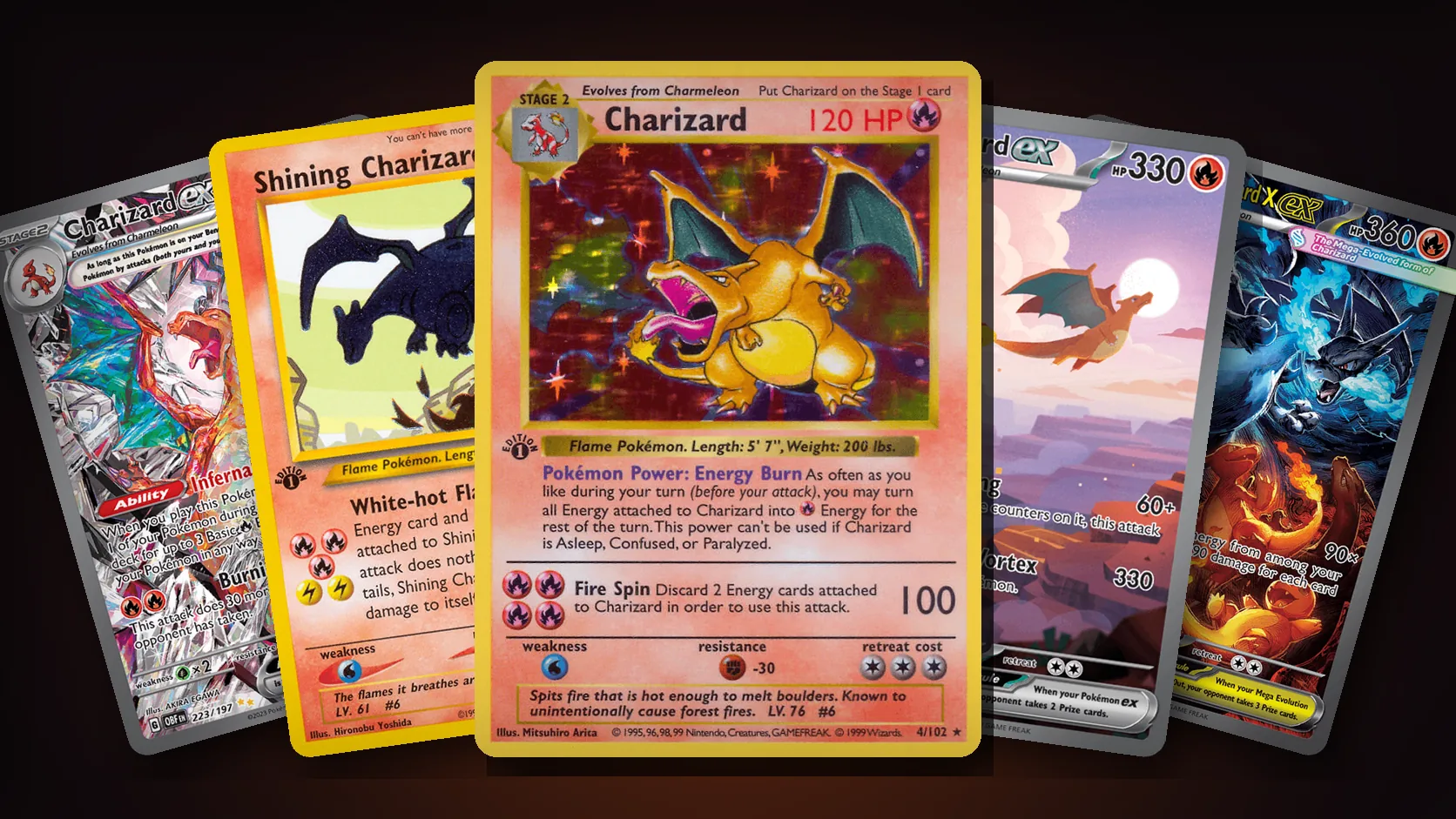
Every English Charizard card on TCGplayer, ranked by price and updated weekly, plus the record sales, led by a $1.7 million PSA 10 Charizard in 2026.
The most valuable Charizard you can buy ungraded in October 2026 is the Crystal Charizard from Skyridge (146/144), at about $3,000 on TCGplayer, followed by the Shadowless Base Set Charizard at about $2,260. Graded copies sell for far more: a PSA 10 Japanese "No Rarity" Base Set Charizard sold for $1.7 million in March 2026, and a PSA 10 1st Edition Base Set Charizard reportedly sold for $1,385,274 in October 2026. Most Charizard cards are worth much less: 61 of the 137 English Charizard cards on TCGplayer sell for under $50.
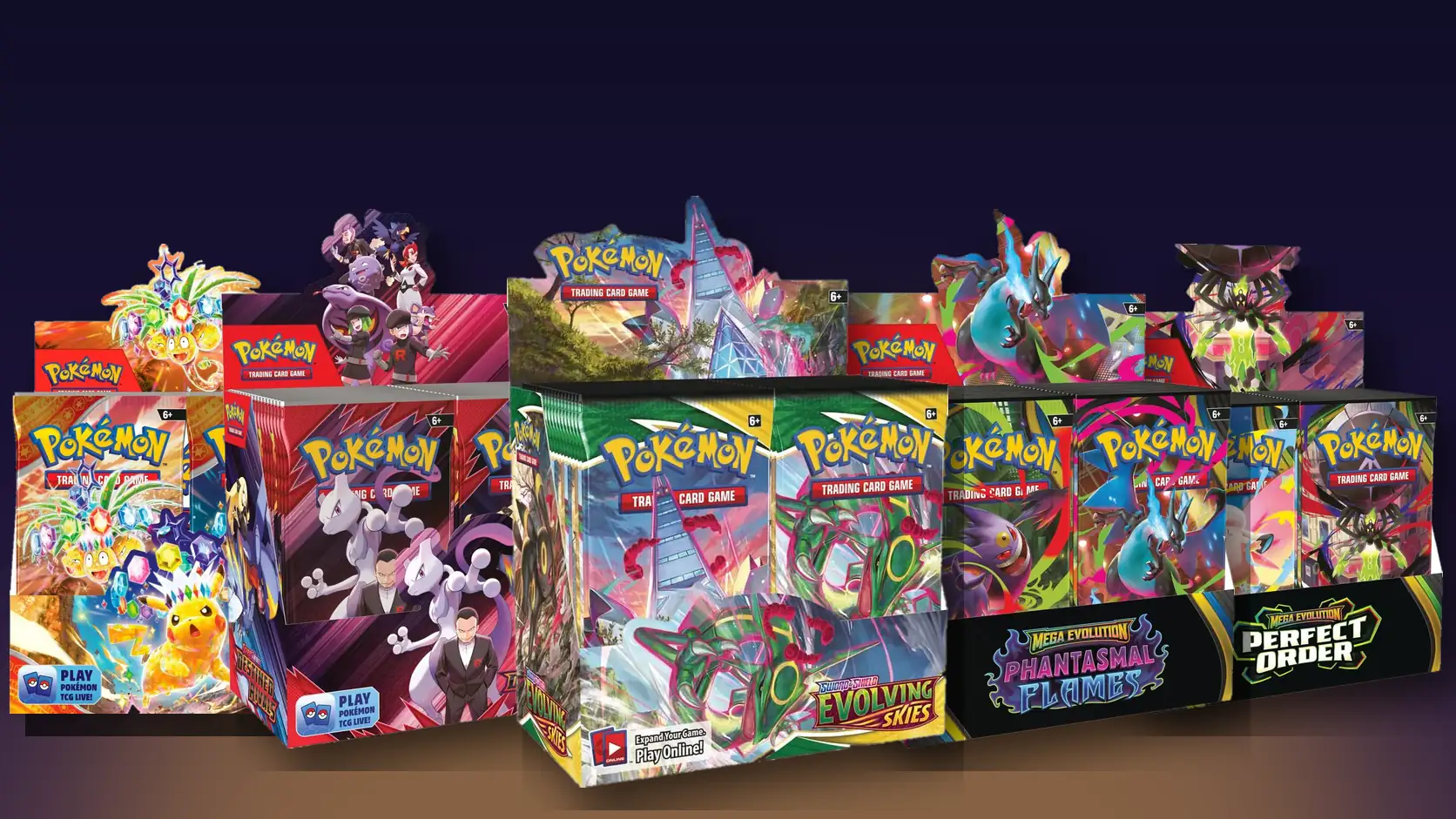
How many packs are in a Pokémon booster box, what every set's box costs on TCGplayer this week, the cheapest boxes per pack, and which sets have no booster box.
An English Pokémon booster box holds 36 booster packs. In October 2026, boxes of the sets released in 2025 and 2026 cost about $170 to $400 on TCGplayer, or $4.77 to $11.21 a pack. Perfect Order was the cheapest box at about $172. Out-of-print boxes can cost far more: Evolving Skies was about $2,290 and Team Up about $11,700. Special sets such as 151, Prismatic Evolutions and Ascended Heroes were never sold in booster boxes.
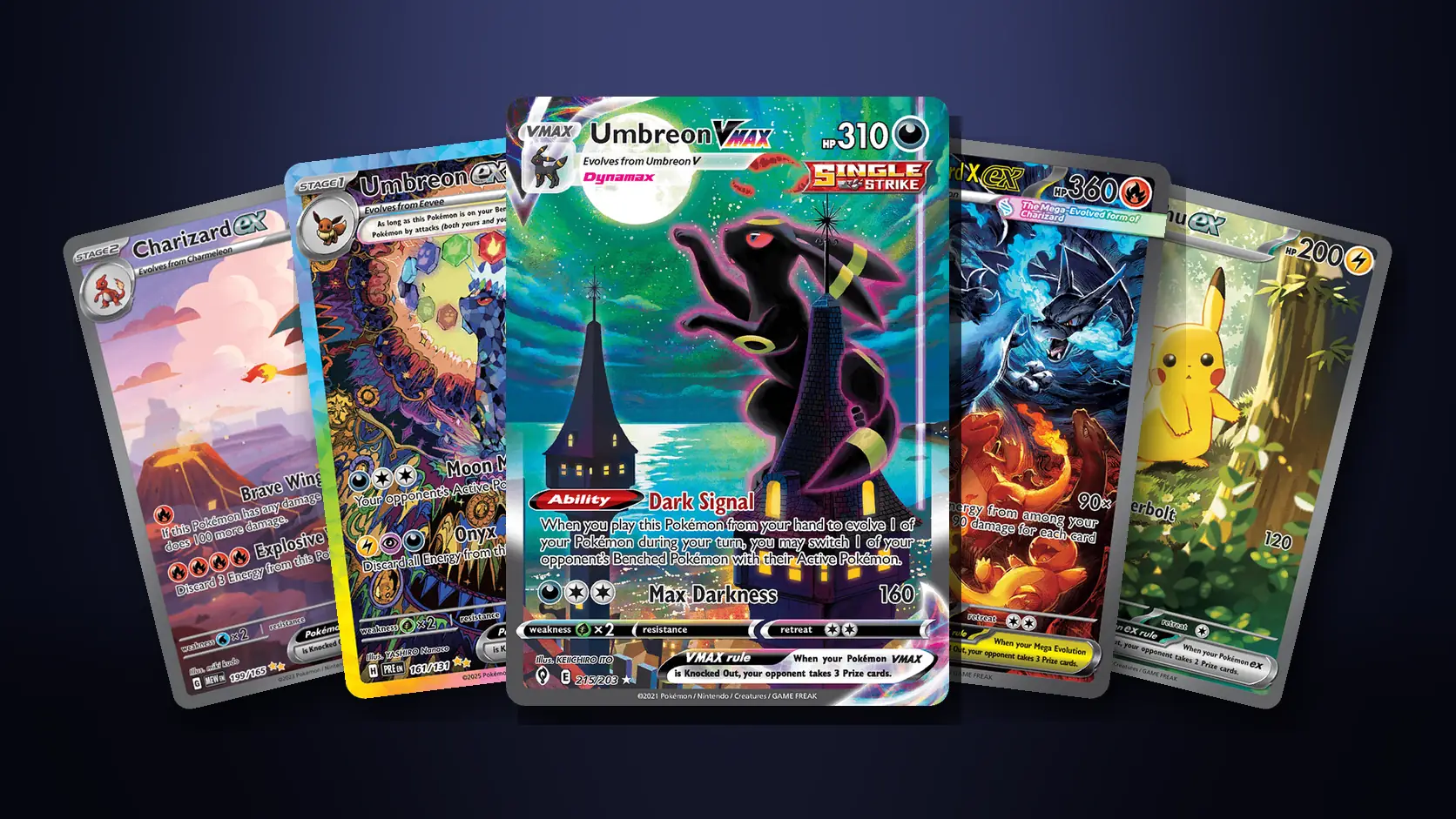
The most expensive Pokémon card ever sold went for $16.49 million in 2026. Plus the 50 most valuable cards on TCGplayer right now, updated weekly.
The most expensive Pokémon card ever sold is a PSA 10 Pikachu Illustrator, which Logan Paul sold for $16,492,000 at Goldin Auctions on 16 February 2026, a Guinness World Record. Among cards you can actually buy today, the most valuable ungraded English cards on TCGplayer in October 2026 were the Gold Star Mewtwo from EX Holon Phantoms (about $9,200) and the RGB Rare Mew from 30th Celebration (about $6,000). Most of the rest of the top 50 are vintage: secret rares from the e-Card era, Gold Star cards and Neo-era Shining Pokémon.

MTG Star Trek releases 13 November 2026. Every product, its MSRP, what it costs to preorder on TCGplayer today, and which ones are worth buying early.
Magic: The Gathering | Star Trek releases on 13 November 2026, with prerelease events from 6 to 12 November and an MTG Arena release on 10 November. It is a full set, legal in every format. On 8 October 2026 most preorders on TCGplayer sat well above Wizards' MSRP: Commander decks around $94 against $74.99, and the Collector's Edition decks at more than twice their $159.99 MSRP. The Play Booster box (about $154) and the regular Bundle (about $76) are the only products close to list price. If your local store sells at MSRP, preorder there.
Flashback in MTG lets you cast an instant or sorcery from your graveyard for its flashback cost, then exile it. Full flashback rules and the best cards.
Flashback lets you cast an instant or sorcery from your graveyard by paying its flashback cost instead of its mana cost. Whatever happens to the spell, it is exiled afterwards, so you get exactly one extra use. Timing rules still apply, the flashback cost is an alternative cost so it can't be combined with another one, and the spell's mana value still comes from its printed mana cost.
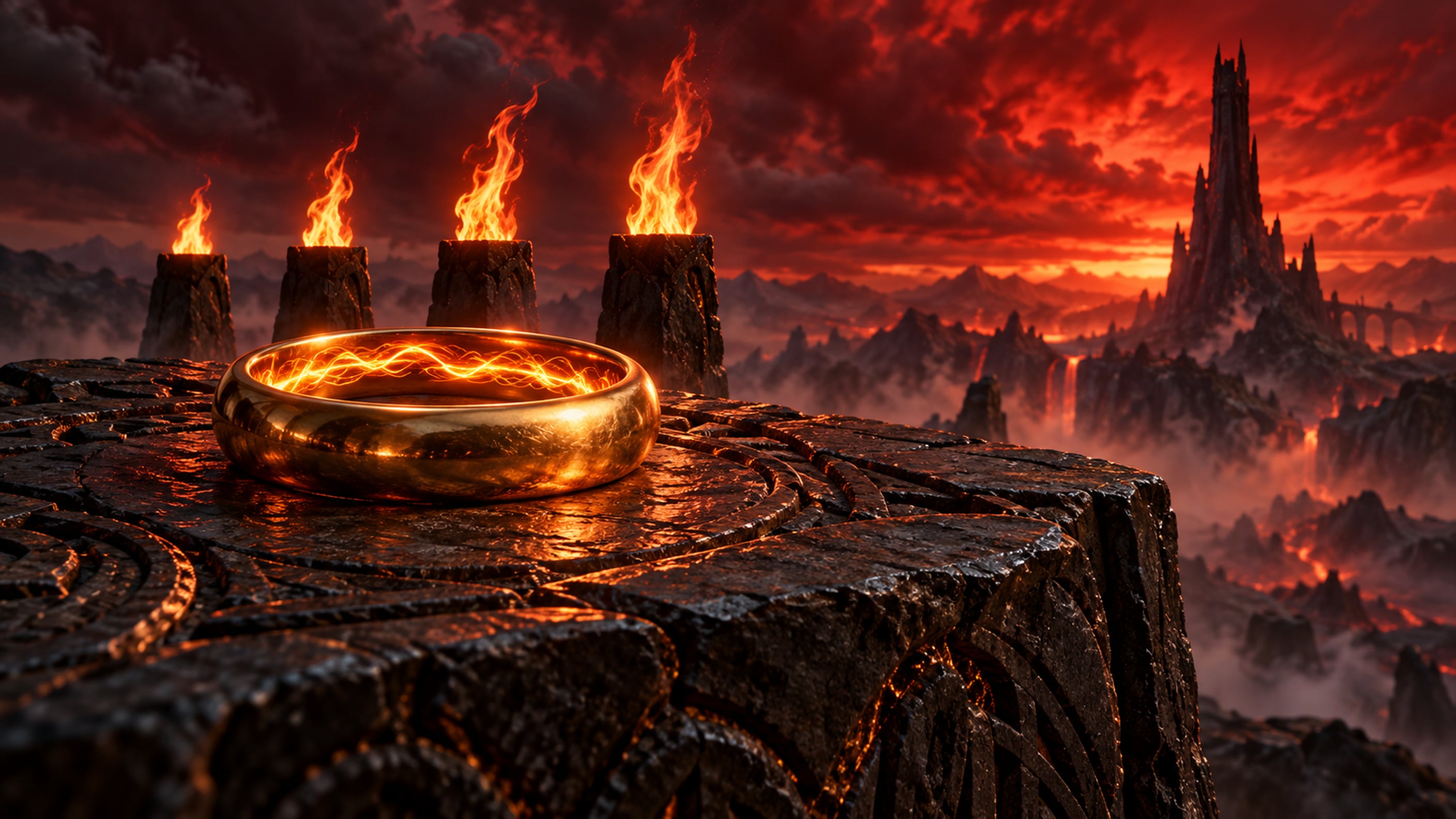
The Ring tempts you in MTG gives you an emblem and a Ring-bearer that gets stronger each time. All four levels, the rules, and the best Ring cards.
When the Ring tempts you, you get an emblem called The Ring (if you don't have one), it gains its next ability, and you choose a creature you control as your Ring-bearer. There are four abilities, gained in order and never lost: the Ring-bearer becomes legendary and hard to block, loots when it attacks, makes blockers sacrifice themselves, and drains 3 life when it connects. It can tempt you even if you control no creature.
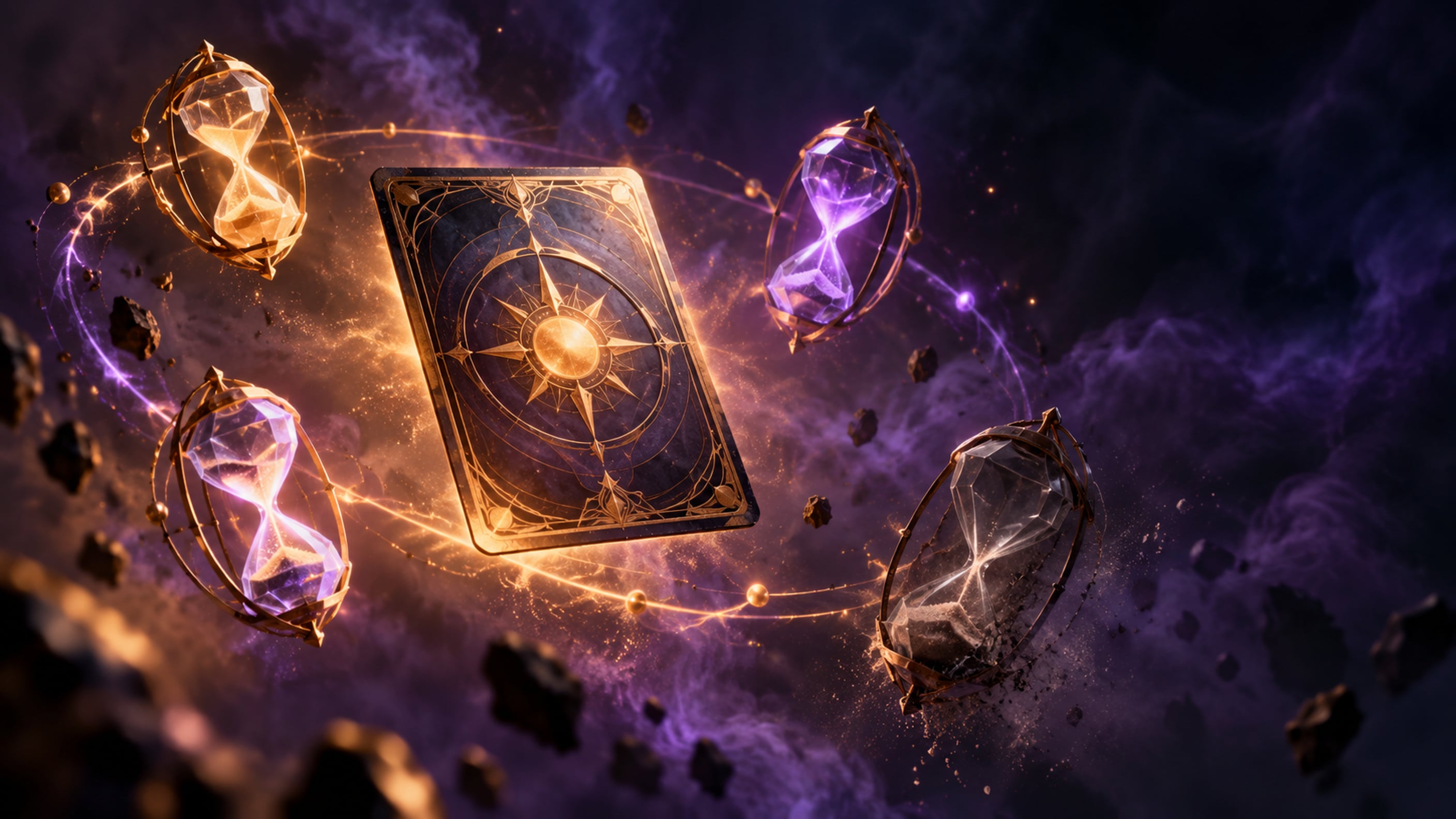
Suspend in MTG lets you exile a card with time counters and cast it for free in a few turns. Full suspend rules, the haste bonus, and the best suspend cards.
Suspend lets you pay a cheap cost to exile a card from your hand with a number of time counters on it. At the start of each of your upkeeps you remove one, and when the last comes off you may cast the card for free. Suspending is not casting, so it can't be countered or responded to, and a creature cast this way has haste. The price is waiting: the card does nothing until the counters are gone.
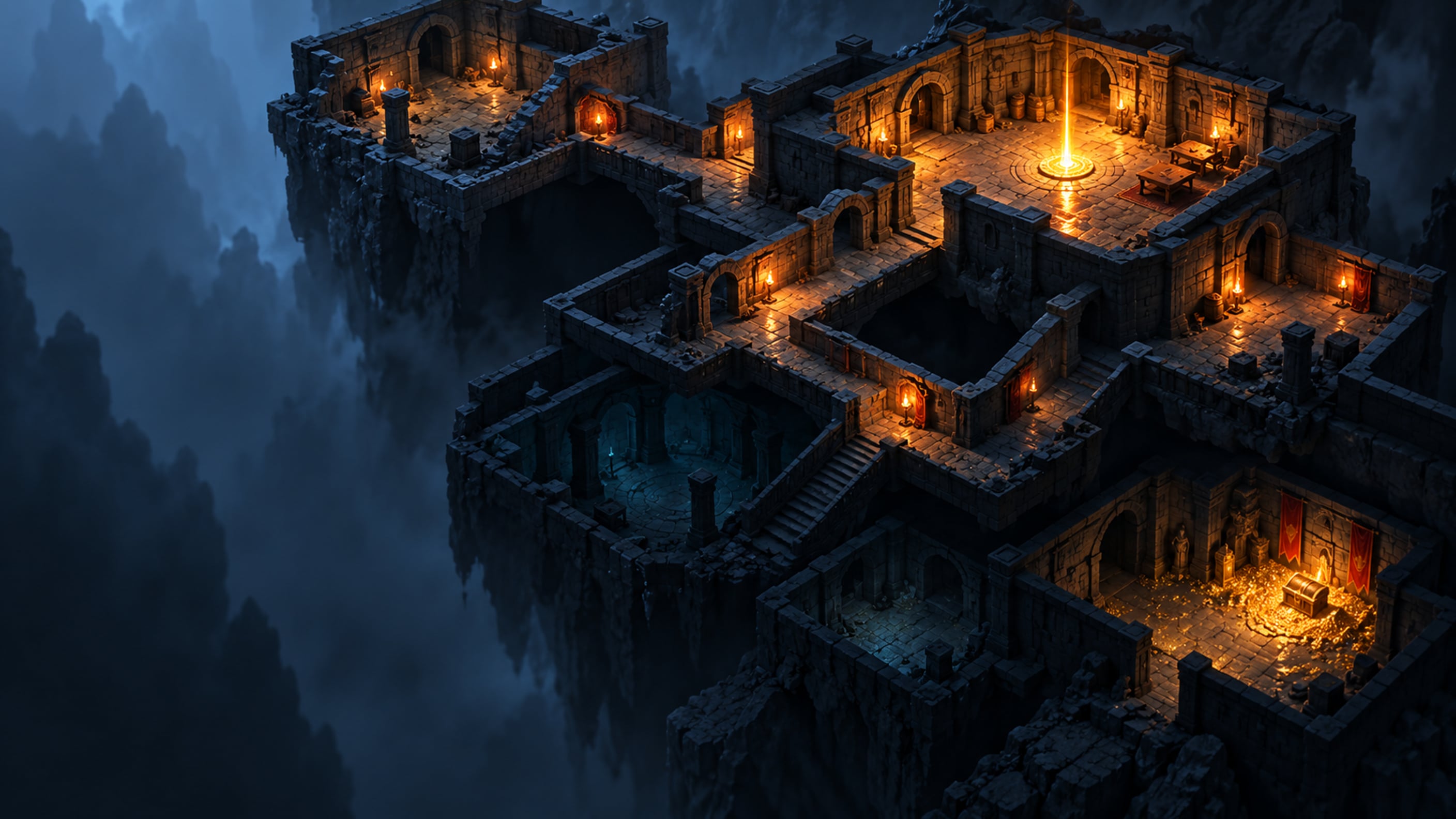
Venture into the dungeon in MTG moves your marker through a dungeon card in the command zone. All three dungeons, every room, the rules and the best cards.
To venture into the dungeon, you either choose a dungeon card from outside the game and enter its first room, or move down to the next room of the dungeon you are already in. Each room has a one-time effect, you can only go forward, and finishing the last room completes the dungeon. There are three dungeons: Lost Mine of Phandelver (7 rooms), Dungeon of the Mad Mage (9) and Tomb of Annihilation (5).
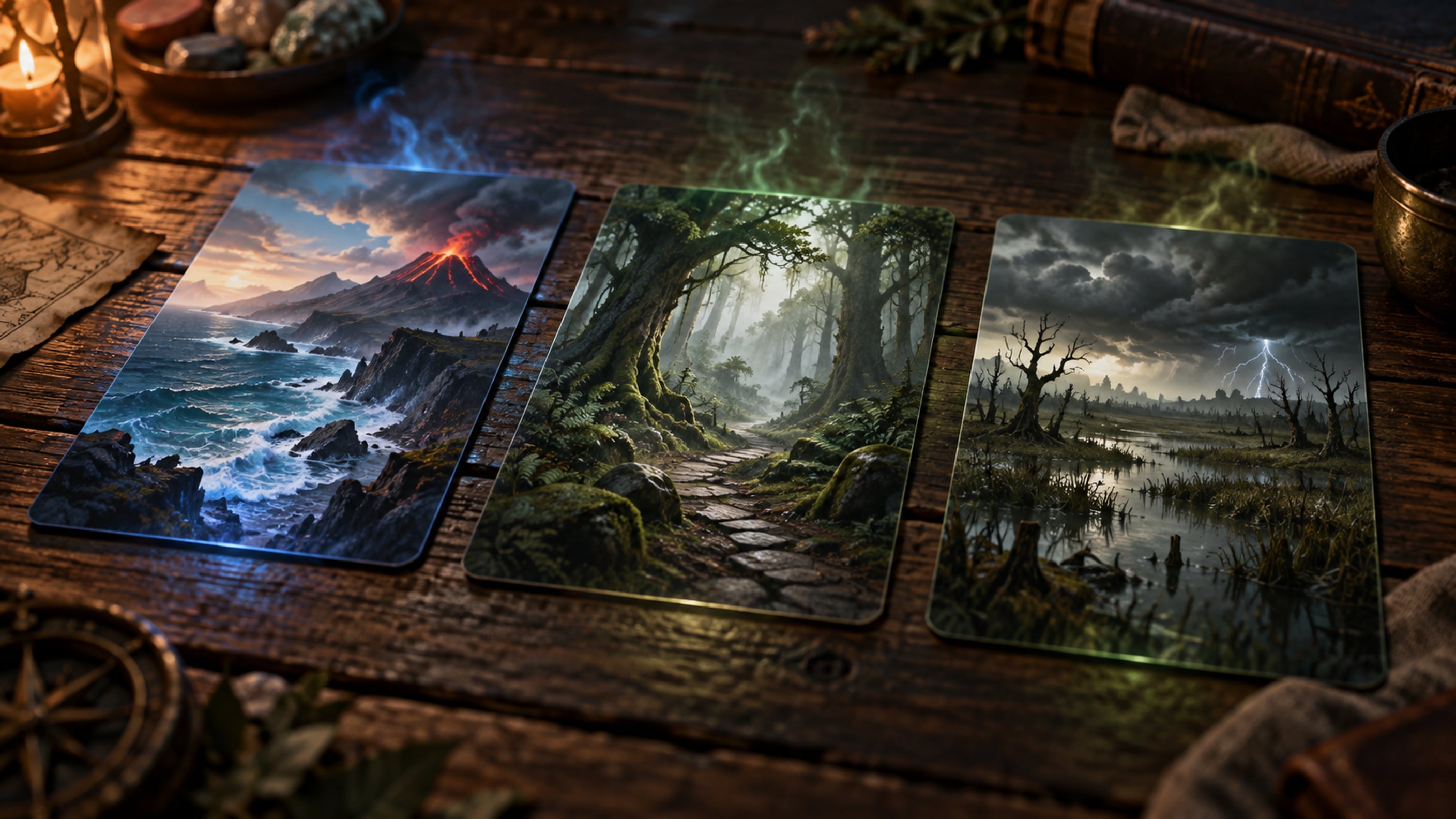
MTG dual lands, fetch lands and shock lands explained: what each cycle does, why fetches find duals and shocks, 2026 prices, and the budget land cycles.
The original dual lands (Underground Sea, Volcanic Island and the rest) are two-colour lands with both basic land types and no drawback; they're on the Reserved List and cost hundreds of dollars. Shock lands are the modern version: the same land types, but you pay 2 life or they enter tapped, and they cost under $11. Fetch lands sacrifice themselves and 1 life to search for a land with a basic land type, which means they can find duals and shocks as well as basics. That interaction is why the three cycles are always discussed together.

Every MTG Final Fantasy product: the Chocobo Bundle, play and collector booster boxes, the four Commander decks and Secret Lairs, with September 2026 prices.
Magic: The Gathering FINAL FANTASY released on 13 June 2025 and is Standard-legal. For playing, the four Commander decks are the best value, from about $34 to $63 each. The play booster box (30 packs) trades around $248, well above what it launched at. The collector booster box (12 packs) is around $1,700 and only makes sense if you're chasing surge foils or a serialized Traveling Chocobo. The Chocobo Bundle, released in December 2025 at $109.99, now trades near $320.
The full MTG Game Changers list (53 cards, September 2026), the five Commander brackets and their rules, and every change to the list since it launched.
Game Changers are a Wizards-curated list of cards that warp Commander games, 53 of them as of September 2026. They decide which Commander bracket your deck belongs in: Brackets 1 and 2 allow none, Bracket 3 allows up to three, and Brackets 4 and 5 allow any number. The list was last changed on 9 February 2026, when Farewell and Biorhythm were added. The next Commander announcement is due on 12 October 2026.

The MTG Infinity Stones so far: The Soul Stone (Spider-Man) and The Mind Stone (Marvel Super Heroes). What each does, how harness works, prices, Commander use.
Two Infinity Stones exist in Magic so far: The Soul Stone from Marvel's Spider-Man (2025) and The Mind Stone from Marvel Super Heroes (2026). Both are two-mana indestructible legendary artifacts that tap for one coloured mana, with an expensive one-time harness cost that switches on a powerful ability every turn. The Soul Stone reanimates a creature every upkeep; The Mind Stone blinks one of your permanents every end step. The Soul Stone is the stronger card and the pricier one, around $93 for a regular copy.
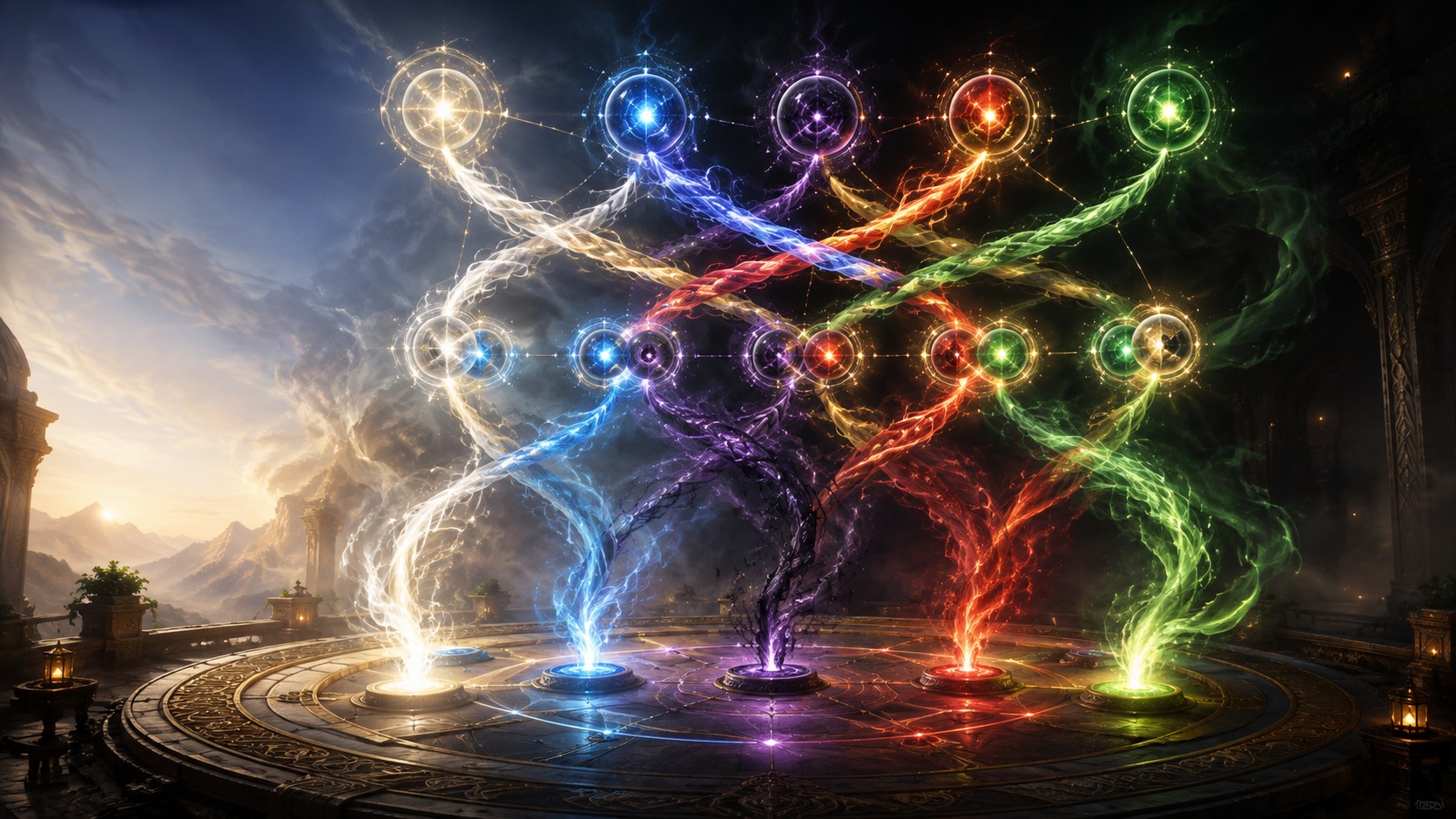
Every MTG color combination name: the ten guilds, five shards, five wedges, the four-color Nephilim names and more. What each combo is called, and why.
Magic has 31 possible colour combinations and almost all of them have a nickname drawn from a specific set. Two-colour pairs use the Ravnica guild names, three-colour allied sets use the Alara shard names, three-colour enemy sets use the Khans of Tarkir clan names, and four-colour sets use the Guildpact Nephilim names. This is the complete reference table, plus why the colours are always listed in WUBRG order.
Discover in MTG exiles until it hits a nonland card of mana value N or less; cast it free or keep it. Full discover rules, and discover vs cascade.
Discover N exiles cards from the top of your library until it exiles a nonland card with mana value N or less, then you either cast that card without paying its mana cost or put it into your hand, with the rest going to the bottom in a random order. It looks like cascade and differs in three ways that matter: a fixed mana value ceiling instead of a relative one, a guaranteed floor because you can always take the card into hand, and no dependency on casting a spell.
Monarch and the initiative in MTG reward whoever holds them and pass on combat damage. Full monarch rules, initiative rules, and why initiative got banned.
Monarch and the initiative are designations, not permanents — one player holds each, and both change hands when a creature deals combat damage to the holder. The monarch draws an extra card at their end step. The player with the initiative ventures deeper into the Undercity dungeon each upkeep. Both were built to stop multiplayer games stalling by making the holder worth attacking, and the initiative proved so strong it was banned in Legacy and Pauper.
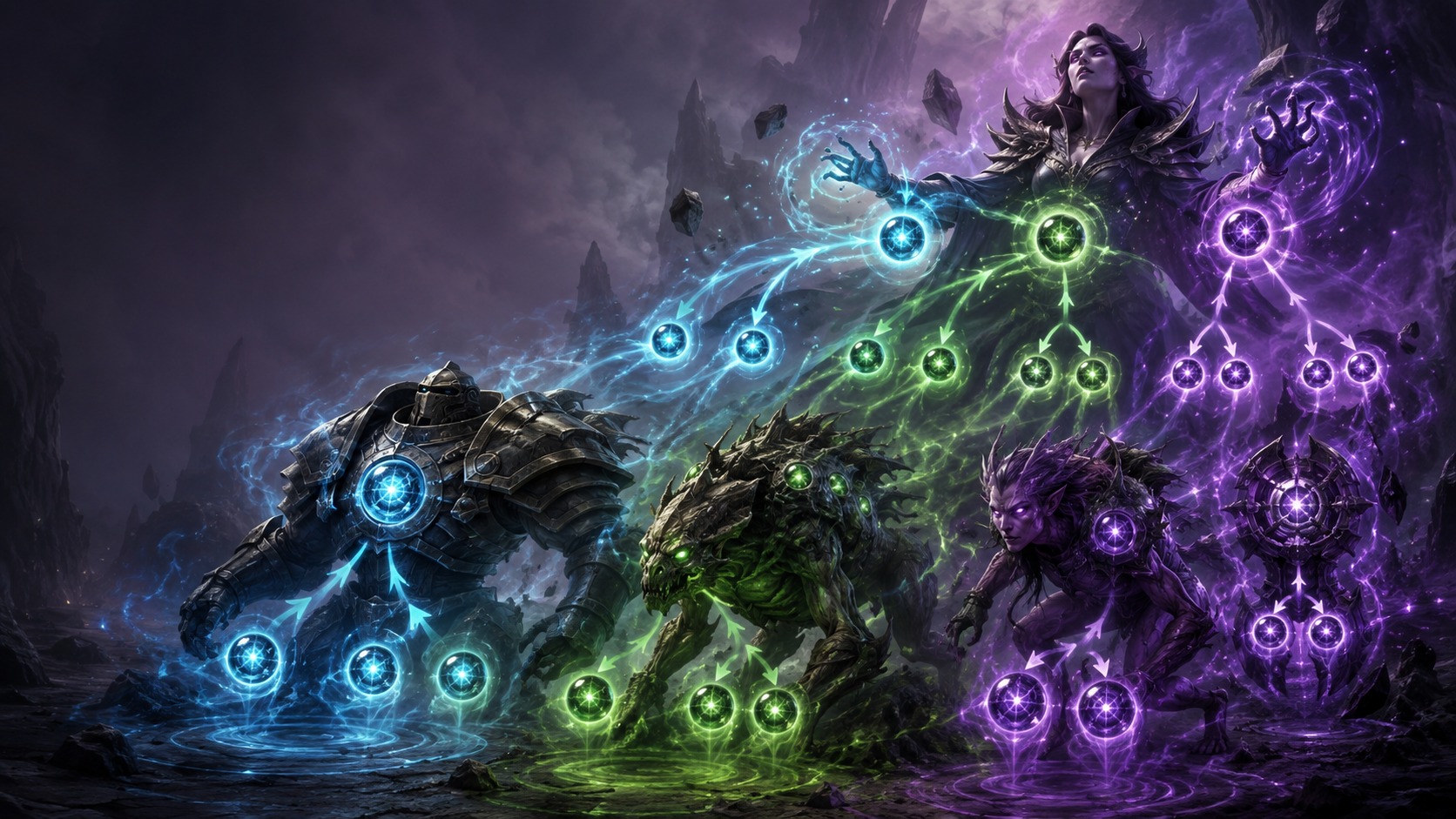
Proliferate in MTG adds one more of each counter already on the permanents and players you choose. It doesn't target. Full proliferate rules and best cards.
To proliferate, choose any number of permanents and players that already have counters on them, then give each one another counter of every kind it already has. It never adds a new type of counter and it never targets, which means hexproof, shroud and ward do nothing against it. That non-targeting clause is the reason proliferate is far stronger than its plain reading suggests.

Protection in MTG stops a creature being Damaged, Enchanted, Blocked or Targeted by the named quality. Full protection rules (DEBT) and every edge case.
Protection from a quality stops exactly four things from sources with that quality: Damage, Enchanting or Equipping, Blocking, and Targeting — the DEBT mnemonic. Everything else goes straight through. A protected creature can still be destroyed by a spell that does not target it, sacrificed, exiled, shrunk to zero toughness, or killed by a source that does not have the quality it is protected from.
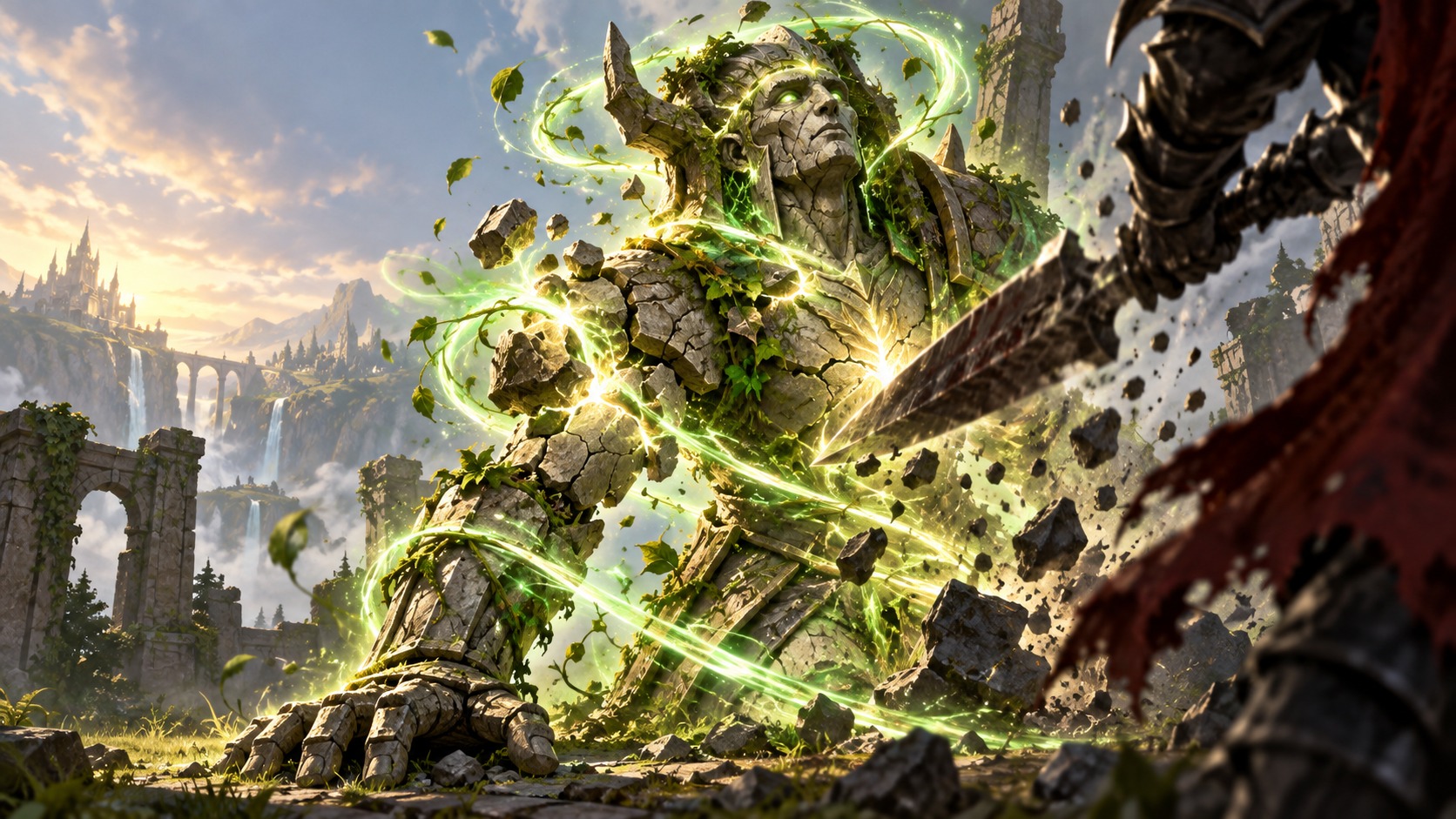
Regenerate in MTG replaces the next destruction this turn: tap it, remove its damage, take it out of combat. Full regenerate rules, and why it was retired.
Regenerate is a replacement effect that creates a shield: the next time the creature would be destroyed this turn, it is instead tapped, removed from combat, and all damage is healed. It is still a valid rule and still works on every card that has it — Wizards retired it from new design in 2016, not from the game. It does not stop exile, sacrifice, or a creature dying to zero toughness, which is why indestructible and shield counters replaced it.
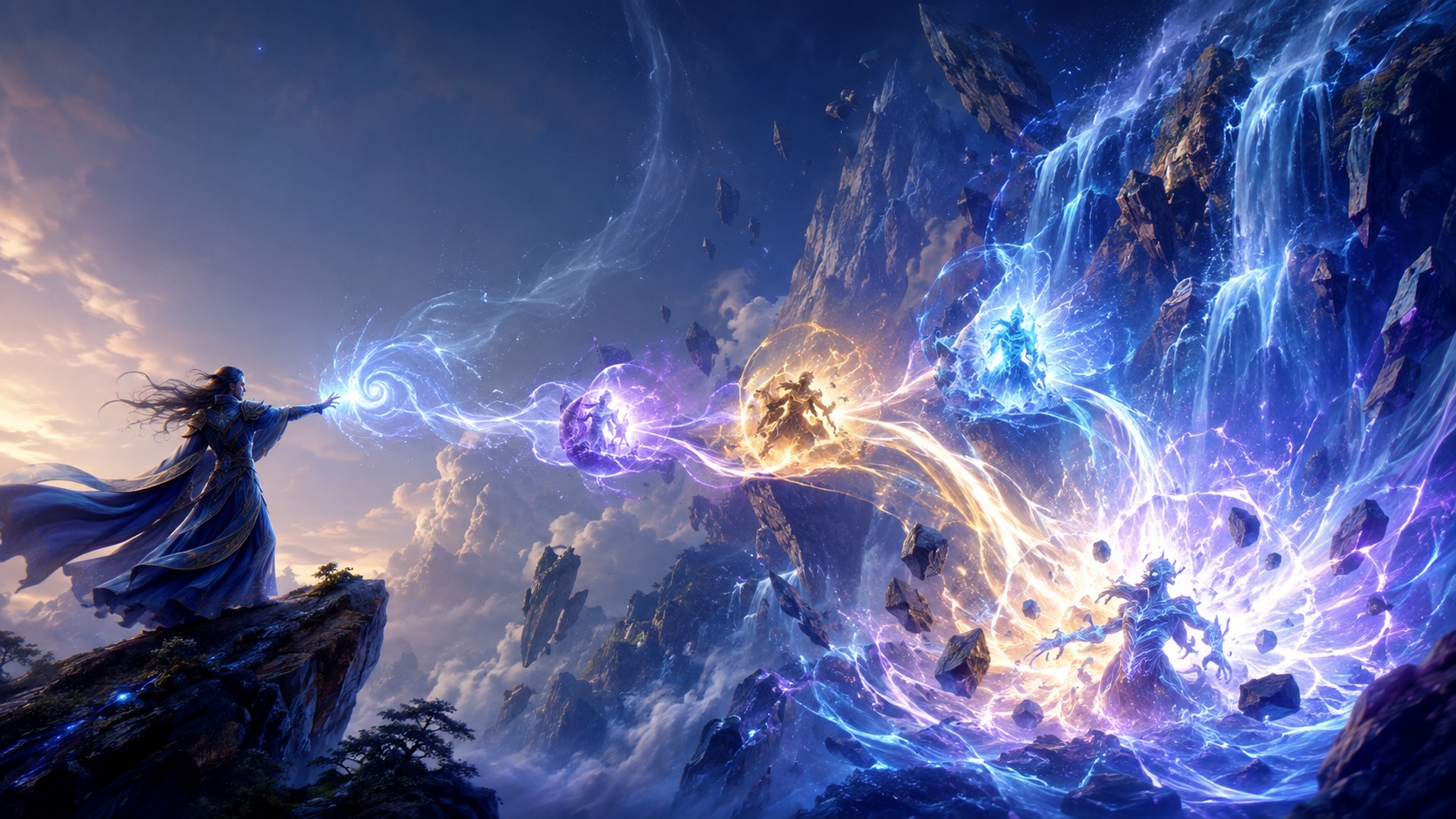
Cascade in MTG exiles until it hits a cheaper nonland card and casts it free. The full cascade rules, why it beats counterspells, and the decks that break it.
Cascade triggers when you cast the spell, exiles cards from the top of your library until it exiles a nonland card that costs less, and lets you cast that card for free. Because it triggers on cast rather than on resolution, a countered cascade spell still gives you the free card underneath. That, plus the fact that a deck can be built to contain exactly one legal hit, is why cascade has been a balance problem since 2009.
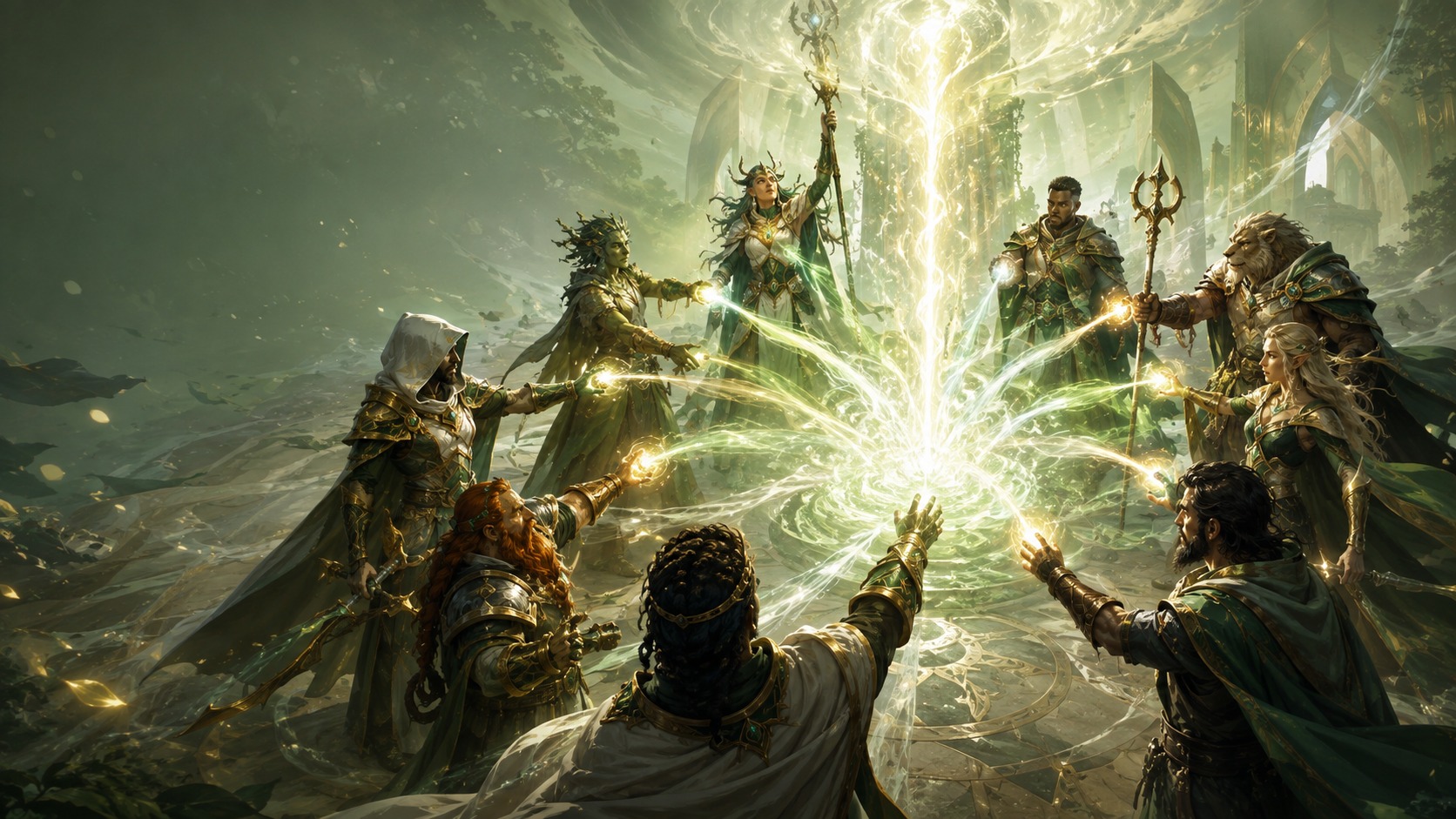
Convoke in MTG lets you tap creatures to help pay for a spell: each pays {1} or one mana of its color. Full convoke rules, the mana math and best cards.
Convoke lets you tap creatures while casting a spell, and each creature tapped pays for one generic mana or one mana of that creature's own colour. Because tapping for convoke is a cost rather than an activated ability, summoning sickness does not prevent it — a creature that entered this turn can convoke immediately. Convoke never reduces the spell's mana value, which matters for everything that cares about cost.

Explore in MTG reveals your top card: a land goes to hand, anything else grows the creature. Explore mechanic rules, Map tokens and the best explore cards.
To explore, reveal the top card of your library. If it is a land, put it into your hand. If it is not, put a +1/+1 counter on the creature and then choose whether to leave the card on top or bin it. Explore is the rare mechanic that never whiffs — every outcome gives you something — and its real skill is the second choice, which most players make on autopilot.
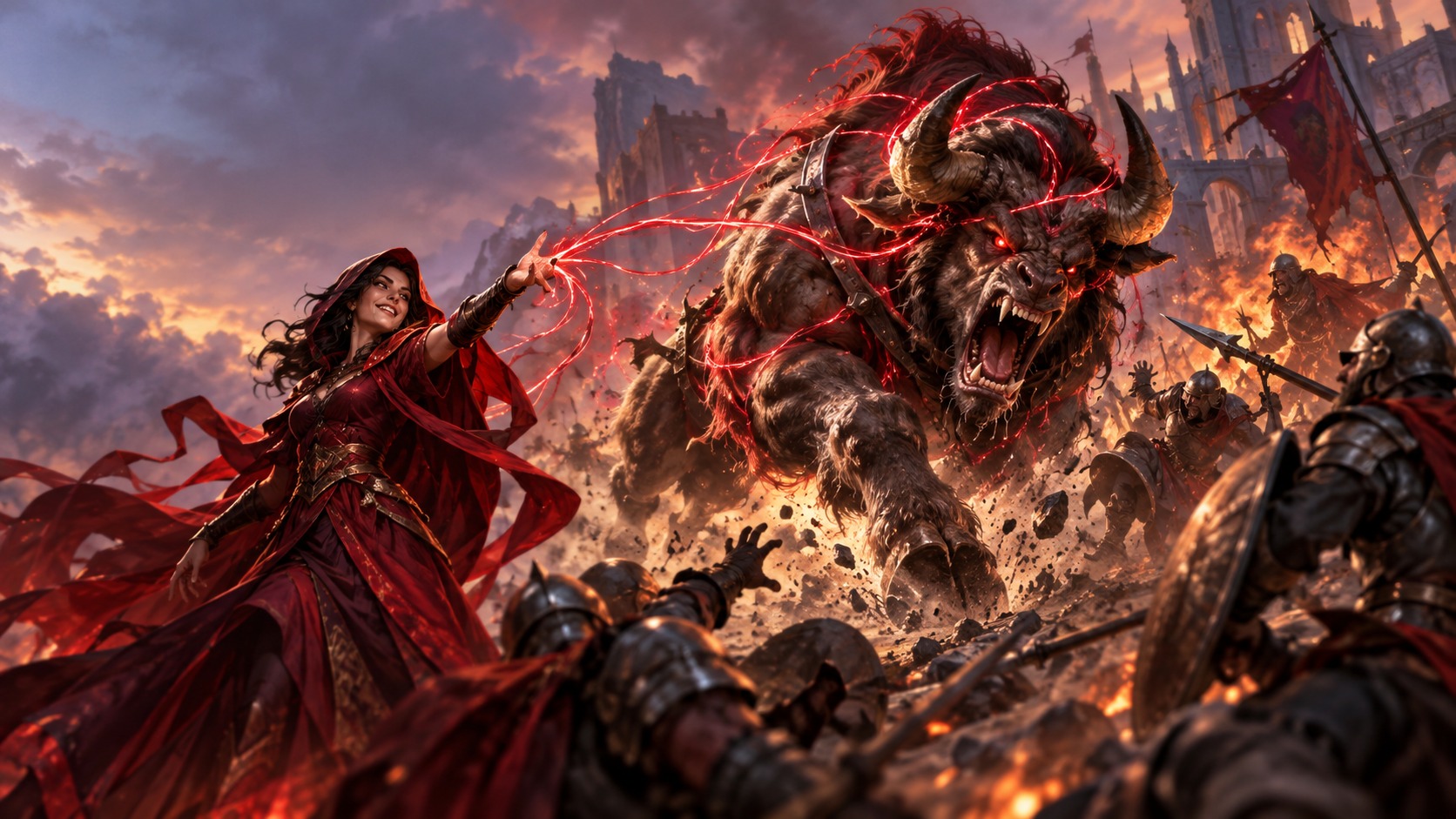
Goad in MTG forces a creature to attack each combat until your next turn, and to attack someone other than you. Full goad rules, politics and best cards.
Goading a creature applies two separate requirements until your next turn: it attacks each combat if able, and it attacks a player other than you if able. Neither requirement can force an illegal attack, so a goaded creature that physically cannot attack simply does not, and a goaded creature whose only legal target is you will attack you. Goad is removal that costs nothing and leaves the creature on the battlefield, pointed at someone else.
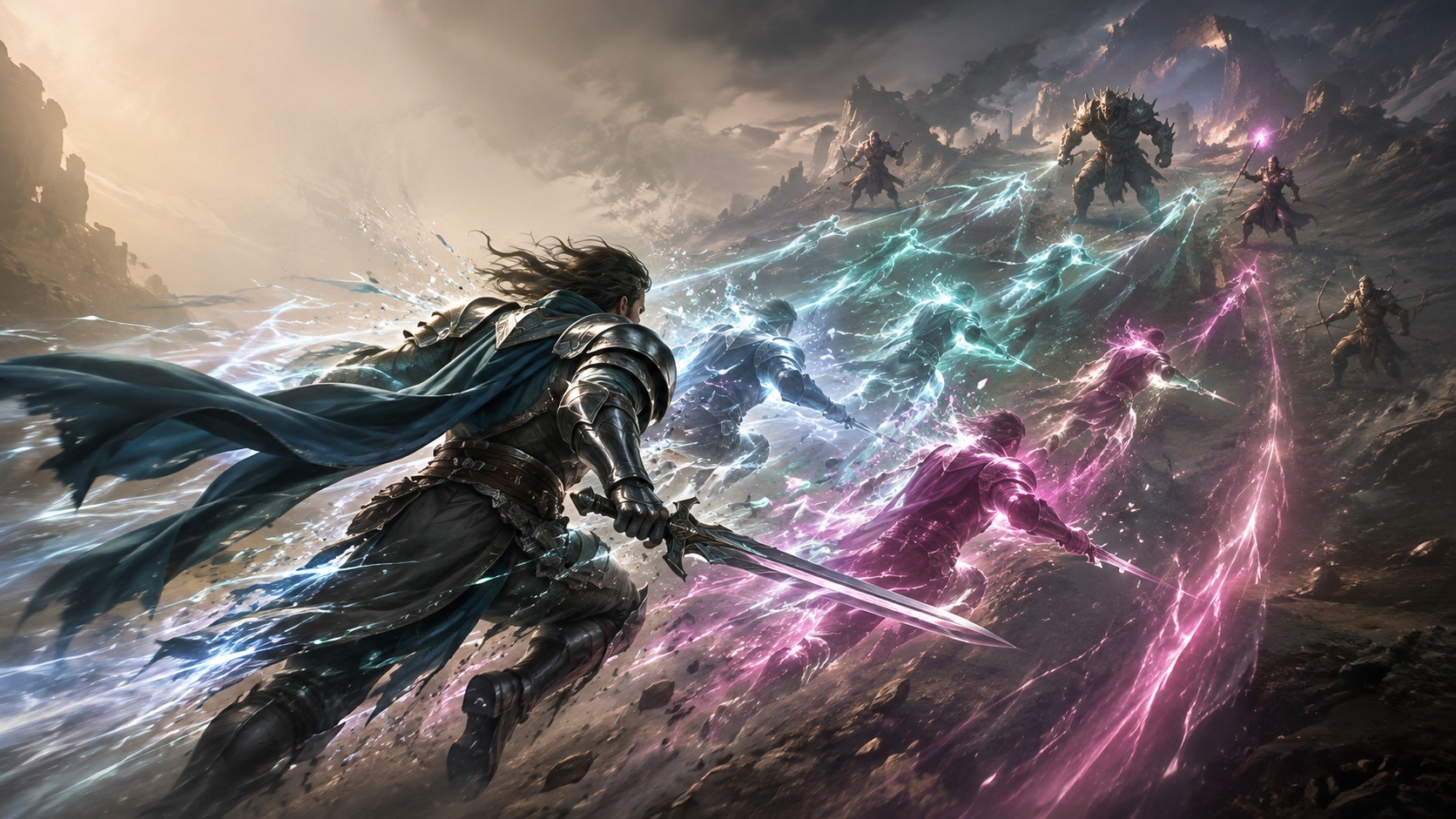
Myriad in MTG copies the attacker for every other opponent, tapped and attacking, then exiles the copies. Full myriad rules, the math and the best cards.
Myriad triggers when the creature attacks: for each opponent other than the defending player, you may create a tapped, attacking token copy pointed at them. The tokens are exiled at end of combat, which sounds like a drawback and is actually the mechanic's engine — every token still entered the battlefield, so every enters-the-battlefield trigger on the creature fires once per opponent.
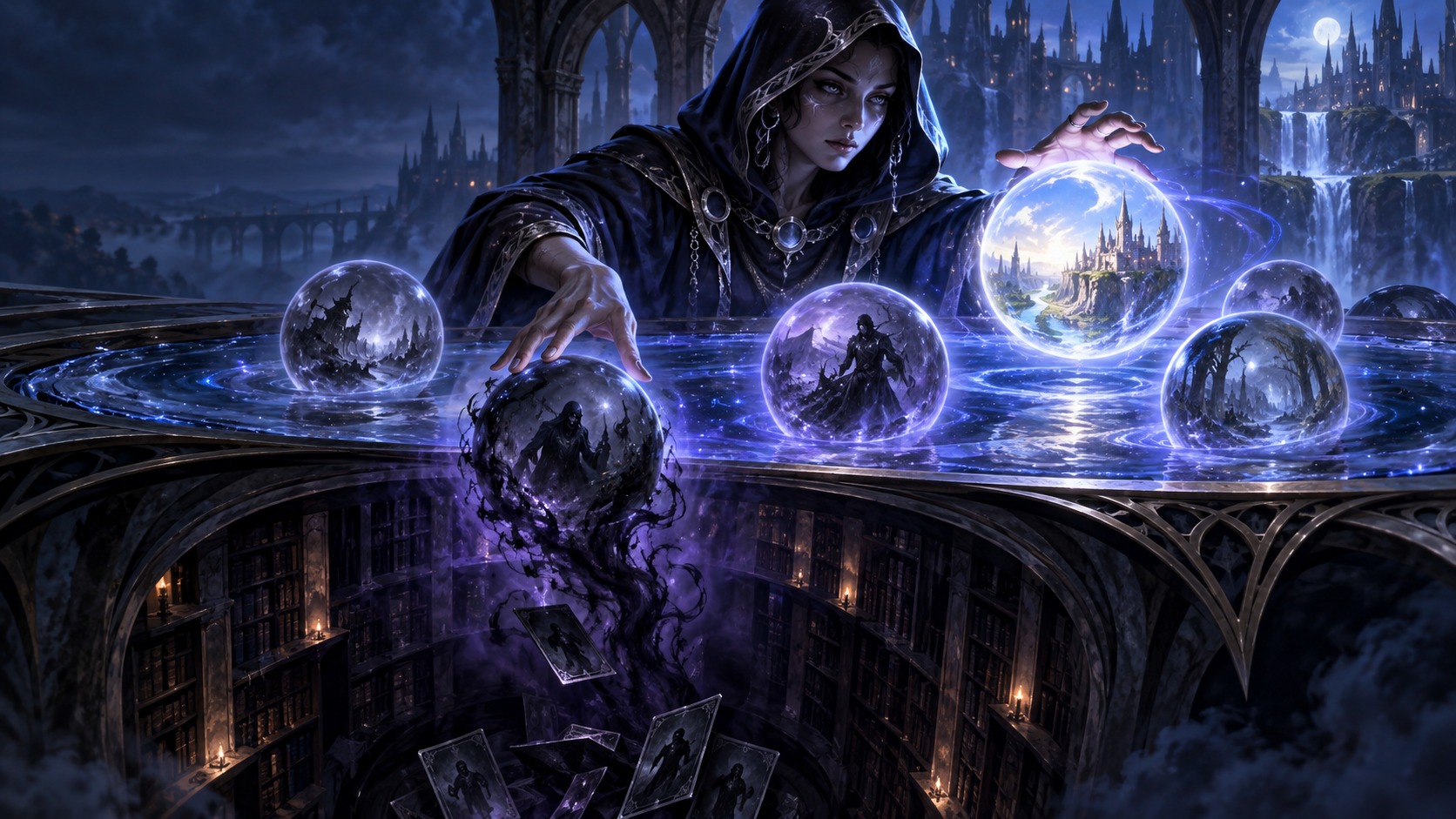
Surveil in MTG: look at the top cards and put any into your graveyard. Full surveil rules, surveil vs scry, the surveil lands, and the best surveil cards.
To surveil N is to look at the top N cards of your library and put any number of them into your graveyard, with the rest staying on top in any order. It is scry with one word changed — graveyard instead of bottom — and that single word is the entire mechanic. Cards you reject with scry are gone; cards you reject with surveil land somewhere you can use them again.

How much does Magic: The Gathering cost in 2026? Free on Arena, $27–$50 for a Commander deck, and why prices rose in January. Real numbers for every way to play.
Magic is free on Arena and about $27–$50 for a complete paper Commander deck. It becomes expensive only when you opt into sealed product, competitive 1v1 formats, or collecting — three cost curves that share a name and almost nothing else. Prices did rise in January 2026: Collector Boosters went from $24.99 to $26.99 and Commander precons from $44.99 to $49.99. But the products that got dramatically more expensive are collector products, and no one has to buy them.

Is Magic: The Gathering dying? It earned over $1.7 billion in 2025, its best year ever. The revenue, the player estimates, and what people are reacting to.
By every measurable metric Magic is not dying — it earned over $1.7 billion in 2025, up 59% year on year, its strongest year in a 32-year history, and it is now Hasbro's primary growth engine. The question persists anyway because commercial success and the feeling of decline share a cause: the Universes Beyond strategy that produced the record revenue is the same thing making long-time players feel the game's identity is being eroded.
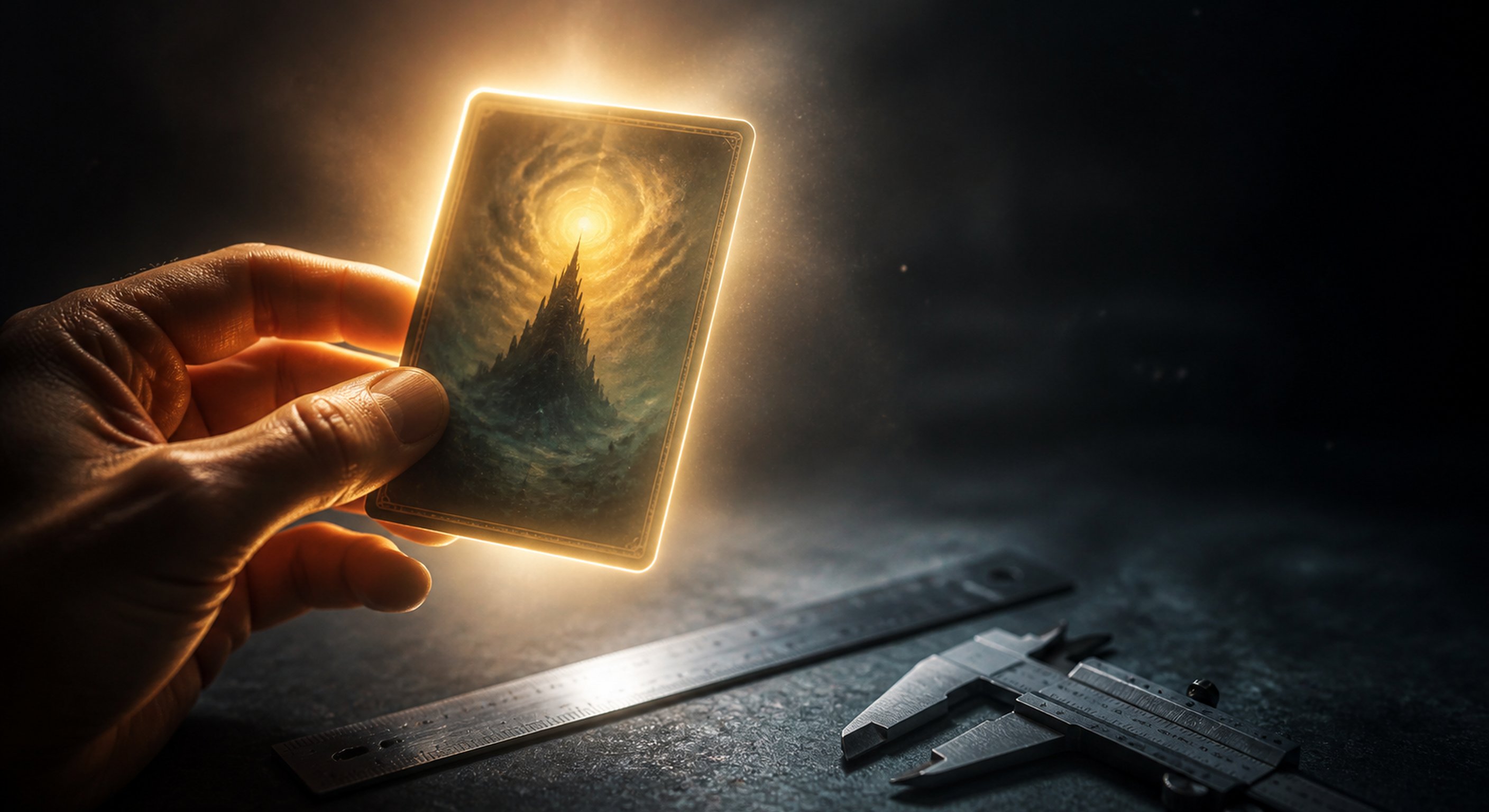
MTG card size is 63 × 88 mm (2.49 × 3.48 in), about 0.3 mm thick. Magic card dimensions, what they mean for sleeves and storage, and the cards that differ.
A Magic card is 63 × 88 mm (2.49 × 3.48 inches), roughly 0.30–0.32 mm thick and about 1.8 grams. Standard sleeves are 66 × 91 mm and perfect-fit inner sleeves are 64 × 89 mm. The back is identical on every tournament-legal card — the wordmark, a ring of five coloured pips, and the Deckmaster label — and the card's internal blue core layer is what makes the light test a reliable authentication check.

What each of the five colours does and refuses to do, the ally-enemy wheel that explains every pairing, and the real names for all 26 colour combinations — guilds, shards, wedges and Nephilim.
Magic's five colours are a design contract as much as a theme: each colour is defined by what it cannot do as much as what it can, and that restriction is the colour pie. The colours sit on a wheel where each has two allies and two enemies, which is what generates every combination name — the ten Ravnica guilds for pairs, the five Alara shards and five Tarkir wedges for triples, and the Guildpact Nephilim for the four-colour sets.
Double strike in MTG deals first-strike and regular combat damage; first strike deals damage first. Full double strike rules and the combat math.
First strike and double strike both work by splitting combat damage into two steps. First strike deals damage only in the earlier step; double strike deals damage in both. The consequence people misjudge is that double strike is not simply double power — if your blocker dies to the first hit, the second hit goes nowhere unless the creature also has trample.

Indestructible in MTG: a permanent can't be destroyed by destroy effects, lethal damage or deathtouch. The rules, and what still kills it: exile, sacrifice.
Indestructible means a permanent cannot be destroyed — it ignores lethal damage and destroy effects, and nothing else. It does not stop exile, sacrifice, or toughness reduced to zero, because none of those destroy anything. Regenerate is the retired predecessor: a one-shot shield that also taps the creature and removes it from combat. Exile is the universal answer to both, which is why removal that exiles costs more than removal that destroys.
MTG planeswalkers explained: loyalty, the one-ability-per-turn rule, attacking them, and why fewer are printed now. Plus Jace, Chandra, Liliana and the rest.
A planeswalker is a legendary permanent that enters with loyalty counters and activates one loyalty ability per turn at sorcery speed. It dies when loyalty hits zero, and opponents can attack it directly. The card type is deliberately rarer than it used to be: March of the Machine: The Aftermath stripped the sparks from a large number of characters, and Mark Rosewater has confirmed fewer planeswalkers are being printed as a direct result — many of those characters now appear as legendary creatures instead.

Any nonzero damage from a deathtouch source destroys the creature — including damage from fight, pings and abilities, not just combat. What it beats, what beats it, and why it is strongest on defence.
Deathtouch means a creature dealt any damage by that source is destroyed, regardless of toughness. It is not limited to combat — fight effects, ping abilities and triggered damage all destroy their target. It does nothing special to players or planeswalkers, and indestructible beats it outright, because deathtouch kills by destroying and an indestructible permanent can't be destroyed.
Flash in MTG lets you cast a spell any time you could cast an instant: on your opponent's turn, in combat, in response. Full flash rules, and the banned card.
Flash is a static ability meaning you may cast the spell any time you could cast an instant. It changes when you cast, never what the card does once it resolves — a creature with flash still has summoning sickness and still cannot attack the turn it arrives. There is also a separate card literally named Flash, from Mirage, which is banned in Legacy and Commander and restricted in Vintage for enabling a turn-one kill with Protean Hulk.
Haste lets a creature attack and use tap abilities the turn it arrives. What summoning sickness actually restricts is narrower than most players think — and haste is quietly a form of protection.
Haste lets a creature attack, and activate abilities with a tap or untap symbol in their cost, the turn it comes under your control. That is the entire ability. Summoning sickness restricts only those two things — it never stops blocking, enters-the-battlefield triggers, static abilities, or activated abilities without a tap symbol, which is the misunderstanding that most often wastes a card.
Menace in MTG: a creature can't be blocked except by two or more creatures. Full menace rules, how it combines with deathtouch and trample, and the best cards.
Menace is an evasion ability meaning a creature can't be blocked except by two or more creatures. It does not prevent blocking — it taxes it, forcing the defender to commit two creatures or take the damage. That makes menace unblockable against a board with one creature and nearly worthless against a wide one, which is the exact inverse of how flying behaves.

Scry in MTG: look at the top N cards, put any on the bottom and the rest on top in any order. Full scry rules, scry vs surveil, and when to bottom a card.
To scry N, look at the top N cards of your library, put any number of them on the bottom, and put the rest back on top in any order you choose. It is not card draw — it does not change how many cards you have, only which ones you get. Scry 2 is strictly better than scry 1 twice, because seeing both cards at once lets you order them; two separate scry 1s can waste the second look entirely.
Trample in MTG lets an attacker assign damage beyond lethal to its blockers to the player. Full trample rules, the deathtouch combo, and the 2024 change.
Trample means that once you have assigned lethal damage to every creature blocking your attacker, the remaining damage carries through to the defending player, planeswalker or battle. The two things people get wrong are that it is not 'all damage goes through' — blockers must be covered first — and that 'lethal' is smaller than it looks, because it counts damage already marked and drops to 1 per blocker when the attacker also has deathtouch.
How to get into Magic: The Gathering in 2026: learn free on Arena, pick a format before you buy, then buy exactly one product. The order that saves you money.
Magic is not hard to learn — it is hard to buy. The rules take an afternoon and MTG Arena teaches them free. What ruins the first month is buying the wrong product before deciding which format you want to play, because a Commander deck and a Standard starter kit are almost unrelated purchases. Learn free on Arena, decide between Commander and 1v1, then buy exactly one thing. A prerelease is the best first paper event there is.

Black Lotus in MTG: a zero-mana artifact that adds three mana once. Why it's banned almost everywhere, every printing, what each is worth in 2026, and fakes.
Black Lotus is a zero-cost artifact that sacrifices itself to produce three mana of one colour — an effect so far beyond the game's normal economy that it has been restricted or banned in every format since 1994. Roughly 22,800 tournament-legal copies were ever printed across Alpha, Beta and Unlimited, it sits on the Reserved List so it can never be reprinted in playable form, and a CGC Pristine 10 Alpha copy sold for $3 million in 2024. Most 'Black Lotus' cards offered casually online are rebacked Collectors' Edition cards or outright counterfeits.
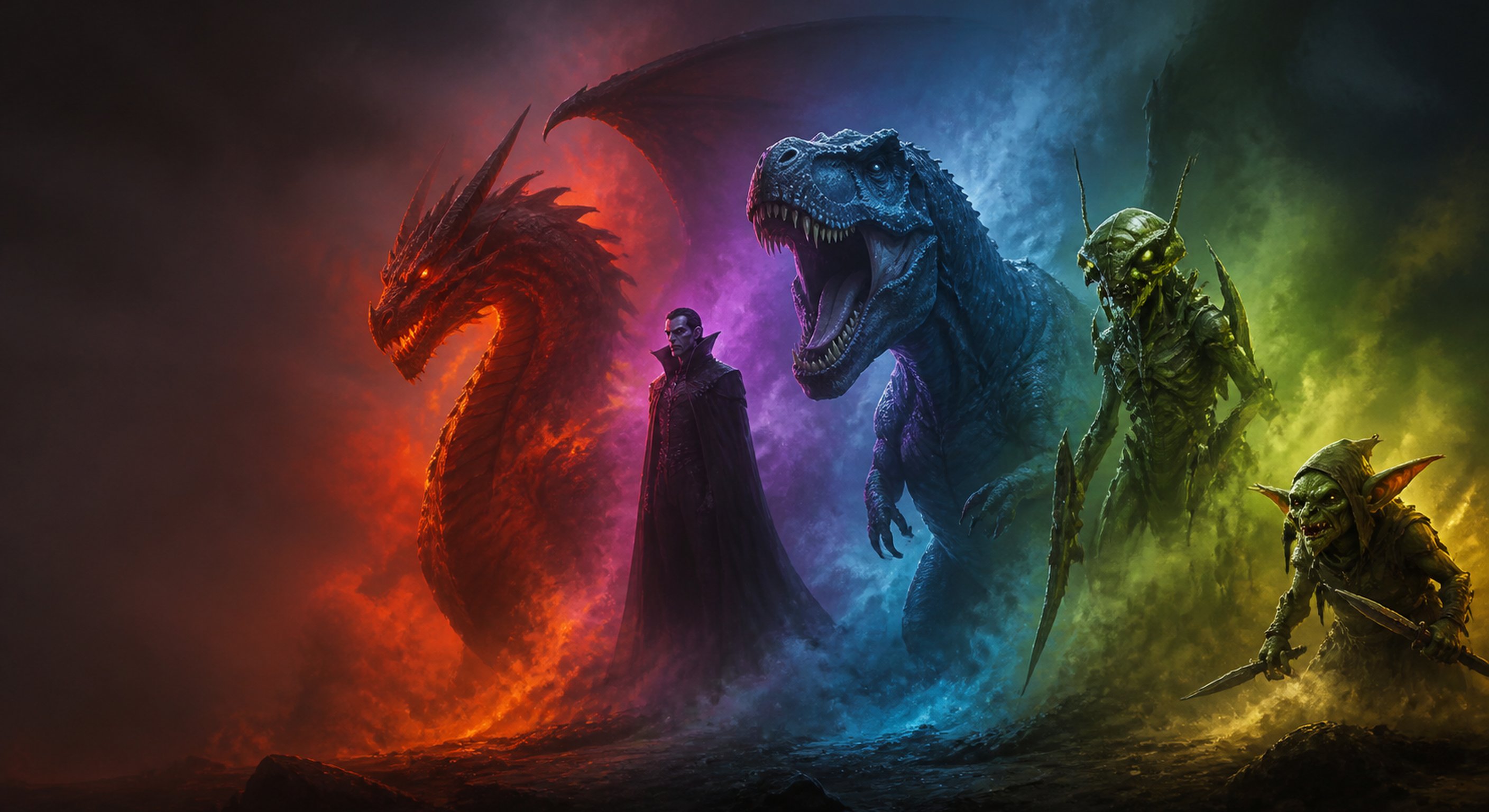
MTG tribal decks explained: what dragons, vampires, slivers, goblins and dinosaurs do, which commander to build around, and what each tribe costs to start.
A tribal deck picks one creature type and plays the cards that reward you for repeating it. The tribes differ enormously in how they win and what they cost: slivers share abilities across the whole board, goblins go wide and fast, dragons play a big expensive top end, vampires drain, and dinosaurs hit hard on arrival. Slivers and goblins are the cheapest routes in; dragons and angels the most expensive. Note that 'kindred' is now the official card type, 'typal' is the community term for the deck style, and 'tribal' is the older word for both.

Every MTG Universes Beyond crossover, from The Walking Dead to Avatar and Marvel: which collabs are Standard-legal, which are Commander-only, and which to buy.
Universes Beyond is Magic's licensed-crossover line, and the single fact that matters is legality. Sets released from 2025 onward — Final Fantasy, Spider-Man, Avatar, TMNT, Star Trek — are legal in every constructed format including Standard. Everything before that is split: Lord of the Rings and Assassin's Creed are Modern-legal, Warhammer 40,000 and Doctor Who and Fallout are Commander-only, and the Secret Lair drops are Eternal-only. The change was forward-facing, so the older sets did not move.
Which Magic: The Gathering cards are worth money? The era markers, Reserved List cards and treatments that find the valuable ones in a box of old cards fast.
In almost any collection, well over 95% of the cards are worth close to nothing and a handful carry nearly all the value. The fastest way to find that handful is to sort by era and treatment rather than by card: cards with no expansion symbol at all predate 1999, anything on the Reserved List holds value permanently, and serialized or Secret Lair treatments are where modern money sits. Everything else is bulk until a scanning app proves otherwise.

Buylists, TCGplayer, Mana Pool, eBay, your local game store or a Facebook group — the real fee math on each, and which one nets you the most for the collection you actually own.
There is no single best place to sell Magic cards — there is a best place for each tier of your collection. Bulk and low-value commons should go to a buylist or a local store because listing them costs more in labour than they return. Cards between roughly $5 and $150 net the most on TCGplayer or Mana Pool. High-end singles, graded cards and sealed product belong on eBay, where the buyer pool is widest. Splitting a collection across all three usually beats sending the whole thing to one place.
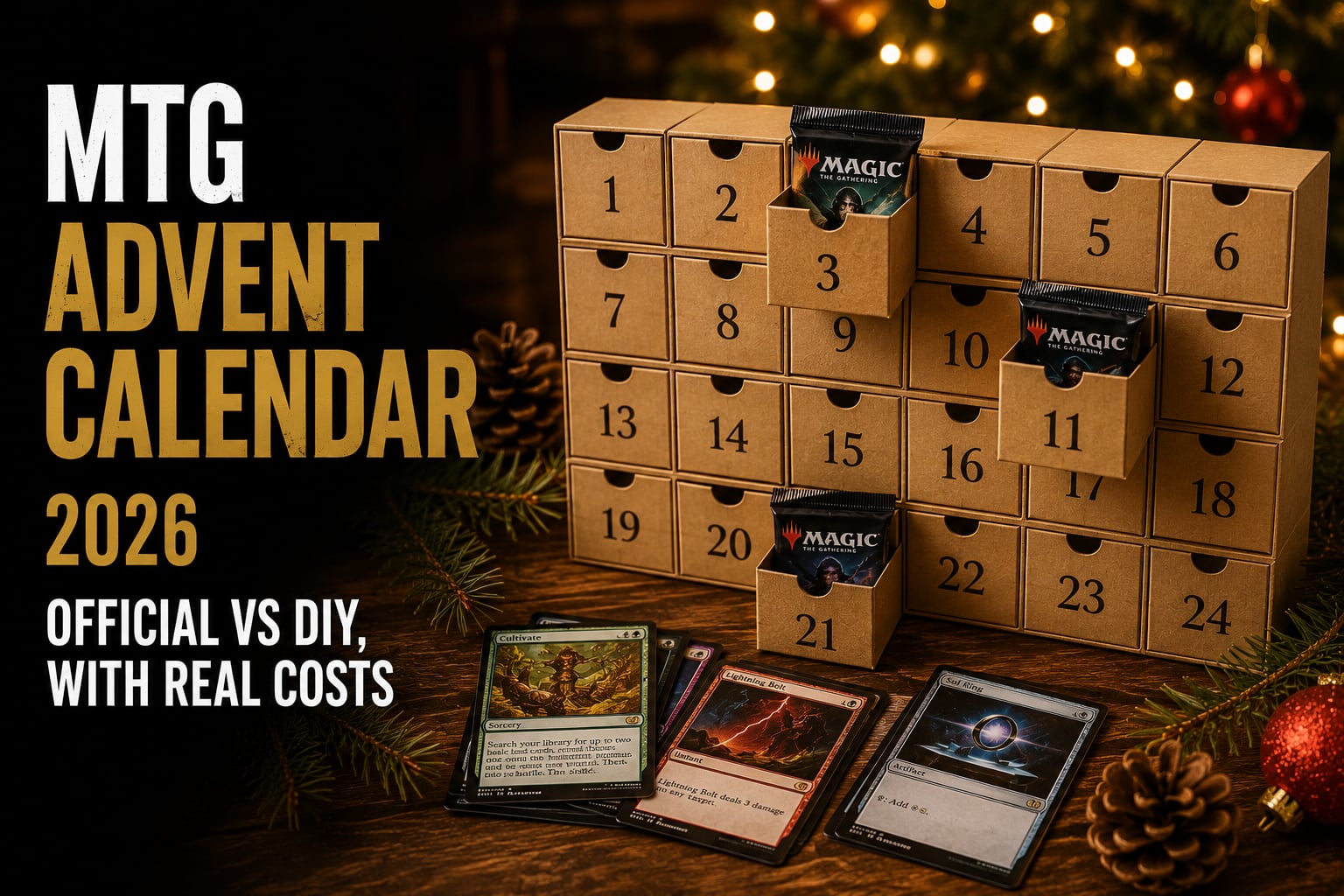
Is there an official Magic advent calendar? Yes, but it is not annual and the last one cost $199.99. Here is what it contained, and why building your own costs about half as much.
Wizards does make an official Magic advent calendar, the Secret Lair Countdown Kit, but it is not an annual product and, as of 8 October 2026, no 2026 version has been announced. The 2025 kit was $199.99 for 26 individually wrapped cards. Building your own from a 30-pack booster box costs about $107 in October 2026, roughly the same as 24 loose packs, and leaves you six spare.
Black Friday falls on 27 November 2026. Here is what every recent Magic booster box actually costs in October 2026, so you can tell a real discount from one measured against an inflated list price.
Black Friday 2026 is 27 November, Cyber Monday is 30 November. The most useful thing you can do beforehand is learn what each box actually trades for. Wizards does not publish an MSRP for booster boxes, so the struck-through 'was' price on a Black Friday listing is the retailer's own number. In October 2026 five of the eighteen boxes below trade for $120 or less, and a headline percentage off can still land above that.

A gift guide for people who don't play Magic. What Magic players actually want at every budget, what to avoid, and how to buy without knowing their deck.
If you don't play Magic, the safest gifts are the things every player uses regardless of what they collect: sleeves, a deck box, counters, and a binder. The riskiest gift is a specific card or a themed product tied to a set they may not care about. Under $15 buys something genuinely useful; around $50 buys a complete gift; a booster box is almost never the right call.
.jpg)
Hexproof in MTG stops only your opponents from targeting; shroud stops everyone, you included. What each does, the difference, and which is stronger.
Hexproof stops opponents from targeting the permanent, but you can still target it yourself. Shroud stops everyone — including you — from targeting it. Hexproof is the asymmetric, strictly-better version, which is exactly why Wizards has phased Shroud out of new design.
.jpg)
The legend rule in MTG: control two legends with the same name and you keep one, the rest go to the graveyard. How the legendary rule works, and its history.
The legend rule is a state-based action that fires whenever a player controls two or more legendary permanents with the same name — that player chooses one to keep, and the others go to the graveyard. The rule changed substantially in 2013 to be per-player rather than global, which is the version every modern player needs to understand.
.jpg)
Persist vs Undying in Magic: The Gathering — the exact rules, how +1/+1 and -1/-1 counters cancel, the real combo loops, and where each keyword is legal as of October 2026.
Persist returns a permanent that died with no -1/-1 counters, with a -1/-1 counter on it. Undying returns one that died with no +1/+1 counters, with a +1/+1 counter on it. +1/+1 and -1/-1 counters on the same permanent cancel as a state-based action, so giving a persisted creature a +1/+1 counter, or an undied creature a -1/-1 counter, resets it. That reset, plus effects like Melira, Sylvok Outcast or Solemnity that stop the counter being placed, is what powers persist and undying combos.
.jpg)
How does the stack work in Magic: The Gathering? A rules guide to MTG's stack: last-in, first-out resolution, priority, and what does and doesn't use the stack, with Comprehensive Rules citations.
The stack is the zone where spells and abilities wait to resolve. Each new spell or ability goes on top, players get a chance to respond, and the top item resolves first once all players pass in a row. Land drops, mana abilities, static abilities, state-based actions and turn-based actions don't use the stack, so they can't be responded to.
.jpg)
MTG state-based actions explained in full: every check in CR 704.5 and 704.6, when the game performs them, and how they decide when creatures die, planeswalkers fall, the legend rule applies and players lose.
State-based actions are automatic checks the game performs every time a player would receive priority. They don't use the stack and can't be responded to. They handle lethal damage, 0 toughness, 0 loyalty, the legend rule, losing at 0 life, and the +1/+1 and -1/-1 counter cancel, among others. CR 704.5 lists them all, and CR 704.6 adds a few for variants like Commander.
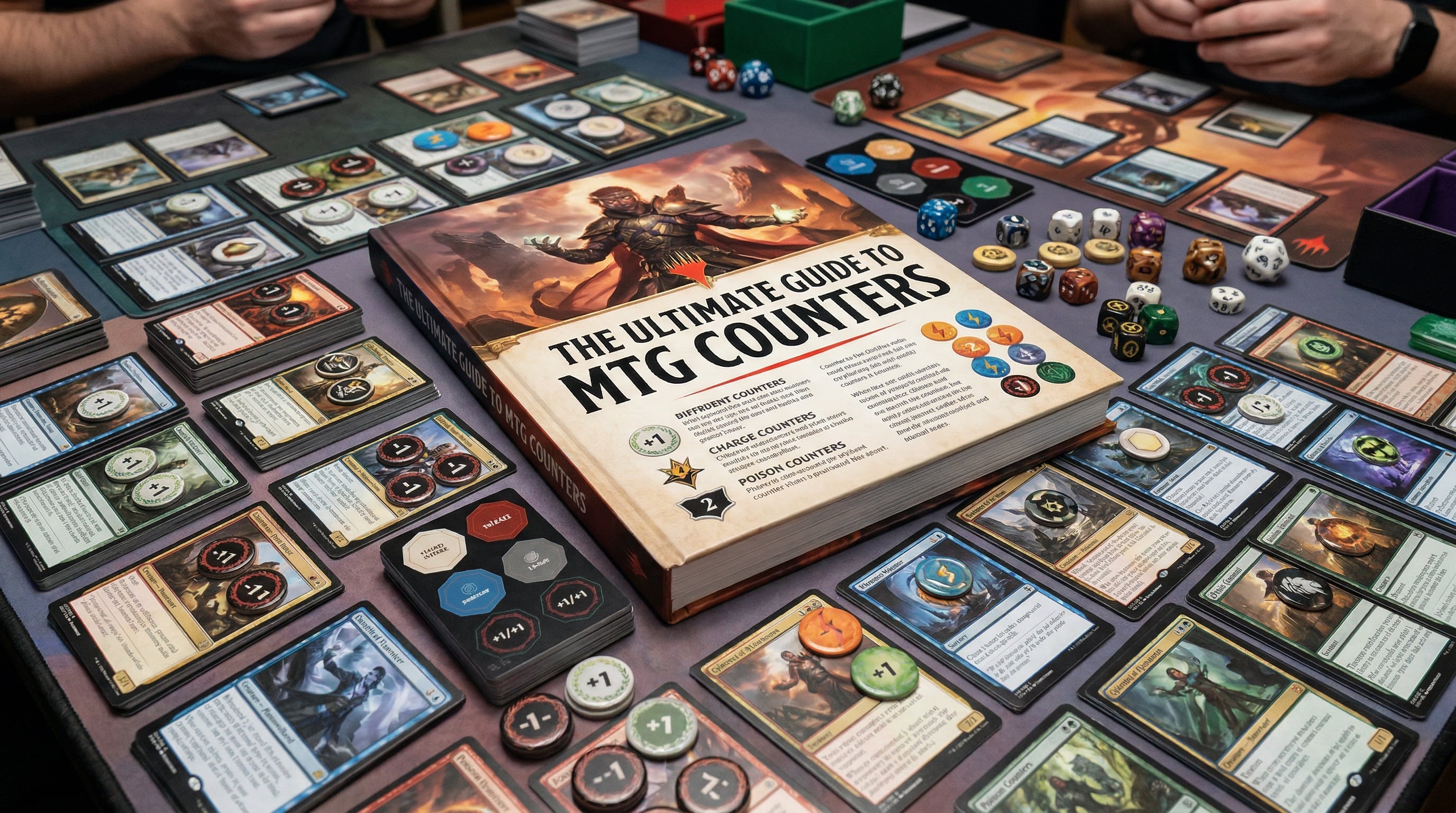
Every MTG counter type explained: +1/+1 and -1/-1, keyword, shield, finality and rad counters, plus the CR 122 rules and the Doubling Season ruling.
Counters are the mathematical backbone of Magic: The Gathering's board state. From the +1/+1 markers of 1993 Alpha to the Mutagen tokens of 2026's TMNT set, understanding how counters interact with state-based actions, replacement effects, and the unprecedented Universes Beyond Standard format is essential for competitive success.
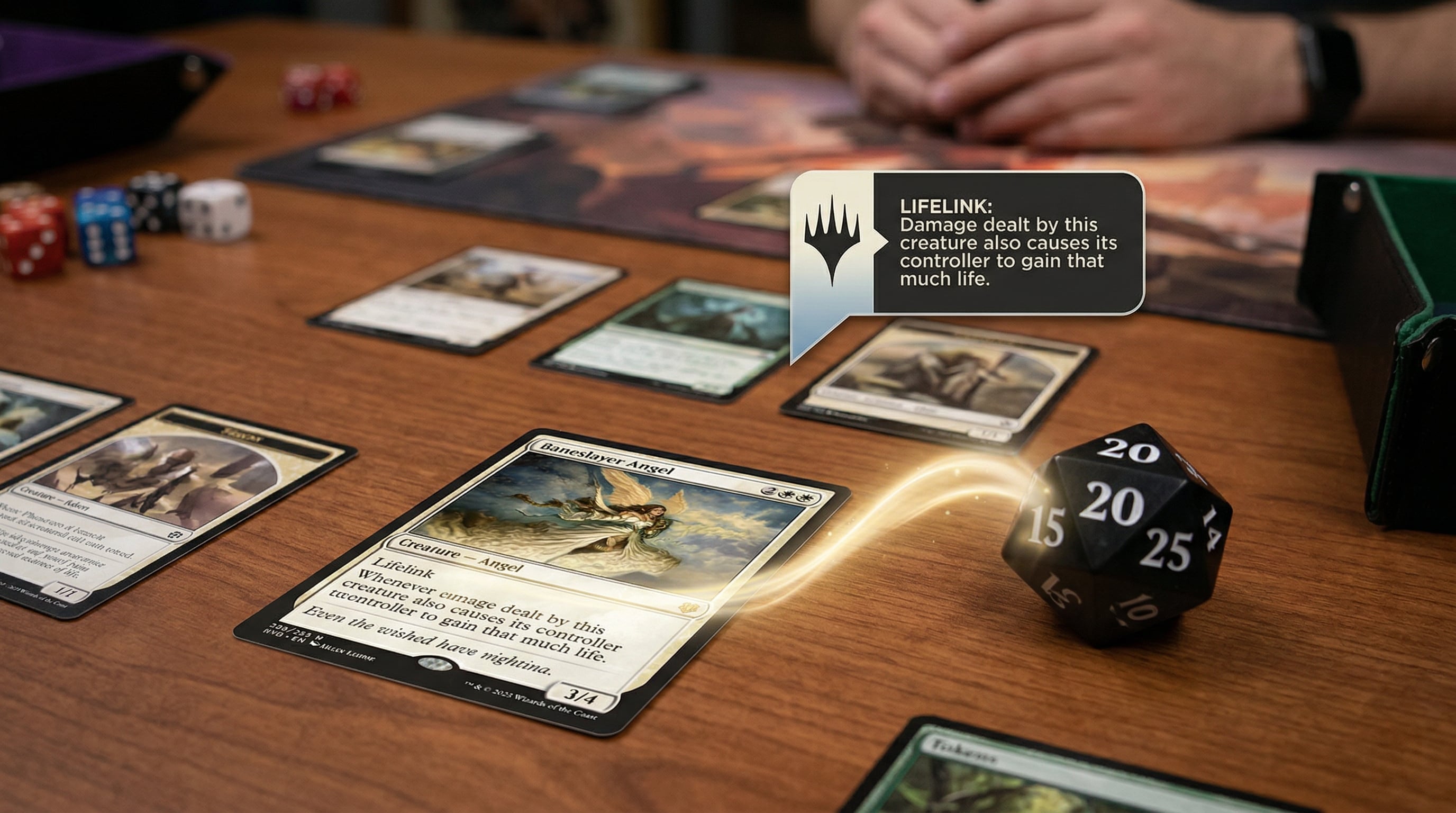
Lifelink in MTG: damage dealt by the source also gains its controller that much life, in combat or out. Full lifelink rules, common myths and the best cards.
Lifelink is a static ability that causes you to gain life simultaneously with dealing damage—and that single word 'simultaneously' changes everything. Understanding the M10 rules shift, the Spirit Link loophole, and modern 2026 metagame applications separates casual play from competitive dominance.
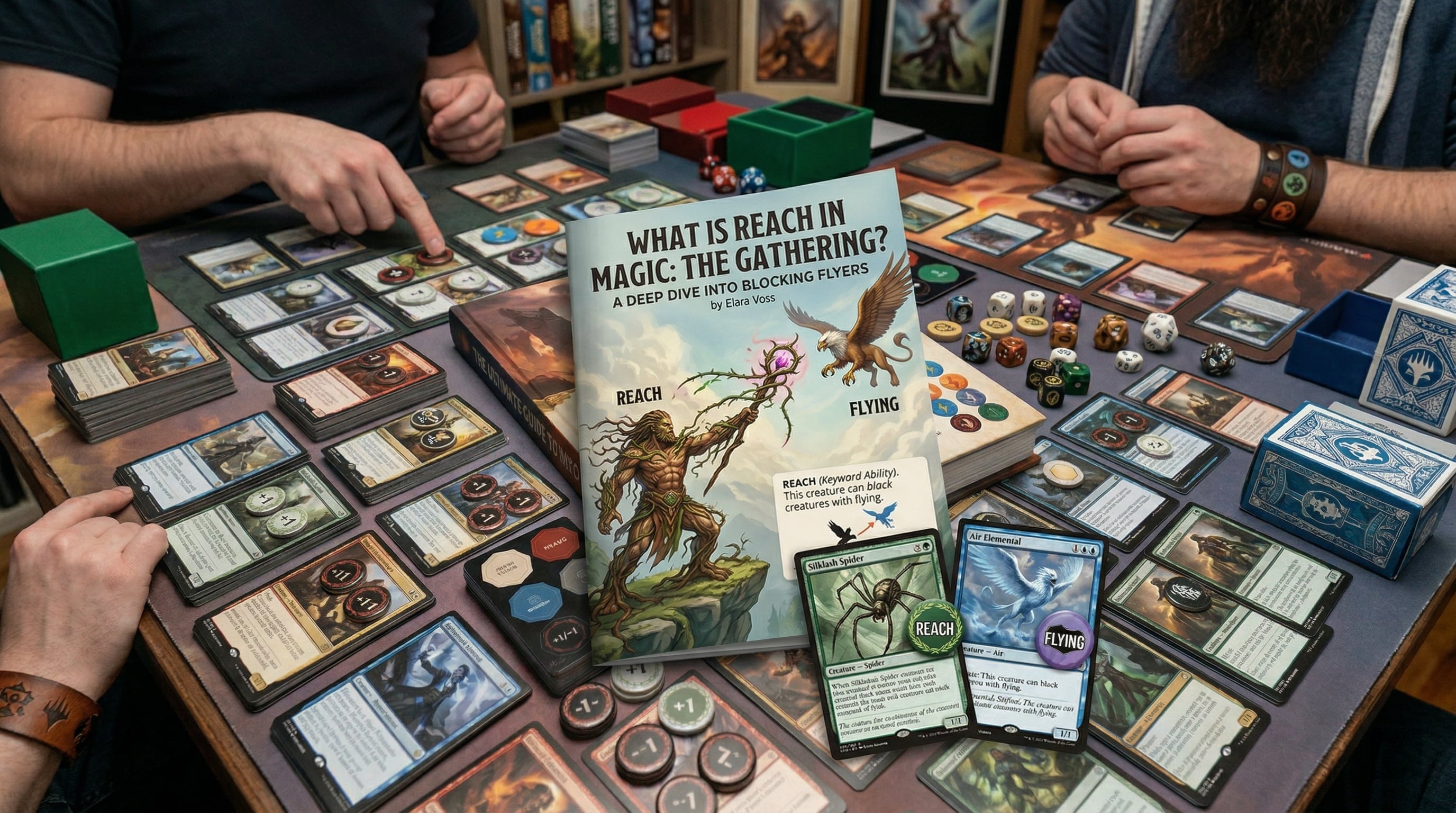
How reach works in MTG: what it can and can't block, where the keyword came from, why it is easy to miss on the table, and the best reach creatures, as of October 2026.
Reach is a static, purely defensive keyword: a creature with flying can't be blocked except by creatures with flying and/or reach. It gives no evasion when attacking, does nothing against horsemanship, shadow or menace, and multiple instances are redundant. The ability dates back to Giant Spider in Alpha and became a keyword in Future Sight in 2007. Green has by far the most reach creatures.
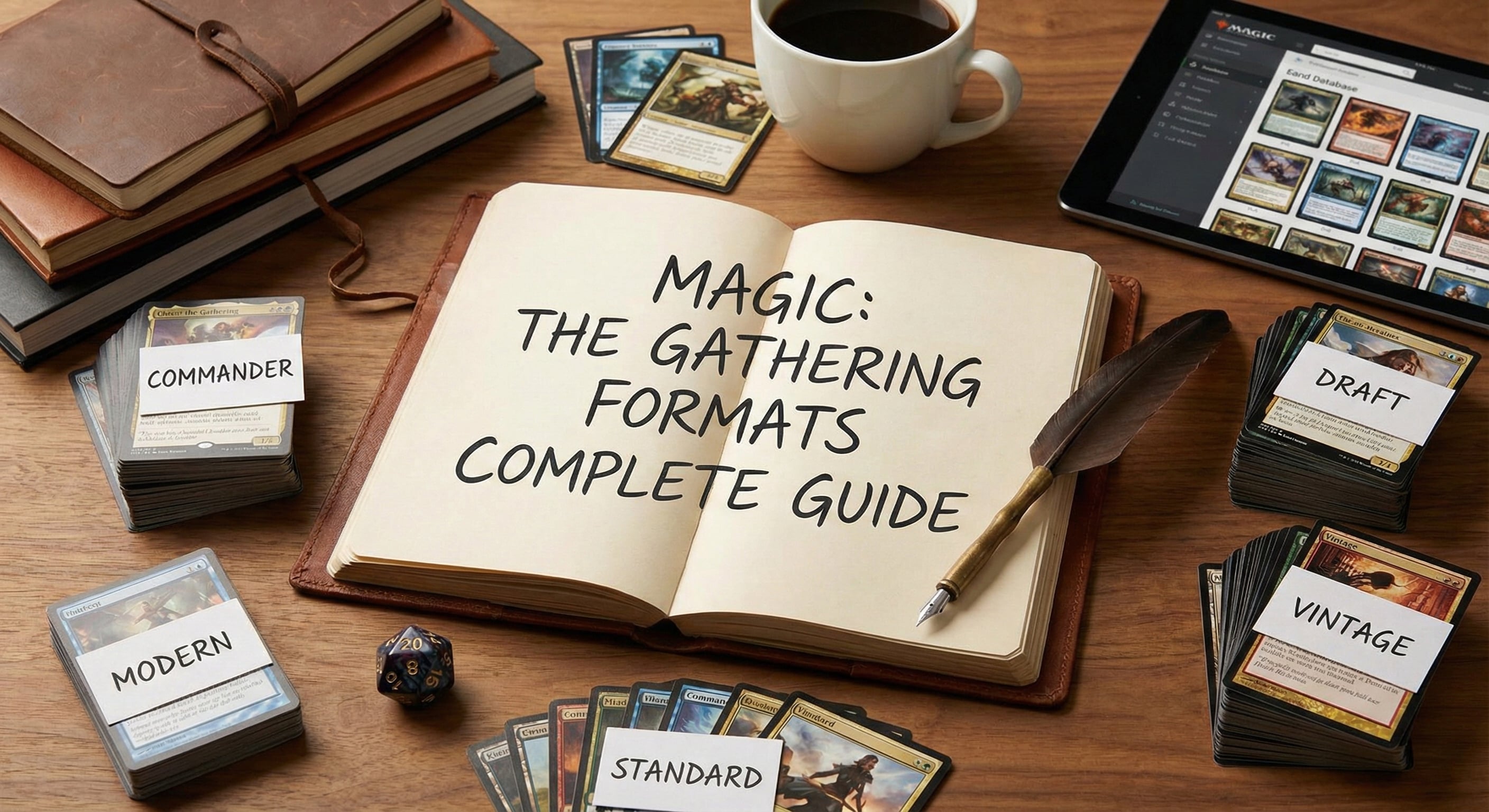
Every MTG format explained: Standard, Pioneer, Modern, Legacy, Vintage, Commander, Pauper, Arena formats and more. How each Magic format works in 2026.
The 2026 MTG ecosystem has undergone its most radical transformation in three decades. From the 'Forever Standard' era to the Commander Bracket System, Timeless digital Vintage, and seven major set releases, this comprehensive guide covers every format, metagame, and competitive structure.
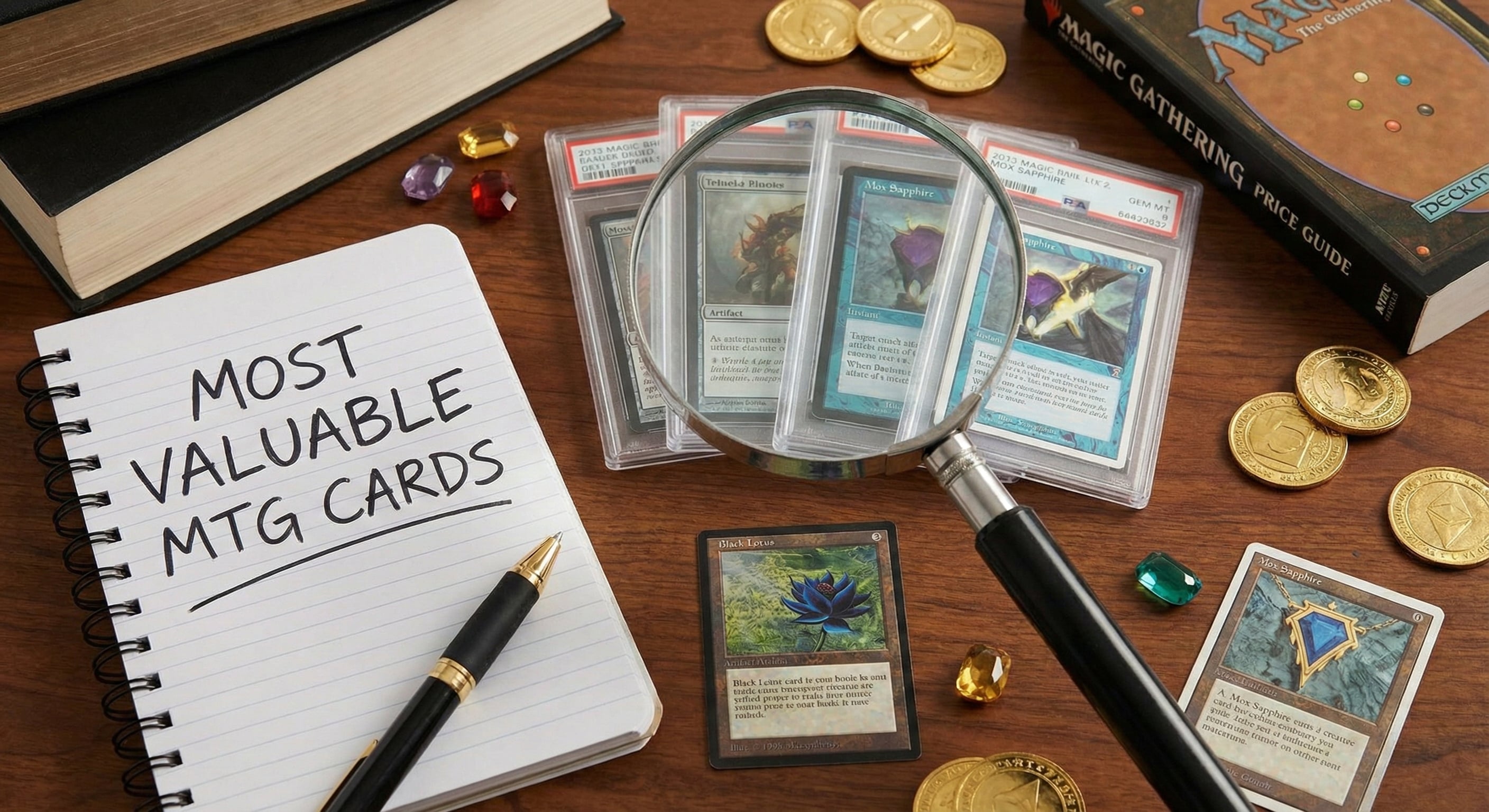
The most expensive MTG card ever sold is a $3M Alpha Black Lotus. The most expensive and rarest Magic cards in 2026: The One Ring, the 1-of-1s, the Power Nine.
The MTG market has evolved into a dual-track economy: Vintage cards like the $3 million Alpha Black Lotus represent stable 'blue chip' assets, while modern serialized cards like The One Ring ($2M+) operate with cryptocurrency-like volatility. This definitive guide covers every tier of value.
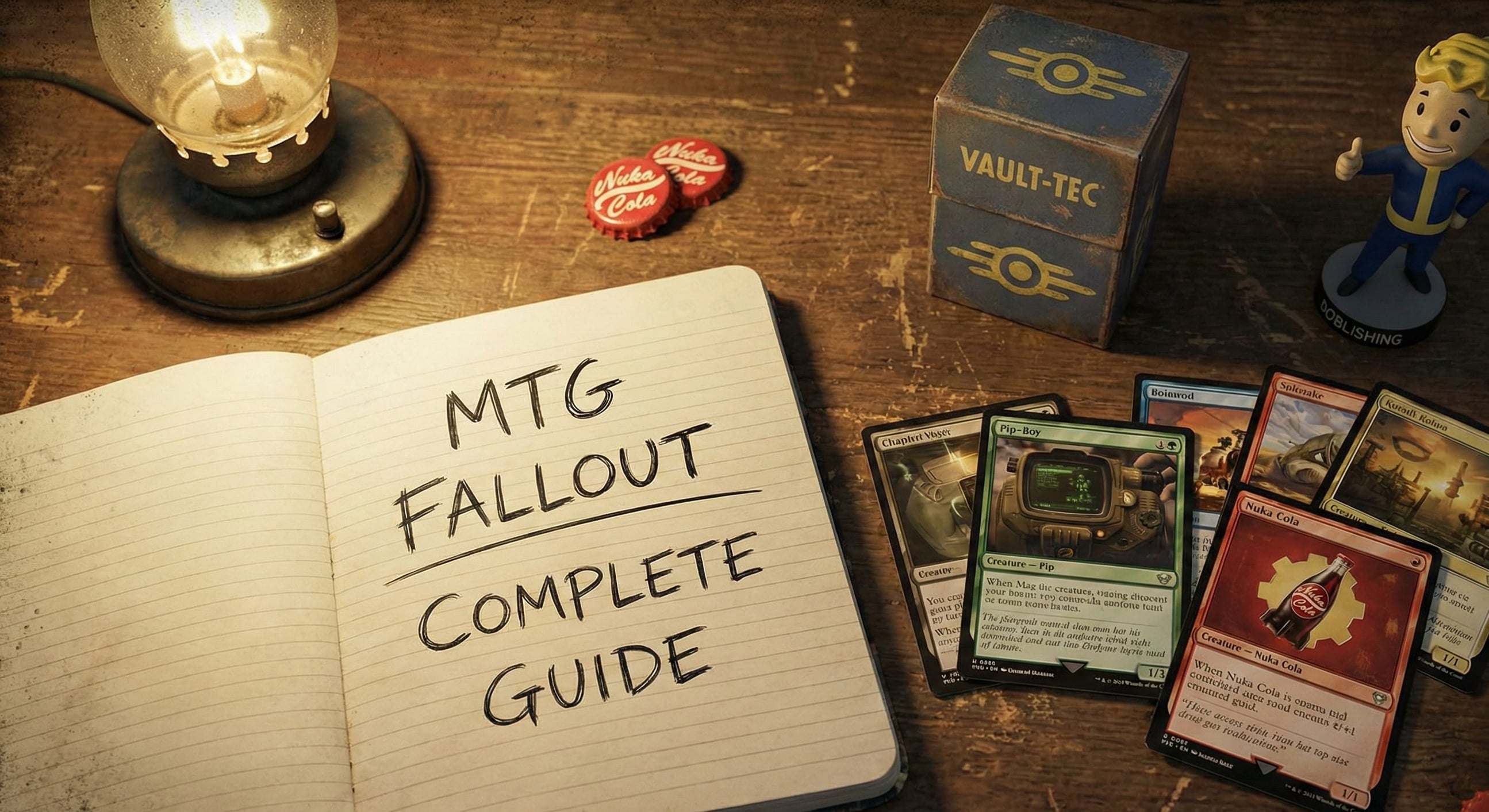
Complete guide to MTG Fallout Commander set. Explore all four preconstructed decks, Rad counters, Junk tokens, serialized Bobbleheads, upgrade strategies, and financial analysis.
The Fallout Commander set (March 2024) introduced rad counters and Junk tokens across four preconstructed decks, with The Wise Mothman and Caesar, Legion's Emperor as popular commanders. This guide covers all four decks, upgrade strategies, and the serialized Bobblehead collector market as of October 2026.
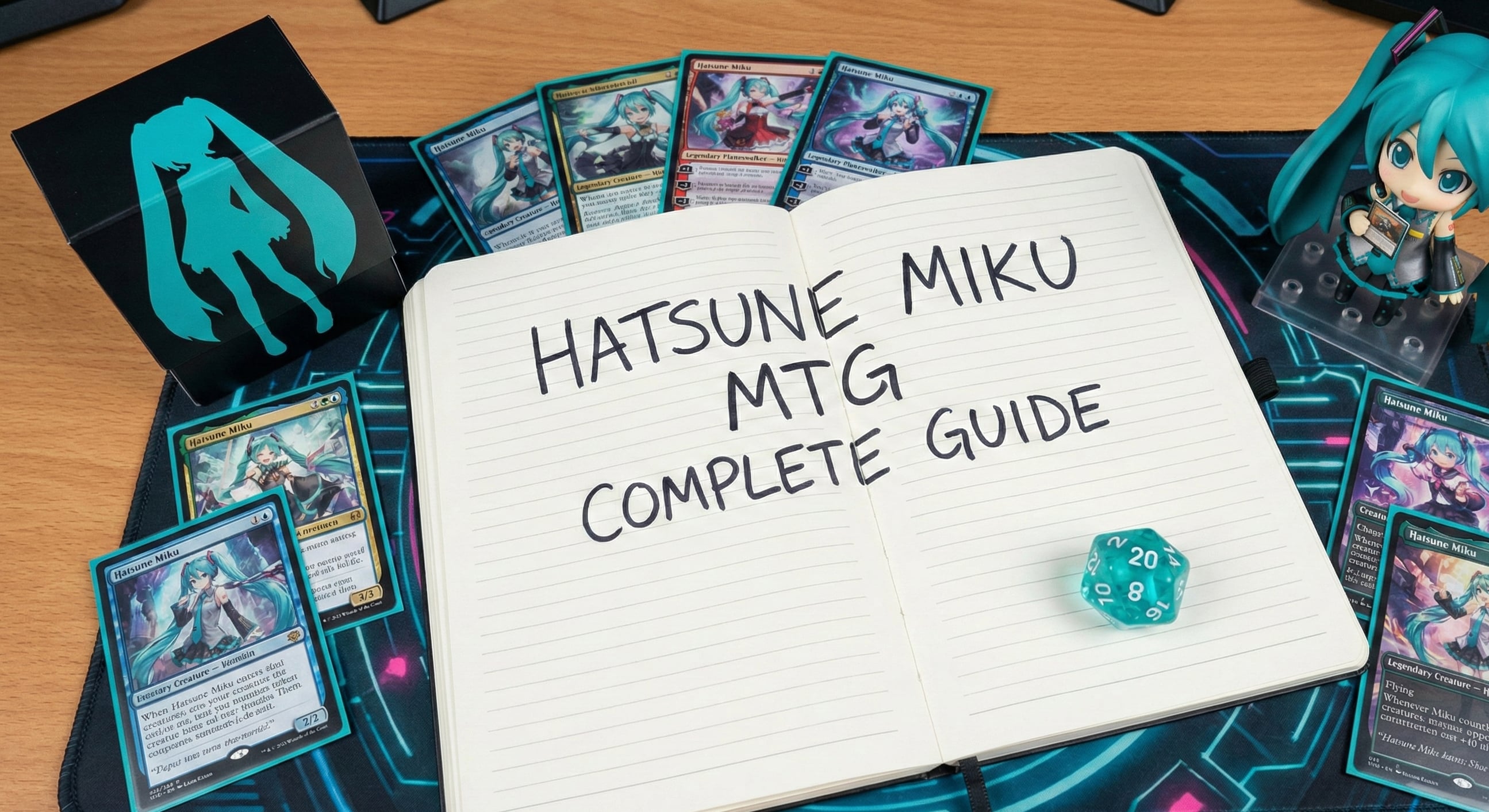
The Hatsune Miku Secret Lair: all four seasonal Miku MTG drops, the Encore Electromancer lottery card, what each card reprints, prices and deck ideas.
The Secret Lair x Hatsune Miku collaboration spanned a full year with four seasonal drops, generating secondary market premiums exceeding 5,000% for chase cards. This definitive guide covers every drop, the Encore Electromancer lottery, and the shift toward aesthetic tribalism in deck building.

The best MTG card sleeves in 2026: Dragon Shield, Ultimate Guard Katana, Ultra Pro Eclipse and more, ranked. Sizes, double-sleeving and tournament rules.
The Ultimate Guard Katana remains the gold standard for competitive shuffle feel, while Dragon Shield Matte offers unmatched durability. Gamegenic Prime provides exceptional value, making it the best budget option for serious players.
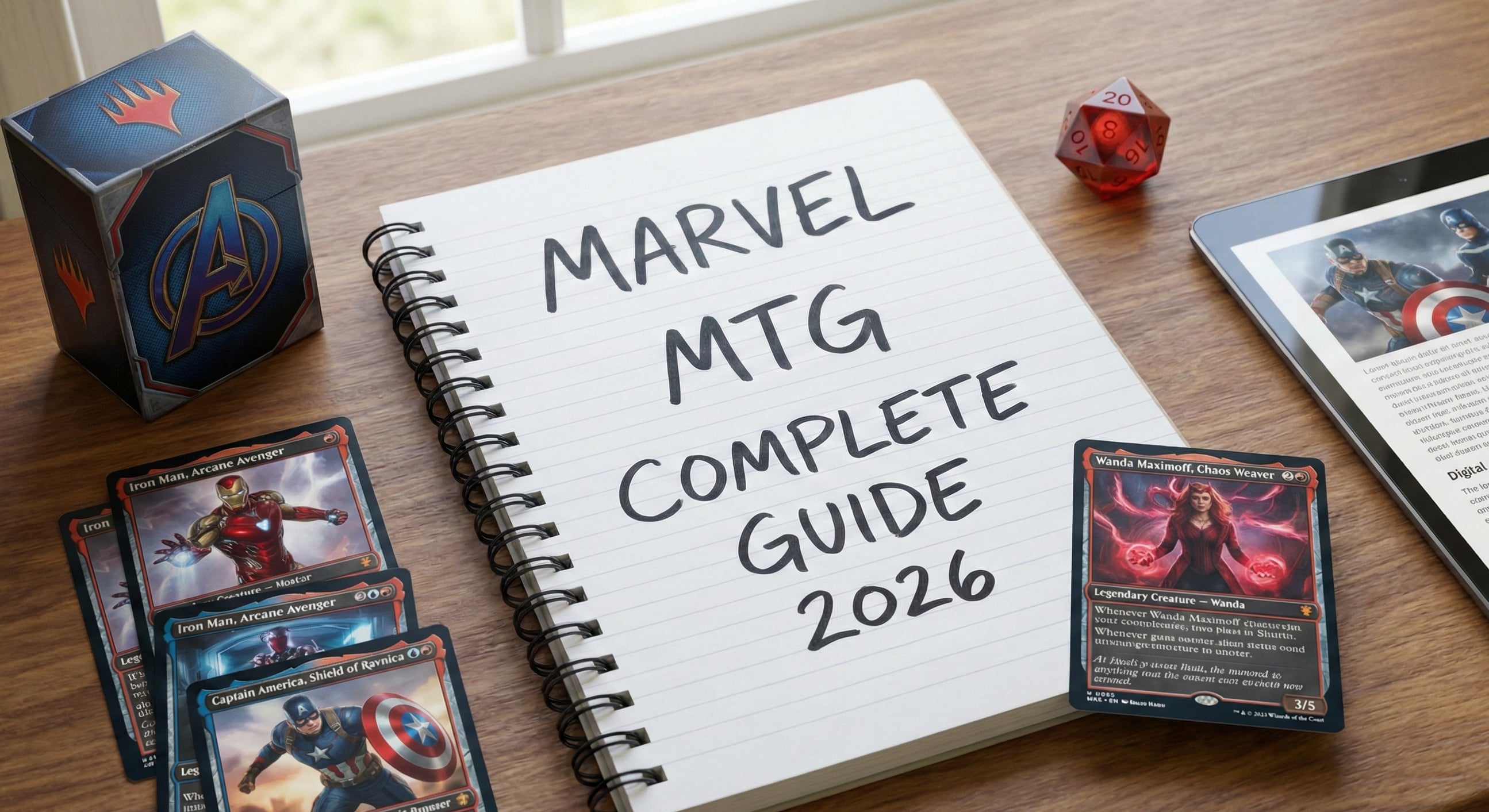
Complete guide to Marvel Magic: The Gathering crossover sets. Explore Secret Lair drops, Spider-Man set mechanics, Marvel Super Heroes 2026 previews, Soul Stone chase cards, and Commander deck strategies.
The Avengers have assembled on the Stack. From the Secret Lair drops to the Spider-Man set's Soul Stone phenomenon and the upcoming Marvel Super Heroes expansion, this is the definitive guide to the most ambitious crossover in Magic's history.
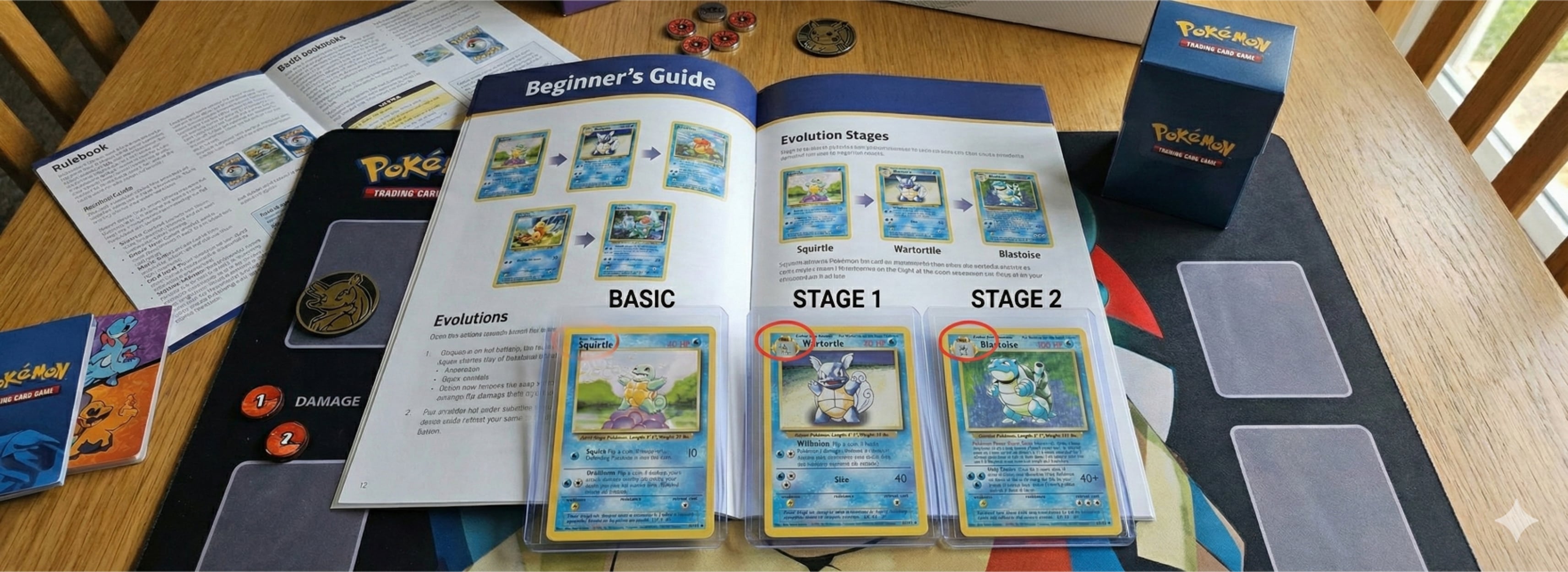
A Pokémon TCG beginner guide for October 2026: how a game works, how Mega Evolution ex works, what the April 2026 rotation changed, and which beginner products are worth buying now.
To start the Pokémon TCG in October 2026, learn the rules for free on Pokémon TCG Live, then pick a product that matches your goal. Battle Academy (latest English edition 2024) teaches the game with ready-made decks. A Build & Battle Box gets you into a prerelease. For local tournaments, the Mega Lucario ex League Battle Deck (May 2026, $29.99) is a current, competitive starting point. Standard now uses only H, I and J regulation marks, since the G cards rotated out on 10 April 2026.
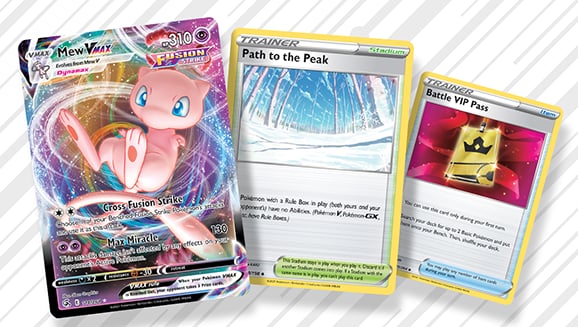
The 2026 Pokémon TCG Standard rotation explained: G regulation mark cards left Standard on 10 April 2026. Which cards rotated, which survived through reprints, and what replaced them.
The 2026 Standard rotation took effect on 10 April 2026 (26 March 2026 on Pokémon TCG Live). Every card with the G regulation mark left Standard, which removed Arven, Nest Ball, Iono, Super Rod, Earthen Vessel and Professor's Research. Boss's Orders, Ultra Ball and Rare Candy survived through I-mark reprints in Mega Evolution, Judge came back with a J mark in Perfect Order, and Poké Pad arrived in Ascended Heroes. Standard is now H, I and J.
Pokemon TCG Standard vs Expanded compared for 2026: legal regulation marks after the April 2026 rotation, the Expanded ban list, Mega Evolution old and new, and how Pokémon TCG Live handles Expanded.
Since 10 April 2026, Standard uses cards with the H, I and J regulation marks. Expanded uses every card from Black & White (2011) onward, minus a ban list of 27 entries on pokemon.com. Standard rotates every year; Expanded doesn't rotate and is balanced only through bans.
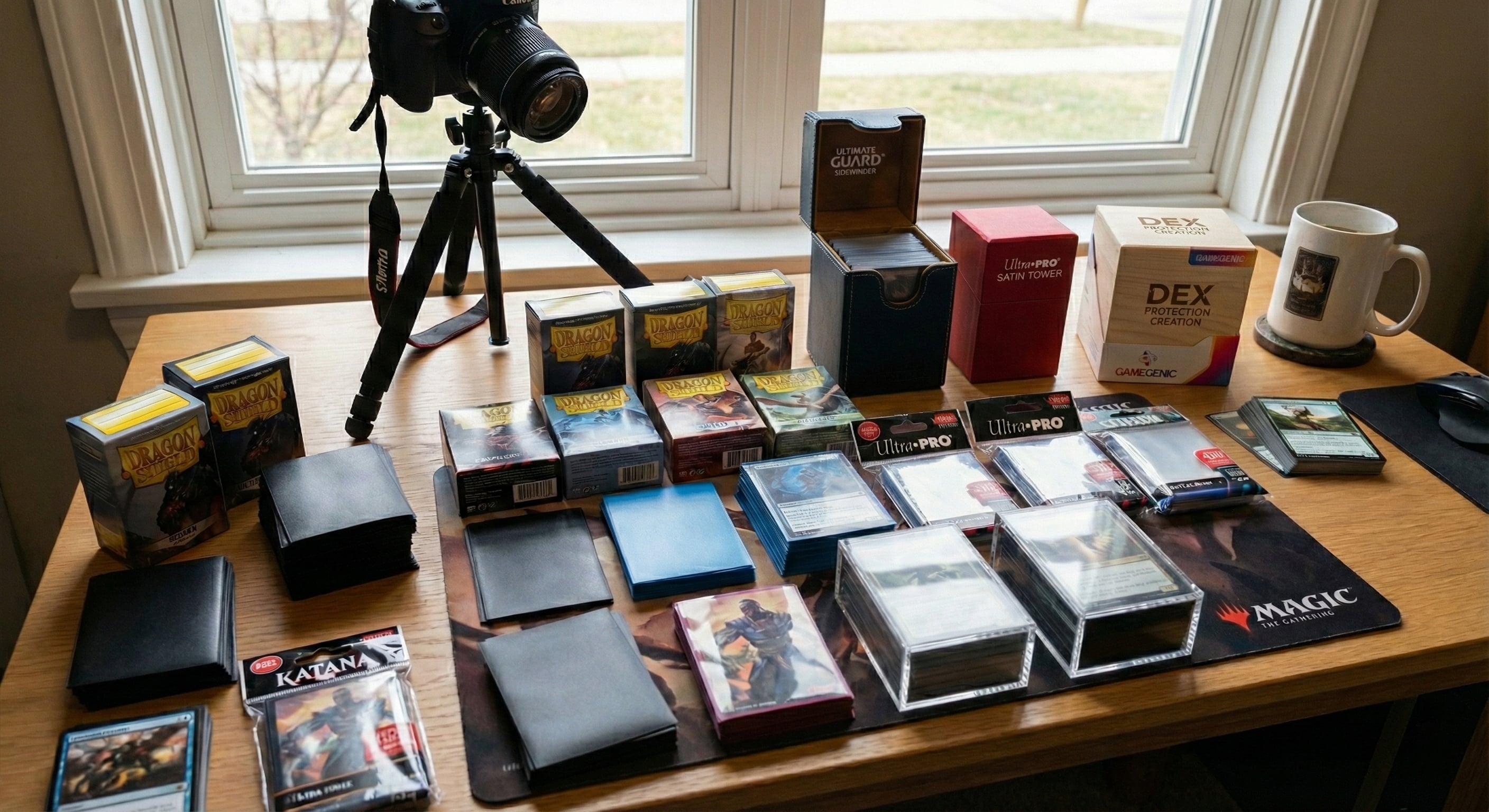
The best MTG deck boxes for Commander: Gamegenic Bastion XL, Ultimate Guard Boulder, Ultra Pro Satin Tower and more, compared on capacity, build and price.
The Gamegenic Bastion 100+ XL has emerged as the new standard for Commander decks, offering the perfect balance between capacity and compactness. Ultra Pro Satin Tower remains indestructible but suffers from long-term stickiness, while Ultimate Guard Boulder 100+ fails to accommodate modern sealable inner sleeves.
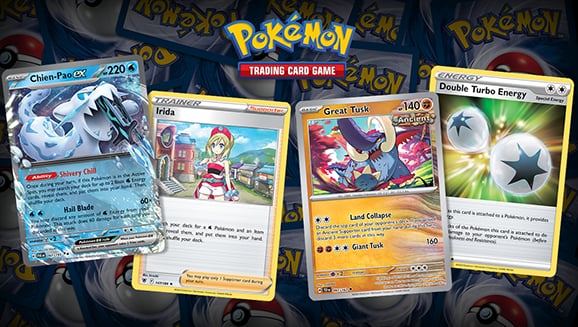
Learn how to build a Pokemon TCG deck for Standard as of October 2026: deck ratios, Mega Evolution ex rules, draw engines, Trainer staples, and three real Regional decklists checked card by card.
A competitive Pokemon TCG deck is 60 cards, with no more than 4 copies of any card except Basic Energy and only 1 ACE SPEC. As of October 2026, Standard allows cards with the H, I and J regulation marks; the G cards (Iono, Arven, Earthen Vessel, Counter Catcher, Nest Ball, Pidgeot ex) rotated out on 10 April 2026. Top lists run roughly 16-20 Pokemon, 32-36 Trainers and 7-11 Energy, built around Lillie's Determination, Boss's Orders, Ultra Ball and either Buddy-Buddy Poffin or a type-specific search card.
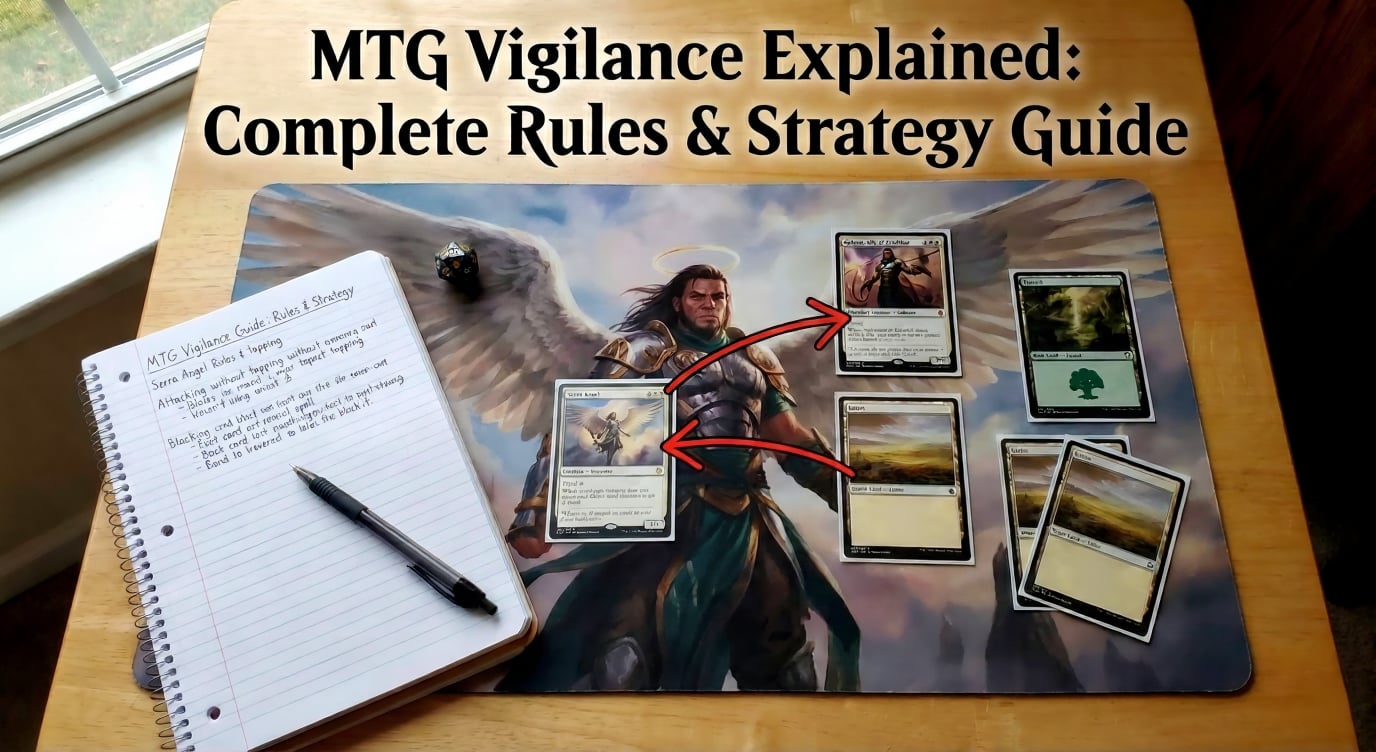
Vigilance in MTG means attacking doesn't tap the creature, so it can attack and still block or use tap abilities. Full vigilance rules and how it plays.
Vigilance has evolved from passive combat utility to a critical economic resource in 2025. Understanding its rules interactions, combat phase mechanics, and strategic applications is essential for competitive play in Foundations and Spider-Man formats.
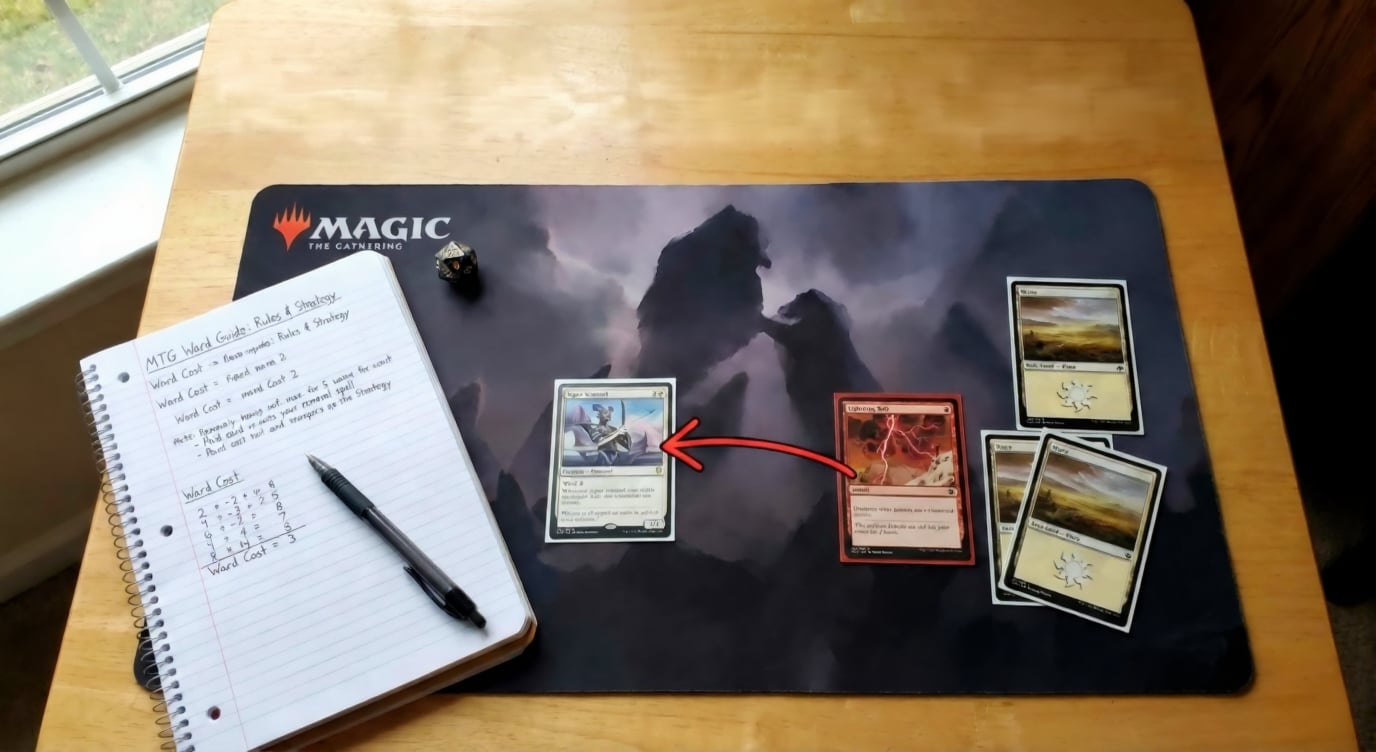
What does ward do in MTG? It counters an opponent's spell or ability that targets it unless they pay the ward cost. Full ward rules and how to beat it.
Ward has replaced Hexproof as Magic's primary protection mechanic, introducing transactional costs that create interactive gameplay. Understanding Ward's triggered ability mechanics and strategic implications is essential for competitive play in 2026.
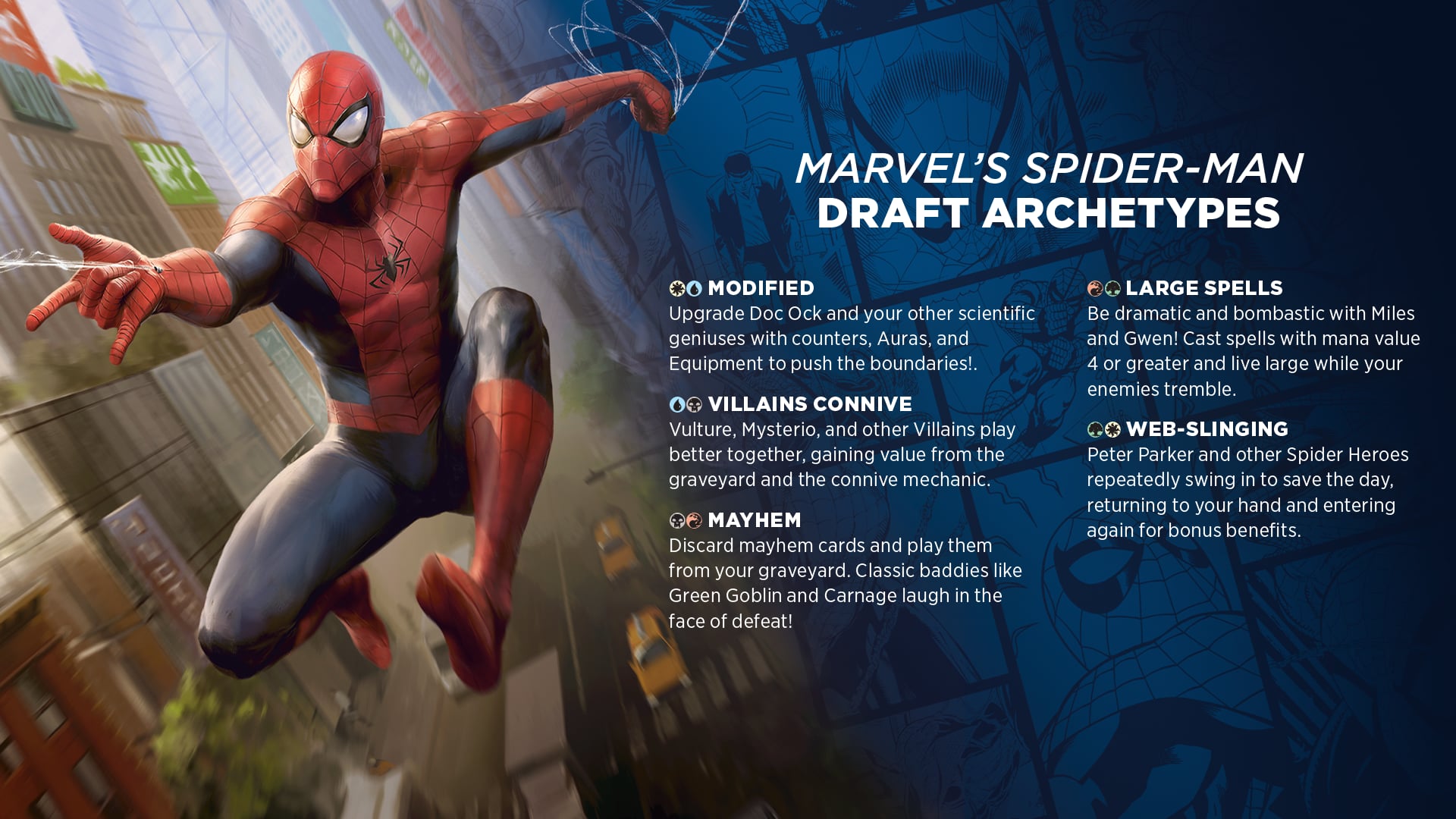
How web-slinging works in MTG: the reminder text, rule 702.188, all 10 web-slinging cards, timing, the mana-creature trick, and the best creatures to return.
Web-slinging is an alternative cost from Marvel's Spider-Man (September 2025): you cast the spell for a cheaper cost by also returning a tapped creature you control to its owner's hand. As of October 2026, ten cards have it. It works best when the creature you return has a good enters-the-battlefield ability, so you get to use it again.
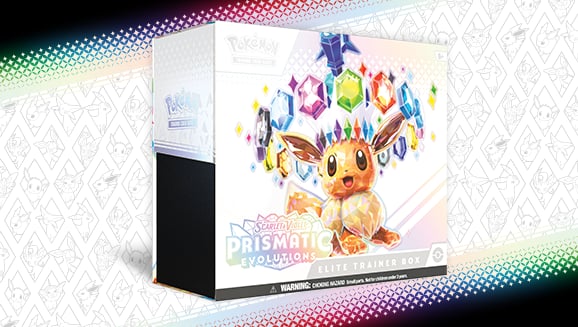
Pokemon TCG Prismatic Evolutions chase cards ranked by October 2026 TCGplayer prices: the Eeveelution Special Illustration Rares, Master Ball pattern cards, and which cards are still Standard legal.
Prismatic Evolutions (SV8.5, released 17 January 2025) is built around nine Eevee and Eeveelution Special Illustration Rares. In October 2026 Umbreon ex SIR is far ahead of everything else at about $1,300 on TCGplayer, followed by Sylveon ex SIR at about $473. The Master Ball pattern cards are much cheaper than the SIRs: the most expensive, Umbreon, is about $60.
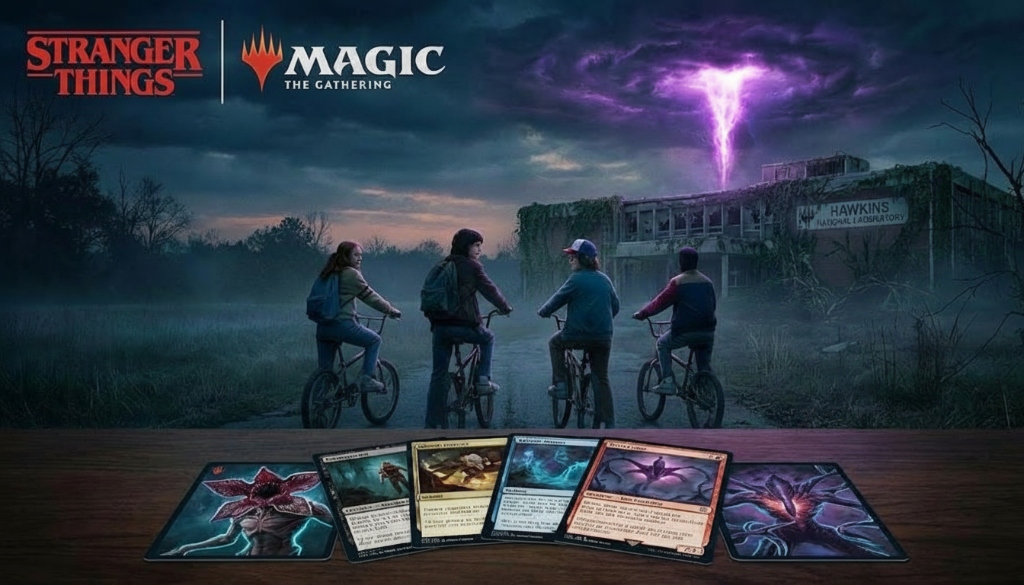
A guide to the Secret Lair x Stranger Things drop: what every card does, how Friends Forever works, the best commander pairs, and October 2026 prices.
A flavourful 2021 Secret Lair with seven 'Friends forever' commanders, one mythic (the Mind Flayer) and a double-faced land. The Stranger Things printings cost about $5 to $26 each in October 2026; the mechanically identical Universes Within versions cost well under $2.
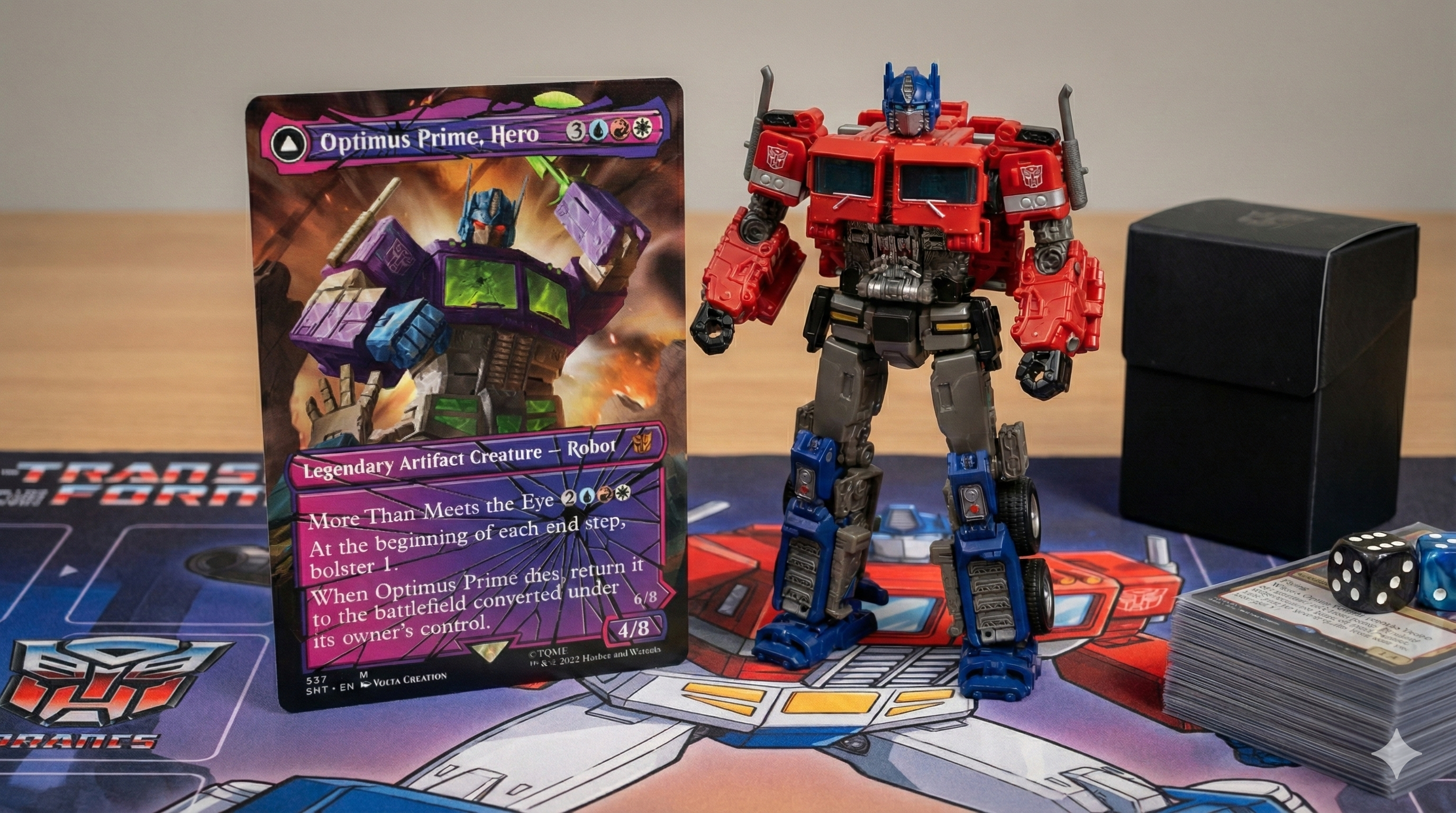
Complete guide to the Transformers MTG cards from The Brothers' War: all 15 characters and their 14 Shattered Glass variants, how convert and living metal work, Commander builds, pull rates and October 2026 prices.
The Transformers series (set code BOT) is 15 legendary double-faced cards that came in The Brothers' War Set and Collector Boosters in November 2022, plus 14 Shattered Glass variants. They're legal in Commander, Legacy and Vintage, not Standard, Pioneer or Modern. Most regular copies cost a few dollars; Optimus Prime, Hero is the priciest at about $8 on Scryfall in October 2026.

How to work out what your Magic: The Gathering cards are worth as of October 2026: the apps that price a binder, why the same card can sell for $10 or $2,000, and the traps that cost sellers money.
A Magic card's value depends on the exact printing, not just the name. Treatments like serialized, neon ink and galaxy foil can turn a $10 card into a four-figure one. Price with a scanner app, confirm the printing on Scryfall or TCGplayer, and value your collection at what you can actually sell it for, not at retail.
The best Magic: The Gathering starter decks as of October 2026: the Foundations, Avatar and Marvel Beginner Boxes, the Final Fantasy Starter Kit, and the new Foundations Commander decks.
'Starter deck' now means three different products. To learn at home, buy a Beginner Box: the Marvel Super Heroes (about $19) and Avatar (about $27) boxes are the cheapest in October 2026, and the Foundations box (about $54) has the cards that stay in Standard longest. For a cheap two-player duel with Arena codes, the Final Fantasy Starter Kit is about $12. To play at a store, skip all of these and buy a Foundations Commander deck.
All 13 MTG Commander decks from 2025, ranked: Tarkir, Final Fantasy, Edge of Eternities and Aetherdrift precons, with October 2026 prices and what's in each.
Wizards released 13 Commander precons in 2025, across Aetherdrift, Tarkir: Dragonstorm, Final Fantasy and Edge of Eternities. The best all-round deck is Tarkir's Sultai Arisen (Teval), which also has the strongest reprints and trades around $93. Temur Roar is the dragon deck and the most fun to open. Scions & Spellcraft is the strongest Final Fantasy deck. For a cheap start, Revival Trance (about $34) and Living Energy (about $29) cost the least.
Learn how to build your first Magic: The Gathering deck with our complete beginner's guide, updated for October 2026. Step-by-step instructions, deck building rules, mana curve basics, and budget-friendly strategies for Standard and Commander formats.
Building your first MTG deck doesn't have to be overwhelming. Start with Foundations cards (Standard-legal until at least 2029), follow the Rule of 9, and build a 60-card deck with proper mana curve. This guide walks you through every step from choosing a strategy to testing your deck.
Want to start playing Magic? Our guide to Magic: The Gathering Foundations explains why this set, Standard-legal until at least 2029, is still a strong entry point for new players in 2026.
Magic: The Gathering Foundations is still the safest set for new players to buy into, with cards legal in Standard until at least 2029. This guide explains what's in each Foundations product, what it costs in October 2026, and which one to buy.

Avatar: The Last Airbender MTG, released 21 Nov 2025: the four bending mechanics, Avatar Aang and the best commanders, the Secret Lairs, and what to buy.
The Avatar: The Last Airbender MTG set delivers innovative Bending mechanics that perfectly capture each element's playstyle, making it one of the best Universes Beyond collaborations yet.
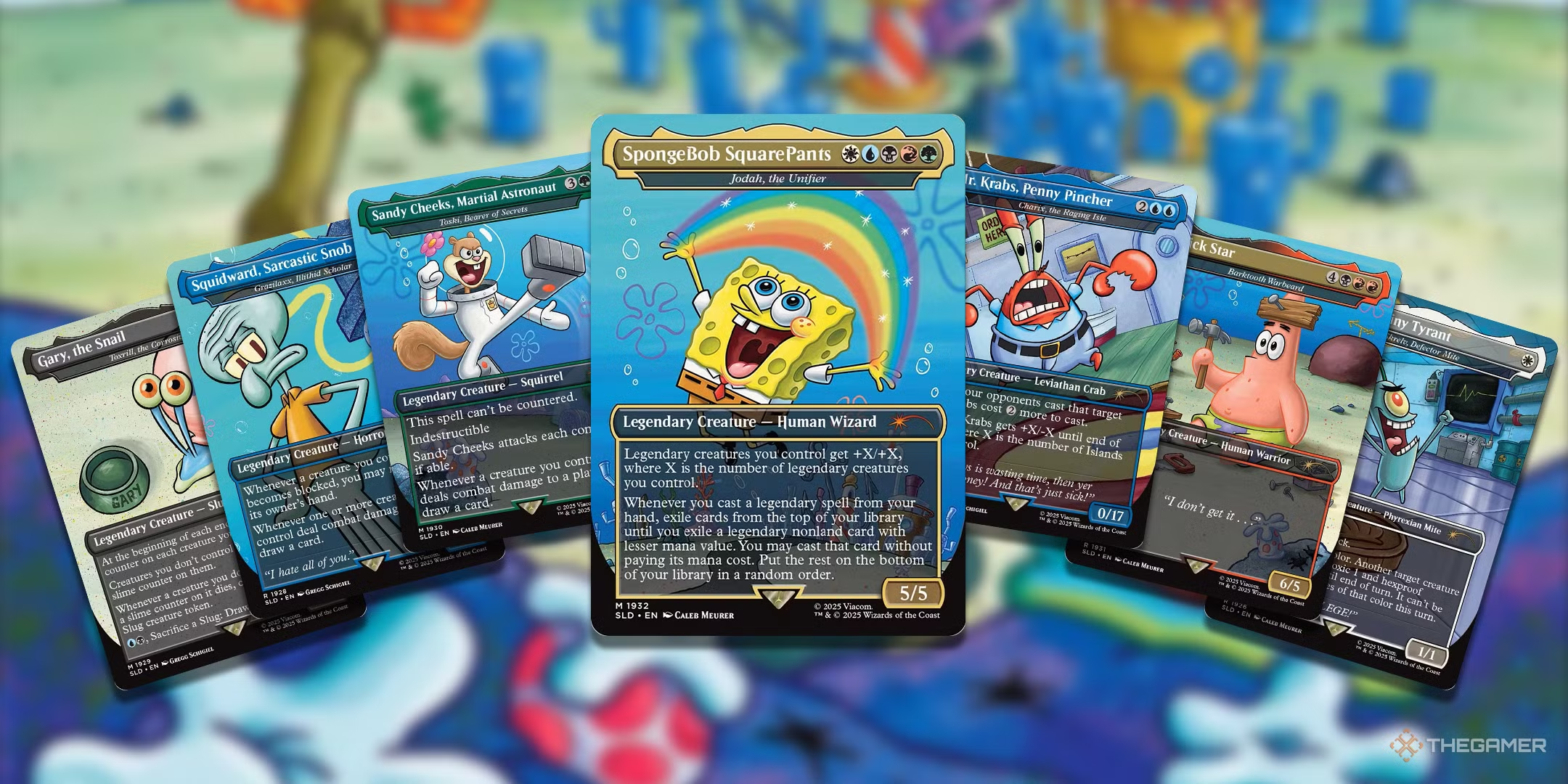
SpongeBob MTG is real: a Secret Lair from March 2025. Every SpongeBob Magic: The Gathering card, what each reprints, current prices and Commander builds.
The SpongeBob Magic: The Gathering Secret Lair was released in March 2025 as part of the 'Our Boss Is on Vacation' Superdrop. SpongeBob (Jodah, the Unifier) is a top-tier Commander, making this one of the funniest and most playable crossovers WotC has ever done.
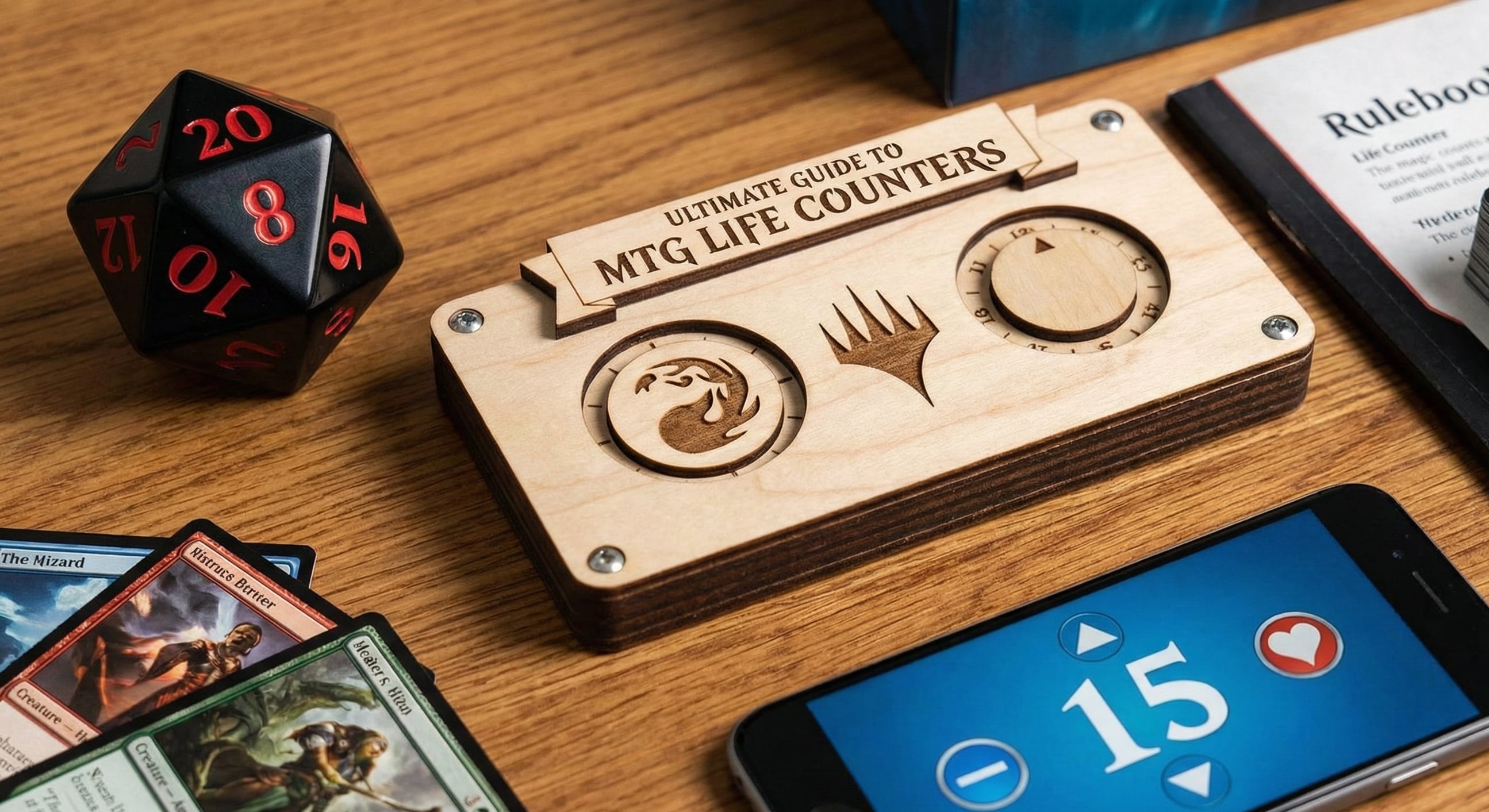
The best MTG life counter for every format: spindown dice, magic life counter apps, and pen and paper, plus tracking Commander damage and poison.
Life tracking in Magic requires different solutions for different formats—from spindown dice for casual play to dedicated apps for Commander and pen-and-paper for competitive tournaments.
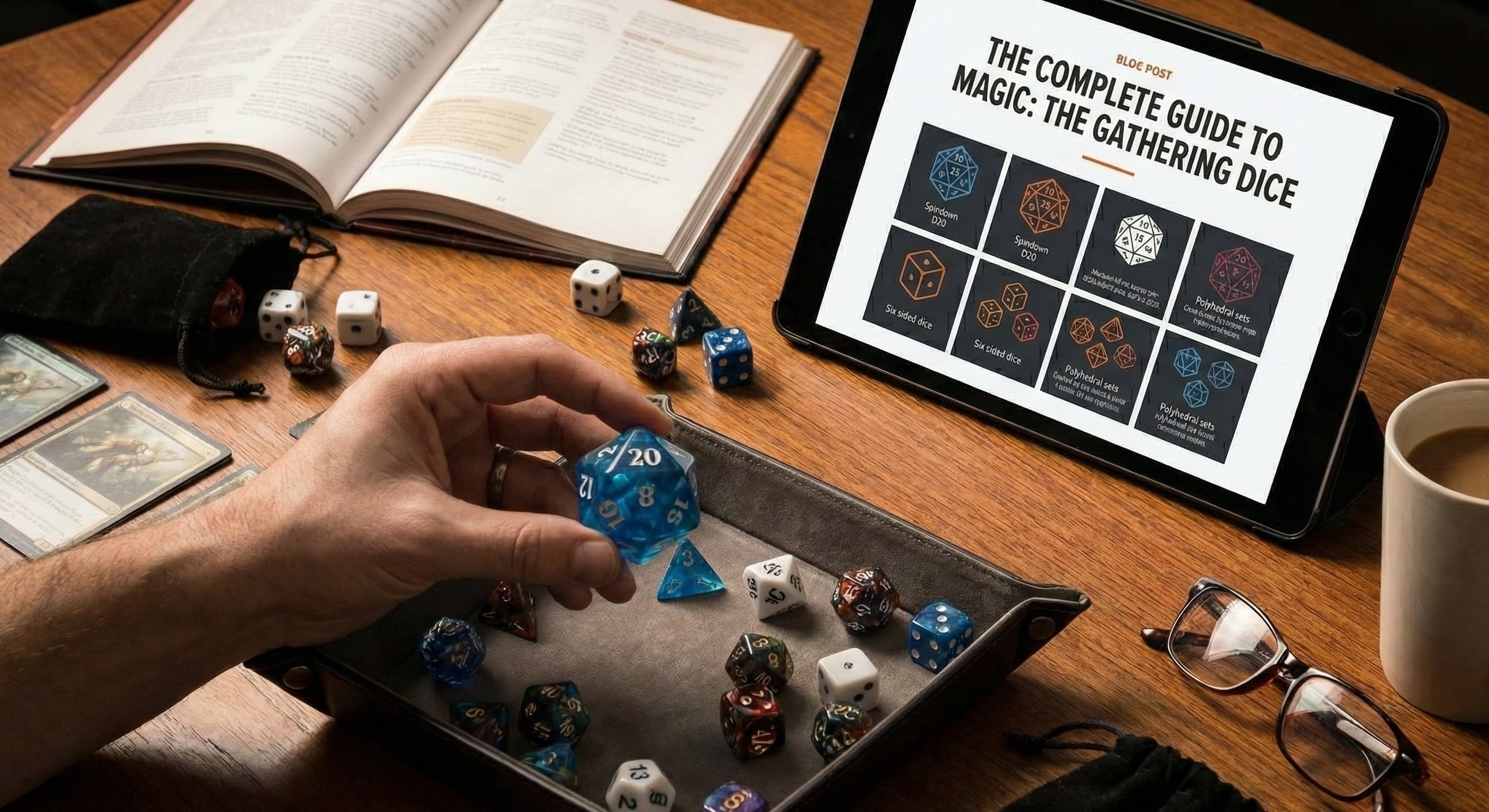
Master MTG dice: Learn the critical difference between spindown life counters and standard d20s, discover specialized counter dice, and find the best dice for Commander.
Understanding Magic: The Gathering dice is essential for tracking life totals, counters, and gameplay mechanics—this comprehensive guide covers everything from spindowns to specialty dice.
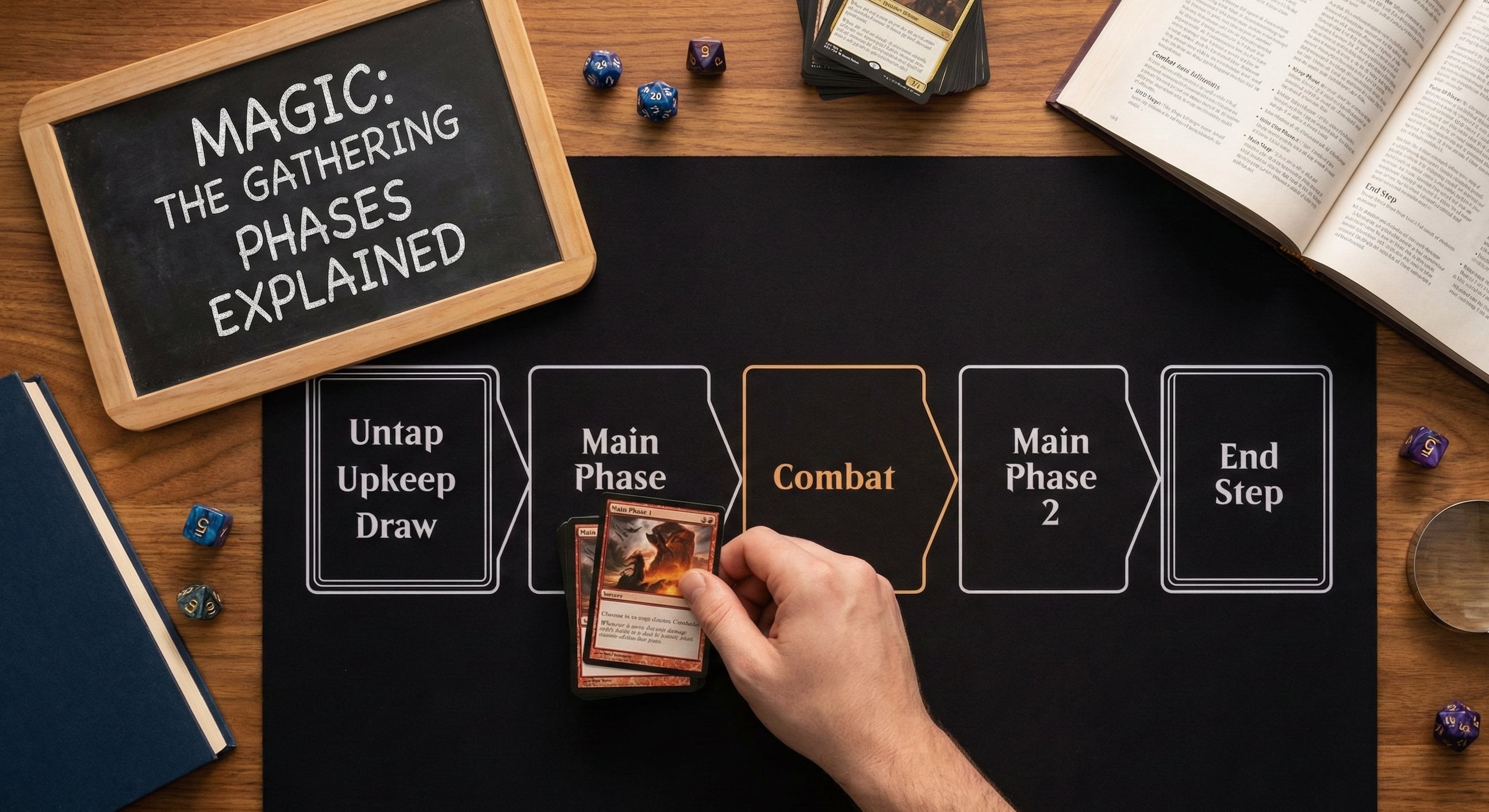
A guide to Magic: The Gathering phases and steps: what happens in each one, when players get priority, how combat damage works under the current rules, and when to cast your spells.
A Magic turn has five phases: beginning, precombat main, combat, postcombat main and ending. The beginning, combat and ending phases are split into steps. Players get priority in every step except the untap step and, usually, the cleanup step. Knowing where those windows are tells you when you can cast instants, when combat damage happens, and when effects end.
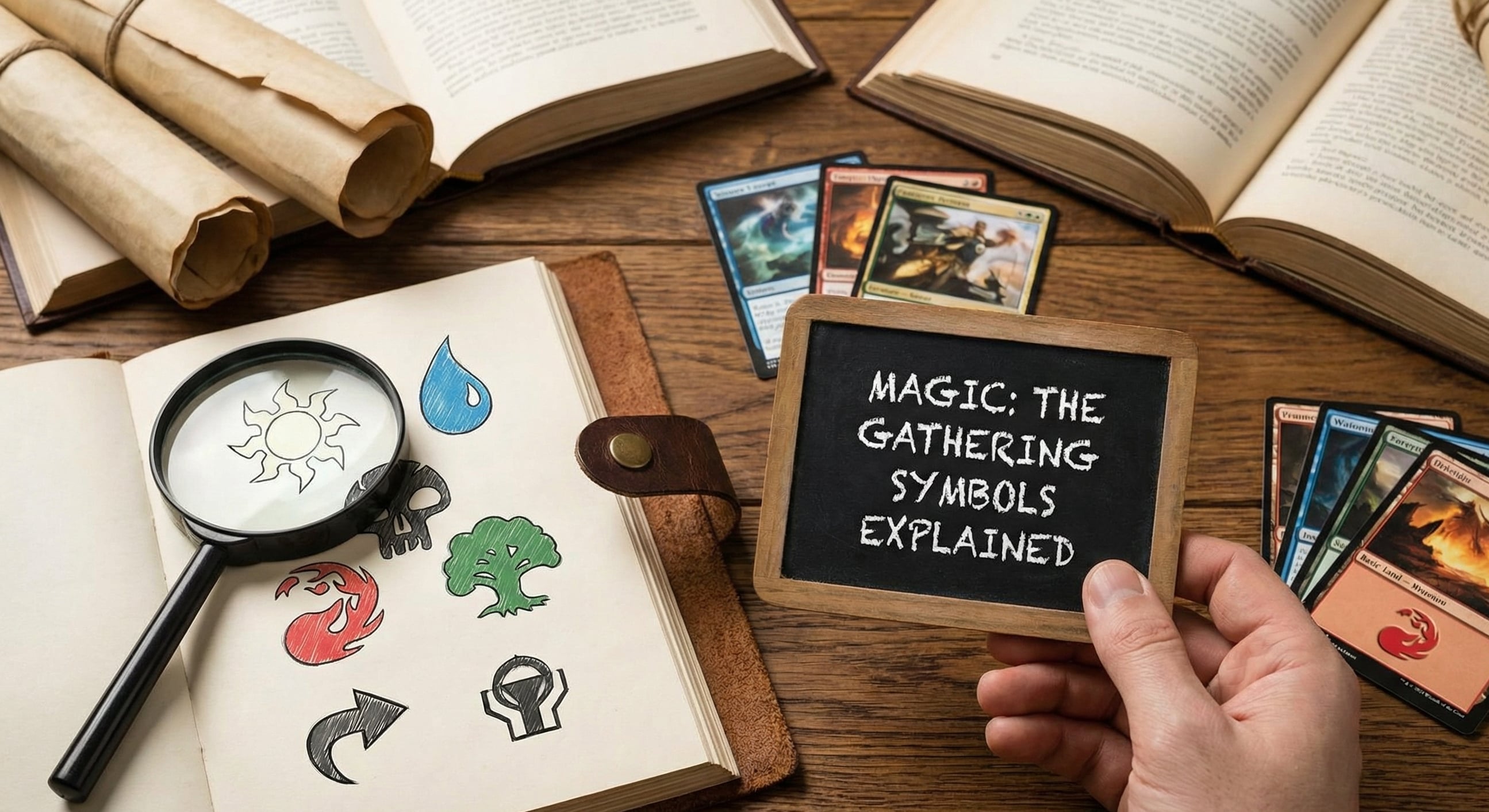
Complete guide to MTG symbols including mana, set, rarity and gameplay symbols — plus what each rarity tier actually means, and why rarity is a print run rather than a price.
Master every Magic: The Gathering symbol from WUBRG mana to set rarity markers with this comprehensive visual guide for players and collectors.
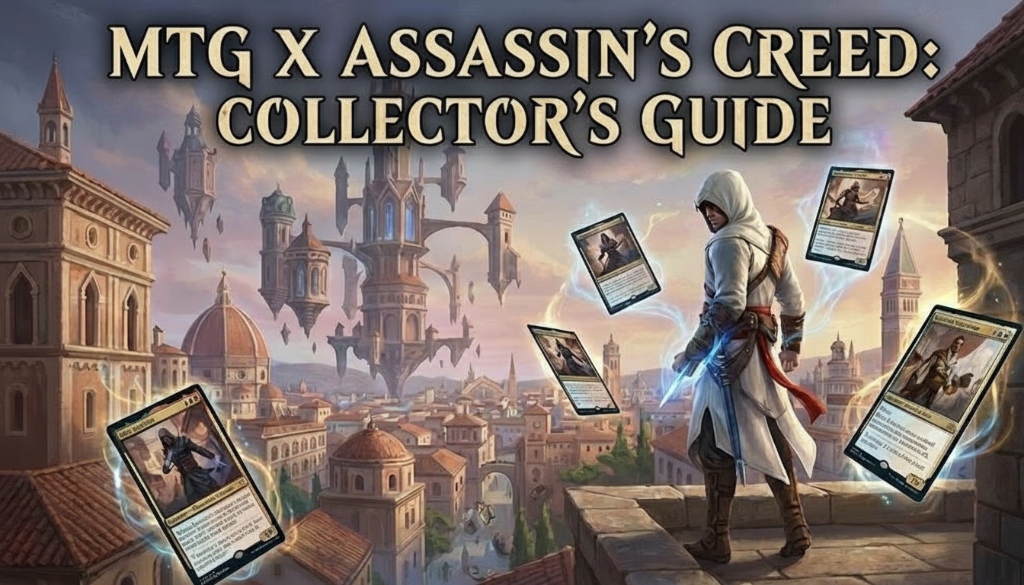
Explore the MTG Assassin's Creed Universes Beyond set. Find the top chase cards, serialized historical figures, and price guides for your collection.
A historic crossover that brings the best of Assassin's Creed lore to Magic: The Gathering, featuring exclusive serialized chase cards and powerful Modern staples.
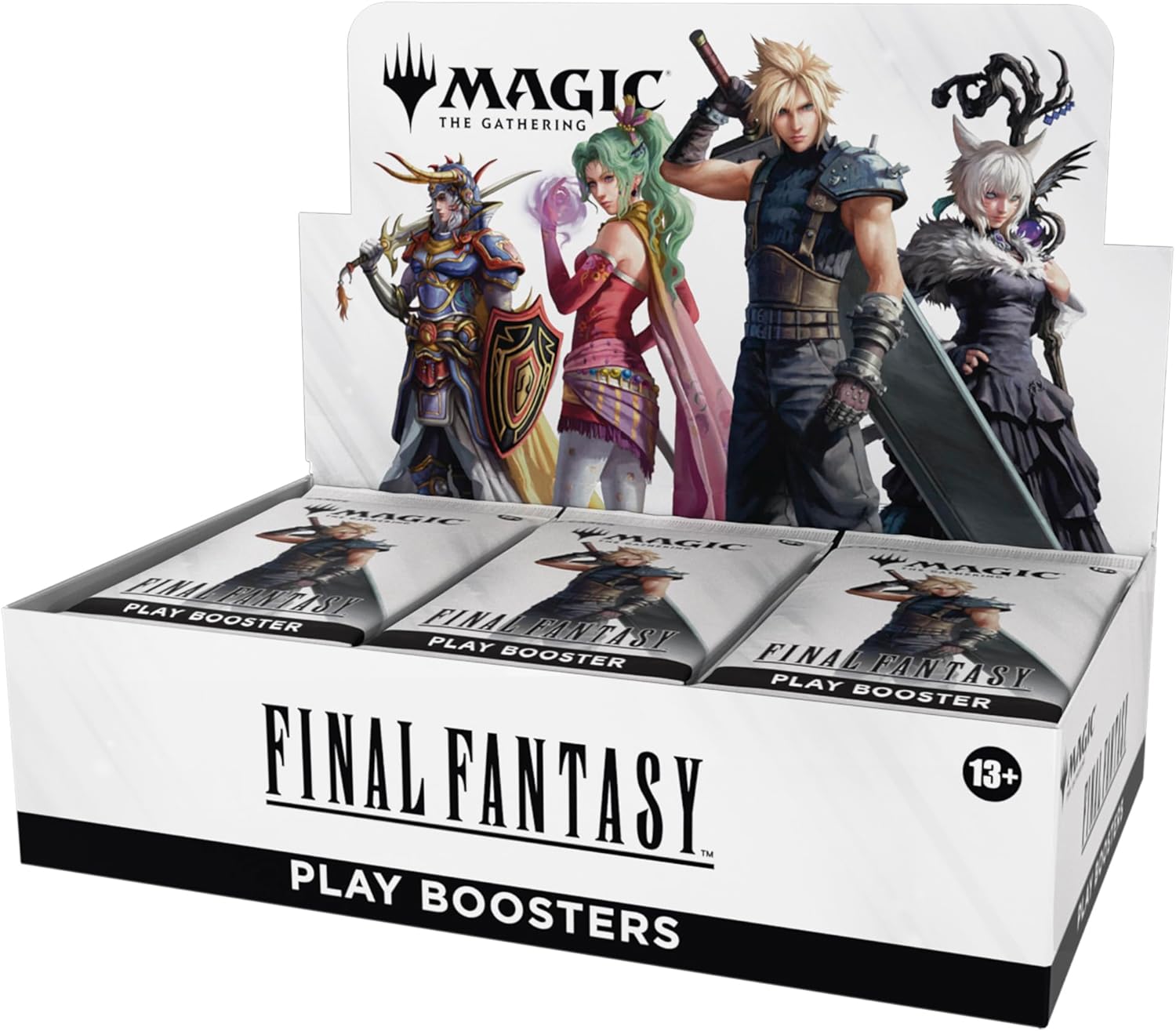
MTG booster box guide: Play vs Collector boxes, how many packs are in a booster box, what each costs in 2026, and how to tell whether a box is worth buying.
Magic booster boxes have evolved dramatically with the introduction of Play Boosters, replacing Draft and Set boosters to streamline the buying experience while maintaining draft functionality.
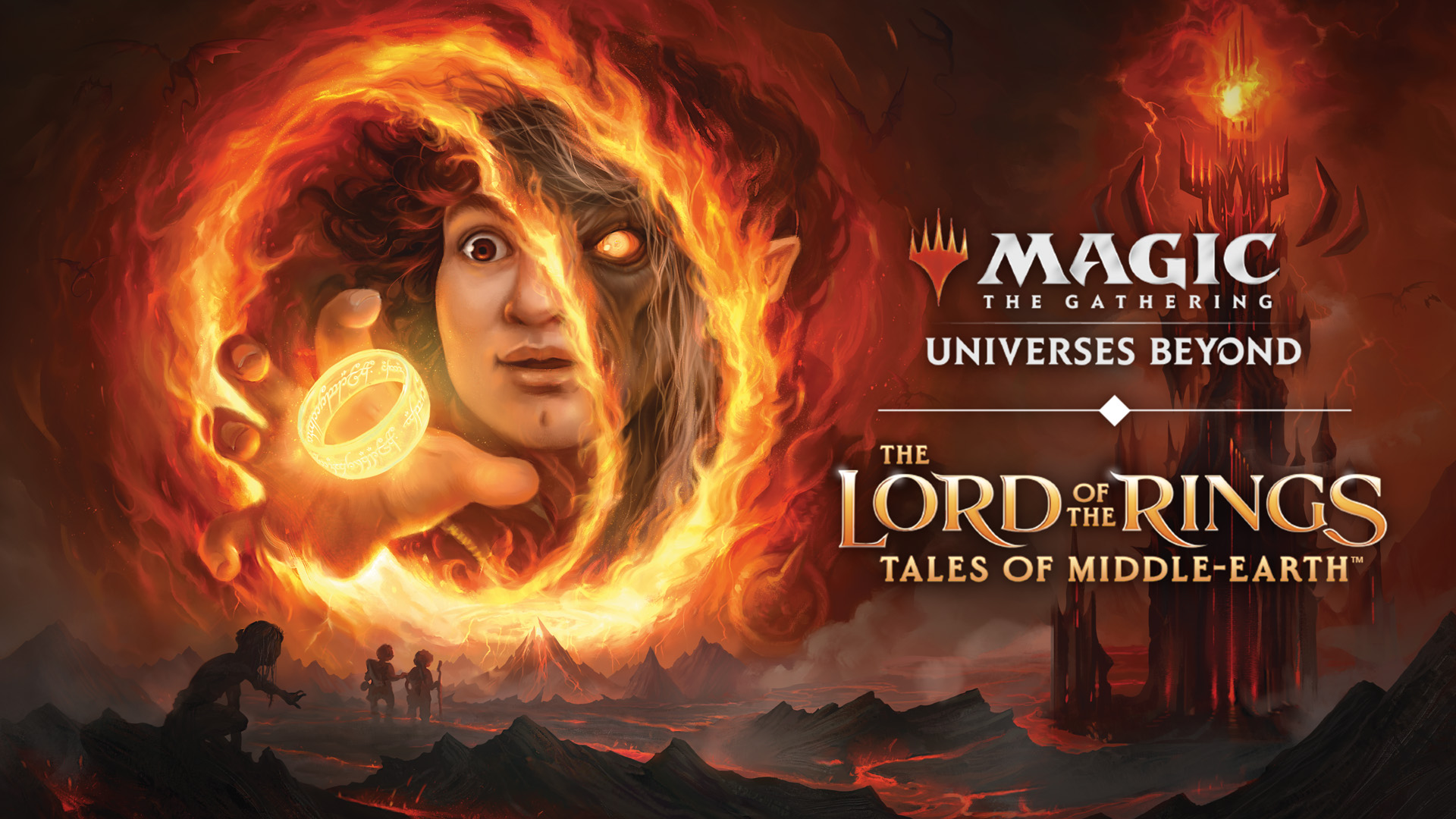
Is LOTR MTG Modern legal? Yes! Complete guide to MTG × LOTR: Tales of Middle-earth. Learn about Ring Tempts You, Amass Orcs, top Commanders, The One Ring card, product value, and buying guide for this Universes Beyond set.
The Lord of the Rings: Tales of Middle-earth remains the undisputed king of Universes Beyond collaborations, dominating Modern and Commander formats with powerful mechanics and iconic cards like The One Ring.

Post Malone and Magic: The Gathering: the $2 million One Ring purchase, his two Secret Lair drops, his Game Knights decks and the $100k match he lost.
Post Malone is a long-time Commander player. He bought the one-of-one serialized One Ring for a reported US$2 million in 2023, has two Secret Lair drops from November 2022, and has played Merieke Ri Berit and Chishiro on Game Knights.
Every Magic: The Gathering keyword ability explained, plus a printable one-page cheat sheet. Includes the Foundations combat damage changes affecting Trample, Deathtouch and more.
The definitive 2025 guide to MTG keywords, updated for the Foundations rule changes that removed damage assignment order. Learn every ability from Vigilance to Ward with real examples from the latest sets.