Quick Verdict
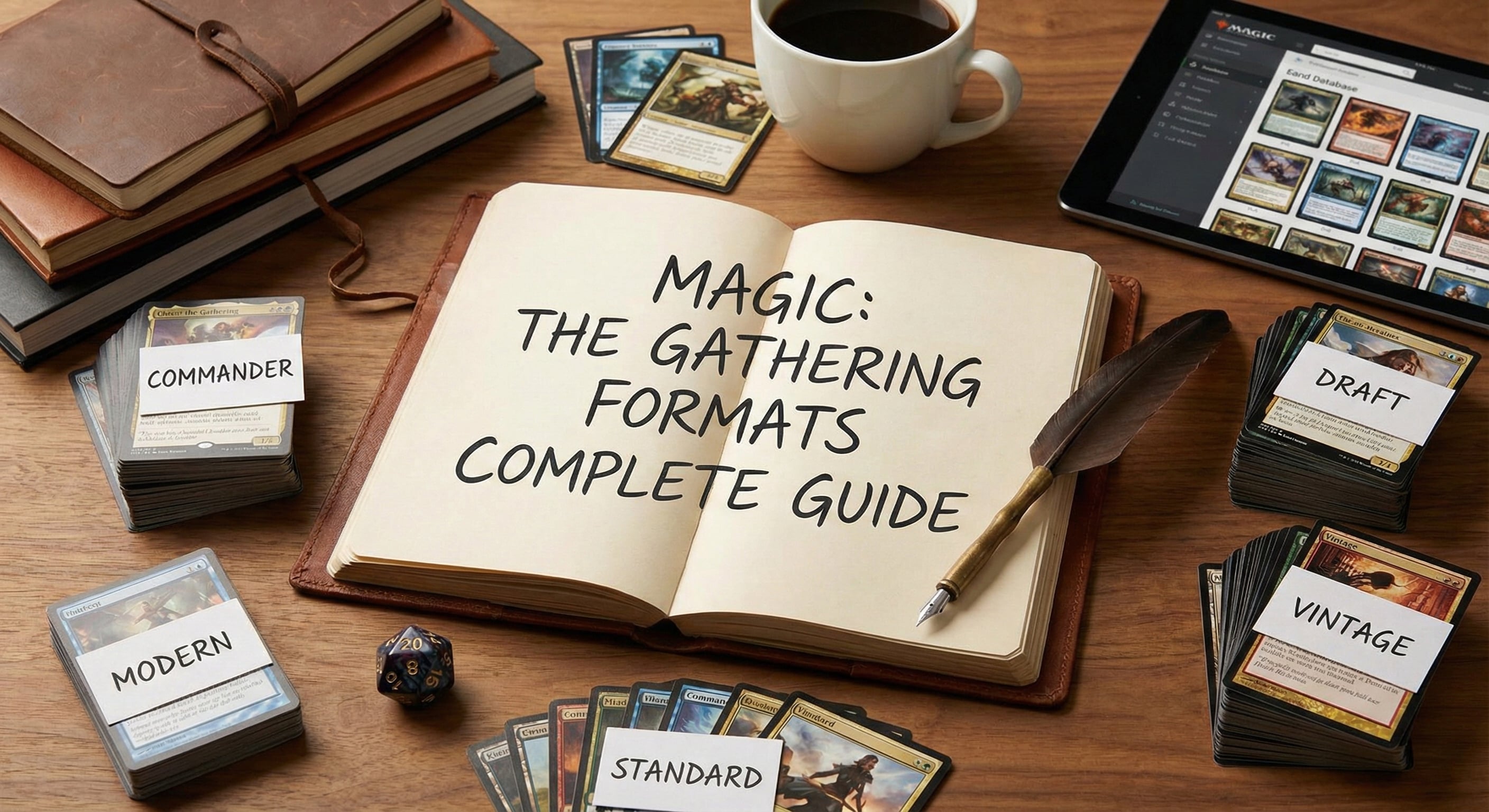
The 2026 MTG ecosystem has undergone its most radical transformation in three decades. From the 'Forever Standard' era to the Commander Bracket System, Timeless digital Vintage, and seven major set releases, this comprehensive guide covers every format, metagame, and competitive structure.
MTG formats are the rule sets that decide which cards you can play and how decks are built. The big ones are Standard (recent sets), Pioneer and Modern (non-rotating), Legacy and Vintage (almost every card ever), and Commander (100-card singleton, the most popular way to play). Here is how every Magic: The Gathering format works in 2026.
As of January 2026, the landscape of Magic: The Gathering has undergone its most radical structural transformation in three decades. The convergence of digital acceleration, aggressive intellectual property (IP) integration, and fundamental alterations to format legality has created an ecosystem of unprecedented complexity and breadth.
The release calendar for 2026 stands as a historical anomaly, featuring a density of seven major set releases designed to realign the global release cadence. This "super-year" includes the full integration of massive external properties—Marvel Super Heroes, Star Trek, The Hobbit, and Teenage Mutant Ninja Turtles—alongside traditional in-universe returns to the planes of Lorwyn and Arcavios.
This comprehensive guide serves as an exhaustive, expert-level analysis of the 2026 Magic ecosystem. It dissects the rules, metagames, and socio-competitive structures of every major and minor format, from the newly stabilized "Forever Standard" to the digitally exclusive high-power environment of Timeless, and the community-regulated Bracket System of Commander.
The Strategic Pivot: Foundations and Universes Beyond
Two primary pillars define the 2026 era. First, the introduction of Magic: The Gathering Foundations in late 2025 has altered the concept of rotation. Legal in Standard until at least 2029, this set creates a multi-year bedrock of staples intended to solve the perennial issue of player attrition due to card obsolescence.
Second, the Universes Beyond initiative has transitioned from a supplemental novelty to a core driver of format identity — our complete guide to Universes Beyond catalogues every release and exactly where each one is legal. In 2026, competitive play in Modern, Legacy, and Commander is increasingly defined by characters from outside the traditional Magic canon. The presence of Marvel and Star Trek cards in black-border tournament play represents a permanent shift in the game's aesthetic and mechanical identity.
| Format | Card Pool | Rotation | Power Level | Primary Platform |
|---|---|---|---|---|
| Standard | Innistrad: Midnight Hunt - Present | Suspended 2026, resumes 2027 | Moderate | Paper & Arena |
| Modern | 8th Edition (2003) - Present | Non-rotating | High | Paper & MTGO |
| Pioneer | Return to Ravnica (2012) - Present | Non-rotating | Moderate-High | Paper & Arena |
| Commander | All sets (except banned list) | Non-rotating | Variable (Brackets 1-5) | Paper, MTGO, Arena |
| Legacy | All sets (except banned list) | Non-rotating | Very High | Paper & MTGO |
| Timeless | All Arena cards | Non-rotating | Very High | Arena only |
Standard: The "Forever" Era and the 2026 Non-Rotation
The Standard format, long the primary on-ramp for competitive constructed play, is currently navigating a unique period of stasis and expansion. The strategic decisions made by Wizards of the Coast regarding rotation schedules and set legality have produced the largest Standard card pool in the format's modern history.
The 2026 No-Rotation Anomaly
In a move designed to align the annual rotation cycle with the calendar year beginning in 2027, Wizards of the Coast suspended Standard rotation for the entirety of 2026. Historically, rotation occurred in the third or fourth quarter, refreshing the format by removing the oldest four sets. However, throughout 2026, no sets will leave Standard.
Profound Implications
This decision has profound implications for the metagame: Card Pool Expansion (Standard will bridge three years of design philosophy), Power Level Accumulation (strategies that would have rotated remain legal), and Meta-Stagnation Risks (requiring more aggressive B&R management).
The "Foundations" Bedrock (2025–2029)
Magic: The Gathering Foundations, released November 15, 2025, serves as the stabilization mechanism for this expansive format. Unlike standard expansions, Foundations is guaranteed legality in Standard through at least 2029.
Strategic Analysis:
- Investment Security: Players can now invest in a core suite of removal, ramp, and threats with the assurance of a five-year shelf life.
- Design Constraints: The existence of a "forever" card pool imposes strict constraints on future set design, potentially leading to a flattening of power curves.
Metagame Analysis: The January 2026 Tier List
As of January 3, 2026, the Standard metagame has coalesced around high-power multi-color strategies facilitated by strong mana fixing, and aggressive decks designed to punish them.
| Archetype | Core Strategy | Key Cards |
|---|---|---|
| WUBG (4-Color) Legends | Good Stuff Control/Midrange | Kaito, Bane of Nightmares, Aang (Swift Savior), and other Avatar legends |
| Izzet Lessons | Spellslinger/Synergy | Iroh's Demonstration, South Pole Voyager |
| Boros Aggro | Hyper-Aggression | Earth Kingdom Jailer, Deep-Cavern Bat |
| Dimir Midrange | Tempo/Disruption | Spyglass Siren, Floodpits Drowner |
Learn About Avatar Cards in Standard
The WUBG (4-Color) Legends deck features Aang, Swift Savior as a key card. Learn more about Avatar mechanics, deck building strategies, and product information in our complete Avatar: The Last Airbender guide.
Card-Level Insights:
- Deep-Cavern Bat: 100% inclusion in top-tier black decks. Its ability to strip information and a card while providing an evasive lifelink body makes it the defining 2-drop.
- Kaito, Bane of Nightmares: The 4-copy staple in 100% of top control/midrange lists. Kaito's ability to phase out protects him from sorcery-speed removal.
The Banned and Restricted Landscape
The path to the 2026 metagame was paved with significant bans in 2025, marking a shift in Play Design's philosophy toward faster corrective action.
November 10, 2025 Bans:
- Vivi Ornitier: Enabled "Izzet Cauldron" deck with unhealthy win rates
- Screaming Nemesis: Removed to weaken stifling red aggro decks
- Proft's Eidetic Memory: Preemptive strike against Izzet pivot strategies
June 30, 2025 Bans: Cori-Steel Cutter, Monstrous Rage, Heartfire Hero (targeting Turn 3 Gruul Prowess decks)
Modern: The Era of Direct-to-Format Volatility
Modern in 2026 is defined less by Standard rotation and more by the "Direct-to-Modern" releases, specifically the residual impact of Modern Horizons 3 and the inclusion of Universes Beyond sets like Final Fantasy and Marvel Super Heroes.
The "Horizons" Effect and Metagame Composition
The Modern format has shifted away from traditional fetch-shock mana bases toward energy economies and Eldrazi ramp, fundamentally altering the "Turn 4 Rule" that once governed the format.
Dominant Archetypes (January 2026):
Boros Energy: Currently the "Deck to Beat," Boros Energy utilizes the parasitic Energy mechanic to generate value that is difficult to interact with via traditional removal. The deck leverages Guide of Souls and Ocelot Pride to flood the board with creatures while generating energy reserves.
Eldrazi Ramp: With the printing of Ugin's Labyrinth and Devourer of Destiny in Modern Horizons 3, Eldrazi Ramp no longer relies solely on Tron lands. It can power out threats as early as Turn 2 or 3, acting as the "Fun Police" for slower control decks.
Ruby Storm: A dedicated combo deck that utilizes cost reducers like Ruby Medallion and Ral, Monsoon Mage. The deck functions by chaining inexpensive red spells to generate a lethal "Storm" count for Grapeshot, often winning on Turn 3.
Izzet Affinity with Salvage Titan: A resurgence of artifact-based aggro utilizing Salvage Titan, a card that can be cast by sacrificing artifacts, to put a massive threat on board early.
Competitive Structure: Pro Tour Lorwyn Eclipsed
Modern's importance in 2026 is underscored by its selection as the format for the Regional Championships feeding Pro Tour Lorwyn Eclipsed (Jan 30–Feb 1, 2026). Over 3,300 players competed in late 2025 across global regions to qualify. The diversity of the Top 8s—featuring Affinity, Energy, and Control variants—suggests a healthy, albeit high-power, metagame.
Pioneer: The Non-Rotating Bridge
Pioneer serves as the bridge between Standard and Modern, utilizing cards from Return to Ravnica (2012) forward. Crucially, it excludes the Modern Horizons and Lord of the Rings direct-to-Modern sets, keeping its power level distinct and closer to "Standard Plus."
Metagame Tier List (January 2026)
Despite its lower power ceiling compared to Modern, Pioneer is currently dominated by explosive proactive strategies.
Tier 1: Izzet Prowess - The undisputed king of the format. Even after bans, the combination of card draw (Treasure Cruise, Consider) and prowess creatures allows for explosive turns. It occupies multiple slots in Top 4s of recent challenges.
Tier 1.5: Boros Convoke - A "Go-Wide" deck that vomits its hand onto the board to power out Venerated Loxodon or Knight-Errant of Eos. It punishes decks that rely on 1-for-1 removal.
Tier 2: Selesnya Company - The premier "Fair" deck. It uses Collected Company to flash in disruptive creatures like Skyclave Apparition or Archon of Emeria.
Tier 2: 5c Enigmatic Incarnation - A toolbox deck that sacrifices enchantments to tutor creatures directly into play. It is favored by high-skill players for its ability to find a "silver bullet" for any situation.
Banned List Updates
Pioneer's health is actively managed to prevent Turn-3 kills. November 2025 Ban: Heartfire Hero was banned. This card gave the aggressive red decks (Heroic/Prowess) too much consistency in early damage output, violating the format's fundamental turn-speed guidelines.
The Commander (EDH) Ecosystem: Formalizing the Social Contract
Commander (EDH) remains the most played format in Magic, but 2026 marks the end of the "Rule 0" era of ambiguity. The format is undergoing a massive sociological shift toward formalized matchmaking via the Commander Bracket System.
The Commander Bracket System (Beta)
Wizards of the Coast launched Commander Brackets in February 2025 to replace the subjective "1-10 power level" scale, and has revised them since with the Commander Format Panel. As of September 2026 there are five brackets:
- Bracket 1 (Exhibition): Theme first, power second. No Game Changers; games should last at least nine turns.
- Bracket 2 (Core): Unoptimized and straightforward, where most unmodified precons sit. No Game Changers; at least eight turns.
- Bracket 3 (Upgraded): Strong synergy and high card quality. Up to three Game Changers; at least six turns.
- Bracket 4 (Optimized): Lethal, consistent and fast. Any number of Game Changers; at least four turns.
- Bracket 5 (cEDH): Built for the competitive metagame. No restrictions beyond the banned list.
The Mechanism of 'Game Changers'
The brackets count cards from Wizards' Game Changers list: 53 cards as of September 2026 that "easily and dramatically warp Commander games", such as Vampiric Tutor, Consecrated Sphinx, Rhystic Study and The One Ring. Game Changers aren't banned; including one moves a deck to Bracket 3 or higher. Mana Crypt isn't on the list because it's banned in Commander outright. See the full MTG Game Changers list and bracket rules.
Top Commanders of the 2026 Era
The influence of Universes Beyond has completely reshaped the command zone. The top-played commanders in late 2025/early 2026 are dominated by external IPs.
| Rank | Commander | Origin Set | Archetype |
|---|---|---|---|
| 1 | Fire Lord Azula | Avatar: The Last Airbender | Aggressive Red / Burn / Monarch |
| 2 | Toph, the First Metalbender | Avatar: The Last Airbender | Mono-Green Land Animation / Artifacts |
| 3 | Y'shtola, Night's Blessed | Final Fantasy | Healer/Cleric Tribal / Life Gain |
| 4 | Sephiroth, Fabled SOLDIER | Final Fantasy | Voltron / 'Nemesis' mechanics |
| 5 | Krenko, Mob Boss | Magic Core | Goblin Tribal (A resilient classic) |
Learn More About Avatar Commanders
The top two commanders—Fire Lord Azula and Toph, the First Metalbender—are from the Avatar: The Last Airbender set. Check out our complete Avatar guide for detailed deck building strategies, Bending mechanics, and product information.
Demographic Shift
The dominance of Avatar and Final Fantasy characters indicates a demographic shift. New players entering via these IPs are sticking to their franchise characters rather than adopting traditional Magic legends. However, classics like The Ur-Dragon and Edgar Markov remain in the top 10, suggesting a bifurcation between "IP players" and "Magic purists."
Commander Variants: Oathbreaker and Tiny Leaders
Oathbreaker: A 60-card singleton, multiplayer format. The Command Zone contains 1 Planeswalker (The Oathbreaker) and 1 Signature Spell (Instant/Sorcery). Critical Rules: 20 Life starting total. The Signature Spell can only be cast if the Oathbreaker is on the battlefield. Both are subject to the "commander tax" (2 mana). Meta: Faster and more aggressive than Commander due to the lower life total.
Tiny Leaders Reborn: A 50-card singleton, 1v1 format. Restriction: All cards must be Mana Value (CMC) 3 or less. Status: After dying out in 2016, the format has been revived by a community committee. Recent Updates: As of late 2025, the life total is formalized at 20 life (down from 25). The ban list is active, with Edric, Spymaster of Trest recently unbanned to encourage tempo strategies.
The Arena Digital Ecosystem: A Fork in the Road
MTG Arena has evolved into a distinct platform with formats that do not exist in paper. The digital client now supports four primary constructed pillars: Standard, Alchemy, Historic, and Timeless.
Alchemy: The Dynamic Standard
Alchemy mirrors Standard's card pool but introduces two key deviations:
Digital-Only Mechanics: Mechanics like Conjure (create cards out of thin air), Seek (tutor randomly without shuffling), and Perpetual (effects that persist across zones).
Rebalancing: Cards can be buffed or nerfed. For example, a dominant card like The One Ring could have a mana cost added, or a weak card could be buffed.
Rotation Schedule: Uniquely, Alchemy maintains a 2-year rotation cycle, causing it to diverge from the 3-year Standard. Sets from the 2024 Magic year will rotate out of Alchemy in July 2025, while remaining legal in Standard.
Timeless: The "Digital Vintage"
Launched in late 2023, Timeless is the highest-power format on Arena.
Philosophy: "Every card is legal." This includes Khans of Tarkir fetch lands (Polluted Delta, etc.), Lightning Bolt, Counterspell, and powerful Mystical Archive cards like Channel and Demonic Tutor.
The Restricted List: Unlike other Arena formats, Timeless does not ban cards for power. It Restricts them to 1 copy per deck. Current Restricted List: Channel, Demonic Tutor, Tibalt's Trickery.
Sideboard Nuance
In Best-of-One (Bo1) matches, the sideboard is capped at 7 cards. This rule prevents "Wish" decks (decks using Karn, the Great Creator or Fae of Wishes) from having access to a 15-card toolbox without paying the opportunity cost of playing Best-of-Three.
Historic: The Curated Legacy
Historic occupies a middle ground. It allows cards from all of Arena's history but maintains an aggressive Ban List to curate a specific play experience.
Differentiation: Historic bans fetch lands to keep shuffling (and time per game) down. It bans cards like Blood Moon and Force of Negation (often "Pre-banned" upon release) to prevent the format from feeling like Modern or Legacy. It is a "turn 4 format" compared to Timeless's "turn 2/3 potential".
Gladiator: The 100-Card Singleton Arena Format
Gladiator is a community-driven format that occasionally receives official event support.
Rules: 100-card singleton, No Commander, No Sideboard.
Style: It is effectively "Cube Constructed." Players use the best cards in their collection to build high-synergy singleton decks.
Bans: Extremely minimal (e.g., Oko, Thief of Crowns, Field of the Dead).
Play Culture: Matches are Best-of-Three. The lack of a sideboard means decks must be built with main-deck answers to artifacts/enchantments.
Eternal Paper Formats: Legacy, Vintage, and Old School
While Arena pushes digital boundaries, the "Eternal" paper formats remain the guardians of Magic's history, defined largely by the "Reserved List"—a list of cards Wizards promised never to reprint.
Legacy: The Initiative and Scam Era
Legacy allows all sets but bans the most egregious offenders (Power 9, etc.). The format in 2026 is defined by the tension between "Fair" blue decks and "Unfair" combo/initiative decks.
Top Decks:
- Dimir Tempo (Rescaminator): Combines Grief (Scam package) with Reanimate and Murktide Regent. It strips the opponent's hand on Turn 1 and deploys a threat.
- Boros Initiative: Uses fast mana (Ancient Tomb, Lotus Petal) to cast creatures like White Plume Adventurer on Turn 1, taking the "Initiative" (a dungeon-like mechanic) that generates immense value if not contested.
- Coveted Jewel Combo: A storm-style deck using Coveted Jewel to draw the deck and generate mana.
Recent Bans: Nadu, Winged Wisdom was banned in November 2025 due to creating non-deterministic loops that caused tournament delays. Entomb was also banned to weaken the consistency of Reanimator strategies.
Vintage: The Power 9 Playground
Vintage allows cards like Black Lotus, Ancestral Recall, and the Moxen.
Restricted List: Powerful cards are restricted to 1 copy.
Meta: The format is currently monitoring the power of Urza's Saga (which fetches key artifacts) and Lurrus of the Dream-Den (which recurs value engines like Black Lotus).
Accessibility: Due to decks costing upwards of $50,000 USD in paper, the format thrives primarily on Magic Online.
Old School 93/94: Magic as it Was
Old School is a format frozen in time, allowing only cards printed in 1993 and 1994 (Alpha through The Dark, sometimes Fallen Empires depending on the variant).
Rules Variants:
- Swedish Rules: The strictest variant. Only original art/frames. City of Brass is the only non-basic land that deals damage (no fetch lands).
- Atlantic/EC Rules: More permissive with reprints (as long as they have the old frame).
Dexterity Cards: Uniquely, Old School allows "Dexterity Cards" like Chaos Orb and Falling Star.
Chaos Orb Rule
Players must flip the card from a height of at least one foot. If it turns over completely and lands on a permanent, that permanent is destroyed. In Eternal Central (EC) tournaments, drawn matches are resolved by a "Chaos Orb Flipping Contest"—a penalty shootout style tiebreaker.
Community & Grassroots Formats
Beyond the sanctioned sphere, several community-led formats drive significant engagement.
Pauper: The Commoner's Legacy
Pauper allows only cards printed at Common rarity in paper or on MTGO.
Economic Appeal: Top-tier decks often cost less than $100.
Power Level: Despite the restriction, Pauper is extremely high-power, often compared to Legacy due to the legality of cards like Brainstorm, Ponder, Counterspell, and Lotus Petal.
Metagame (2026):
- Affinity: Indestructible artifact lands make this deck resilient.
- Dimir Terror: A "Delver-style" deck using Tolarian Terror (a 5/5 with Ward 2) that costs 1 mana due to graveyard synergies.
- Kuldotha Red: An aggressive burn/token deck.
Canadian Highlander: The "Points" Format
A 100-card singleton, 1v1 format originating in Victoria, BC.
The Points List: Instead of a ban list, the format uses a "Points" system. Each player has a budget of 10 Points.
Example Costs: Ancestral Recall might be 7 points. Black Lotus might be 7 points. Sol Ring might be 3 points. Demonic Tutor is 4 points.
Strategy: Players must choose between playing one extremely powerful card (Lotus) and a few minor ones, or a spread of moderately powerful tutors.
Gameplay: Often described as "Constructed Vintage Cube." It allows the most powerful cards in history but balances them through the singleton restriction and points cap.
Premodern: The Middle School Era
Premodern caters to players nostalgic for the era between the "Old School" years and the "Modern" frame change.
Legal Sets: Fourth Edition (1995) through Scourge (2003).
Aesthetics: Only cards with the pre-Modern card frame are legal.
Ban Philosophy: Unlike Legacy, Premodern bans Brainstorm and Force of Will. This fundamentally changes the blue decks, making them less dominant and allowing non-blue midrange strategies to flourish.
Limited Formats: Draft, Sealed, and Cube
Limited play (building a deck from unopened product) remains a core skill test.
Draft vs. Sealed
Sealed: Used for Prerelease events (e.g., Lorwyn Eclipsed Jan 16–22, 2026). Players open 6 packs and build a 40-card deck. It is slower and bomb-dependent.
Draft: Players sit in a pod, open a pack, pick one card, and pass the rest. It requires reading "signals" from other players.
Skill Differentiation: Draft is widely considered more skill-intensive regarding deck construction, whereas Sealed requires skill in maximizing a fixed pool.
The Evolution of Cube Design (2026)
Cube (a custom draft environment) has seen design trends shift in 2026.
Complexity Management: Designers are actively cutting "wordy" cards and reducing the number of unique tokens to streamline gameplay and reduce mental load.
Arena Powered Cube: A digital event that introduces Power 9 cards to Arena. It often features an "Alchemy-lite" approach, using cards like Oracle of the Alpha to conjure Power 9 cards into the deck.
Future Outlook: The 2026 Release Calendar
The year 2026 is a gauntlet for Magic players, with a release cadence that tests the limits of the market.
The 2026 Release Schedule:
Lorwyn Eclipsed: A return to the tribal-heavy plane of Lorwyn
TMNT (Teenage Mutant Ninja Turtles): A full Universes Beyond booster set, Standard-legal like every UB set from 2025 onward
Secrets of Strixhaven: A return to the magical school, focusing on enemy-color pairs
Marvel Super Heroes: A massive tentpole set, Standard-legal under the 2025 Aligning the Universes policy
The Hobbit: A follow-up to the Lord of the Rings success (distinct from the 2023 LotR set)
Reality Fracture: A mainline premiere set
Star Trek: A Universes Beyond booster set closing the 2026 schedule
The Segmentation of Magic
The Magic: The Gathering ecosystem in 2026 is no longer a monolith. It is a federation of distinct gaming experiences. The Foundations player in Standard, the Timeless player on Arena, and the Bracket 2 Commander player may never interact with the same cards or rules. This segmentation is Wizards of the Coast's strategy to manage growth: creating bespoke products for every demographic while using Universes Beyond to acquire new users who care more about Spock and Spider-Man than Jace and Chandra.
Conclusion: The Federation of Formats
The challenge for 2026 will be maintaining the connective tissue of the game—the rules engine—under the strain of such diverse mechanical expansions. From the "Forever Standard" era to the Commander Bracket System, from Timeless digital Vintage to Old School nostalgia, Magic: The Gathering has become a true federation of formats, each serving distinct player needs and demographics.
Whether you're a competitive Standard player navigating the largest card pool in history, a Commander player finding your bracket, an Arena player exploring Timeless, or a Legacy player wielding the Power 9, the 2026 ecosystem offers a format for every play style and budget.
The game has evolved. The formats have multiplied. The community has grown. Welcome to Magic: The Gathering in 2026.
External References
Detailed Comparison
| Format | Card Pool | Rotation | Power Level | Primary Platform |
|---|---|---|---|---|
| Standard | Innistrad: Midnight Hunt - Present | Suspended 2026, resumes 2027 | Moderate | Paper & Arena |
| Modern | 8th Edition (2003) - Present | Non-rotating | High | Paper & MTGO |
| Pioneer | Return to Ravnica (2012) - Present | Non-rotating | Moderate-High | Paper & Arena |
| Commander | All sets (except banned list) | Non-rotating | Variable (Brackets 1-5) | Paper, MTGO, Arena |
| Legacy | All sets (except banned list) | Non-rotating | Very High | Paper & MTGO |
| Timeless | All Arena cards | Non-rotating | Very High | Arena only |
Frequently Asked Questions
🔗 Related Resources
More Reviews:
Related Articles
.jpg)
MTG Persist vs Undying: The Complete Mechanic Comparison (2026)
Persist vs Undying in Magic: The Gathering — the exact rules, how +1/+1 and -1/-1 counters cancel, the real combo loops, and where each keyword is legal as of October 2026.
MTG Counters: Every Type Explained, From +1/+1 to Rad (2026)
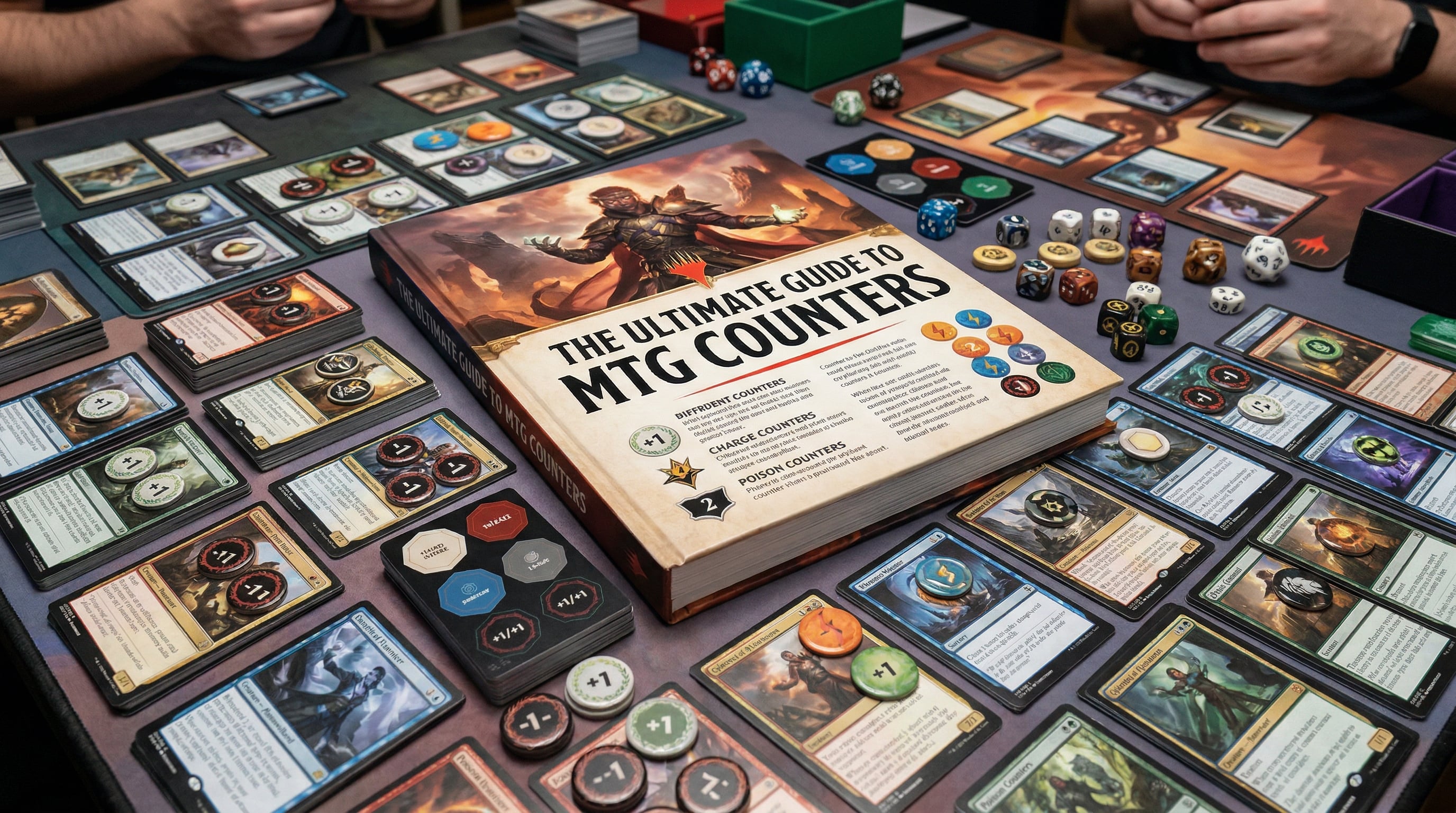
Every MTG counter type explained: +1/+1 and -1/-1, keyword, shield, finality and rad counters, plus the CR 122 rules and the Doubling Season ruling.
Lifelink MTG: What Does Lifelink Mean in Magic? (2026)
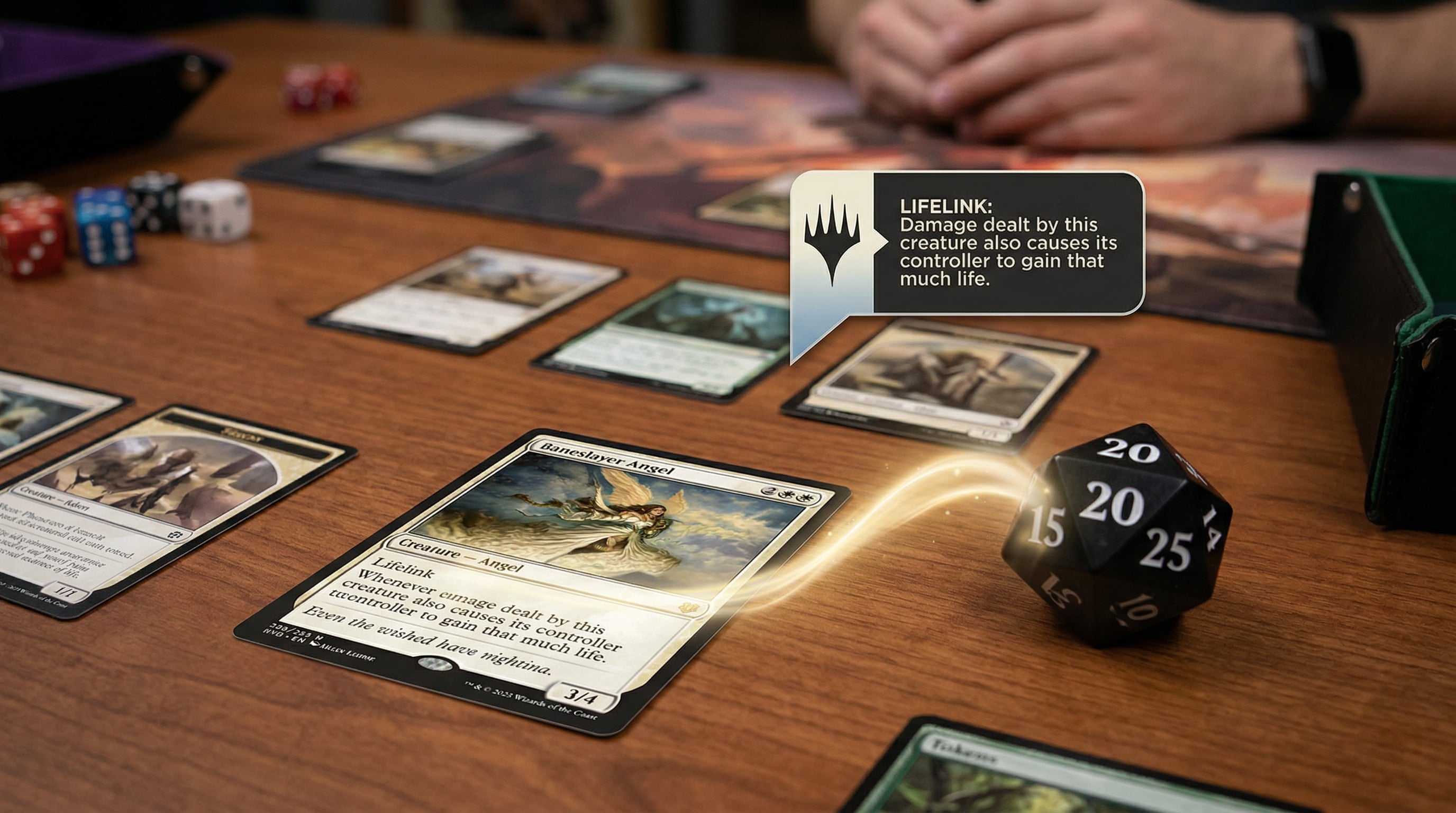
Lifelink in MTG: damage dealt by the source also gains its controller that much life, in combat or out. Full lifelink rules, common myths and the best cards.