
Card sleeves
 Top pick
Ultra Pro Soft Card Penny Sleeves, Standard (100-Pack)
The first layer for every card you submit: clear, as PSA asks
- Pro: Clear polypropylene, acid-free and PVC-free (TCGplayer listing)
- Pro: PSA's shipping guide asks for clear penny sleeves and warns against solid or opaque ones
- Pro: 550 packs listed by 3 sellers on 19 Nov 2026
- Con: CGC doesn't return sleeves, so each submission uses a new one
Price
$2.23TCGplayer market, 19 November 2026

Cardboard Gold Card Saver 1, 3" x 4" Semi-Rigid (50-Count)
The semi-rigid holder PSA asks for: 3 5/16 x 4 7/8 inches
- Pro: Measures 3 5/16" x 4 7/8", the size PSA's shipping guide requires for standard cards
- Pro: 50 holders, enough for two CGC Bulk minimums
- Pro: PSA says not to use toploaders, so this replaces them for submissions
- Con: Sells rarely on TCGplayer: too few recent sales for a volatility score on 19 Nov 2026
- Con: CGC doesn't return card savers
Price
$12.83TCGplayer market, 19 November 2026

Ultra Pro Soft Card Penny Sleeves, Standard (1000-Pack)
For bulk submissions: the same sleeves for under 2 cents each
- Pro: Same clear, acid-free, PVC-free sleeve as the 100-pack
- Pro: About 1.6 cents a sleeve at market price, against about 2.2 cents in the 100-pack
- Con: Only 2 listings on TCGplayer on 19 Nov 2026
Price
$15.99TCGplayer market, 19 November 2026
The Short Answer
To grade a Pokémon card, check it for flaws, put it in a penny sleeve and a semi-rigid holder (a Card Saver I), create an order on PSA's, CGC's, Beckett's or TAG's website, ship it insured, and wait for it to come back sealed in a slab with a grade from 1 to 10.
What it costs, on 19 November 2026: PSA from $39.99 a card (Value, 90 to 100 business days) to $599 (Premier, 7 to 10 days). CGC from $17 (Bulk, 25-card minimum). TAG from $29.95 (10-card minimum). Beckett's cheaper tiers were paused, so its only tier open online was Express at $79.95. Shipping both ways comes on top.
Grade a card only if a 10 would sell for far more than the raw card plus those costs. Most cards worth under about $50 aren't worth grading.
How to Grade Pokémon Cards, Step by Step
1. Pick cards worth grading
Grading is a bet on the grade. Before you submit, look up recent sold prices for your card raw, in PSA 9 and in PSA 10, and run the numbers:
Profit = (graded price − raw price) − grading fee − shipping both ways − selling fees
Run it for a 10 and a 9, because many cards come back a 9 and a PSA 9 often sells for little more than a raw copy.
A real example: Moonbreon. On 18 November 2026 TCGplayer's market price for a raw Evolving Skies Umbreon VMAX alternate art (215/203) was $2,195. Four PSA 10 copies sold at auction on eBay on 12 November 2026 for $3,136 to $3,850, and PSA 9 copies were selling for about $1,860.
| Result | Sale price (November 2026) | PSA tier the card ends up in | Gain over selling raw at $2,195, before shipping and selling fees |
|---|---|---|---|
| PSA 10 | $3,136–$3,850 | Super Express, $349 (up to $5,000) | about +$590 to +$1,310 |
| PSA 9 | about $1,860 | Express, $199 (up to $2,500) | about −$530 |
A PSA 9 sells for less than TCGplayer's raw price and about the same as raw copies sold on eBay (about $1,816), so grading Moonbreon only pays if you're confident of a 10.
PSA's tier is set by what the card is worth after grading. If PSA decides a card is worth more than your tier's max insured value, it moves that card up a tier and bills the difference. That is why a valuable card costs far more than $39.99 at PSA.
A cheap card loses money. A card that sells for $20 raw costs $39.99 at PSA Value plus shipping. It needs a PSA 10 worth over $60 just to break even, and that assumes it gets the 10.
The cards that usually make sense are vintage holos in clean condition (see our shadowless Pokémon cards guide) and modern chase cards such as Special Illustration Rares whose PSA 10 sells for a clear multiple of the raw price. Our best Pokémon cards list covers which cards hold their value.
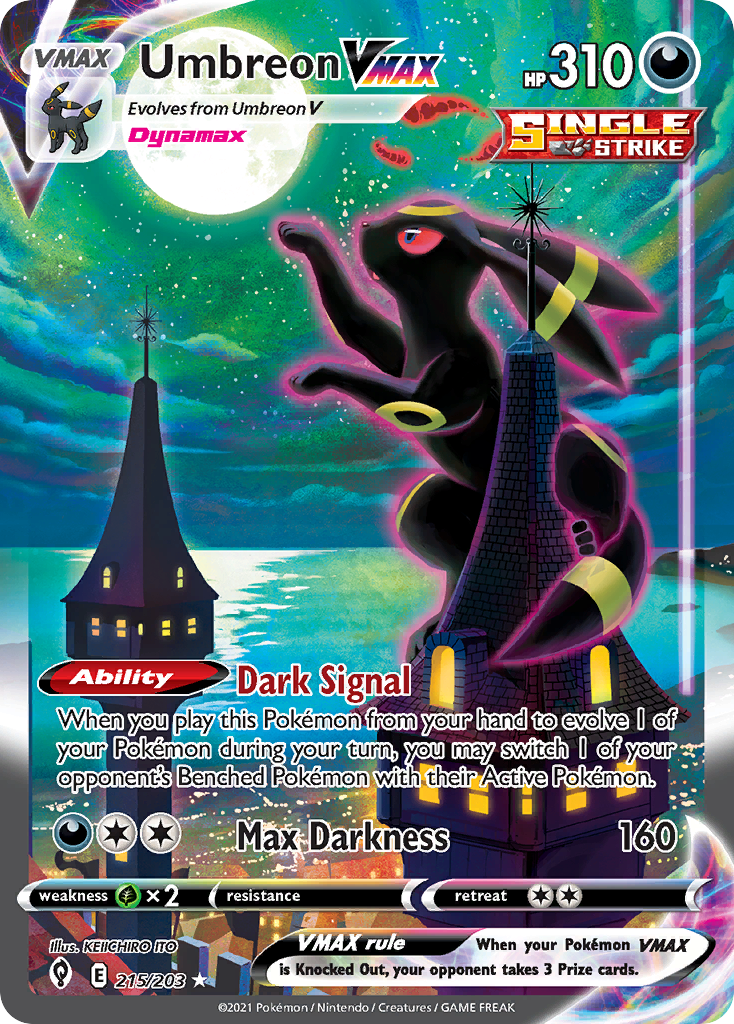 Umbreon VMAX 215/203 (Moonbreon), Evolving SkiesRaw: $2,195.10 on 18 Nov 2026
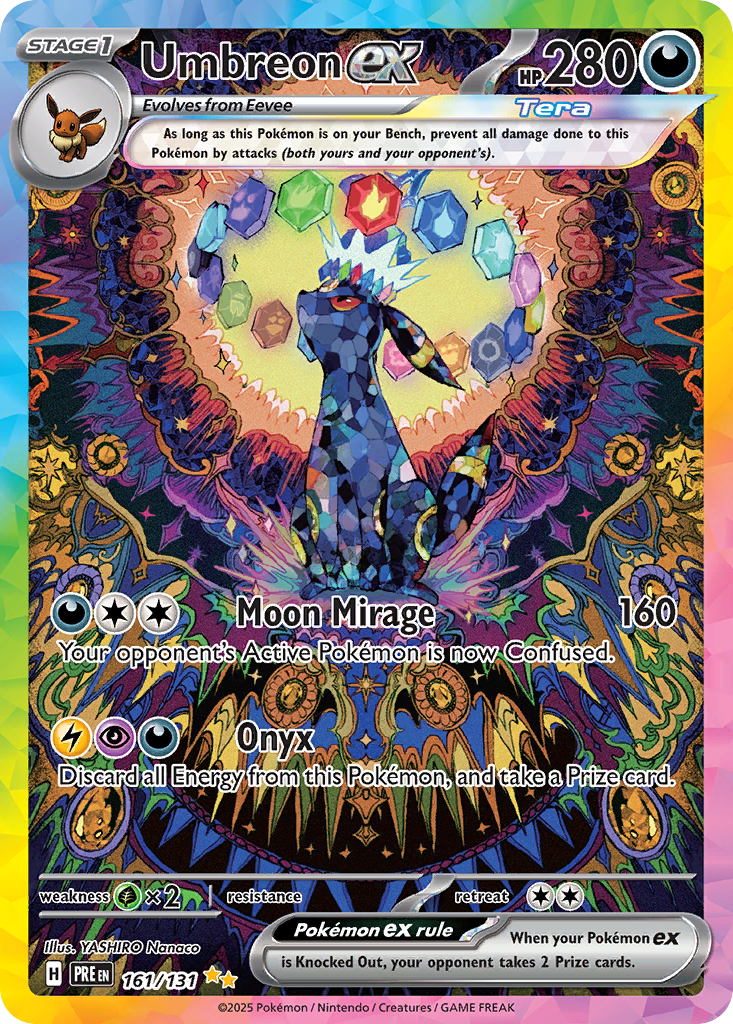 Umbreon ex 161/131 (SIR), Prismatic EvolutionsRaw: $1,155.92 on 18 Nov 2026
 Mega Charizard X ex 125/094 (SIR), Phantasmal FlamesRaw: $531.36 on 18 Nov 2026
All three had raw TCGplayer market prices above $500 on 18 November 2026, which is already over the $500 cap of PSA Value and CGC Bulk. Declare what each would be worth graded and pick a tier that covers it; otherwise PSA and CGC move the card up a tier, and PSA bills the difference.
2. Inspect centering, corners, edges and surface
Graders look at four things, and you can check all four at home with a bright light and a loupe.
- Centering. Compare the borders left to right and top to bottom. PSA's standard for a Gem Mint 10 is about 55/45 to 60/40 on the front and 75/25 on the back. A Mint 9 allows about 60/40 to 65/35.
- Corners. A 10 needs four perfectly sharp corners.
- Edges. Look for white chipping or fraying along the coloured back border.
- Surface. Tilt the card under the light. Scratches, print lines, dents and fingerprints all cost points.
If the card has an obvious flaw, don't pay to have it confirmed. And if you bought it from a stranger, check it's genuine first with our fake Pokémon card guide.
3. Sleeve it and put it in a semi-rigid holder
PSA's shipping guide asks for each card in a clear penny sleeve (no coloured or opaque sleeves), then in a semi-rigid holder measuring 3 5/16 × 4 7/8 inches, usually sold as a Card Saver I. PSA says not to use toploaders, tape, pull tabs or sticky notes. CGC doesn't return sleeves or card savers, so use cheap ones. Our Pokémon card size guide lists which sleeves and holders fit.
These are the supplies we found on TCGplayer that match PSA's shipping guide, at market prices on 19 November 2026. Card Saver 1 lists its size as 3 5/16" × 4 7/8", the size PSA asks for. For a 25-card CGC Bulk order, the sleeves and holders come to about $7 at those prices.
- Ultra Pro Penny Sleeves, Standard (100-Pack)$2.23, TCGplayer market, 19 Nov 2026
- Cardboard Gold Card Saver 1 (50-Count)$12.83, TCGplayer market, 19 Nov 2026
- Ultra Pro Penny Sleeves, Standard (1000-Pack)$15.99, TCGplayer market, 19 Nov 2026
4. Submit online and choose a tier
Every company takes orders on its website. Create an account, enter each card, give each one a declared value (your estimate of its value after grading) and choose a tier that covers it. PSA's per-card tiers don't need a membership. CGC's listed fees are for its Collector members, with 10% off for Associate and Premium members and 20% off for Elite. Print the submission form and put the cards in the same order as the form.
5. Pack, ship and insure
PSA's guide says to stack the cards between two cardboard dividers, hold them with two or three rubber bands, wrap the stack, put it in a new box, fill the gaps, seal every seam with packing tape and stick on the tracking label from your order.
PSA does not insure your package on the way in. Its cover starts only when PSA confirms your card has arrived. If you ship by FedEx you can buy inbound insurance from PSA's partner Cabrella at checkout, or arrange your own. Check that it covers ungraded cards at their value. TAG's submission kit includes prepaid shipping and the first $1,000 of inbound cover. Return shipping is added at checkout.
6. Wait
Turnaround is counted in business days from the day the company logs your order, so PSA's 90 to 100 days for Value is more than four months. PSA and CGC both call their turnaround times estimates, not promises. When the card comes back, check the certification number on the company's website.
Pokémon Card Grading Cost: PSA vs CGC vs BGS vs TAG
Prices per card for standard-size cards, checked on 19 November 2026 against each company's pricing page or, where the page wouldn't load, its latest announced prices. Beckett publishes no max card value. Max value is the most a card in that tier can be worth (PSA calls it max insured value; TAG calls it protection).
| Company and tier | Price per card | Max card value | Estimated turnaround |
|---|---|---|---|
| PSA Value | $39.99 | $500 | 90–100 business days |
| PSA Standard | $59.99 | $1,000 | 70–80 business days |
| PSA Priority | $79.99 | $1,500 | 50–60 business days |
| PSA Express | $199 | $2,500 | 20–30 business days |
| PSA Super Express | $349 | $5,000 | 10–15 business days |
| PSA Premier | $599 | $10,000 | 7–10 business days |
| CGC Bulk (25-card minimum) | $17 | $500 | 150 working days |
| CGC Economy | $20 | $1,000 | 90 working days |
| CGC Standard | $55 | $3,000 | 10 working days |
| CGC Express | $100 | $10,000 | 5 working days |
| CGC WalkThrough | $300 | $100,000 | 2 working days |
| Beckett (BGS) Base, no subgrades | $14.95 (paused) | — | 75+ business days |
| BGS Base with subgrades | $17.95 (paused) | — | 75+ business days |
| BGS Standard | $34.95 (paused) | — | 45 business days |
| BGS Express | $79.95 | — | 15 business days |
| BGS Priority | $124.95 (not open online) | — | 5 business days |
| TAG Value (10-card minimum) | $29.95 | $250 | 90 business days |
| TAG Base (5-card minimum) | $39.95 | $500 | 60 business days |
| TAG Standard | $59.95 | $1,000 | 45 business days |
| TAG Priority | $79.95 | $1,500 | 30 business days |
| TAG Express | $149.95 | $2,500 | 10 business days |
| TAG Premier | $299.95 | $5,000 ($10,000 available) | 3–5 business days |
PSA's prices went up on 29 October 2026. Value rose to $39.99, Standard to $59.99 and Priority to $79.99, and PSA reopened Value, which had been paused. Value Bulk, PSA's Collectors Club-only tier from $24.99 a card, is still paused. The club costs $149 or $199 a year, so don't join for bulk access until it reopens.
Value matters most at PSA and CGC. Both move a card to a higher tier if it turns out to be worth more than you declared. TAG says its price never changes with a card's value, and you choose your own cover.
PSA vs CGC vs BGS vs TAG: What's Different
| PSA | CGC | Beckett (BGS) | TAG | |
|---|---|---|---|---|
| Scale | 1–10; half grades from 1.5 to 8.5 | 1–10 with half grades; Pristine 10 above Gem Mint 10 | 1–10 in half points; Pristine 10 and Gem Mint 9.5 | 1,000-point score mapped to 1–10; Pristine at 990–1,000 |
| Top grade needs | 55/45–60/40 centering front, 75/25 back | Pristine: 50/50, flawless under 10× magnification | Black label (Pristine 10): 50/50 front, 55/45 back | 990+ score |
| Label | Grade and cert number; sonically sealed case | Special label for Pristine 10 | Four subgrades on the label (unless you pick Base without subgrades); black, gold or silver label | Score and rank from the Standard tier up; defect-imaging report (DIG) |
PSA describes itself as the largest grading company, and it publishes a population report and a price guide for PSA-graded cards. Its scale has no 9.5: a card is a 9 or a 10.
CGC splits its 10s. A Pristine 10 must have 50/50 centering and look flawless under 10× magnification; a Gem Mint 10 allows about 55/45 front and 75/25 back, roughly PSA's 10.
Beckett prints centering, corners, edges and surface subgrades on the label, unless you pick its cheapest Base option without subgrades. Its labels are colour-coded: black for perfect Pristine 10s (centering 50/50 on the front and 55/45 or better on the back), gold for Pristine 10 and Gem Mint 9.5, and silver for everything else.
TAG grades on a score from 100 to 1,000. Gem Mint 10 is 950 to 989 and Pristine is 990 to 1,000. Its Standard tier and up show the score and rank; the cheaper Value and Base tiers are grade only. Graded cards' DIG defect reports can be looked up in TAG's pop report.
Resale premium. We couldn't find a reliable published study of how much more a Pokémon card sells for in one company's slab than another's. Before you choose, compare recent sold listings for your card in PSA, CGC, BGS and TAG slabs at the same grade.
When NOT to Grade a Pokémon Card
- Cards worth under about $50 raw, unless the PSA 10 is worth several times that. The fee alone can be most of the card's value.
- Damaged cards: creases, dented surfaces, whitened corners. A grade only puts a number on what you can already see.
- Modern cards with huge PSA 10 populations. Pokemon Price Tracker counted 21,215 PSA 10 Moonbreons by July 2026, which caps how much more a 10 sells for.
- Cards you'll keep in a binder anyway. Grading doesn't make a card more enjoyable to own; a good Pokémon card binder protects it for a fraction of the price.
- When you need the money soon. At 90+ business days, cheap tiers tie up your cards for months, and prices can drop while they wait.
Conclusion: Grade the Few Cards That Pay
Grading costs from $17 a card at CGC to $599 at PSA's fastest tier, plus months of waiting and shipping both ways. It pays only when a 10 sells for far more than the raw card plus those costs, and when you're realistic about getting the 10 rather than a 9.
Before you pick a card, price it raw with our Pokémon card value checker guide, then run the numbers in the grading calculator. For cards you keep ungraded, a penny sleeve and a good binder protect them for a few dollars.
Citations & Resources
- PSA: Trading Card Grading, prices, max insured values and turnaround (read 19 November 2026)
- PSA: An Update on Service Levels (prices from 29 October 2026; Value Bulk paused)
- PSA: Collectors Club Memberships ($149 and $199 a year; bulk from $24.99, paused)
- PSA: Shipping Guide (penny sleeves, 3 5/16 × 4 7/8 inch semi-rigid holders, packing)
- PSA: Coverage (no inbound insurance; tier upgrades for undervalued cards)
- PSA: Card Grading Standards (centering for each grade, half grades)
- CGC Cards: Services and Fees (read 19 November 2026)
- CGC Cards: Grading Scale (Pristine 10 vs Gem Mint 10)
- Beckett: Card Grading, service levels, pricing and grading scale (read 19 November 2026)
- TAG Grading: Pricing (read 19 November 2026)
- TAG Grading: Grading Scale (1,000-point score)
- Heavy: PSA reopens Value at $39.99 on 29 October 2026; new Standard and Priority turnaround; Value Bulk still paused
- TCGCSV: TCGplayer prices for Evolving Skies (Umbreon VMAX 215/203 market price $2,195.10 on 18 November 2026)
- PokePrices: Umbreon VMAX 215/203 eBay sold listings (PSA 10 sales of 12 November 2026; PSA 9 price)
- Pokemon Price Tracker: Moonbreon Price History (PSA 10 population of 21,215, July 2026)
Related Guides
- How to Tell If a Pokémon Card Is Fake: check a card before you pay to grade it, and spot fake slabs
- What Is an SIR Pokémon Card?: the modern chase cards most often sent for grading
- Shadowless Pokémon Cards: how to identify the Base Set print run worth grading
- Best Pokémon Cards: the cards that hold their value
- Umbreon Pokémon Cards: Moonbreon's raw and PSA 10 price history
- Pokémon Card Size: sleeve, toploader and Card Saver sizes
- Best Pokémon Card Binders: storage for cards you don't grade