

To tell if a Pokémon card is fake, compare it with a card you know is real, and start with the back. Almost every English Pokémon card since 1999 has the same back, and TCGplayer's authentication team calls it "the most reliable way" to spot a fake. Washed-out colours, the wrong shade of blue, or blues that bleed into each other give most fakes away.
Then match the text, font, energy symbols, HP and set number against the official image, and the card stock, edges and texture against a real card from the same set. No single test is conclusive, so use several.
Two famous tests are weaker than their reputation. Pokémon Support recommends the light test, but TCGplayer's authentication team doesn't recommend it because of false positives. The rip test destroys the card, so it's a last resort. For a card worth $200 or more, buy it graded and check the cert number yourself, or buy it through eBay's Authenticity Guarantee.
It matters more in 2026 than ever: PSA's 2025 Fraud Report, released on 7 May 2026, says the counterfeit Pokémon cards it received rose 125% in 2025.
Real vs Fake Pokémon Cards: The 10 Checks at a Glance
The authorities don't agree on every test, so each row names the source behind it, and says where the rating is our own. They are ordered from most to least reliable, and the first nine don't damage the card.
| # | Check | What you need | Reliability | Who says so |
|---|---|---|---|---|
| 1 | The card back | A real card | High | TCGplayer: "the most reliable way" |
| 2 | Side by side with a real card (stock, edges, texture) | A real card from the same set and rarity | High | TCGplayer |
| 3 | Match the official image (font, symbols, HP, attacks) | A phone | Medium | TCGplayer |
| 4 | Read every word (spelling, the é in Pokémon) | Your eyes | Low on its own | TCGplayer: many fakes copy the real text |
| 5 | HP and attacks that can't exist | Your eyes | High, but only catches obvious fakes | Our rating; TCGplayer: no card above 380 HP |
| 6 | Holo, texture and finish | A real card, a lamp | Medium | Our rating; TCGplayer lists flat foil as a red flag |
| 7 | Set symbol, number and rarity symbol | A card database | Medium | TCGplayer |
| 8 | Weight against a real card | A 0.01 g scale, a real card | Low to medium | Wargamer: "not a very useful test" |
| 9 | Light test | A phone torch | Low to medium | Pokémon Support recommends it; TCGplayer doesn't |
| 10 | Rip test | A card you're willing to destroy | Destructive: last resort | TCGplayer: "we never will" |
How to Tell If a Pokémon Card Is Fake: The 10 Checks
1. Check the card back first: what a fake back looks like
What to do: Put the card face down next to a card you know is real, in daylight, and compare the colours and the print.
What a real card shows: The same back as every other English Pokémon card, "whether it was printed in 2021 or 1999", according to TCGplayer, apart from a few well-documented exceptions. The dark blue of the border is distinct from the other blues, with no bleed between them, and the colours are rich rather than washed out. Fake Pokémon card backs are often washed out, the wrong shade of blue, or blurry. Wargamer quotes a dealer who says about 80% of fakes give themselves away in the shade of blue on the back.
How reliable it is: High. TCGplayer says it's "the first test our experts use". If an online seller won't show you the back of a card, treat that as a red flag in itself.
2. Compare it side by side with a card you know is real
What to do: Hold the card next to a real one from the same set, rarity and finish. A bulk common from a recent set works for modern cards; for a vintage holo, use a vintage card.
What a real card shows: Card stock that isn't too thin or too weak. Edges that are "straight and clean", in TCGplayer's words, without any cardboard residue. The same size: a standard card is 63 x 88 mm (2.5 x 3.5 inches). Texture where the real card has texture.
How reliable it is: High, according to TCGplayer, which says fakes that stand up to this comparison are "vanishingly rare". It's only as good as your reference card, so match the era and finish.
3. Match it against the official image
What to do: Find the exact card on the Pokémon TCG card database or on pkmncards.com, which TCGplayer says is more complete, and compare the two closely.
What a real card shows: The same font and font size, the same energy symbols at the same size, the same HP, attack damage, weakness, resistance and retreat cost, the same set symbol and number, and foil only where the real card has foil.
How reliable it is: Medium (TCGplayer). It catches most cheap fakes, but many cards have several versions (reverse holos, promos, reprints, stamped prize cards), so make sure you're comparing against the exact one.
 M Charizard EX, Flashfire 69/106HP 230; Wild Blaze costs five Energy for 300; retreat three
 M Charizard EX, Generations 12/83Same name, different card: HP 220, Heat Typhoon 100+
 M Gengar EX, Phantom Forces 35/119HP 220; Phantom Gate costs three Energy; retreat one
4. Read every word
What to do: Read the name, attacks, ability text and the copyright line.
What a real card shows: Correct spelling and grammar, and "Pokémon" with the accent on the é. TCGplayer's red flags include "Pokemon" without the accent, "Pocket Monster" in place of Pokémon, and spelling or grammar mistakes.
How reliable it is: Low on its own, according to TCGplayer, because many fakes copy the real text exactly. A typo proves a fake; clean text proves nothing.
5. Sanity-check the HP and attacks
What to do: Look at the HP and the damage numbers.
What a real card shows: Numbers that a real card could have. TCGplayer: "As of 2026, no Pokémon card has an HP higher than 380." A card with 1,000 HP or an attack that does 10,000 damage is a novelty or a fake. So are gold "VMAX" cards of Pokémon that never got a VMAX: there is no Arceus VMAX and no Lugia VMAX. Official metal cards do exist, but only in specific premium products, such as the metal Arceus V and VSTAR in the 2022 Arceus VSTAR Ultra-Premium Collection.
How reliable it is: High for the obvious fakes sold as toys and gifts, which is what many parents meet first. It won't catch a careful copy of a real card.
6. Look at the holo, texture and finish
What to do: Tilt the card under a lamp and run a fingertip across the surface, then do the same with a real card of the same rarity.
What a real card shows: Textured full arts, Special Illustration Rares and similar cards feel ridged, not flat. The foil sits where the real card has it, and nowhere else. TCGplayer lists flat, untextured foil as a common sign of a fake. Collectors on Reddit also point to holo patterns that run unbroken from the top of the card to the bottom, though that's a crowd tip, not a published rule.
How reliable it is: Medium. Texture is expensive to copy, so it catches many fakes of modern chase cards, but the best fakes now imitate it.
7. Check the set symbol, number and rarity symbol
What to do: Find the set symbol and collector number at the bottom of the card and look them up.
What a real card shows: A set symbol and number that match the database entry for that exact card, with the right rarity symbol. A number higher than the set total is normal for a secret rare: the Flashfire M Charizard EX is 108/106, and the Charizard ex Special Illustration Rare from 151 is 199/165. Our Charizard guide explains how to read the symbols.
How reliable it is: Medium. A mismatch is a clear fake; a match only means the counterfeiter copied the card carefully.
 Charizard ex, 151 199/165Bottom left: G, MEW EN, 199/165 and two gold stars
 Umbreon ex, Prismatic Evolutions 161/131Bottom left: H, PRE EN, 161/131 and two gold stars
 Umbreon VMAX, Evolving Skies 215/203Bottom left: set symbol, E, 215/203 and one star
8. Weigh it, but only against a real card
What to do: Put the card on a jewellery scale that reads to 0.01 g, then weigh a real card from the same era with the same finish.
What a real card shows: About the same weight as the real one. Don't trust a single published figure: Wargamer says real cards weigh between 1.8 and 2 grams, while a 2026 guide from PreGradeCards says 1.7 to 1.8 grams, and TCGplayer gives no number at all. Holo, textured and vintage cards also differ from one another.
How reliable it is: Low to medium. Wargamer calls weight "not a very useful test", because most modern fakes match it. TCGplayer counts only an "excessive weight difference" against a real card as a red flag.
9. The light test, and why TCGplayer doesn't recommend it
What to do: In a dark room, shine a phone torch through the card, then through a real card of the same type.
What a real card shows: Real cards are two layers of card with a dark layer between them, so most of the light is blocked. Cheap fakes often glow. Pokémon Support says counterfeits "are often easy to see through if you hold them up to a bright light".
How reliable it is: Low to medium. TCGplayer's authentication team doesn't recommend it because it "produces too many false positives": Pokémon cards have been published by two different companies since 1999, in many foil types, and results change with the light you use. Some better fakes now add a dark middle layer, according to PreGradeCards. Use the fake Pokémon card light test as a quick screen for a stack of cheap cards, never as proof.
10. The rip test: a last resort
What to do: Only if you're willing to destroy the card, tear it in half and look at the edge of the tear.
What a real card shows: TCGplayer describes a real card as "two thin pieces of cardboard glued together, with a black layer in between". That black layer shows along the tear.
How reliable it is: It works, but it's destructive: you lose the card whatever the result. TCGplayer says it hasn't run the experiments to find out whether the rip test is reliable, "and we never will". Only rip a cheap card you already believe is fake, for example one card from a suspect bulk lot to judge the rest. If you want to know how to tell if Pokémon cards are fake without ripping them, checks 1 to 9 do it.
The Pokémon Cards Counterfeiters Target Most
Counterfeiters copy the cards worth copying. PSA's 2025 Fraud Report, released on 7 May 2026, found that Pokémon was the most counterfeited category it received. Counterfeit Pokémon cards rose 125% from 2024, against 5.1% for sports cards and 45.3% for all counterfeit cards. Six of PSA's ten most-counterfeited subjects were Pokémon: Charizard (#1), Pikachu, Gengar, Rayquaza, Umbreon and Mewtwo. PSA's top ten fakes by volume are led by a sports card, the 1986 Fleer Michael Jordan; the next six are all Pokémon.
Here are the Pokémon cards on PSA's lists, with the TCGplayer market price of a real, ungraded copy on 2 November 2026:
| Card | Why it's on PSA's list | Real copy on TCGplayer, 2 Nov 2026 |
|---|---|---|
| M Charizard EX, XY Flashfire 108/106 (secret rare) | #2 by number of fakes received, the most-faked Pokémon card | $1,501.23 |
| M Charizard EX, XY Flashfire 69/106 | #3 by number of fakes | $287.15 |
| Charizard, Base Set 1st Edition 4/102 (Shadowless) | #4 by number of fakes | No TCGplayer market price (too few ungraded sales); the Unlimited Shadowless print was $2,172.24 |
| Pikachu with Grey Felt Hat, SV Promo 085 | #5 by number of fakes | $976.56 |
| M Charizard EX, Generations 12/83 | #6 by number of fakes | $158.35 |
| Latias & Latios GX alternate full art, Team Up 170/181 | #7 by number of fakes | $4,619.79 |
| M Gengar EX, Phantom Forces 35/119 | Fastest-growing fake, up 656% | $152.15 |
| Lugia EX (Team Plasma) full art, Plasma Storm 134/135 | Fastest-growing, up 640% | $2,717.32 |
| M Rayquaza EX full art, Roaring Skies 105/108 | Fastest-growing, up 520% | $567.33 |
| Charizard ex Special Illustration Rare, 151 199/165 | Fastest-growing, up 480% | $300.72 |
 M Charizard EX, Flashfire 108/106Most-faked Pokémon card; $1,501.23 on 2 Nov 2026
 Pikachu with Grey Felt Hat, SVP 085#5 by fakes; $976.56 on 2 Nov 2026
 Latias & Latios GX, Team Up 170/181#7 by fakes; $4,619.79 on 2 Nov 2026
 Lugia EX, Plasma Storm 134/135Fakes up 640%; $2,717.32 on 2 Nov 2026
 M Rayquaza EX, Roaring Skies 105/108Fakes up 520%; $567.33 on 2 Nov 2026
The same is true of other cards collectors chase. On 2 November 2026, TCGplayer's ungraded market price was $2,298.95 for the Evolving Skies Umbreon VMAX alternate art (215/203), $1,184.37 for the Prismatic Evolutions Umbreon ex Special Illustration Rare (161/131) and $987.13 for the Base Set Unlimited Charizard (4/102).
The rule of thumb: the closer a card is to this list, and the higher its price, the more checks it has to pass before you pay. Above about $200, buy it graded or through eBay's Authenticity Guarantee. For prices by Pokémon, see our guides to Charizard, Gengar, Umbreon, Mewtwo, Mew and Lugia cards. These are the ten most valuable English cards on TCGplayer this week:
TCGplayer market prices for ungraded English cards, updated November 2, 2026. We scan every set on TCGplayer (220 sets, 26,868 priced cards) and rank by the card's most valuable printing. Links to TCGplayer are affiliate links.
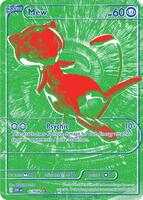
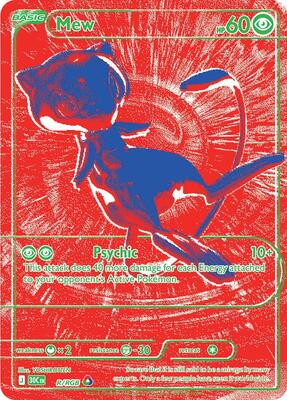 1.Mew30th Celebration$4,679
 2.Latias & Latios GX (Alternate Full Art)SM - Team Up$4,620
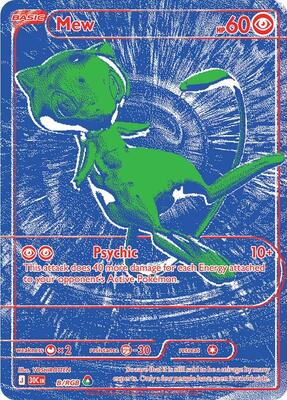 3.Mew30th Celebration$4,153
| # | Card | Set | Printing | Price |
|---|---|---|---|---|
| 1 | Mew R/RGB · RGB Rare | 30th Celebration | Holofoil | $4,679 |
| 2 | Latias & Latios GX (Alternate Full Art) 170/181 · Ultra Rare | SM - Team Up | Holofoil | $4,620 |
| 3 | Mew B/RGB · RGB Rare | 30th Celebration | Holofoil | $4,153 |
| 4 | Mew G/RGB · RGB Rare | 30th Celebration | Holofoil | $3,529 |
| 5 | Groudon Star 111/113 · Ultra Rare | EX Delta Species | Holofoil | $3,000 |
| 6 | Charizard 146/144 · Secret Rare | Skyridge | Reverse Holofoil | $3,000 |
| 7 | Lugia EX (Team Plasma) (134 Full Art) 134/135 · Ultra Rare | Plasma Storm | Holofoil | $2,717 |
| 8 | Lugia ex 105/115 · Ultra Rare | EX Unseen Forces | Holofoil | $2,500 |
| 9 | Rocket's Mewtwo [Winner] 008/009 · Promo | Best of Promos | Reverse Holofoil | $2,400 |
| 10 | Umbreon VMAX (Alternate Art Secret) 215/203 · Secret Rare | Evolving Skies | Holofoil | $2,299 |



The full top 50 is in our most expensive Pokémon cards list, updated every week.
How to Spot Fake Pokémon Cards When Buying Online
Most people asking how to know if a Pokémon card is fake are deciding whether to buy one. These are the warning signs before you pay:
- A price far below the market. Pokémon Support says a pack priced "dramatically below" the suggested retail price is a near-certain sign of a fake. For singles, check the current market price first; our most expensive Pokémon cards list shows what the top cards really sell for.
- Stock photos, or no photo of the back. Ask for photos of both sides of the actual card, in daylight, next to something that shows the photo is new. A seller who won't send them has answered your question.
- Many copies of the same expensive card. One seller with a stack of high-value chase cards at a discount, especially from a new account with little feedback, deserves extra care.
- A request to pay as "friends and family". PayPal's Friends and Family payments have no buyer protection, so a fake bought that way usually can't be refunded. Pay with a method that has buyer protection.
- Flea markets and pop-up stalls. Pokémon Support says most of the reports of counterfeit sales it receives come from flea markets.
- On eBay, use the Authenticity Guarantee. Single cards listed at $200 or more, raw or graded, go to PSA for inspection before they reach US buyers, at no cost to the buyer. eBay lowered the threshold from $250 to $200 in 2026.
Fake sealed packs and boxes
Pokémon Support says fake packs are "very difficult to discern" from real ones, so buy sealed product from established retailers. TCGplayer's checklist: real booster boxes are wrapped in soft cellophane printed with a Poké Ball logo; real packs have straight, flat seals with little air inside; images from the anime on the packaging are a red flag; and the cards in a real pack all face the same way. To see what a real box should cost, our Pokémon booster box prices guide lists every current set.
Can an app tell if a Pokémon card is fake?
Not reliably. Pokémon card scanner apps are built to identify a card and look up its price, which helps with check 3, but they don't authenticate it. PreGradeCards, which offers AI pre-grading, says in its own FAQ that "AI tools are not designed specifically for counterfeit detection". Use the checks above.
Graded Cards: How to Spot a Fake PSA Slab and Verify the Cert
A graded card is the safest way to buy an expensive single, but fake PSA slabs exist, and so do real slabs with swapped cards or fake labels. PSA's Buyer's Guide and the graders' own lookup tools give you three steps.
1. Look up the cert number yourself. Type it into the grader's own site: psacard.com/cert, CGC's cert lookup or Beckett's card lookup. Don't use a link or QR code the seller sends you, and check that the web address is the grader's own. The card, set, year and grade must match.
2. Compare the card with the grader's images. PSA and CGC show images for many certs. PSA warns that verifying a cert number doesn't remove the risk, because forgers can copy real cert numbers from public sources onto fake labels. If the card in the slab doesn't match the card in the grader's photos (centring, print lines, a mark on the holo), walk away.
3. Inspect the holder. PSA's guide says it has used tamper-evident holders since 1991, and that the sonic weld sealing them makes a real holder firm and almost inflexible. Signs of tampering include "frosting" or cracks along the edges, plastic that flexes, glue, and edges that pop open under a fingernail. Hold the label up to a light: on a real PSA label you can faintly see the printing on the other side, while a fake front glued over a real label is too thick for that. Forgers sometimes copy an older label style, so compare the label with PSA's examples from the same period.
The October 2026 duplicate-cert case
On 28 October 2026, a Reddit user said that a PSA 10 Expedition Dragonite slab sold on Fanatics Collect carried the same cert number (65821932) as a slab they already owned. Fanatics Collect's sales history lists a PSA 10 Expedition holo Dragonite at $288,000 on 23 October. The next day, members of the Elite Fourum forum flagged more slabs on Fanatics Collect, ALT and eBay that they believe have faked labels. When we checked on 3 November 2026, neither PSA nor Fanatics Collect had commented. The lesson: a cert number that checks out isn't enough on its own. The card, the grade and the label all have to match PSA's record. Our Dragonite guide leaves the disputed sale out of its price records for that reason.
For a big purchase, PSA's Buyer's Guide suggests making the sale conditional on PSA reviewing the slab, and says a seller who hesitates may have given you your answer. If you're thinking of grading a card you already own, our grading calculator shows whether the fee is worth paying.
What to Do If You've Been Sold a Fake Pokémon Card
Go back to the platform or payment method you used, and do it quickly: most protection has a deadline.
| Where you bought it | What to do | Deadline and rule |
|---|---|---|
| TCGplayer | Open a counterfeit claim with customer service under TCGplayer Safeguard. TCGplayer sends a prepaid label, its experts test the card, a fake is refunded in full, and TCGplayer settles it with the seller. | Within 30 calendar days of the estimated delivery date (TCGplayer asks for 48 hours after you spot a problem). The card must reach TCGplayer to be refunded |
| eBay | Open a return under the eBay Money Back Guarantee. Items with "strong indicators" of being counterfeit are covered. You may not have to ship the card back, and may be asked to help dispose of it instead. | 30 days after the estimated or actual delivery date, or the seller's return window if that's longer |
| eBay, $200 or more | The Authenticity Guarantee sends the card to PSA before it ships. A card that fails is never sent to you. | Automatic: a full refund to your original payment method |
| PayPal Goods and Services | File an "item not as described" claim: an item advertised as authentic that isn't is covered by PayPal Purchase Protection. | 30 days from delivery or 180 days from payment, whichever comes first. Friends and Family payments aren't covered |
| Card shop, flea market or cash | Ask the shop or seller for a refund. You can report counterfeits to the US IPR Center. | No formal protection |
Then keep the card, the listing and your messages as evidence, and leave honest feedback.
Are fake Pokémon cards worth anything?
No. A fake Pokémon card has no resale value, and it can't be played at official Pokémon events. Don't sell or trade it on, even labelled as a fake: TCGplayer notes that printing or selling counterfeits infringes The Pokémon Company's trademarks. The one use for it is as a reference, kept beside your real cards, for spotting the next fake.
When you do buy a real card worth protecting, put it in a penny sleeve and a toploader or magnetic holder; our Pokémon card binder guide covers the options.
How we built this guide
The checks and their reliability ratings come from TCGplayer's authentication team, Pokémon Support, Wargamer, PSA's Buyer's Guide and 2025 Fraud Report, and the published policies of TCGplayer, eBay, CGC and PayPal, all linked below; where a rating is our own, the table says so. Where the sources disagree, as on the light test and card weight, we say so instead of picking a side. We haven't run our own lab tests. Prices are TCGplayer market prices for ungraded English cards on 2 November 2026, from tcgcsv.com.
Conclusion: Use Several Checks, and Buy Expensive Cards Protected
Start with the back, compare everything against a real card and the official image, and don't rely on any single test. The light test is a screen, not proof, and the rip test is only for a card you're happy to lose.
The more a card is worth, and the closer it is to PSA's list of the most-counterfeited cards, the more it matters how you buy it. Above about $200, buy graded, check the cert yourself against the grader's images, or use eBay's Authenticity Guarantee, and pay with a method that has buyer protection.
Citations & Resources
- TCGplayer: How to Spot Fake Pokémon Cards (Peter Day, updated 13 May 2026)
- Pokémon Support: Did I purchase fake or counterfeit cards?
- Wargamer: How to spot fake Pokémon cards (31 January 2025)
- PreGradeCards: How to tell if a Pokémon card is fake, 2026 counterfeit guide (15 August 2026)
- PSA: 2025 Fraud Report (released 7 May 2026)
- ICv2: Pokémon TCG card counterfeiting surged in 2025 (8 May 2026)
- Sports Collectors Digest: Fraud, counterfeit trading cards rampant in hobby, PSA report shows (11 May 2026)
- PSA: PSA Security: A Buyer's Guide
- CGC Cards: Certification verification
- Elite Fourum: Fake slab on Fanatics? (from 28 October 2026)
- Elite Fourum: Multiple instances of likely faked labels in PSA slabs (29 October 2026)
- eBay: Authenticity Guarantee for trading cards
- eBay: Money Back Guarantee policy
- PayPal: Buyer protection
- TCGplayer Help: TCGplayer Safeguard
- tcgcsv.com: TCGplayer market price data
Related Guides
- Most Expensive Pokémon Cards: record sales and this week's top 50
- Best Pokémon Cards: the most valuable, the strongest ever and the best in Standard
- Charizard Pokémon Cards: every Charizard card and its value, the most-faked Pokémon of all
- Umbreon Pokémon Cards: every Umbreon card, including Moonbreon
- Gengar Pokémon Cards: every Gengar card and what it's worth
- Lugia Pokémon Cards: every Lugia card, including the $654,000 Neo Genesis record
- Dragonite Pokémon Cards: every Dragonite card, and the disputed Expedition slab
- Arceus Pokémon Cards: every real Arceus card, and the fake ones sold as VMAX
- Best Pokémon Card Binders: binders, sleeves and holders to protect your cards
- Pokémon Booster Box Prices: every set's box and its cost per pack
Frequently Asked Questions
🔗 Related Resources
More Reviews:
Related Articles
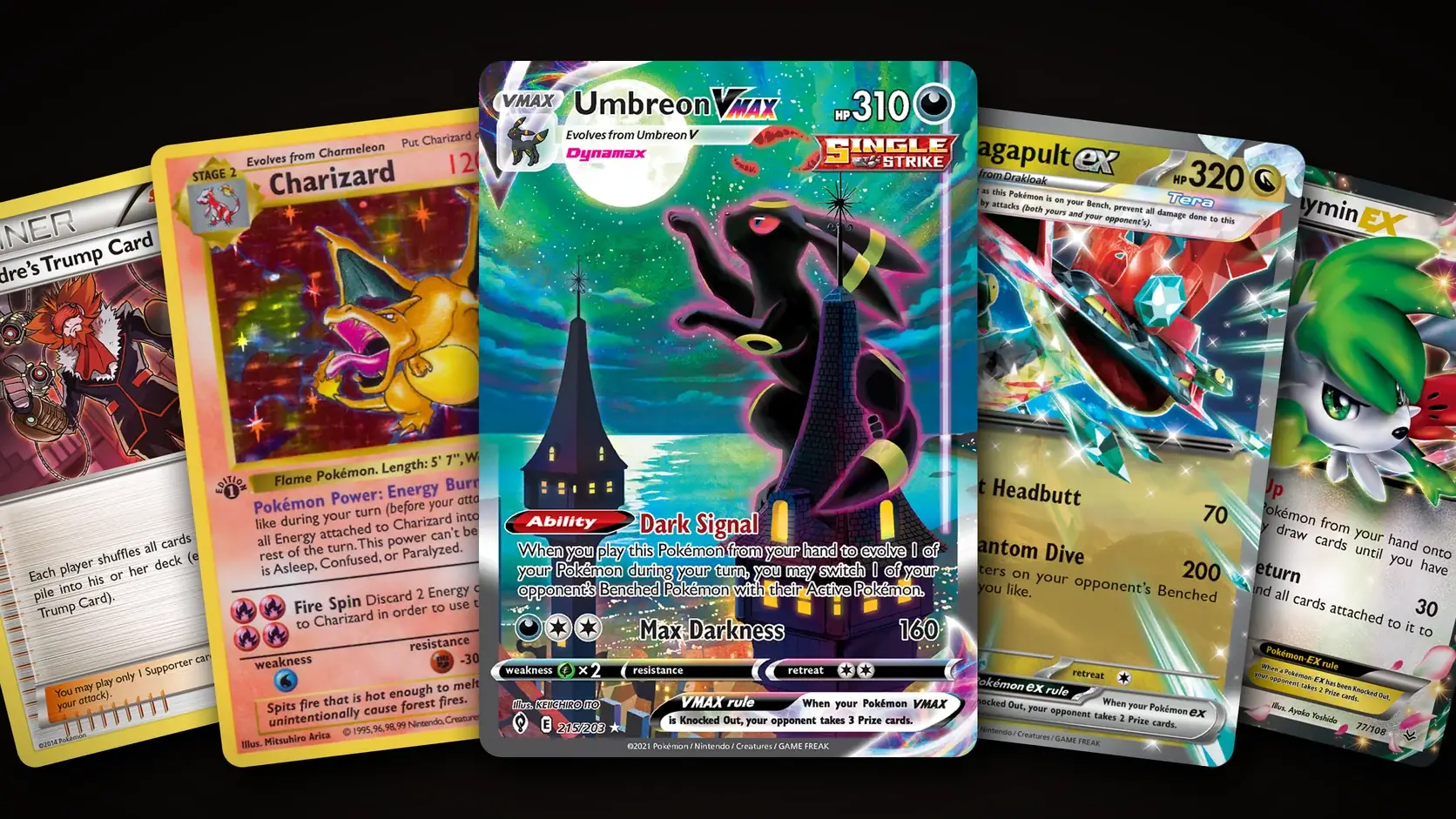
Best Pokémon Cards 2026: Strongest and Most Valuable Ever
The best Pokémon card depends on what you mean: the most valuable sold for $16.49 million, the strongest was banned, and Dragapult ex leads Standard in 2026.
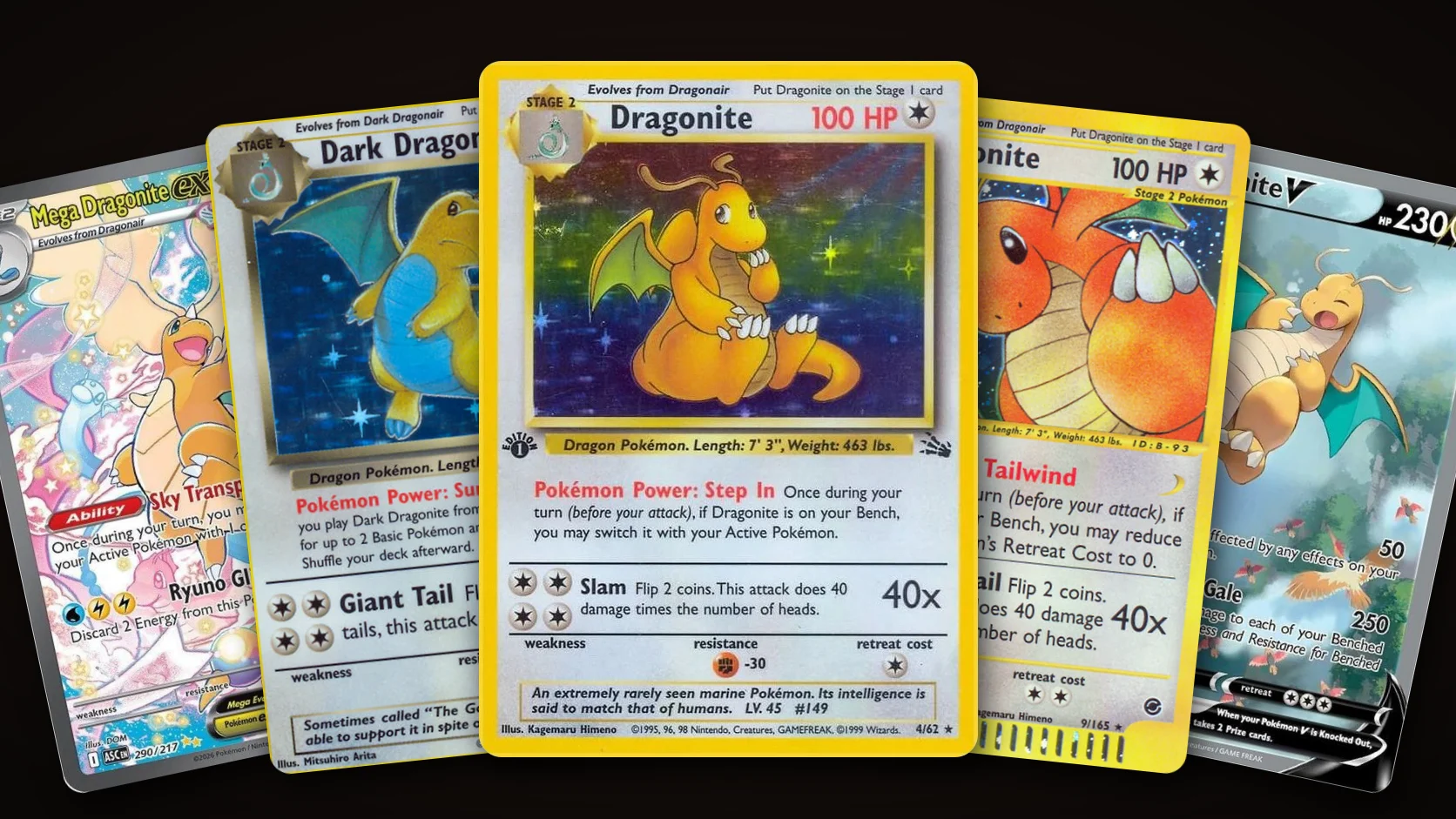
Dragonite Pokémon Cards: Every Card and Its Value (2026)
Every English Dragonite Pokémon card on TCGplayer, ranked by price and updated weekly, plus the record: a $384,000 PSA 10 Dark Dragonite in October 2026.

Lugia Pokémon Cards: Every Card and Its Value (2026)
Every English Lugia Pokémon card and what it's worth, ranked by TCGplayer price and updated weekly, plus the record: a $654,000 PSA 10 1st Edition Lugia.