Quick Verdict
Understanding Magic: The Gathering dice is essential for tracking life totals, counters, and gameplay mechanics—this comprehensive guide covers everything from spindowns to specialty dice.
TOP RECOMMENDATIONS
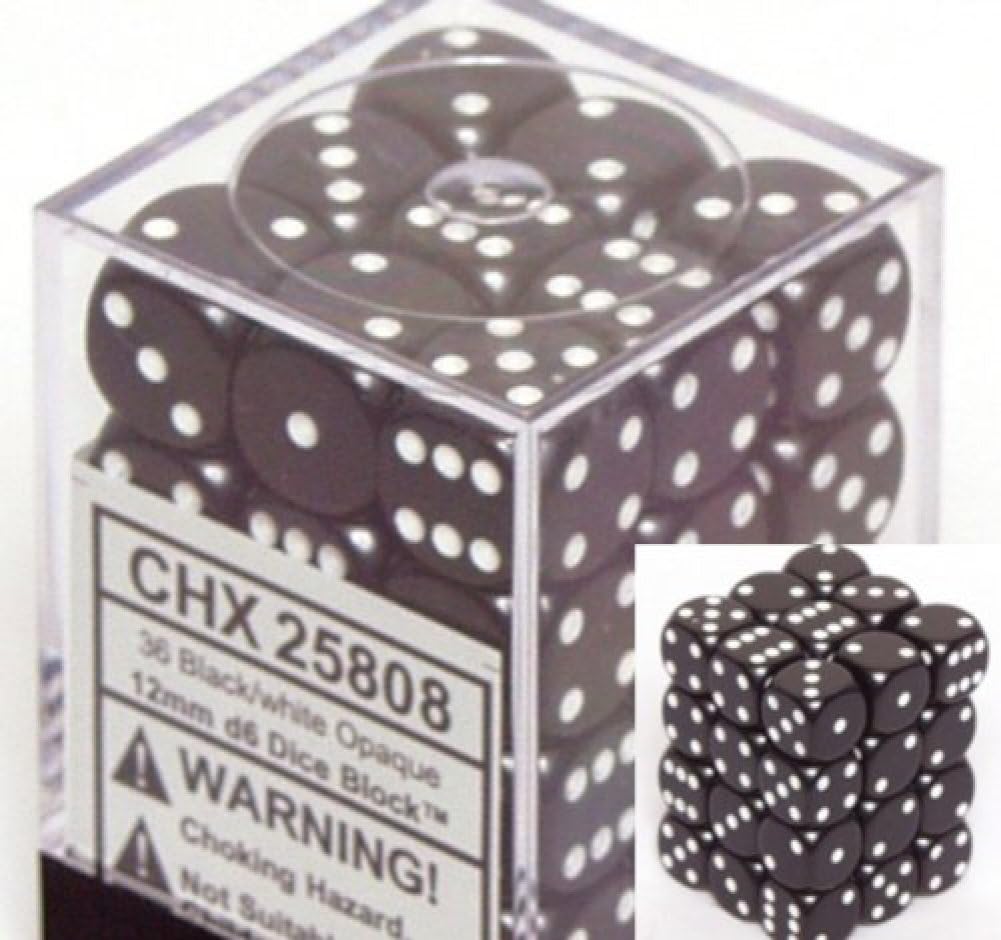
Chessex 12mm d6 Dice Block (36 Dice)
The industry standard for tracking counters - 36 dice is enough for any table
- ✓12mm is the sweet spot: readable on a card without crowding neighbouring permanents
- ✓36 dice covers a full Commander pod without borrowing
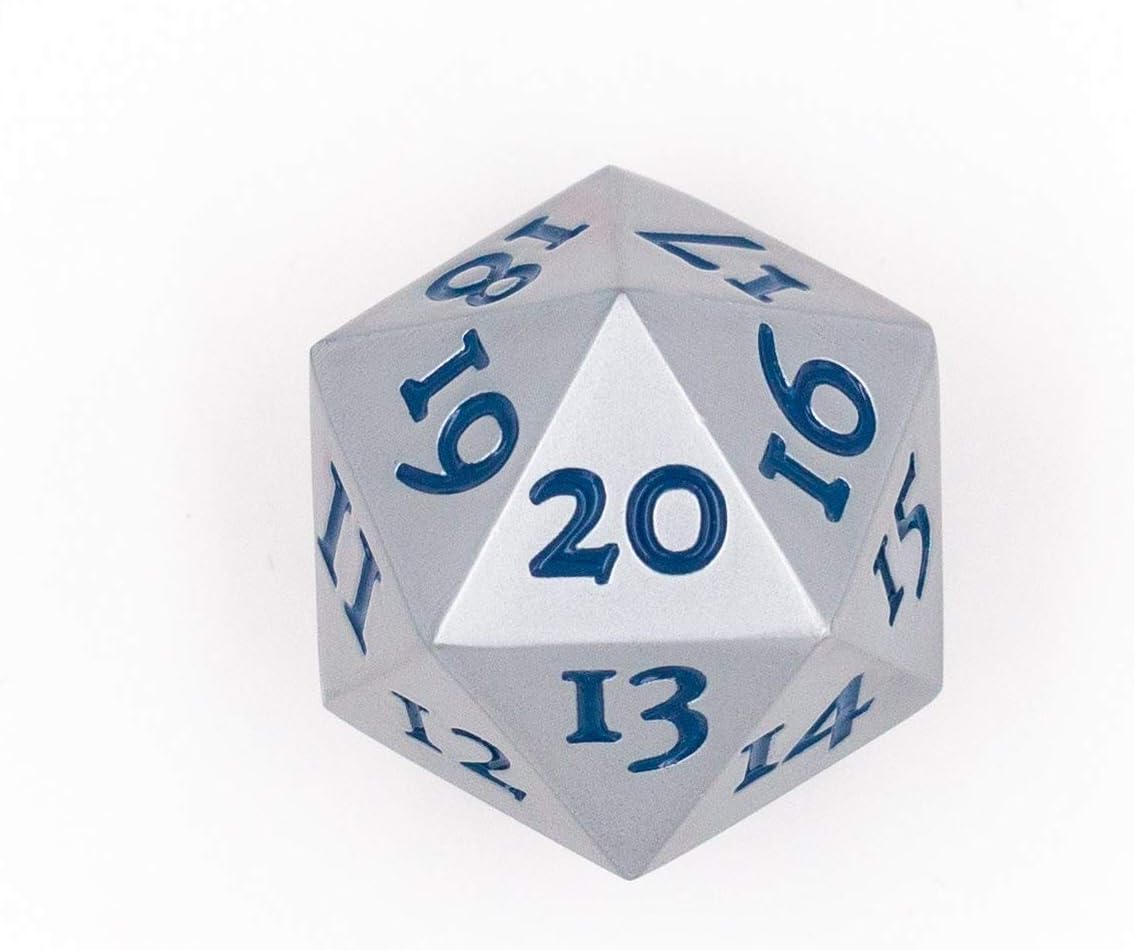
Solid Metal D20 Spindown Life Counter
Best life tracker - the weight keeps it from getting nudged mid-game
- ✓Numbers run in sequence, so a single nudge changes life by exactly one
- ✓Solid metal is heavy enough that it does not roll when the table gets bumped
Walk into any local game store on Friday Night Magic, and you'll witness a kaleidoscope of colorful dice scattered across playmats—from simple spindowns tracking dwindling life totals to elaborate arrays of counters marking +1/+1s, loyalty abilities, and Commander damage. Magic: The Gathering dice have evolved from simple accessories into essential gameplay tools that bridge the gap between card mechanics and physical board state management.
Yet despite their ubiquity, confusion abounds. New players unknowingly roll their spindown life counters for random effects, triggering judge calls at competitive events. Commander enthusiasts struggle to track multiple damage sources across four-player games. Collectors hunt for rare set-specific dice featuring Phyrexian numerals or guild symbols, unaware of the treasures hiding in their Bundle boxes.
This comprehensive guide demystifies the world of Magic: The Gathering dice, from the critical technical distinction between spindown life counters and standard d20s to specialized counter dice, collectible variations, and format-specific requirements. Whether you're cracking your first Welcome Deck or optimizing your Commander setup, understanding dice is fundamental to mastering the physical elements of Magic gameplay.
The most common mistake in Magic? Using the wrong die for the wrong purpose—and it might cost you a game.
The Basics: What Dice Do You Actually Need for Magic?
Unlike tabletop RPGs where dice rolling drives core gameplay mechanics, Magic: The Gathering uses dice primarily as tracking tools rather than randomization devices. This fundamental distinction separates Magic dice from their Dungeons & Dragons cousins and explains why the dice in your Bundle box look different from standard gaming dice.
At minimum, every Magic player needs a way to track life totals. In casual formats like Standard, Pioneer, or Modern, you start at 20 life. Commander format begins at 40 life. While paper life pads and digital apps exist, most players prefer the tactile immediacy of dice—specifically, the iconic twenty-sided die (d20).
Starting Life Totals by Format
Standard, Pioneer, Modern, Legacy, Vintage: 20 life
Commander (EDH): 40 life
Two-Headed Giant: 30 life per team
Brawl: 25 life (or 30 life if your commander started in the command zone)
Beyond life tracking, Magic's diverse mechanics create additional tracking needs. Creatures accumulate +1/+1 counters. Planeswalkers gain and lose loyalty. Token creatures multiply across the battlefield. Energy counters, experience counters, poison counters—each mechanic introduces another element requiring physical representation.
This is where your dice collection expands from a single d20 to a complete tracking ecosystem.
Six-sided dice (d6) have become the community standard for representing quantities: three +1/+1 counters on your creature, five 1/1 Goblin tokens, eight Treasure tokens awaiting sacrifice. Their clear readability and universal availability make d6s indispensable for board state clarity, especially in complex token strategies or creature-heavy decks.
The introduction of "roll a d20" mechanics in sets like Adventures in the Forgotten Realms and Commander Legends: Battle for Baldur's Gate added genuine randomization to Magic gameplay, creating scenarios where the type of die you use becomes critically important—a topic we'll explore in depth next.
The Great Debate: Spindown Life Counters vs. Standard d20s
Understanding the difference between spindown life counters and standard d20s is the most important concept in this entire guide. These two dice may look similar at first glance—both have twenty faces, both feature numbers 1 through 20—but their number arrangements serve entirely different purposes, and confusing them can lead to gameplay issues or even disqualification at competitive events.
Anatomy of a Spindown Life Counter
The spindown die, officially called a "spindown life counter," features numbers arranged sequentially in descending order. Starting at 20, each adjacent face counts down: 20 is next to 19, which touches 18, which connects to 17, and so on in a spiral pattern down to 1.
This clever design serves one purpose: rapid, intuitive life total tracking. When you take damage, you simply rotate the die to show your new life total without searching for the correct number. Going from 20 to 17 after taking 3 damage requires a simple twist rather than flipping the die multiple times.
The trade-off? This sequential clustering makes spindowns terrible for randomization.
Critical Tournament Rule
Never roll a spindown die for random effects. The Magic Tournament Rules (MTR Section 3.9) require randomization methods to be fair and unmanipulable. Because spindown dice cluster high numbers together, they can be "plunked" or gently placed to favor certain results. Using a spindown for dice rolls in competitive play may result in a warning or game loss from a judge.
Most spindown life counters feature a set symbol replacing the 20 on one face—a gear for The Brothers' War, the Phyrexian symbol for Phyrexia: All Will Be One, or guild symbols for Ravnica sets. This branding makes spindowns highly collectible while serving as immediate visual identification.
Anatomy of a Standard d20
Standard twenty-sided dice, common in tabletop RPGs, distribute numbers across faces in a carefully balanced pattern designed for randomization. High and low numbers alternate, with opposite faces typically summing to 21 (20 opposite 1, 19 opposite 2, 18 opposite 3, etc.).
This distribution ensures no cluster of high or low numbers occupies one region of the die. When rolled fairly, each number has an equal probability of appearing—true randomness necessary for game mechanics that rely on chance.
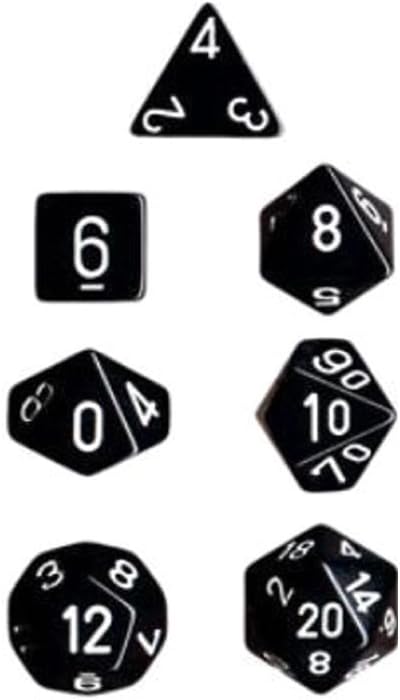
Chessex Polyhedral 7-Die Set
Properly balanced d20s for random dice rolls in MTG
Key Feature: Randomized number distribution
Use Case: Cards requiring d20 rolls (AFR, CLB sets)
Compliance: Tournament legal for randomization
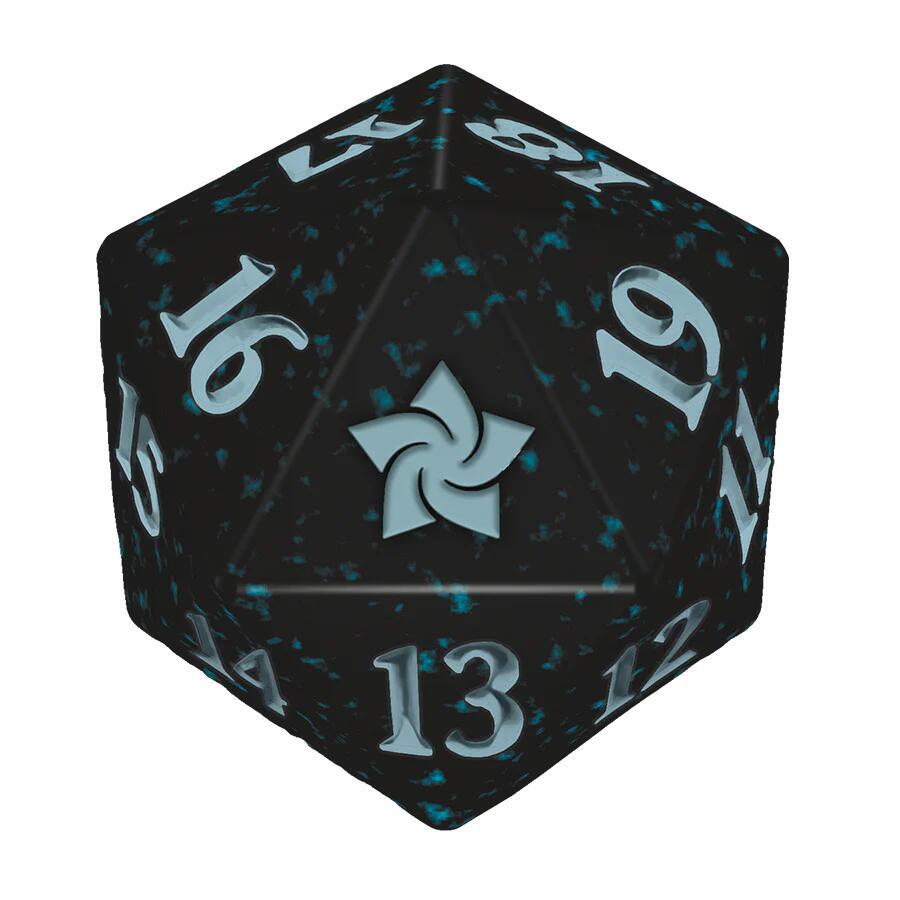
MTG Bundle Spindown Die
Sequential number arrangement for easy life counting
Key Feature: Sequential countdown design
Use Case: Life total tracking only
Warning: Not for random dice rolls
The Golden Rule: Match the Die to Its Purpose
The distinction crystallizes into one simple rule: Spindowns for tracking, standard d20s for rolling.
When cards like Barbarian Class, Ancient Copper Dragon, or Wyll, Blade of Frontiers instruct you to "roll a d20," you must use a properly randomized standard d20. When tracking your life total throughout the game, a spindown life counter provides superior usability.
In casual play, many groups tolerate rolling spindowns for convenience—but understanding the technical and ethical reasons why this compromises fairness helps you make informed choices about your gameplay tools.
Spindown vs. Standard d20 Comparison
| Feature | Spindown Life Counter | Standard d20 |
|---|---|---|
| Number Arrangement | Sequential (20→19→18→17...) | Randomized (opposites sum to 21) |
| Primary Use | Life total tracking | Random dice rolls |
| Tournament Legal Rolling | ❌ No | ✅ Yes |
| Life Tracking Ease | ✅ Excellent | ⚠️ Requires searching for numbers |
| Collectibility | High (set symbols, special editions) | Low (generic gaming dice) |
| Typical Source | Bundle boxes, Pre-release kits | Gaming stores, dice retailers |
| Visual Identifier | Set symbol on "20" face | Plain numbers only |
Specialized Dice for Gameplay Mechanics
As Magic's design space expanded beyond simple life totals and creature combat, specialized dice emerged to track the game's increasingly complex mechanical landscape. Understanding these specialized dice transforms cluttered, confusing board states into clear, readable game positions.
+1/+1 Counter Dice and -1/-1 Counter Dice
The most common tracking challenge in Magic involves creatures with +1/+1 or -1/-1 counters. A creature entering as a 2/2 that receives three +1/+1 counters becomes a 5/5—but without clear tracking, opponents lose trust in board state accuracy.
The solution: dedicated counter dice that sit directly on creature cards, immediately visible to all players.
Six-sided dice (d6) serve this role perfectly. Place a d6 showing "3" on your creature card, and everyone instantly knows that creature has three counters. Color coding adds another layer of clarity: green dice for +1/+1 counters, black dice for -1/-1 counters, or transparent colored dice that don't obscure card text.
Board State Clarity Best Practice
Always announce counter placement and removal aloud: "Putting two +1/+1 counters on my Pelt Collector, making it a 3/3." This verbal confirmation, combined with visible dice, prevents misunderstandings and maintains game integrity.
Some players prefer specialized +1/+1 counter dice featuring plus/minus symbols instead of numbers. While aesthetically pleasing, these can be harder to read at a glance compared to standard numbered d6s. Choose based on your playgroup's preferences and your need for instant readability across the table.
Keyword Counter Dice: Tracking Abilities
Ikoria: Lair of Behemoths introduced keyword counters as a formal mechanic, allowing creatures to gain abilities like Flying, Deathtouch, or Trample as counters rather than until-end-of-turn effects. This innovation created a new tracking challenge and spawned a market for keyword counter dice.
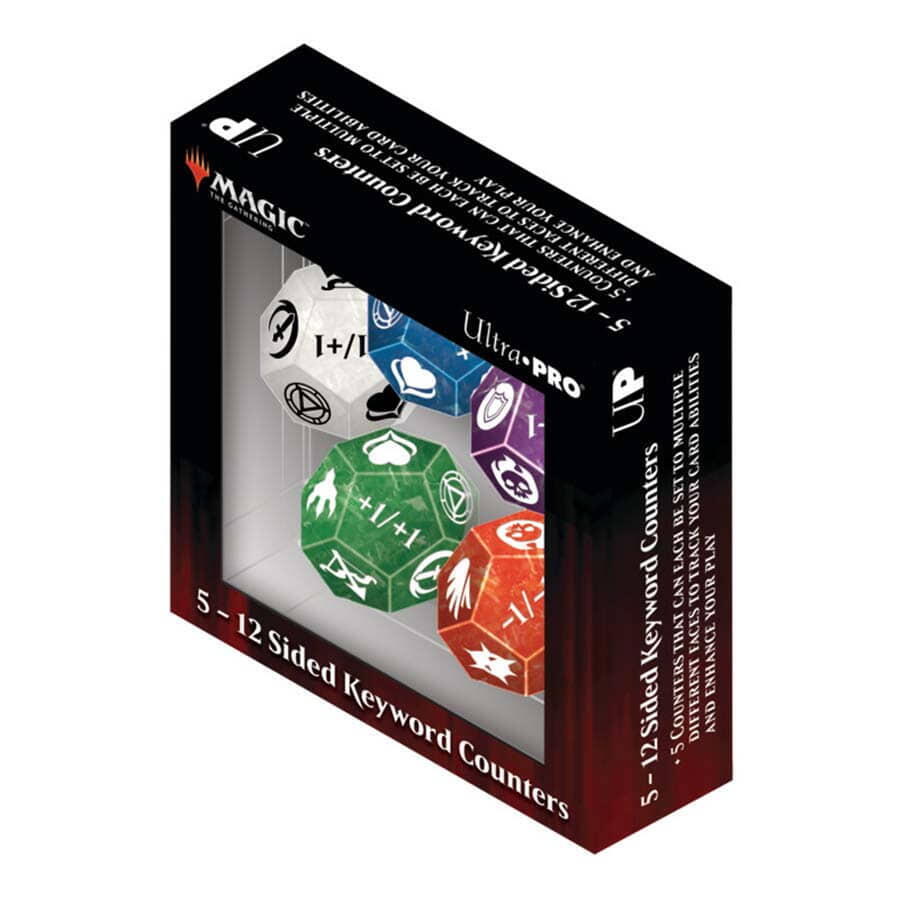
MTG Keyword Counter Dice
Ultra Pro's official set of five 12-sided keyword counters
Key Feature: Five 12-sided dice, each face a different keyword symbol
Covers: +1/+1 and -1/-1 alongside keyword abilities, one die per colour
Use Case: Ikoria mechanics, mutate decks, ability-granting commanders
Alternative: Small tokens or paper counters
These specialized dice feature ability names printed on their faces. Instead of trying to remember whether your mutated creature has Flying and Deathtouch or Flying and Trample, you simply place the appropriate dice on the card. The visual reference eliminates memory issues and speeds up combat calculations.
Keyword counter dice shine brightest in Commander, where games stretch long enough for ability-tracking to become legitimately challenging.
Loyalty Dice: Managing Planeswalkers
Planeswalkers enter the battlefield with loyalty counters equal to their starting loyalty and gain or lose loyalty as they activate abilities. While +1/+1 counter dice work in a pinch, dedicated loyalty dice provide superior functionality.
Loyalty dice typically feature larger numbers (ranging from 1 to 10 or higher) since planeswalkers often start with 3-6 loyalty and can scale much higher. Some specialty loyalty dice use twelve-sided (d12) or even twenty-sided formats to accommodate high-loyalty planeswalkers like Ugin, the Spirit Dragon or ultimate-heavy superfriends strategies.
Loyalty Tracking Solutions
Spindown d20: Repurpose extra spindowns as loyalty counters for high-loyalty planeswalkers
Large d12: Twelve-sided dice provide good number ranges without taking up too much table space
Loyalty-specific dice: Some retailers sell dice specifically designed with loyalty symbols
The key consideration: size and visibility. Planeswalkers often become removal targets, so opponents need to clearly see current loyalty totals to make informed tactical decisions. Oversized dice or brightly colored loyalty counters help maintain board state transparency.
Format-Specific Dice Requirements
Different Magic formats create unique tracking challenges that require tailored dice solutions. Understanding format-specific needs helps you build the perfect dice kit for your preferred way to play.
Commander (EDH): The Multi-Track Challenge
Commander format creates the most demanding dice requirements in all of Magic. Beyond the standard 40 starting life total, you must track Commander damage from up to three opponents' commanders (21 damage from any single commander results in elimination), potential poison counters (still lethal at 10), experience counters from certain commanders, energy counters, and all the standard +1/+1 counters, tokens, and mechanical complexity of regular Magic.
Many Commander players carry 20+ dice to every game—and that's before accounting for token generation.
Life Tracking Solutions for 40 Life:
- Two d20 Spindowns: Stack two spindowns to represent tens and ones (top die showing 4, bottom showing 0 = 40 life)
- Oversized d20: Some manufacturers produce larger d20s specifically for Commander
- Life Wheels: Mechanical spin-down counters that dial up to 40+
- Digital Life Trackers: Apps like Lifelinker or Commander Damage Tracker
Commander Damage Tracking:
The 21-commander-damage rule requires separate tracking for each opponent's commander. Effective solutions include:
- Color-coded d20s: Assign each opponent a color and place that colored die near your life tracker
- Designated zone: Create a "commander damage zone" on your playmat with three dice
- Paper tracking: Simple paper and pencil remains reliable for damage from multiple sources
Commander Damage Rules Reminder
Commander damage is tracked per commander, not per opponent. If an opponent controls two different commanders (partner commanders), damage from each tracks separately. You can take 20 damage from one commander and 20 from another without losing—but 21 from any single commander eliminates you.
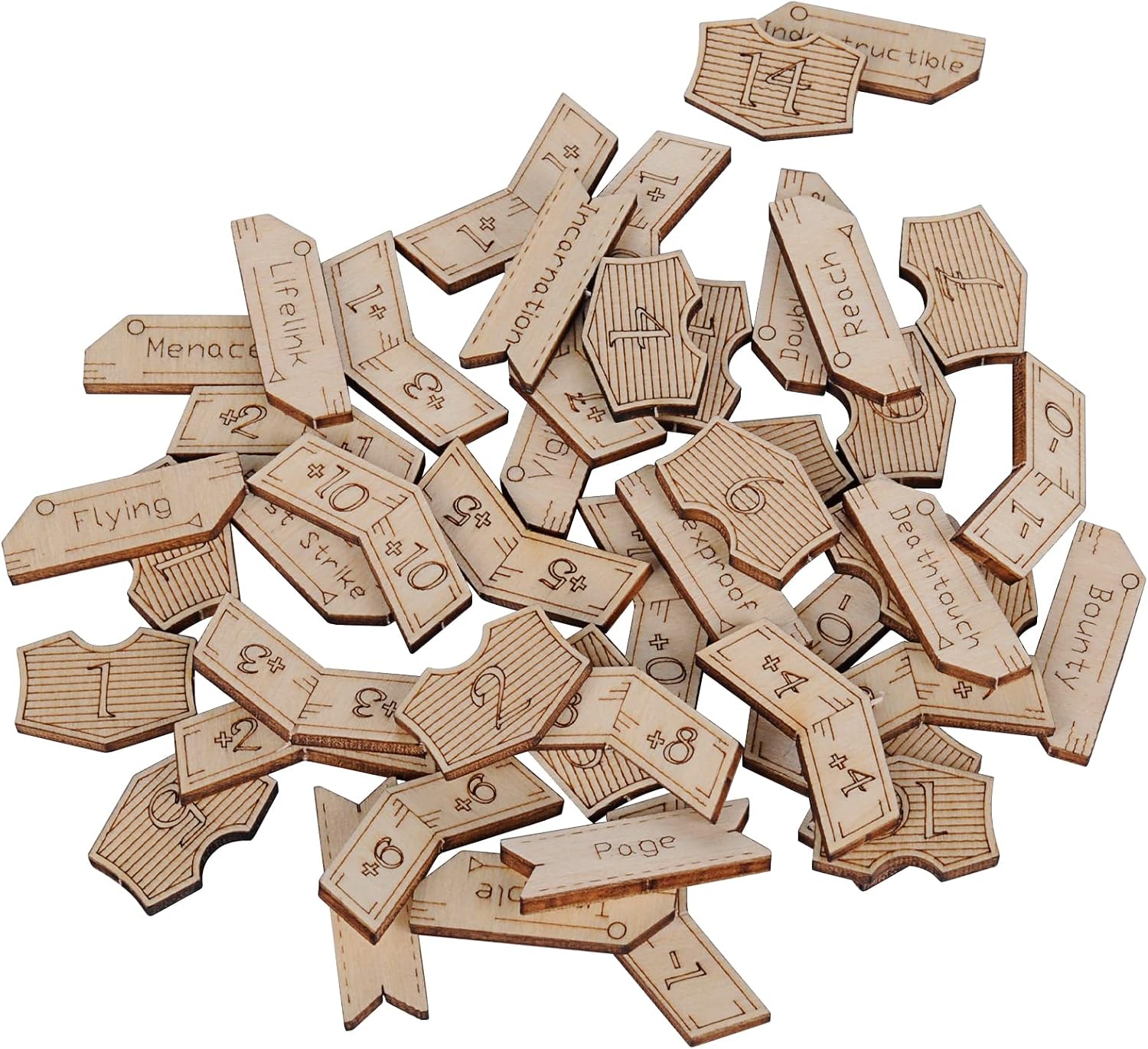
Wooden MTG Counter Token Set (194 Pieces)
Comprehensive dice collection for Commander format needs
Includes: 194 laser-cut tokens — +1/+1, -1/-1, loyalty numerals, keyword counters
Use Case: Complete solution for Commander tracking
Benefit: Flat tokens stack and do not roll off a crowded board
Solid Metal D20 Spindown Life Counter
Extra-large metal d20 for clear 40-life tracking
Key Feature: 30mm+ size for visibility
Use Case: Primary life tracking in Commander
Benefit: Single-die solution for 40 life
Planechase: The Planar Die
Planechase format introduces a unique die found nowhere else in Magic: the Planar Die. This oversized six-sided die doesn't feature numbers at all—instead, it uses symbols to drive the format's plane-hopping mechanics.
Planar Die Faces:
- Four blank faces: No effect (most common result)
- One Planeswalker symbol: Planeswalk to the next plane card in the deck
- One Chaos symbol (spiral): Trigger the current plane's chaos ability
The Planar Die's symbol-based design makes Planechase immediately distinguishable from standard Magic gameplay, creating memorable multiplayer experiences.
During your turn in Planechase, you may roll the Planar Die. The first roll is free; each subsequent roll costs {1} more than the last. This escalating cost, combined with the die's results, creates the format's signature tension between staying on favorable planes and risking mana to escape unfavorable ones.
Planar Dice come packaged with Planechase products but are also available separately from retailers. Their oversized nature (typically 22mm or larger) and unique symbols make them collector's items even for players who don't regularly play the format.
Adventures in the Forgotten Realms: True Randomization Returns
The Adventures in the Forgotten Realms (AFR) and Commander Legends: Battle for Baldur's Gate (CLB) sets marked a significant mechanical shift by introducing cards that explicitly require rolling a d20 as part of their effect. Cards like Delina, Wild Mage, Pixie Guide, and Barbarian Class brought D&D's dice-rolling excitement directly into Magic gameplay.
Roll Effects Example
Delina, Wild Mage (AFR)
Whenever Delina attacks, choose target creature you control, then roll a d20:
- 1–14: Create a token copy that's tapped and attacking
- 15–20: Create a token copy with that ability, roll again
This mechanical innovation created the only mandatory use case for standard d20s in Magic. Spindown dice are explicitly inadequate for these effects because the rolls must be random and fair. The game's rules require using balanced, randomized dice for these mechanics.
Players building decks around AFR or CLB mechanics should carry multiple standard d20s, especially since some effects allow rerolling or advantage (rolling multiple dice and taking the higher result).
A Collector's Guide to MTG Dice
Beyond gameplay functionality, Magic: The Gathering dice have developed their own collectible market. Rare spindowns, promotional dice, and special editions become treasured accessories that showcase personal style and celebrate Magic's history.
Dice collecting within the Magic community began modestly with the introduction of spindowns in Fat Pack boxes during the Mirrodin block (2003-2004). Early spindowns were simple—solid colors with basic set symbols. But as Wizards of the Coast recognized their popularity, dice became canvases for creative expression, featuring guild symbols, Phyrexian text, metallic finishes, and oversized formats.
Today, rare MTG dice command prices rivaling some reserved list commons, with pristine original Ravnica guild dice or misprinted spindowns selling for $50-$100+ in collector markets. The dice that once seemed like throwaway Pack-ins have become genuine collectibles with dedicated trading communities.
Identifying Set Symbols on Spindowns
Nearly every modern Magic spindown features a set symbol replacing the "20" on one face. This branding serves dual purposes: immediate set identification and collectible differentiation. Learning to recognize these symbols helps you date your dice collection and identify valuable or rare variants.
The set symbol location is universal: replace the highest number (20) with the set's icon.
Notable Set Symbol Dice:
- Original Ravnica Guilds: Featured individual guild symbols (Azorius scales, Rakdos horns, etc.) and remain highly collectible
- Phyrexia: All Will Be One: Used Phyrexian numerals instead of Arabic numbers—the entire die features alien script
- Throne of Eldraine: Storybook frame symbol die matching the showcase card frame
- Kamigawa: Neon Dynasty: Neon-colored acrylic with cyberpunk aesthetic
Some sets include multiple dice variants. War of the Spark, for example, included different Planeswalker symbol dice corresponding to key characters. Guilds of Ravnica and Ravnica Allegiance provided guild-specific dice that matched deck color identities.
Rare and Valuable Dice
Certain dice transcend utility to become genuine collectibles worth significantly more than their $2-3 retail price:
Top 8 Dice
Tournament prizes given to Top 8 finishers at major events. Feature "Top 8" text instead of set symbols. Highly prized by competitive players.
Phyrexian Numbered Dice
Complete Phyrexian text from Phyrexia: All Will Be One. Popular among players who love the aesthetic horror of Phyrexia.
Original Ravnica Guild Dice
First-edition guild symbol dice from original Ravnica block (2005-2006). Complete sets command premium prices.
Misprints and Errors:
Like misprinted cards, dice with manufacturing errors develop cult followings. Double-numbered faces, missing symbols, or color variations create one-of-a-kind pieces. The rarity and uniqueness drive collector interest far beyond functional value.
Oversized Dice:
Several products included oversized spindowns (25mm or larger) that make impressive display pieces:
- Commander Anthology volumes included extra-large d20s
- From the Vault sets occasionally feature premium dice
- Judge promos and special events sometimes reward oversized variants
Storage and Display
Serious dice collectors face the same preservation challenges as card collectors: how to store, organize, and display their collection while preventing damage.
Storage Solutions:
- Dice bags: Velvet or microfiber bags protect from scratches during transport
- Compartmented cases: Tackle box-style organizers separate dice by set or color
- Display frames: Shadow boxes with foam inserts showcase rare dice as wall art
- Deck boxes with dice trays: Modern deck boxes from Ultra Pro, Gamegenic, and Ultimate Guard include dedicated dice compartments
Preservation Tip
Avoid storing dice in direct sunlight or extreme temperatures. Acrylic and resin dice can yellow or warp over time with UV exposure. Climate-controlled storage preserves colors and material integrity.
The most passionate collectors create catalogued inventories with set completion checklists, treating dice collection with the same dedication as card collecting.
Advanced Topics: Edge Cases and Specialized Uses
Token Representation Best Practices
Token-heavy strategies in Modern, Pioneer, and Commander create board states drowning in creature representations. Proper dice usage transforms chaos into clarity:
The Standard Protocol:
- Use actual token cards (official or custom) as base representations
- Place a d6 on the token card showing quantity
- For multiple token types, use different colored dice or separate play areas
Common Mistakes to Avoid:
- Using a d20 to represent "20 tokens" creates confusion with life totals
- Placing dice directly on non-token creature cards obscures whether they're counters or token counts
- Mixing +1/+1 counter dice with token quantity dice without clear differentiation
Tournament Clarity Requirement
At competitive events, judges require board states to be unambiguous. If your opponent cannot instantly determine your board state from visual inspection, you may be required to reorganize or face slow play warnings. Clear, consistent dice usage is part of tournament readiness.
Dice Rolling Mechanics and Probability
For players building decks around AFR/CLB dice-rolling mechanics, understanding probability improves strategic decision-making:
Standard d20 Probabilities:
- Each face: 5% (1 in 20)
- Rolling 10 or higher: 55% (11 in 20)
- Rolling 15 or higher: 30% (6 in 20)
- Rolling natural 20: 5% (1 in 20)
Modified Rolls:
- Adding +2 to rolls shifts all probabilities by 2 numbers
- "Advantage" (roll twice, take higher) significantly improves high-roll chances
- "Disadvantage" (roll twice, take lower) dramatically reduces high-roll chances
Cards like Pixie Guide (grant advantage) or Barbarian Class (add +2 to rolls) transform dice-rolling from unreliable to strategically viable. Building around these effects requires carrying multiple standard d20s for simultaneous rolling.
The Mana Pool Dice Debate
Some players use dice to track floating mana between phases—a practice that's acceptable but often unnecessary in modern Magic. With most mana sources producing mana that empties at phase ends, floating mana is rare in contemporary formats. However, cards like Omnath, Locus of Mana or Kruphix, God of Horizons that allow mana to persist between phases make dice tracking useful. If you're playing these strategies, use colored d6s to represent different mana types, keeping them clearly separated from counter dice to avoid confusion.
Conclusion: Building Your Perfect Dice Collection
Understanding Magic: The Gathering dice transforms gameplay from confusing board states into clear, trackable game positions. The critical distinction between spindowns (for tracking) and standard d20s (for rolling) prevents tournament issues and ensures fair play.
Every Magic player should own:
- At least one spindown d20 for life tracking (included in Bundle products)
- A set of d6s (6-12 dice) for counters and tokens
- One standard d20 for random rolls (if playing AFR/CLB mechanics)
Commander players need more: multiple spindowns for 40-life tracking, additional d6s for complex board states, and potentially keyword counter dice for ability tracking.
The Golden Rules:
- Spindowns for tracking, standard d20s for rolling—never confuse these purposes
- Color code your dice—green for +1/+1, black for -1/-1, different colors for different token types
- Always announce changes—verbal confirmation combined with visible dice prevents disputes
- Carry backups—technology fails, dice get lost, and having spares prevents game delays
Whether you're a casual player using the spindown from your first Bundle or a competitive Commander enthusiast with a curated dice collection, understanding these tools elevates your gameplay experience. The right dice don't just track numbers—they create clarity, prevent disputes, and let you focus on the strategic depth that makes Magic: The Gathering the world's greatest trading card game.
Related Guides
- MTG Life Counters — the alternatives to a spindown for tracking life
- The Ultimate Guide to MTG Counters — what every counter type your dice are tracking does
- Best MTG Deck Boxes — boxes with room for dice and tokens
- MTG Gifts: What to Buy a Magic Player — dice sets as a gift for a Magic player