Quick Verdict
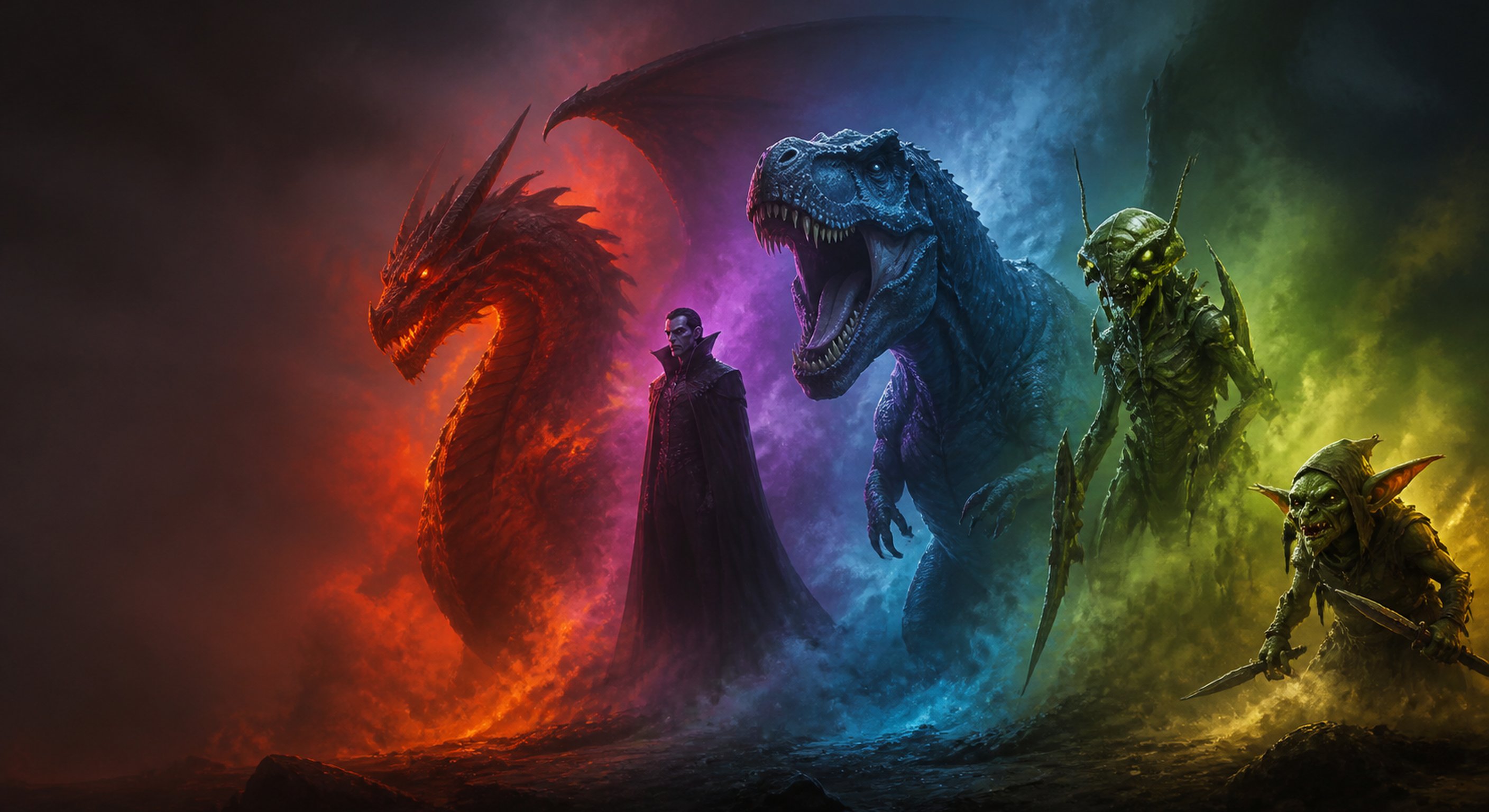
A tribal deck picks one creature type and plays the cards that reward you for repeating it. The tribes differ enormously in how they win and what they cost: slivers share abilities across the whole board, goblins go wide and fast, dragons play a big expensive top end, vampires drain, and dinosaurs hit hard on arrival. Slivers and goblins are the cheapest routes in; dragons and angels the most expensive. Note that 'kindred' is now the official card type, 'typal' is the community term for the deck style, and 'tribal' is the older word for both.
BUYING INTO A TRIBE
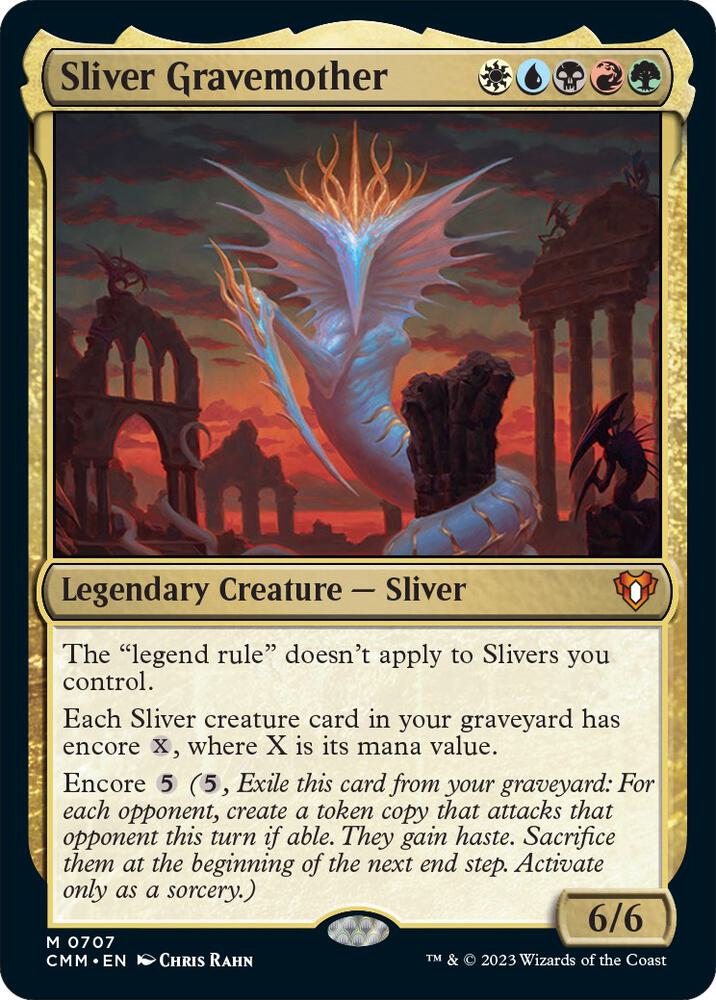
Sliver Gravemother (commander single)
The five-colour sliver commander for a fraction of the out-of-print Sliver Swarm precon
- ✓Buy the commander, then add slivers as singles
- ✓Most slivers cost under $5 each
Tribal is the most intuitive way to build a Magic deck and the reason most players stay with the game. You do not need to understand the metagame to know that you want the deck with the dragons in it. Pick a creature type you like the look of, find the cards that reward you for playing more of them, and you have a deck with a plan.
What separates a good tribal deck from a pile of themed creatures is understanding that the tribes are not interchangeable. Slivers share abilities across the whole board. Goblins win by arithmetic. Dragons need you to cheat their cost. Each tribe has a different engine underneath the flavour, and building one like another is the most common reason a themed deck feels bad to play.
This guide covers what each major tribe actually does, which commander to build around, and roughly what it costs to get there.
One piece of vocabulary first, because all three words are in active use and they do not mean the same thing.
Tribal, Typal, Kindred: Three Words, Three Meanings
Tribal was the original word, used for both the card type and the deck style. Most players still say it, and you will be understood everywhere.
Kindred is the current official card type. Wizards of the Coast announced the rename in November 2023 and implemented it from Modern Horizons 3 in June 2024, with older cards receiving errata. The card type does something specific and narrow: it lets a noncreature card carry a creature type. A Kindred Instant can be an Elf, so it counts for effects that care about elves without being a creature. No rules changed — the vocabulary changed.
Typal is the community and design term for the deck style — a deck built around one creature type. It is slang, not a game term, and it exists to fill the gap left when "tribal" stopped being used for the card type.
Which word to use
For a deck, "tribal" and "typal" both work and mean the same thing. For the card type printed on a card, "Kindred" is correct and "Tribal" is the outdated name for the same thing. Nothing about how any card functions depends on which word you use.
How Creature Types Actually Work
A creature type is a subtype printed after the dash on the type line — Creature — Elf Warrior. A creature can have several. There are several hundred types in total, and only a few dozen carry enough printed support to build around.
The support comes in a small number of repeating shapes, and recognising them is most of deck construction:
- Lords — a creature that gives every other creature of its type +1/+1 or a keyword. The single most important card class in any tribal deck.
- Cost reducers — spells of your type cost less. Critical for expensive tribes.
- Tutors and recursion — search your library for a creature of the type, or return one from the graveyard.
- Scaling payoffs — an effect that gets stronger with the number of that type you control.
- Type-matters lands and artifacts — mana producers or anthems that only work with a specific tribe.
Changelings are the universal solution to a shallow tribe. A changeling is every creature type at once, in every zone, so a card like Universal Automaton is an Elf, a Dragon and a Sliver simultaneously. If your tribe does not have enough playable creatures, changelings fill the gap without breaking the count your payoffs care about.
The number that decides whether a tribal deck works is not how many creatures of the type you play. It is how many cards in the deck get better because you played them.
The Major Tribes at a Glance
| Tribe | Colours | How it wins | Cost to build |
|---|---|---|---|
| Slivers | Five colour | Every sliver's ability applies to every other sliver — the board becomes one organism | Low to medium |
| Goblins | Red, sometimes black | Overwhelming numbers, very fast, sacrifice payoffs | Lowest |
| Elves | Green, sometimes black | Explosive mana into a large finisher or a drain effect | Low |
| Zombies | Black, sometimes blue | Recursion and token grind — the board keeps coming back | Low |
| Vampires | Black, red, white | Aggression plus lifedrain; wide boards with a life-total clock | Medium |
| Merfolk | Blue, sometimes green | Evasive creatures under lords, backed by counterspells | Medium |
| Cats | White, green, red | Efficient small creatures plus equipment and anthems | Medium |
| Dinosaurs | Green, red, white | Huge bodies with enter-the-battlefield damage; combat maths | Medium to high |
| Dragons | Usually five colour or mono-red | Flying beaters that end games quickly once they land | High |
| Angels | White, sometimes Mardu | Large flying bodies with lifegain and protection | High |
| Eldrazi | Colourless | Enormous top end with cast triggers; ramp into inevitability | High |
Dragons
Colours: five colour, Temur, or mono-red · Archetype: big flying threats
Dragons are the tribe most people want to build first and the one most likely to disappoint if built naively. The problem is arithmetic: dragons cost five to eight mana each, and a deck that simply casts them one at a time loses to anything faster.
Every good dragon deck solves the cost problem rather than paying it. Three approaches:
The Ur-Dragon in five colours is the default. Its eminence ability reduces dragon costs from the command zone before you ever cast it, and attacking with dragons puts a permanent from your hand onto the battlefield for free.
Miirym, Sentinel Wyrm in Temur copies every other dragon that enters, which turns each individual dragon into two and makes expensive cards pay off twice.
Lathliss, Dragon Queen is the mono-red budget entry. Every non-token dragon that arrives brings a 5/5 dragon token with it. Mono-red keeps the manabase cheap, which matters more than it sounds when the spells are already expensive.
Tiamat tutors five dragons directly to hand on arrival, which fixes the consistency problem that makes dragon decks feel random.
If you are building dragons on a budget, go mono-red. The five-colour manabase for a dragon deck can easily cost more than the dragons.
Vampires
Colours: Mardu (black-red-white), or mono-black · Archetype: aggressive lifedrain
Vampires are the best-balanced tribe in the game — genuinely aggressive, but with a lifegain backbone that makes them resilient rather than fragile. They also have the deepest card pool of any tribe outside goblins, because vampires appear in nearly every gothic-horror set Magic prints.
Edgar Markov is the strongest and most-played vampire commander. Its eminence ability creates a 1/1 vampire token every time you cast a vampire spell — from the command zone, before Edgar is even on the battlefield. A deck of cheap vampires becomes a deck of cheap vampires that each bring a friend, and the board gets out of hand fast.
Strefan, Maurer Progenitor builds around blood tokens for a faster, more explosive line.
Anje Falkenrath and Olivia Voldaren offer a slower build for players who prefer filtering and removal over a wide board.
The vampire failure mode is greed. The tribe rewards a low curve and a fast clock; a vampire deck full of six-drops gives up the thing that makes the tribe good.
Dinosaurs
Colours: Naya (green-red-white) · Archetype: enormous creatures with arrival damage
Dinosaurs are the most straightforward tribe here. The creatures are large, many of them deal damage the moment they land, and the deck wins by presenting bodies that opponents cannot profitably block.
Gishath, Sun's Avatar is the archetypal commander: connect once, reveal cards off the top of your library, and put every dinosaur you find directly onto the battlefield. It converts one successful attack into an entire board.
Pantlaza, Sun-Favored offers a similar free-dinosaurs engine keyed to discover, and is the more consistent build.
The tribe's weakness is that it does very little that is not combat. Dinosaur decks lose to opponents who can stabilise the board, because the deck has almost no answer to a stalled table beyond playing another large creature.
Slivers
Colours: five colour · Archetype: shared abilities
Slivers are the most mechanically distinctive tribe in Magic. Every sliver's ability applies to every sliver on the battlefield — including your opponents'. Three slivers granting flying, haste and a pump ability turn every other sliver you control into a threat simultaneously. The board stops being a set of creatures and becomes one organism.
Sliver Overlord tutors any sliver to hand repeatedly and can steal opposing slivers.
The First Sliver cascades when cast and gives every other sliver cascade, which chains an entire turn out of one spell.
Two warnings. Slivers are five-colour by nature, so the manabase is the real cost of the deck. And the shared-ability rule cuts both ways — in a game against another sliver player, you are building their board too.
Goblins
Colours: mono-red, or Rakdos · Archetype: go wide, fast, cheap
Goblins are the cheapest functional tribe in Magic and one of the strongest at the casual table. The cards are commons and uncommons that have been reprinted for thirty years, the curve tops out low, and the deck wins by producing more bodies than the opponent can remove.
Krenko, Mob Boss doubles your goblin count every time it taps, and the number goes exponential in two turns.
Muxus, Goblin Grandee pulls a fistful of goblins from the top of your library directly onto the battlefield.
Goblins also have the best sacrifice support of any tribe, so the deck has a second gear: instead of attacking, convert the board into damage or card draw.
If you want a strong tribal deck for the least money, this is the answer.
The Rest, Briefly
Elves — the mana tribe. Elves produce absurd quantities of mana and dump it into a large payoff or a drain effect. Lathril, Blade of the Elves is the standard commander. Elf precons consistently top the tribal rankings, and EDHREC's June 2026 list put Elven Empire first.
Zombies — grind and recursion. The board keeps coming back, which is miserable to play against and very hard to remove permanently. Wilhelt, the Rotcleaver is the default.
Angels — large white flying creatures with lifegain and protection. Expensive, powerful, and slow. Kaalia of the Vast cheats them into play; Giada, Font of Hope builds a cheaper mono-white version.
Eldrazi — colourless, enormous, and built around ramping into a top end that ends the game on cast rather than on attack. The most expensive tribe to assemble and the most inevitable once online.
Merfolk — small evasive creatures under lords, with counterspells behind them. Kumena, Tyrant of Orazca is the usual build.
Cats — efficient small creatures, equipment and anthems. Arahbo, Roar of the World is the classic commander, and the tribe is more competitive than its reputation suggests.
Lorwyn is the tribal plane
If you are choosing a tribe now, watch what Wizards prints on Lorwyn. The plane exists specifically to deepen creature-type support — it is where changelings were introduced — and the 2026 return to it in Lorwyn Eclipsed adds meaningfully to several of the tribes above. See our complete guide to MTG formats for where that set sits in the current Standard.
The Godzilla Question
godzilla magic the gathering deck is a common search, and the honest answer is that Godzilla is not a creature type in Magic.
The 19 Godzilla Series Monster cards from Ikoria: Lair of Behemoths (2020) are alternate art styles licensed from Toho, printed over existing Ikoria cards. Rodan is mechanically identical to Vadrok. Eighteen of the nineteen have a normal Ikoria counterpart and are completely interchangeable with it for play purposes; only the buy-a-box card exists solely in its Godzilla form.
So building "a Godzilla deck" means one of two things:
A collection goal — acquiring the Godzilla Series art treatments and playing them in a deck built around the underlying Ikoria cards. The cards function normally; you are choosing the skin.
A kaiju-flavoured deck — building around enormous monsters generally, which in practice means dinosaurs, eldrazi, or an Ikoria mutate shell.
If the appeal is giant monsters smashing things, dinosaurs above are the tribe you actually want. If the appeal is specifically the Toho artwork, you are collecting rather than deck-building, and that is a perfectly good reason — just know which one you are doing before you spend.
Building Your First Tribal Deck
| Step | What to do | Why |
|---|---|---|
| 1. Pick the commander first | Choose the tribe's commander, not the tribe | The commander determines colours, budget and how the deck wins |
| 2. Count the payoffs | Find every lord, cost reducer and scaling effect for the type | These are the deck. Creatures without payoffs is a themed pile |
| 3. Fill with changelings | Add changelings if the tribe is shallow | They count as your type without diluting the payoffs |
| 4. Fix the curve | Match the curve to the plan — low for goblins, ramp for dragons | The most common failure is an expensive version of a cheap tribe |
| 5. Answer the board wipe | Add recursion, protection, or a way to rebuild | One wipe beats an unprotected tribal deck outright |
| 6. Cut to 100 | Remove the creatures that are only in the deck for flavour | A creature of the right type that does nothing is still a bad card |
Step 5 is the one new builders skip, and it is the difference between a deck that is fun and a deck that loses to a single card. Committing to one creature type means your whole board dies to the same sweeper — so a tribal deck needs a plan for the turn after that happens.
For the general framework behind curve, card counts and mana, see our guide to building a Magic: The Gathering deck. If you would rather buy a finished list and upgrade it, the best Commander precons of 2025 covers the preconstructed decks, several of which are tribal.
Buying Into a Tribe
Most famous tribal precons are out of print and priced as collectibles. On 24 September 2026 on TCGplayer, the Sliver Swarm deck cost about $329, Elven Empire about $179, Vampiric Bloodline about $150 and Veloci-Ramp-Tor about $132. For most tribes, buy the commander as a single and build around it. Two exceptions still make sense:
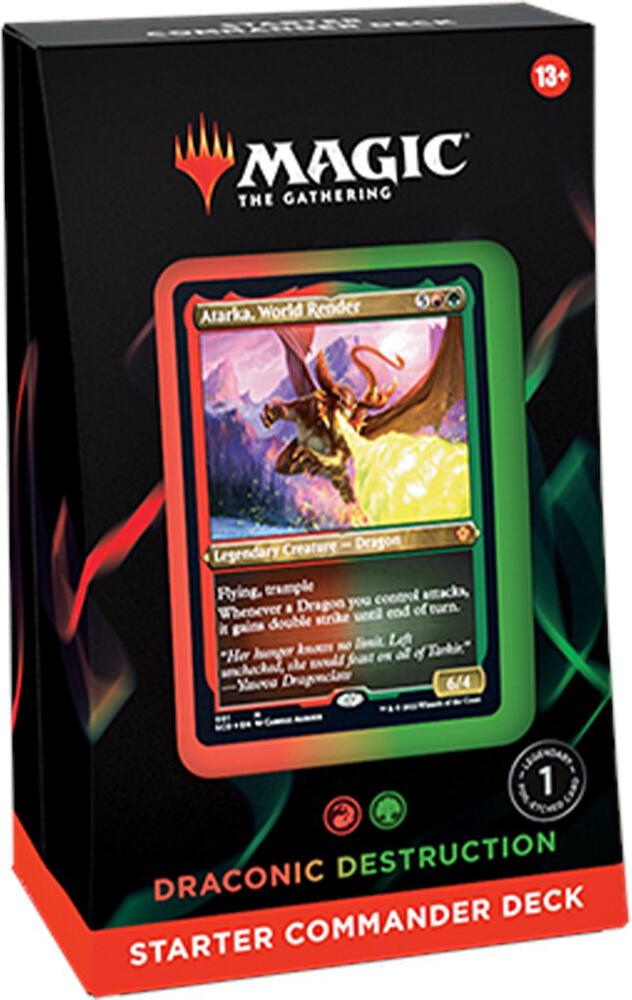
Starter Commander Deck: Draconic Destruction
- Atarka, World Render: red-green dragons with double strike
- Complete 100-card deck
- Still close to its original price
Sliver Gravemother (commander single)
- Buy the commander, then add slivers as singles
- Most slivers cost under $5 each
- Avoids paying $300+ for the sealed Sliver Swarm deck
Conclusion: Pick the Engine, Not the Art
Every tribe in Magic looks the same from the outside — a pile of creatures that share a word on the type line. They are not the same on the inside. Slivers are a single distributed organism, goblins are an arithmetic problem, dragons are a cost-cheating exercise, and dinosaurs are a combat-maths deck wearing scales.
Choose on the engine and the flavour comes free. Choose on the flavour alone and you can end up with a five-colour dragon manabase that costs more than the dragons, or a vampire deck full of six-drops that has given up the speed the tribe is built on.
If you want the cheapest strong deck, build goblins. If you want the most synergy, build slivers. If you want the most balanced game, build vampires. And if you want the dragons — build them mono-red first, and add colours once you know what the deck is missing.
Citations & Resources
- MTG Wiki: Kindred — the card type formerly named Tribal
- MTG Wiki: Changeling — every creature type at once
- Wizards of the Coast: Modern Horizons 3 mechanics and the Kindred implementation
- Wizards of the Coast: Collecting Ikoria — the Godzilla Series Monster cards
- EDHREC: Commander deck and tribe statistics
- Scryfall: Card search by creature type
Related Guides
- How to Build a Magic: The Gathering Deck — curve, card counts and mana fundamentals
- Best Magic: The Gathering Commander Decks 2025 — preconstructed decks worth upgrading
- The Ultimate MTG Keywords Glossary — every keyword the tribes above hand out
- Complete Guide to MTG Formats — where tribal decks are legal and viable
Frequently Asked Questions
🔗 Related Resources
More Reviews:
Related Articles
MTG Color Combo Names: Every Guild, Shard and Wedge (2026)
Every MTG color combination name: the ten guilds, five shards, five wedges, the four-color Nephilim names and more. What each combo is called, and why.
Magic: The Gathering Fallout – Complete Guide to the Wasteland Commander Set
Complete guide to MTG Fallout Commander set. Explore all four preconstructed decks, Rad counters, Junk tokens, serialized Bobbleheads, upgrade strategies, and financial analysis.
Marvel Magic: The Gathering – The Ultimate Guide to the Crossover of the Century
Complete guide to Marvel Magic: The Gathering crossover sets. Explore Secret Lair drops, Spider-Man set mechanics, Marvel Super Heroes 2026 previews, Soul Stone chase cards, and Commander deck strategies.