
The Short Answer
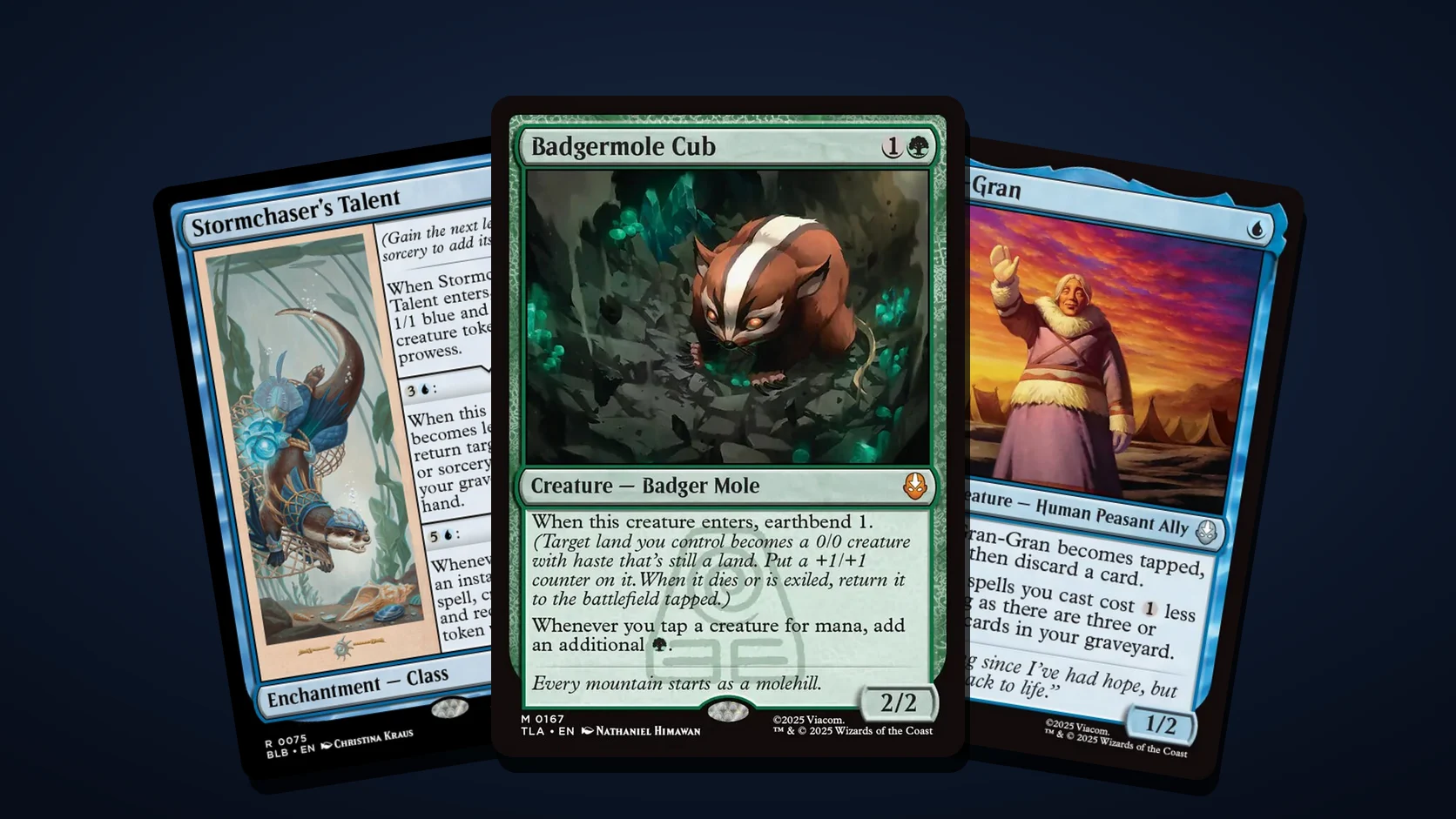
The MTG August 2026 bans removed one card from each of Standard's three best decks: Badgermole Cub from Selesnya Offense, Stormchaser's Talent from Izzet Prowess and Gran-Gran from Jeskai Lessons. Those three decks held 54.8% of the winner's metagame in July. Two weeks after the ban, Selesnya Offense was down to 1.0% and the other two were below 1%.
Mono-Green Landfall, which barely changed, took over at 27.8%, and by November the field had spread out with no deck above 12%. Counterspell decks came through intact. Badgermole Cub lost about 23% of its price.
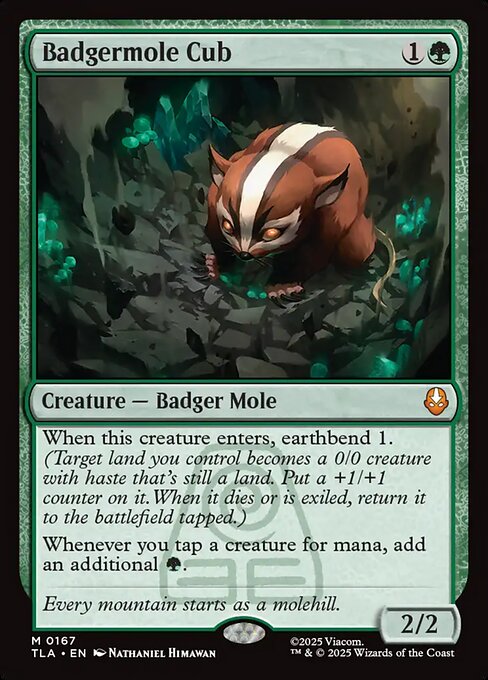 Badgermole CubBanned 10 Aug 2026: Selesnya Offense
 Stormchaser's TalentBanned 10 Aug 2026: Izzet Prowess
 Gran-GranBanned 10 Aug 2026: Jeskai Lessons
What Was Banned on 10 August 2026 and Why
Wizards' Banned and Restricted announcement of 10 August 2026 made these changes, effective the same day:
| Format | Change |
|---|---|
| Standard | Badgermole Cub, Stormchaser's Talent and Gran-Gran banned |
| Legacy | The Fantasticar banned |
| Vintage | The Fantasticar restricted |
| Pioneer, Modern, Pauper, Alchemy, Historic, Timeless, Brawl | No changes |
Wizards' case rested on MTG Arena data, because Standard had little in-person play over the summer. In its words: "Selesnya Offense has the highest win rate by a large margin, winning over 57% of its matches, and it also has the second-highest play rate. Normally, win rates fall as play rates climb."
Badgermole Cub ({1}{G}) earthbends 1 when it enters and adds an extra {G} whenever you tap a creature for mana. Wizards called it "a cheap threat that demands an immediate answer and lets its controller develop an insurmountable mana advantage." Our Avatar mechanics guide explains earthbend.
The other two bans were pre-emptive. Wizards wrote that Jeskai Lessons and Izzet Prowess were the other two most-played decks, and it wanted "to prevent one of these established decks from taking over as the best deck in the format after the banning of Badgermole Cub."
- Stormchaser's Talent ({U}) was "Izzet Prowess's keystone card." Wizards: "This combination of early-game and late-game strength is something we think is inappropriate for a one-mana card." The early game is the 1/1 Otter with prowess; the late game is level 2 returning an instant or sorcery, which Wizards tied to Boomerang Basics.
- Gran-Gran ({U}) loots whenever it becomes tapped and makes noncreature spells cost {1} less with three or more Lessons in your graveyard. Wizards called it "an inappropriately threatening one-mana card that provides too much late-game advantage," and said Jeskai Lessons "has the highest play rate in Standard on MTG Arena."
The stated aim: "to pave the way for Standard to be a fun and diverse format as competitive pressure returns to it", meaning the Standard Regional Championship Qualifier season that was about to start.
The Standard Metagame Before vs After the Bans
Three dated snapshots. The first two are Frank Karsten's Metagame Mentor columns on magic.gg, which measure winner's metagame share (popularity weighted by wins) across Magic Online Challenges and top paper finishes. The third is MTGGoldfish's Magic Online metagame for the 30 days to 19 November 2026 (about 3,800 decks), which counts share of published decks. The two methods differ, so read the third column as direction, not a like-for-like number.
| Archetype | Before: 1–23 Jul 2026 (magic.gg, 900+ decks) | After: 18–31 Aug 2026 (magic.gg, 400+ decks) | Now: 30 days to 19 Nov 2026 (MTGGoldfish, MTGO) |
|---|---|---|---|
| Izzet Prowess | 21.1% | Under 1% (not listed) | 2.2% |
| Selesnya Offense | 17.7% | 1.0% | Not listed by that name |
| Jeskai Lessons | 16.0% | Under 1% (in "Other") | Not in the top 60 |
| Izzet Spellementals | 10.5% | 10.8% | 5.2% |
| Four-Color Control | 7.5% | 3.3% | 4.1% |
| Mono-Green Landfall | 6.0% | 27.8% | 11.6% |
| Dimir Excruciator | 5.0% | 2.9% | 1.0% |
| Izzet Lessons | 2.7% | Under 1% (not listed) | Not in the top 60 |
| Mardu Discard | 0.7% | 3.0% | 0.7% |
| Dimir Midrange | Under 0.7% (not listed) | 12.1% | 9.5% |
| Selesnya Landfall | Under 0.7% (not listed) | 4.0% | 2.5% |
| Azorius Control | Under 0.7% (not listed) | 1.1% | 5.9% |
| Jund Sacrifice | Not yet built | Under 1% (not listed) | 9.8% |
"Under 1%" means the column puts the deck in "Other" or doesn't name it; Karsten's July table names every deck at 0.7% or more, his August table every deck at 1.0% or more.
Two things other than the bans moved these numbers. The Hobbit reached MTG Arena on 11 August, the day after the ban, and Wizards says it enabled Jund Sacrifice and Boros Dwarves "in part". Reality Fracture (2 October) and Star Trek (13 November) came later still. The August column is the cleanest read of the bans alone.
Which Decks Rose and Which Fell
Fell hardest: the three targets. The top three went from 54.8% of the winner's metagame to under 3% between them. Izzet Lessons also dropped out of the named list in August, so the Lessons family as a whole lost its engine with Gran-Gran.
Rose: Mono-Green Landfall went from 6.0% to 27.8%. Its engine is Llanowar Elves and Earthbender Ascension, the two most-played nonland cards in Karsten's August data, plus a curve of landfall creatures. Karsten wrote that "Landfall decks have gotten slightly slower after the banning of Badgermole Cub," but slower was enough once the faster green deck and both blue-red decks were gone. Dimir Midrange went from unlisted to 12.1%, and Mardu Discard from 0.7% to 3.0%.
Settled: by October Wizards wrote that Mono-Green Landfall "was the early winner of the post-ban Standard metagame but has fallen in popularity and win rate over time," and that "Metagame diversity in the format has improved from the pre-ban format." The November data agrees: the top deck holds 11.6%, against 21.1% in July and 27.8% in late August. Wizards also noted Jund Sacrifice as "the first time in many months a deck that wasn't base green or blue-red has been the most played deck at the top of MTG Arena ladder." Izzet Prowess is back at 2.2%; Wizards credits Reality Fracture's Pompous Battlemage.
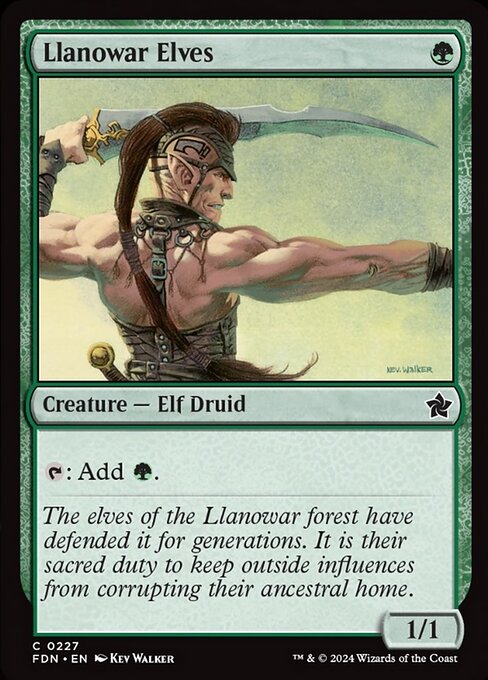 Llanowar ElvesMono-Green Landfall; $0.36 on 19 Nov 2026
 Earthbender AscensionMono-Green Landfall; $3.15 on 19 Nov 2026
 The Theorist, Jace BelerenAzorius Control: helped control come back
 Pompous BattlemageIzzet Prowess; $0.61 on 19 Nov 2026
Which Counter Archetypes Survived the Ban
The calendar asked two questions here, about counterspell decks and about +1/+1 counter decks, and both come from the same 10 August announcement, so they are answered together.
Counterspell and control decks
None of the three banned cards was a counterspell or a removal spell, so the decks built on countermagic lost nothing directly:
- Izzet Spellementals held its share (10.5% → 10.8%) through the ban. Wizards called it "an Izzet variant that was mostly left unscathed by the bans." The list in Wizards' October update main-decks Spell Pierce and Spell Snare, with Annul and Flashfreeze in the sideboard.
- Dimir Midrange is the biggest winner among interactive decks: from unlisted to 12.1% in August, still 9.5% in November. Karsten describes it as disrupting opponents with "removal, discard, and countermagic."
- Four-Color Control dipped (7.5% → 3.3%) as Landfall took over, then recovered to 4.1% on Magic Online. Its engine is Tablet of Discovery and Jeskai Revelation, not Gran-Gran.
- Azorius Control grew from 1.1% to 5.9%. Wizards says Reality Fracture's The Theorist, Jace Beleren and the set's other planeswalkers are "helping to enable a resurgence of control strategies."
Adding the control decks in MTGGoldfish's top 60 archetypes (Azorius, Four-Color, Dimir, Jeskai, Sultai, Izzet, Esper and five-colour) gives 13.9% of Magic Online decks in the 30 days to 19 November. The one casualty was Jeskai Lessons, the control-leaning Lessons deck. Gran-Gran was its mana engine, and it fell from 16.0% to under 1%.
+1/+1 counter decks
The ban hit the counter deck at the top but not the counter engines underneath it. Badgermole Cub's earthbend puts a +1/+1 counter on a land, and Selesnya Offense, the wide creature deck it powered, fell from 17.7% to 1.0%. Mono-Green Landfall is the counter deck that survived: Earthbender Ascension earthbends 2 and then puts a +1/+1 counter on a creature from each landfall trigger once it has four quest counters. Every rule behind that is in our MTG counters guide.
Price Impact of the August 2026 Bans
TCGplayer market prices for each card's regular nonfoil printing, as Scryfall showed them (pre-ban figures from Internet Archive snapshots of the Scryfall card pages):
| Card | Before the ban | 19 Nov 2026 | Change |
|---|---|---|---|
| Badgermole Cub (Avatar: The Last Airbender) | $51.92 (4 Aug 2026) | $40.10 | −23% |
| Stormchaser's Talent (Bloomburrow) | $3.92 (21 Jul 2026) | $3.03 | −23% |
| Gran-Gran (Avatar: The Last Airbender) | $0.29 (27 Jul 2026) | $0.28 | Flat |
Neither card crashed, because both are still legal in Pioneer, Modern, Legacy, Vintage and Commander. Badgermole Cub slid steadily rather than dropping overnight: $46.11 on 29 September, $40.01 on 16 November. Gran-Gran is an uncommon that was never expensive. Stormchaser's Talent leaves Standard with Bloomburrow at the 2027 rotation anyway; our cards to sell before rotation list covers the rest of that set.
What to Expect at the Next B&R on 30 November 2026
Wizards' 12 October 2026 announcement made no Standard changes and dated the next announcement 30 November 2026. Its own outlook for Standard:
"Given the amount of banned and restricted changes that have been necessary for Standard in the latter half of 2025 and 2026, we are not looking to make sweeping changes to the format to prepare it for rotation this time around. That said, if a problem emerges that looks like it will threaten Standard's health and stability in 2027, we won't hesitate to take action."
What that means in practice:
- Standard bans are unlikely unless a deck from sets that stay after rotation breaks out. No deck is above 12% on Magic Online.
- Watch Star Trek. It released on 13 November, so almost none of its play is in the data above.
- Stormchaser's Talent's ban stops mattering at rotation, when Bloomburrow leaves Standard (29 January 2027 in paper, 2 February on Arena; see our Standard rotation 2027 guide, and Standard after rotation for the decks that survive it). Badgermole Cub and Gran-Gran come from a 2025 set that stays, so they stay banned unless Wizards unbans them, and it has given no sign of that.
For how ban lists work in each format, see our guide to MTG formats.
The August 2026 bans did what Wizards said they would: the three decks that held 54.8% of the winners in July fell under 3% between them, and by November no Standard deck held more than 12% of Magic Online decks. None of the banned cards was a counterspell, so control decks lost nothing directly; only Jeskai Lessons, which lost Gran-Gran, collapsed.
The next test is the 30 November announcement and then rotation on 29 January 2027. Our Standard after rotation guide shows which of today's decks survive it. If you're buying into Standard, our Modern vs Standard guide prices the format's top decks and names the products to start with.
Sources
- Wizards: Banned and Restricted Announcement, 10 August 2026
- Wizards: Banned and Restricted Announcement, 12 October 2026
- Magic.gg: Metagame Mentor, the top Standard decks of July 2026 (30 July 2026; data 1–23 July)
- Magic.gg: Metagame Mentor, the top Standard decks for September 2026's RCQs (3 September 2026; data 18–31 August)
- MTGGoldfish: Standard metagame, Magic Online, last 30 days, checked 19 November 2026
- Card text, legality and 19 November prices from Scryfall; earlier prices from Internet Archive snapshots of the Scryfall card pages
Related Guides
- MTG counters guide: every counter type, and the counter decks after the bans
- Avatar MTG mechanics: earthbend and the Badgermole Cub story
- MTG Standard rotation 2027: what leaves Standard and when
- MTG Standard after rotation 2027: which of today's decks survive 29 January
- MTG keywords glossary: prowess, landfall and every other keyword above