
Quick Verdict
Ward has replaced Hexproof as Magic's primary protection mechanic, introducing transactional costs that create interactive gameplay. Understanding Ward's triggered ability mechanics and strategic implications is essential for competitive play in 2026.
SEALED PRODUCTS

Duskmourn: House of Horror Play Booster Box
Best for Ward - Horror creatures use ward as their primary defensive mechanic
- ✓Horror creatures heavily feature ward to resist targeted removal
- ✓Survival theme rewards protecting key permanents

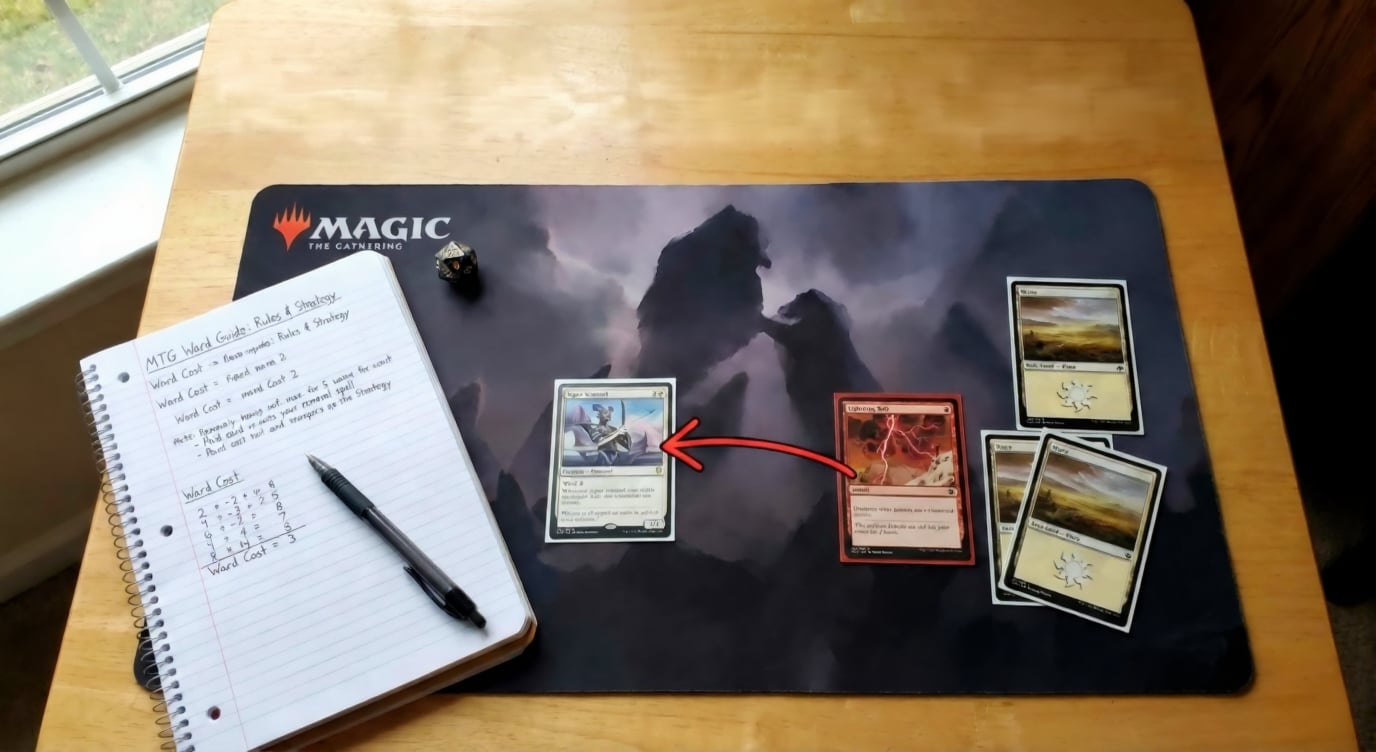
Ward in MTG is a triggered ability: whenever the permanent becomes the target of a spell or ability an opponent controls, that spell or ability is countered unless its controller pays the ward cost. So what does ward do? It doesn't stop removal. It taxes it, in mana, life or cards.
Magic: The Gathering has undergone a fundamental shift in how creatures are protected. For decades, the game grappled with the "interaction problem"—making creatures resilient enough to be playable without creating non-interactive board states. The solution, solidified in Foundations (2024) and Spider-Man (2025), is Ward: a mechanic that transforms protection from absolute immunity into an economic transaction.
Unlike Hexproof or Shroud, which operate on binary principles (you can't target this, period), Ward introduces nuance. It allows targeting but demands payment. This shifts the question from "Can I do this?" to "Can I afford to do this?"—creating interactive gameplay where removal remains possible but never free.
With Foundations cards legal until 2029 and Ward becoming an evergreen mechanic, understanding this protection system is essential for competitive play. This comprehensive guide breaks down the rules, analyzes key cards, explores advanced interactions, and provides strategic insights for navigating the "Ward Era" of Magic: The Gathering.
Whether you're playing Standard, Commander, or exploring the Spider-Man set, this guide will help you master one of Magic's most important modern mechanics. For every other keyword in the game, see our complete MTG keywords glossary.
The Evolution of Protection: From Shroud to Ward
To understand Ward's significance, we must examine the design evolution that necessitated its creation. Magic's history is a dialectic between threats (creatures) and answers (removal), and protection mechanics have been central to this balance.
The Binary Age: Shroud and Absolute Protection
Shroud (keyworded in Future Sight, 2007) represented protection in its simplest form: "This permanent can't be the target of spells or abilities."
The Problems:
- Symmetry of Disadvantage: You couldn't target your own Shroud creatures. No Giant Growth, no equipment, no auras—your creatures were locked away from your own spells.
- Interaction Vacuum: Once a Shroud creature hit the battlefield, interaction was reduced to global effects or combat. No nuance, no puzzle, no economic decision.
Shroud was effective but unintuitive and binary.
The Hexproof Overcorrection
Hexproof (introduced in Magic 2012) solved Shroud's symmetry problem by allowing the controller to target their own creatures while preventing opponents from doing so.
The Problems:
- Created "Bogle" decks (named after Slippery Bogle) where cheap Hexproof creatures became unstoppable with auras
- Led to "solitaire" gameplay where one player races to 20 damage while the other holds useless removal
- Removed opponent agency entirely—no decision-making, just frustration
The community feedback was clear: Hexproof was powerful but miserable to play against because it removed interaction entirely.
The Ward Solution: Protection as a Tax
Ward, introduced in Strixhaven (2021) and now evergreen in Foundations, represents the synthesis of this design evolution.
The Key Innovation:
- Ward doesn't say "You can't target this"
- Ward says "If you target this, you must pay X, or your spell fails"
Ward transforms protection from a question of possibility to a question of economics. Instead of "Can I do this?" the question becomes "Can I afford to do this?" This creates meaningful decision-making while allowing powerful creatures to be designed without creating non-interactive gameplay.
Why Ward Works:
- Maintains Agency: Opponents can always interact, but at a cost
- Balances Power: Allows powerful creatures while keeping them answerable
- Smooths Variance: Prevents feel-bad moments (6-mana Dragon dying to 2-mana Terror) while still allowing answers
- Creates Decisions: Forces resource evaluation and strategic thinking
Ward Rules in MTG: Understanding CR 702.21
To master Ward, players must move beyond reminder text and understand the Comprehensive Rules framework. Unlike Shroud or Hexproof (static abilities), Ward functions as a triggered ability that uses the stack.
The Core Definition (Rule 702.21a)
Ward [cost] means: "Whenever this permanent becomes the target of a spell or ability an opponent controls, counter that spell or ability unless that player pays [cost]."
This definition has three operational phases:
- The Trigger Condition: "Whenever this permanent becomes the target..."
- The Controller Check: "...of a spell or ability an opponent controls..."
- The Resolution Effect: "...counter that spell or ability unless that player pays [cost]."
Phase 1: The Trigger Mechanism
Ward is a Triggered Ability. This is the most important distinction from Hexproof.
How It Works:
- Opponent casts a spell targeting your Ward creature
- The targeting spell goes on the stack
- Ward triggers immediately and goes on the stack on top of the spell
- Both players receive priority before the Ward trigger resolves
Strategic Implications:
- Because it uses the stack, players can respond to the Ward trigger
- You can buff your creature before the Ward trigger resolves
- Opponents can counter the Ward trigger itself (with cards like Stifle or Spider-Sense)
The Response Window
When Ward triggers, both players receive priority. This means you can cast instants to protect your creature, or your opponent can counter the Ward trigger itself to bypass the cost. Understanding the stack is crucial for mastering Ward interactions.
Phase 2: The Controller Check
Ward checks the controller of the spell or ability, not the owner or original caster.
Key Rulings:
- Self-Targeting: If you target your own Ward creature, Ward doesn't trigger (you control the spell)
- Redirects: If Player A casts Murder, and Player B redirects it to Player B's own Ward creature using Deflecting Swat, Ward doesn't trigger (the controller is still Player A, but the creature is now being targeted by a spell controlled by an opponent—wait, let's clarify this)
Important Clarification:
- If you redirect a spell to your own Ward creature, Ward doesn't trigger (you control the spell)
- If you redirect a spell to an opponent's Ward creature, Ward does trigger (opponent controls the spell)
Phase 3: The Counter and Cost
Ward uses a "counter unless" effect structure.
Resolution Process:
- Ward trigger resolves
- Game asks: "Pay the cost or the spell is countered?"
- Opponent chooses to pay or not pay
- If they pay, the spell continues to resolve
- If they don't pay, the spell is countered
Critical Timing:
- The cost is paid during the resolution of the Ward trigger
- You don't pay immediately upon casting
- You can float mana in response to the Ward trigger
Example:
- You cast Murder (targeting Ward creature)
- Murder goes on stack
- Ward triggers, goes on stack
- You can float mana, tap lands, etc.
- Ward trigger resolves: "Pay 2 mana or Murder is countered"
- You pay 2 mana (or don't pay)
- Murder resolves (or is countered)
Multiple Instances: Cumulative Ward
A creature can have multiple instances of Ward, and each instance triggers separately.
Example:
- Tolarian Terror (Ward 2 mana) equipped with Mithril Coat (Ward 2 mana)
- When targeted, two separate Ward (2 mana) triggers go on the stack
- Opponent must pay 2 mana for the first trigger, then 2 mana for the second trigger
- Total cost: 4 mana to resolve the spell
Strategic Note:
- A single Stifle can only counter one Ward trigger
- To bypass protection without paying, you'd need two Stifles
- Stacking Ward equipment is highly effective in Commander
The Foundations (FDN) Epoch: 2025-2029
Magic: The Gathering Foundations isn't just a set—it's a structural baseline. Released in November 2024 with legality until at least 2029, its cards will define Standard for half a decade. The prominence of Ward in Foundations signals Wizards' commitment to it as the primary protection mechanic.
The "Classic" Design Philosophy
Foundations eschews parasitic mechanics in favor of universal Magic concepts. By standardizing Ward alongside classic keywords like Flying and Trample, WotC ensures every new player understands protection as a cost-based system rather than an immunity-based one.
The Strategic Implication:
- Ward is now "evergreen" (always available in new sets)
- Players learning Magic via Foundations will understand Ward as core to the game
- This design philosophy will persist through 2029
Sire of Seven Deaths: The Flagship Ward Card
The standout Ward card of Foundations is undoubtedly Sire of Seven Deaths, serving as a stress test for the mechanic's power level.
Card Profile:
- Mana Cost: 7
- Type: Creature — Eldrazi
- Stats: 7/7
- Keywords: First strike, Vigilance, Menace, Trample, Reach, Lifelink
- Protection: Ward—Pay 7 life
Strategic Analysis:
The Life Cost:
- Paying 7 life represents 35% of your starting life total (20 life)
- Against aggressive decks, this effectively makes Sire "Hexproof"
- Aggro decks can't afford to pay 7 life while racing
Commander Implications:
- In Commander (40 life), 7 life is 17.5%—still substantial but more manageable
- Acts as a "rattlesnake" effect—opponents target other threats to avoid the tax
- Creates political dynamics in multiplayer
The Lifelink Synergy:
- Sire has Lifelink, creating a closed loop
- If opponent pays 7 life to remove it but fails (bounce, etc.), Sire can attack to gain 7 life back
- The Ward cost protects the very resource (life) the creature generates
Strategic Role: Sire demonstrates how Ward enables powerful creatures while maintaining answerability. It's a game-ending threat that can be answered, but at significant cost.
Tolarian Terror: The Tempo Threat
Foundations includes Tolarian Terror, a reprint from Dominaria United that defined Mono-Blue Tempo.
Mechanic: Ward 2 mana
Strategic Role:
- Cost reduction allows casting for 1 blue mana (1 total mana)
- Ward (2 mana) demands 2 additional mana from opponents
- Creates massive tempo advantage: 1 mana investment vs. 4+ mana to remove
The Tempo Equation:
- Cast Tolarian Terror: 1 blue mana (1 total mana)
- Opponent removes with Go for the Throat: 1 black mana (2 total mana) + Ward (2 mana) = 4 total mana
- Tempo advantage: 3 mana (spent 1, they spent 4)
This interaction is the cornerstone of Blue Ward strategies in Standard.
The Myth of Bloodthirsty Conqueror
Clarification: Bloodthirsty Conqueror does not have Ward.
Despite some confusion in release notes, the card itself lacks Ward. This is intentional design:
- Sire of Seven Deaths: Game-ending threat - Gets Ward
- Bloodthirsty Conqueror: Combo piece - No Ward (vulnerable to removal)
This illustrates how WotC uses Ward to balance different threat types. Combo pieces remain vulnerable to ensure interaction is possible before combos go off.
Limited Format Implications
In Foundations Limited, Ward reshapes removal hierarchy:
Premium Removal:
- Cheap removal (1-2 mana) is valued higher
- Can pay Ward costs and still cast in the same turn
Devalued Removal:
- Expensive removal (4-5 mana) becomes nearly unplayable
- 5-mana removal + Ward (2 mana) = 7 mana (often an entire turn)
"Edict" Value:
- Cards that force sacrifice (bypassing Ward) are premium picks
- Sheoldred's Edict becomes highly valuable in Ward-heavy formats
The Marvel's Spider-Man Paradigm
If Foundations uses Ward as a structural pillar, the Spider-Man set uses it as a narrative device, translating the character's agility and reflexes into mechanics.
The Flavor Translation: Spider-Sense IS Ward
One critique of Universes Beyond sets is flavor-mechanic alignment. In Spider-Man, Ward represents "Spider-Sense" perfectly.
The Logic:
- Spider-Man isn't invulnerable (Indestructible) or invisible (Hexproof)
- He's hard to hit—he dodges attacks
- Opponent targets Spider-Man (takes a shot)
- Spider-Sense triggers (Ward)
- Unless opponent puts in extra effort (pays cost), attack misses (spell countered)
This is exemplary ludonarrative harmony—the mechanic tells the story.
Spider-Sense: The Anti-Ward Tech
Card Profile: Spider-Sense
- Cost: 1 blue mana (2 total mana) (Instant)
- Keyword: Web-slinging (Cast for 1 blue mana if you also return a tapped creature to hand)
- Effect: "Counter target instant spell, sorcery spell, or triggered ability."
Strategic Impact:
Countering Ward Triggers:
- Ward is a triggered ability
- Spider-Sense can target Ward triggers on the stack
- This allows bypassing Ward costs entirely
The Play Pattern:
- Opponent has Sire of Seven Deaths (Ward—Pay 7 life)
- You cast Murder
- Ward triggers ("Pay 7 life or counter Murder")
- You cast Spider-Sense targeting the Ward trigger
- Ward trigger is countered
- You don't pay 7 life
- Murder resolves
Web-slinging Synergy:
- If you have a tapped creature, cast Spider-Sense for just 1 blue mana
- For 1 mana, you bypass "Pay 7 Life" or "Pay 3 Mana" Ward costs
- Incredibly efficient answer to the set's own protection mechanic
Commander Staple Potential: Spider-Sense will likely become a Blue staple in Commander. For 1 blue mana (2 total mana), being able to Stifle a fetchland, a Thassa's Oracle trigger, or a Ward trigger provides incredible flexibility.
Web-slinging and Defensive Pivots
The Web-slinging mechanic introduces a secondary protection layer functioning adjacent to Ward.
Self-Bounce Strategy:
- Web-slinging cost: Return a tapped creature to hand
- If opponent targets your Ward creature and pays the cost
- You can respond by casting a Web-slinging spell
- Bounce your own creature as part of the cost
- Opponent's removal fizzles (loses target)
- You save the card to hand to recast later (retriggering ETBs)
This mimics Spider-Man dodging away from a fight to regroup—excellent flavor and strategy combined.
Advanced Interaction Matrix
For competitive players, understanding edge cases is essential. This section details complex Ward interactions that arise in high-level play.
Ward vs. Redirection Effects
Redirection spells create confusing Ward interactions.
Scenario A: Redirecting to Your Own Creature
- Player A casts Doom Blade on Player B's creature (no Ward)
- Player B redirects Doom Blade to Player A's own Sire of Seven Deaths (Ward)
- Ruling: Ward checks if spell controller (Player A) is opponent of permanent controller (Player A)
- Since they're the same player, Ward does NOT trigger
- Player A kills their own creature without paying life
Scenario B: Redirecting Between Opponents
- Player A casts Doom Blade on Player B's Sire (Ward)
- Player B redirects Doom Blade to Player C's Sire (Ward)
- Ruling: Original Ward trigger for Player B's Sire is invalidated (target changed)
- New Ward trigger for Player C's Sire triggers
- Player A (controller of Doom Blade) must pay Player C's Ward cost
Redirect Complexity
When redirecting spells, Ward checks the controller of the spell at the time of targeting, not the original caster. This can create unexpected outcomes in multiplayer games.
Ward vs. Uncounterable Spells
Scenario: Player A targets Player B's Sire with Abrupt Decay ("This spell can't be countered")
The Trap:
- Ward triggers: "Counter that spell unless you pay 7 life"
- Player A is given the option to pay 7 life
The Optimal Play:
- Player A chooses NOT to pay
The Resolution:
- Ward attempts to counter Abrupt Decay
- Game rules say Abrupt Decay cannot be countered
- Ward ability fails to do anything
- Abrupt Decay resolves and destroys the Sire
Key Takeaway: You never need to pay Ward costs for uncounterable spells. The counter attempt simply fails.
Ward vs. Mass Removal
Rule: Ward only triggers on targeting. Spells that don't target don't trigger Ward.
The Vocabulary of Removal:
| Removal Type | Example | Targets? | Ward Triggers? |
|---|---|---|---|
| Targeted Destroy | Murder | Yes | Yes |
| Targeted Exile | Swords to Plowshares | Yes | Yes |
| Global Destroy | Wrath of God | No | No |
| Global Exile | Farewell | No | No |
| Edict (Sacrifice) | Sheoldred's Edict | No | No |
The Farewell Problem: Farewell is the ultimate answer to Ward decks. It exiles all creatures without targeting, bypassing Ward, Indestructible, and "Dies" triggers. In the Foundations era, decks relying on Ward creatures must have a plan for Farewell (counterspells, Phasing, etc.).
Ward vs. Council's Judgment (Voting)
Mechanism: "Each player votes for a nonland permanent... Exile each permanent with the most votes."
Ruling: Voting does not target. Even though players select specific permanents, the word "target" doesn't appear in voting rules.
Result: You can vote to exile a creature with Ward (or even Progenitus-level protection). The protection doesn't apply.
Council's Judgment is a "hard counter" to Ward strategies in Legacy and Commander.
Ward vs. Copying Spells
Scenario: Player A controls Alania, Divergent Storm. They cast a removal spell, copy it, and change the copy's target to a Ward creature.
Ruling: Ward triggers when a permanent becomes the target of a spell. It doesn't matter if the spell was cast or copied.
Result: The Ward ability triggers for the copy. Player A must pay the cost for the copy to resolve.
Note: This differs from "cast triggers" (like Ulamog), which don't happen on copies. Ward is a state-based trigger regarding targeting, so it applies to everything.
Strategic Meta-Analysis: The Ward Test
The integration of Foundations and Spider-Man creates a specific metagame texture. Every competitive deck must pass the "Ward Test."
The Ward Test Questions
Question 1: Can you answer Tolarian Terror efficiently?
- Do you have removal costing 1-2 mana, so paying 2 mana is feasible?
- If your removal costs 4+ mana, you're spending 6+ to remove a 1-mana threat
Question 2: Can you answer Sire of Seven Deaths without dying?
- Do you have non-targeted removal (Sunfall, Farewell)?
- Do you have edict effects (Sheoldred's Edict)?
- Can you afford to pay 7 life?
Deckbuilding Implication: If a deck relies entirely on 4-mana targeted removal (like Vraska's Contempt), it's unplayable in a Ward-heavy meta. Removing a Ward (2 mana) creature requires 6 mana—too slow for modern Magic.
Commander (EDH) Implications
Ward is significantly stronger in Commander due to multiplayer dynamics.
Political Ward:
- Players are less likely to pay Ward costs when multiple opponents exist
- Why pay 3 mana to remove Player A's threat when Player C is also a threat?
- Ward creatures naturally deflect removal to other players' boards
Spider-Sense as Staple: The card Spider-Sense will likely become a Blue staple in Commander. For 1 blue mana (2 total mana), being able to Stifle a fetchland, a Thassa's Oracle trigger, or a Ward trigger provides incredible flexibility. It solves the "Voltron" problem efficiently.
Standard Archetype: Dimir Ward
The combination of Tolarian Terror, Sire of Seven Deaths, and Spider-Sense suggests a dominant Dimir (Blue/Black) Ward archetype.
Strategy:
- Play threats that protect themselves (Ward)
- Keep mana open for counterspells (Spider-Sense, Counterspell)
- Use edict effects to remove opponent's Ward creatures
Key Cards:
- Tolarian Terror (FDN) - Tempo threat
- Sire of Seven Deaths (FDN) - Late-game bomb
- Spider-Sense (SPM) - Anti-Ward tech and flexible counter
- Go for the Throat - Efficient removal
- Sheoldred's Edict - Bypasses Ward
Quick Reference: Ward Interaction Matrix
| Removal Type | Example Card | Does Ward Trigger? | Outcome |
|---|---|---|---|
| Targeted Destroy | Murder | Yes | Countered unless paid |
| Targeted Exile | Swords to Plowshares | Yes | Countered unless paid |
| Uncounterable Target | Abrupt Decay | Yes (but fails) | Resolves (counter fails, payment optional) |
| Global Destroy | Wrath of God | No | Creature destroyed |
| Global Exile | Farewell | No | Creature exiled |
| Edict (Sacrifice) | Sheoldred's Edict | No | Creature sacrificed |
| Voting | Council's Judgment | No | Creature exiled |
| Targeted Damage | Lightning Bolt | Yes | Countered unless paid |
| Global Damage | Blasphemous Act | No | Creature takes damage |
Key Ward Cards in Foundations and Spider-Man
| Card | Set | Ward Cost | Strategic Role |
|---|---|---|---|
| Sire of Seven Deaths | FDN | Pay 7 life | Late-game bomb; punishes Aggro/Burn decks |
| Tolarian Terror | FDN | 2 mana | Tempo threat; demands efficient removal |
| Spider-Sense | SPM | N/A | Anti-Ward tech; counters the Ward trigger |
| Bloodthirsty Conqueror | FDN | None | Glass cannon combo piece; highly vulnerable |
Best Practices for Playing With Ward
Playing Ward Creatures
- Understand Your Protection: Know what Ward protects against (targeting) and what it doesn't (board wipes, edicts)
- Stack Multiple Instances: Equipment and auras can stack Ward for cumulative protection
- Mana Management: Keep mana open if opponents might pay Ward costs—you can respond to triggers
- Political Play (Commander): Use Ward's multiplayer strength—opponents will target each other
Playing Against Ward
- Cheap Removal: Use 1-2 mana removal so paying Ward costs is feasible
- Uncounterable Spells: Abrupt Decay and similar spells bypass Ward entirely
- Mass Removal: Board wipes don't target, so Ward never triggers
- Edict Effects: Force sacrifice bypasses Ward completely
- Counter the Trigger: Cards like Spider-Sense can counter Ward triggers themselves
The most-played ward cards in Commander
Ranked by how many Commander decks play them (EDHREC data, via Scryfall). Prices are for the cheapest printing on Scryfall in October 2026.
- Roaming Throne — about $47
- Hexing Squelcher — about $19
- Kappa Cannoneer — about $0.24
- Valgavoth, Terror Eater — about $17
Conclusion: The Ward Era
The transition to Ward as Magic's primary protection mechanic represents a maturation of game design. By moving from the "solitaire" nature of Hexproof to the "transactional" nature of Ward, Wizards of the Coast has created a system where interaction is always possible but never free.
Ward represents Magic's evolution toward interactive gameplay. Protection is no longer an immunity shield—it's a tax. Victory in the 2025-2029 era belongs to those who can best manage the economy of that tax: knowing when to pay it, when to bypass it with global effects, and when to counter the tax collector entirely.
Foundations anchors this philosophy with defining cards like Sire of Seven Deaths, establishing a high-risk, high-reward baseline that will persist until 2029. Simultaneously, Spider-Man demonstrates Ward's flavor versatility, turning abstract rules into narrative beats while introducing powerful answers.
The Strategic Lesson:
- Ward creatures are powerful but answerable
- Always have non-targeted removal in your deck
- Understand when to pay costs and when to bypass them
- In Commander, leverage Ward's political strength
The Rules Lesson:
- Ward is a triggered ability (uses the stack)
- Ward checks the controller of the spell
- Ward only triggers on targeting
- Multiple Ward instances stack cumulatively
As Magic enters the Ward Era, mastery of this mechanic becomes essential for competitive success. Understand the rules, plan your removal suite accordingly, and remember: protection is no longer absolute—it's transactional.
External References
- Magic: The Gathering Comprehensive Rules - Rule 702.21 (Ward)
- Scryfall - Search for Ward cards
- Foundations Set Information
- Spider-Man Set Information
- Tolarian Community College - Rules Videos
Keep Reading
- Hexproof vs Shroud: The Complete Difference — the two mechanics Ward replaced, and why
- MTG The Stack Explained — Ward is a triggered ability, so the stack governs when it resolves
- MTG State-Based Actions — the automatic checks that run alongside Ward triggers
- The Ultimate MTG Keywords Glossary — every keyword in the game in one place
- MTG Counters: Complete Guide — including why there is no such thing as a Ward counter
Frequently Asked Questions
🔗 Related Resources
More Reviews:
Related Articles
Vigilance MTG: What Vigilance Does and How It Works
Vigilance in MTG means attacking doesn't tap the creature, so it can attack and still block or use tap abilities. Full vigilance rules and how it plays.
MTG Counters: Every Type Explained, From +1/+1 to Rad (2026)
Every MTG counter type explained: +1/+1 and -1/-1, keyword, shield, finality and rad counters, plus the CR 122 rules and the Doubling Season ruling.
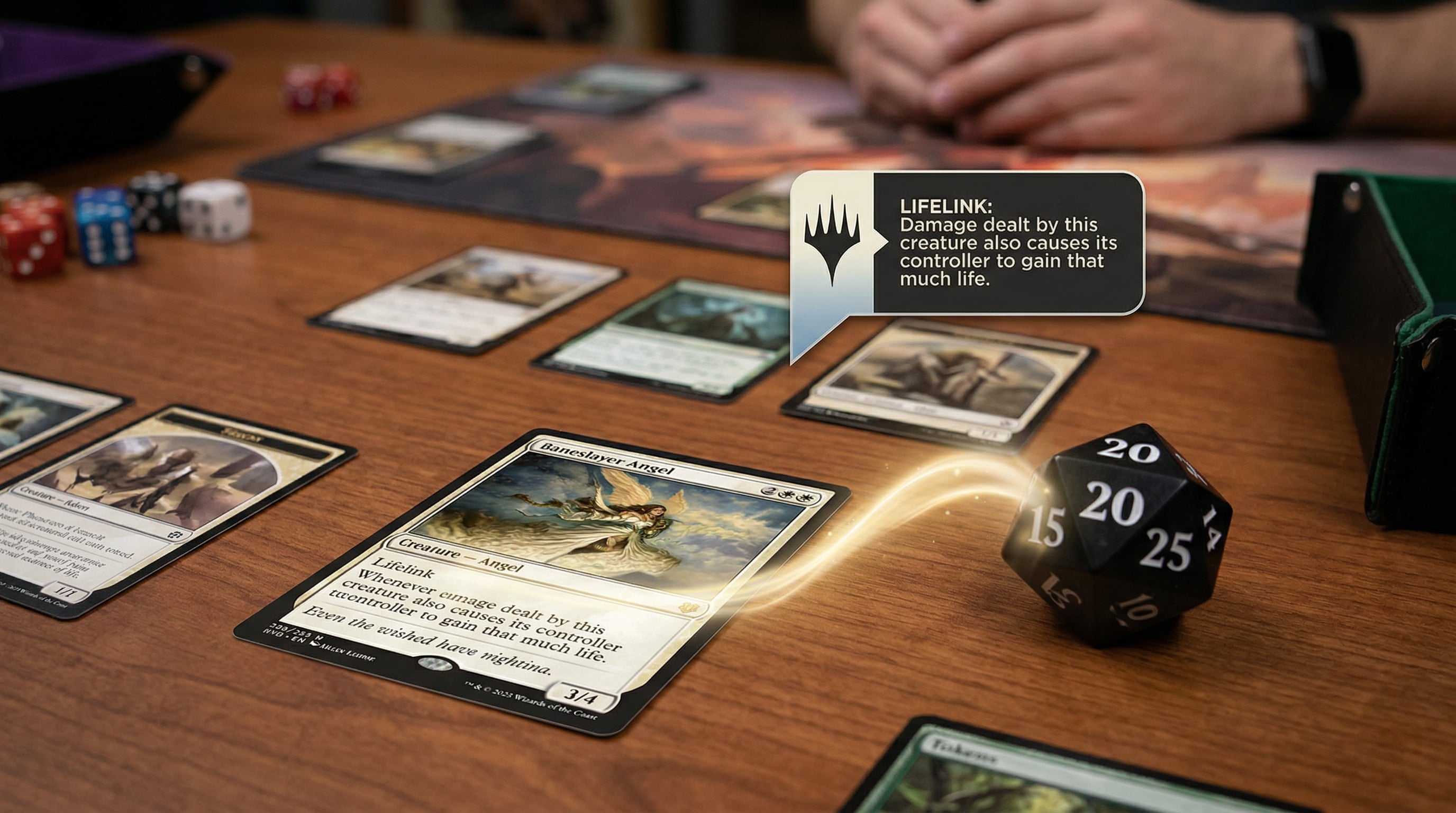
Lifelink MTG: What Does Lifelink Mean in Magic? (2026)
Lifelink in MTG: damage dealt by the source also gains its controller that much life, in combat or out. Full lifelink rules, common myths and the best cards.