
Quick Verdict
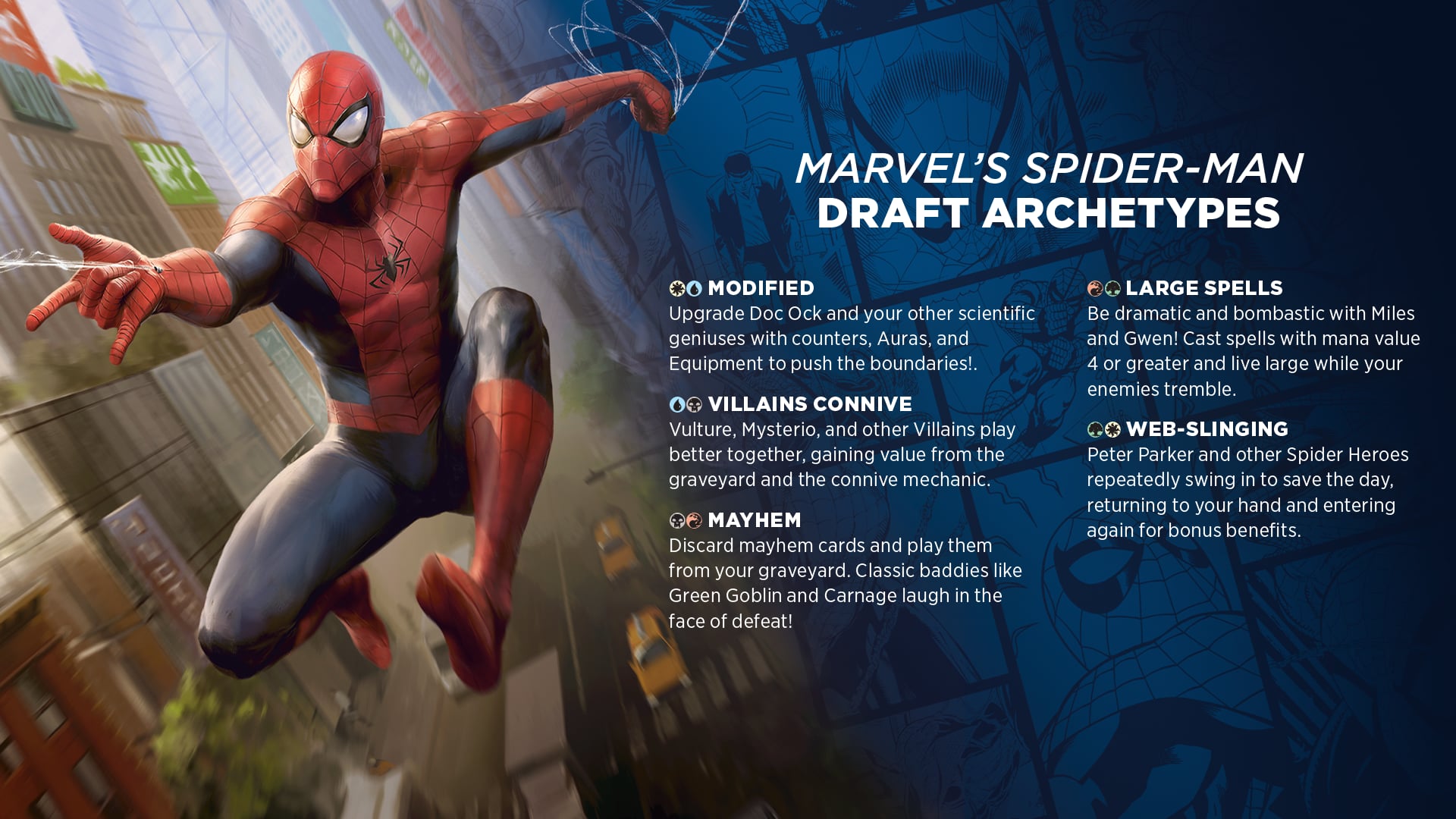
Web-slinging is an alternative cost from Marvel's Spider-Man (September 2025): you cast the spell for a cheaper cost by also returning a tapped creature you control to its owner's hand. As of October 2026, ten cards have it. It works best when the creature you return has a good enters-the-battlefield ability, so you get to use it again.
SEALED PRODUCTS
What web-slinging is, in one sentence: web-slinging is an alternative cost from Marvel's Spider-Man (September 2025) that lets you cast a spell for a cheaper cost if you also return a tapped creature you control to its owner's hand.
It captures Spider-Man swinging in to save someone and carrying them out of the fight. In game terms, you trade tempo for mana: your creature leaves the battlefield, you cast something cheaper than normal, and you can recast the returned creature later. That's best when the returned creature has a strong "when this enters" ability.
This guide covers the exact rules text, rule 702.188, all ten web-slinging cards, how timing works, and the best creatures to return.
The Exact Rules Text
Every web-slinging card has this reminder text, with its own cost:
Web-slinging {cost} (You may cast this spell for {cost} if you also return a tapped creature you control to its owner's hand.)
The Comprehensive Rules define it in rule 702.188a (rules effective 25 September 2026):
Web-slinging is a static ability that functions while the spell with web-slinging is on the stack. "Web-slinging [cost]" means "You may cast this spell by paying [cost] and returning a tapped creature you control to its owner's hand rather than paying its mana cost." Casting a spell using its web-slinging ability follows the rules for paying alternative costs in rules 601.2b and 601.2f–h.
The glossary sums it up the same way: a keyword that lets spells be cast for an alternative cost by returning a tapped creature you control to its owner's hand.
Key point
Web-slinging is an alternative cost, like evoke. You pay the web-slinging cost instead of the mana cost, not as well as it.
How Web-Slinging Works, Step by Step
1. Announce it when you cast the spell
When you cast the spell, you announce that you're using web-slinging (rule 601.2b). Only one alternative cost can apply to a spell (rule 118.9a). That means you can't combine web-slinging with an effect that lets you cast the spell "without paying its mana cost", or with any other alternative cost.
2. Work out the total cost
The total cost is the web-slinging cost plus any additional costs and cost increases, minus any cost reductions (rules 601.2f and 118.9d). If an opponent's Arachne, Psionic Weaver names instant, your Spider-Sense costs {1} more even when you web-sling it.
3. Activate mana abilities
Before paying, you get a chance to activate mana abilities (rule 601.2g). This is where the best trick in the mechanic lives.
4. Pay: mana plus a tapped creature
You pay the mana and return a tapped creature you control to its owner's hand (rule 601.2h). The creature must be tapped at the moment you pay, not before you start casting. The official rulings give the example directly: if you tap a creature for mana to help pay the web-slinging cost, you can also return that same creature to pay the cost.
The mana-creature trick
Tap a mana creature like Guy in the Chair ({T}: add one mana of any color) for mana, then return it as the creature part of the cost. It helps pay for the spell and then goes back to your hand to be cast again.
What doesn't change
- Timing. Web-slinging doesn't let you cast at a different time. Creatures still need your main phase with an empty stack (rule 302.1). Spider-Sense is an instant, so it can be cast any time you have priority (rule 117.1a).
- Mana value. An alternative cost doesn't change the spell's mana cost (rule 118.9c). A web-slung Silk, Web Weaver still has mana value 4.
- It's still cast. "Whenever you cast" triggers still happen, and the creature's "when this enters" abilities still trigger when it resolves.
Leave-the-battlefield triggers
If the creature you return has an ability that triggers when it leaves the battlefield, that trigger goes on the stack after you finish casting, so it resolves before your web-slinging spell. Molten Man, Inferno Incarnate, for example, makes you sacrifice a land when he leaves, so he's a poor creature to return.
Returning tokens
A tapped creature token pays the cost too. It goes to your hand and then ceases to exist (rules 111.8 and 704.5d). That's fine for a spare token, but you lose it for good.
Where Does the Tapped Creature Come From?
The usual ways to have a tapped creature in your main phase:
- It attacked. Attacking taps a creature without vigilance (rule 508.1f; tapping to attack isn't a cost, it just happens). After combat, in your second main phase, return the attacker to cast a web-slinging creature. The attacker has already dealt its damage.
- You tapped it for mana or an ability. Mana creatures and creatures with {T} abilities work, including during the same casting (see the trick above).
- It entered tapped. Some effects put creatures onto the battlefield tapped.
Vigilance doesn't help
Vigilance and web-slinging pull in opposite directions. A vigilance creature doesn't tap when it attacks (rule 702.20b), so it's still untapped afterwards and can't pay a web-slinging cost. For more on that keyword, see our vigilance guide.
Every Web-Slinging Card (October 2026)
There are ten. Nine are from Marvel's Spider-Man (SPM, September 2025). Spider-Man, Web-Slinger and Spider-UK were reprinted in Marvel Super Heroes Commander (MSC, June 2026), which also added the tenth card, Amazing Spider-Girl. Prices are non-foil on Scryfall, October 2026.
| Card | Normal cost | Web-slinging cost | Type | What it does | Price |
|---|---|---|---|---|---|
| Arachne, Psionic Weaver | {2}{W} | {W} | 3/3 legendary creature | As she enters, look at an opponent's hand and choose a card type other than creature. Spells of that type cost {1} more. | ~$0.35 |
| Spider-Man, Web-Slinger | {2}{W} | {W} | 3/3 legendary creature | No other abilities. | ~$0.14 |
| Spider-UK | {3}{W} | {2}{W} | 3/4 legendary creature | At your end step, if two or more creatures entered under your control this turn, draw a card and gain 2 life. | ~$0.23 |
| Amazing Spider-Girl (MSC) | {3}{W}{W} | {2}{W} | 5/4 legendary creature | Flying, vigilance. | ~$0.29 |
| Spider-Sense | {1}{U} | {U} | Instant | Counter target instant spell, sorcery spell, or triggered ability. | ~$1.30 |
| Spider-Man, Brooklyn Visionary | {4}{G} | {2}{G} | 4/3 legendary creature | When he enters, search for a basic land and put it onto the battlefield tapped. | ~$0.19 |
| Spiders-Man, Heroic Horde | {1}{G} | {4}{G}{G} | 2/3 legendary creature | If cast using web-slinging, when it enters you gain 3 life and create two 2/1 green Spider tokens with reach. | ~$0.26 |
| Scarlet Spider, Ben Reilly | {1}{R}{G} | {R}{G} | 4/3 legendary creature | Trample. If cast using web-slinging, he enters with X +1/+1 counters, where X is the mana value of the returned creature. | ~$0.47 |
| Silk, Web Weaver | {2}{G}{W} | {1}{G}{W} | 3/5 legendary creature | Whenever you cast a creature spell, create a 1/1 Human Citizen token. {3}{G}{W}: creatures you control get +2/+2 and gain vigilance until end of turn. | ~$0.38 |
| Spider-Man India | {3}{G}{W} | {1}{G}{W} | 4/4 legendary creature | Whenever you cast a creature spell, put a +1/+1 counter on target creature you control. It gains flying until end of turn. | ~$0.26 |
Notes on the trickier cards
- Spiders-Man, Heroic Horde is the odd one: its web-slinging cost ({4}{G}{G}) is higher than its normal cost ({1}{G}). You pay more to get the bonus: 3 life and two 2/1 reach Spiders.
- Scarlet Spider, Ben Reilly uses the mana value of the returned creature as it last existed on the battlefield. Return a five-drop and he enters as a 9/8 trampler for {R}{G}. A creature with {X} in its cost counts X as 0.
- Spider-Sense is the only non-creature. It's a two-mana counter for instants, sorceries and triggered abilities, or one blue mana if you return a tapped creature. On your turn, return a creature that attacked. On an opponent's turn, creatures that attacked on your last turn are usually still tapped, because they don't untap until your next untap step. A creature you tapped for mana or an ability works too.
- Arachne looks at an opponent's hand, so you can name the card type they're holding most of.
Good Creatures to Return
The returned creature goes to your hand, not the graveyard, so you can cast it again. The best ones to return have a useful "when this enters" ability or produce mana. All of these are from Marvel's Spider-Man:
- Gallant Citizen ({G/W}{G/W}, 1/1): when it enters, draw a card. Cheap to recast for another card, and it fits the green-white colors most web-slingers use.
- Guy in the Chair ({2}{G}, 2/3): {T}: add one mana of any color. Tap it for mana while casting, then return it.
- Spider Manifestation ({1}{R/G}, 2/2 reach): {T}: add {R} or {G}. The same trick, and it untaps whenever you cast a spell with mana value 4 or greater.
- Spider-Man, Brooklyn Visionary: returning one web-slinger to cast another works. Each time Brooklyn Visionary enters, you get another basic land.
- Professional Wrestler ({3}{G}, 4/4): when it enters, create a Treasure. A good attacker to return after combat.
- Web-Warriors ({4}{G/W}, 4/3): when it enters, put a +1/+1 counter on each other creature you control. With mana value 5, it's also a big X for Scarlet Spider.
- Damage Control Crew ({3}{G}, 3/3): when it enters, return a card with mana value 4 or greater from your graveyard to your hand, or exile an artifact or enchantment.
A sample turn
Attack with Professional Wrestler. After combat, cast Scarlet Spider, Ben Reilly for {R}{G} by returning the tapped Wrestler. Scarlet Spider enters with four +1/+1 counters as an 8/7 trampler. Next turn, recast the Wrestler for another Treasure.
Creatures to avoid returning
- Creatures with leave-the-battlefield drawbacks, like Molten Man, Inferno Incarnate (sacrifice a land).
- Tokens you want to keep, since they cease to exist.
- Creatures carrying lots of +1/+1 counters or Auras. Counters are lost, and Auras go to the graveyard.
Web-Slinging in Limited, Standard and Commander
- Limited: Web-slinging is mostly a tempo tool in green-white. Attack, then return a creature after combat to cast a bigger web-slinger for less. You lose tempo when the returned creature leaves, so pick creatures that are cheap or that give value on entering.
- Standard and Modern: All nine Marvel's Spider-Man web-slinging cards are legal in both, as of October 2026. Amazing Spider-Girl from Marvel Super Heroes Commander is not.
- Commander: All ten are legal. Decks with lots of enters-the-battlefield creatures get the most out of it, and Silk, Web Weaver and Spider-Man India reward you for casting creature spells, including the ones you recast after returning them.
Should You Buy a Play Booster Box?
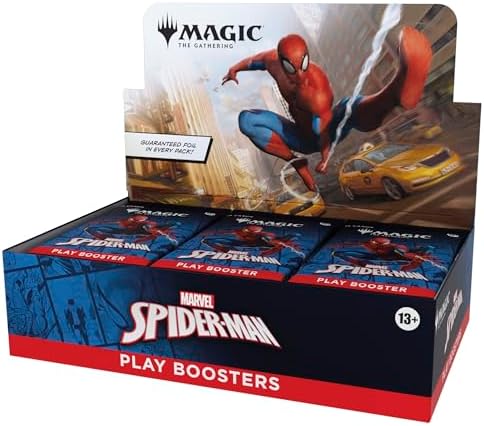
The Marvel's Spider-Man play booster box has 30 Play Boosters and was about $120 on TCGplayer in October 2026. If you only want web-slinging cards, buy singles: every one of them was under $1.50 on Scryfall in October 2026. For the full set, see our Marvel MTG guide.
Conclusion
Web-slinging is a simple trade: return a tapped creature to cast a spell for less. Use creatures that already attacked or tapped for mana, follow normal timing rules, and return creatures with good enter abilities so the "lost" creature becomes value when you cast it again.
Key Rules References:
- CR 702.188: Web-slinging
- CR 118.9: Alternative costs
- CR 601.2b, 601.2f–h: Announcing and paying costs while casting
- CR 508.1f: Attacking creatures become tapped (it isn't a cost)
- CR 702.20b: Vigilance creatures don't tap to attack
Keep Reading
- MTG Vigilance: Complete Guide — the keyword that works against web-slinging
- MTG The Stack Explained — how casting and triggers use the stack
- Marvel MTG: Complete Guide — the full Spider-Man set breakdown
- MTG Keywords Glossary — every other keyword in one place
Frequently Asked Questions
🔗 Related Resources
More Reviews:
Related Articles
Vigilance MTG: What Vigilance Does and How It Works
Vigilance in MTG means attacking doesn't tap the creature, so it can attack and still block or use tap abilities. Full vigilance rules and how it plays.
MTG Ward: What Ward Does, Ward Rules and How to Beat It
What does ward do in MTG? It counters an opponent's spell or ability that targets it unless they pay the ward cost. Full ward rules and how to beat it.
.jpg)
Hexproof vs Shroud MTG: The Difference Explained (2026)
Hexproof in MTG stops only your opponents from targeting; shroud stops everyone, you included. What each does, the difference, and which is stronger.