
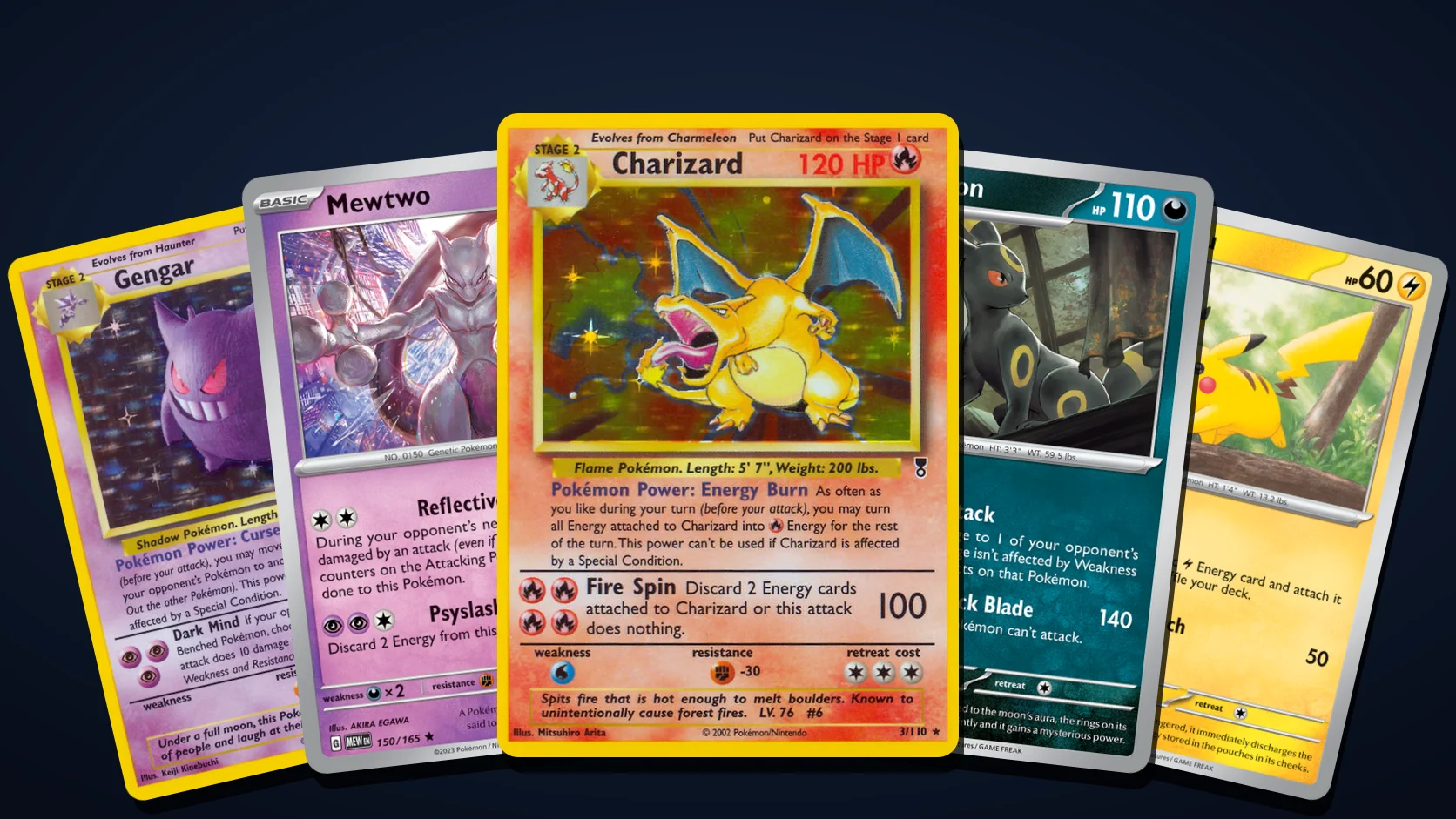
The Short Answer
A holo Pokémon card has the shiny foil inside the artwork window; a reverse holo has foil everywhere except the artwork. On a holo, the picture sparkles and the frame, name bar and text box are flat. On a reverse holo, the frame and text box shine and the picture is flat.
A reverse holo is not a different card. It is a foil version of a card that also exists without foil, with the same name, number and rarity symbol. Reverse holos began with Legendary Collection in May 2002, nearly every Common, Uncommon and Rare has one, and since Scarlet & Violet (2023) English packs have two reverse-holo slots. For modern cards a reverse holo is usually worth a few cents to a few dollars more than the regular print; for early-2000s sets it can be worth many times more.
Holo vs Reverse Holo: What Each One Looks Like
Hold the card under a lamp and tilt it slowly. You are looking for which part of the card catches the light.
| Holo | Reverse holo | Regular (non-holo) | |
|---|---|---|---|
| Artwork window | Foil, shifts colour as you tilt | Flat print | Flat print |
| Frame, background, text box | Flat | Foil | Flat |
| Which cards | Rares and higher, most promos | Commons, Uncommons, Rares (not ultra rares) | Commons, Uncommons, older non-holo Rares |
| Pack slot | The Rare slot | Its own reverse-holo slot | Common and Uncommon slots |
Think of a reverse holo as a foil sheet with a window cut out for the art. Three quick checks settle it:
- Tilt test. If the art shines, it is a holo. If everything around the art shines, it is a reverse holo.
- Look at the text box. Attack text sitting on a shiny background means reverse holo. A standard holo has a flat text box.
- Scarlet & Violet set symbol. Bulbapedia notes that on Scarlet & Violet-era reverse holos the set symbol is black on white, the reverse of the white-on-black symbol on non-reverse cards.
The rarity symbol won't help. A reverse holo of a common still has the circle, and a reverse holo of a Rare still has the star. Our rarity symbols chart explains what each symbol means and why every Rare has been holo since Scarlet & Violet. If you're new to the rest of the card layout, see how to read a Pokémon card.
Where Reverse Holos Came From
Legendary Collection, released on 24 May 2002, was the first set with reverse holos. According to Bulbapedia, Wizards of the Coast stopped printing 1st Edition cards after Neo Destiny, mainly because 1st Edition stock kept arriving after the Unlimited print, and borrowed the idea of a foil version of every card from Magic: The Gathering to give collectors something new. Almost every card in Legendary Collection, a set of reprints from Base Set, Jungle, Fossil and Team Rocket, came as a reverse holo with a "fireworks" foil pattern, one per pack.
The idea stuck: every main English set since has had reverse holos, and the background pattern changes by era. Expedition used plain flat foil; Emerging Powers to Steam Siege repeated the card's Type symbol; Sword & Shield and Scarlet & Violet used tiles of Type symbols; Mega Evolution went back to plain foil.
The EX-era sets are the odd ones out. From EX Hidden Legends to EX Power Keepers, reverse holos put the foil inside the art box, so a reverse holo from EX Delta Species can look like a holo at first glance. From EX Team Rocket Returns on, check for the set logo stamped in the bottom right of the picture, which only the reverse holos have.
Which Cards Come as Reverse Holos, and How Many per Pack
Almost every card up to Rare has a reverse holo version. Bulbapedia's Holofoil page says a reverse holo is usually available for every card in a set except Ultra Rare and Secret Rare cards and full-art cards. In practice that means:
- Yes: Commons, Uncommons, Rares, Trainers and Special Energy, and pre-2023 Rare Holos (so many older Pokémon exist as both a holo and a reverse holo).
- No: Pokémon ex, V, VMAX, VSTAR, GX, Illustration Rares, Special Illustration Rares, Hyper Rares and other full arts. These are already foil and have no reverse version. Our guide to what an SIR is covers the top rarities.
Pack structure. From Legendary Collection until Scarlet & Violet, each English booster pack had one reverse holo. Since Scarlet & Violet (March 2023) there are two reverse-holo slots, according to Bulbapedia's pack table, and both can be replaced by something better:
- The first reverse-holo slot can turn into an ACE SPEC Rare (Temporal Forces to Prismatic Evolutions) or a Shiny Rare (Paldean Fates only).
- The second reverse-holo slot is where Illustration Rares, Special Illustration Rares and Hyper Rares appear.
So a pack with only one reverse holo is often a good sign: one of those slots became a hit. Alongside them sit four Commons, three Uncommons and one card of Rare or higher, which is always holo. Our booster box guide covers what a full box usually contains.
Poké Ball and Master Ball Reverse Holos
A few special sets replaced or extended the normal reverse holo with patterned versions. These are the English ones we could confirm:
| Set | Released | Pattern variants |
|---|---|---|
| Prismatic Evolutions | 17 January 2025 | Regular reverse holo, Poké Ball and Master Ball. Pokémon Commons, Uncommons and Rares come in all three; Common and Uncommon Trainers only in regular and Poké Ball |
| Black Bolt and White Flare | 18 July 2025 | Same three: regular, Poké Ball and Master Ball. Trainers and Special Energy only regular and Poké Ball |
| Ascended Heroes | 30 January 2026 | No regular reverse pattern for Pokémon. Pokémon Commons, Uncommons and Rares come in two versions: one with a ball pattern (each Pokémon has its own: Poké Ball, Love Ball, Friend Ball, Quick Ball or Dusk Ball, or a Team Rocket "R") and one with its type's Energy symbol. Trainers and Special Energy keep the regular reverse holo |
English Scarlet & Violet 151 did not have Poké Ball or Master Ball reverse holos. Bulbapedia's 151 page says the English set used normal reverse holos for every card up to Rare; the Poké Ball and rare Master Ball mirror cards were in the Japanese, Korean and Traditional Chinese versions. If you see an English 151 Master Ball card for sale, it's a Japanese card or a fake (our fake card guide covers the checks).
If you want to open packs for Poké Ball and Master Ball patterns, these are the Elite Trainer Boxes of the three English sets that have both, at TCGplayer market prices on 18 November 2026:
 Prismatic Evolutions Elite Trainer Box$109.98, TCGplayer market, 18 Nov 2026
 Black Bolt Elite Trainer Box$151.72, TCGplayer market, 18 Nov 2026
 White Flare Elite Trainer Box$139.75, TCGplayer market, 18 Nov 2026
A single Master Ball card is usually the cheaper way to own one. The Master Ball Eevee from Prismatic Evolutions was $11.38 on the same day, about a tenth of that set's Elite Trainer Box.
Are Reverse Holos Worth More?
Slightly, for modern cards. Sometimes enormously, for old ones. These are TCGplayer market prices for ungraded English cards, via tcgcsv.com, on 18 November 2026:
Venusaur 18/110
- Set (year)
- Legendary Collection (2002)
- Regular
- —
- Holo
- $140.00
$799.99
Reverse holo
Alakazam 1/110
- Set (year)
- Legendary Collection (2002)
- Regular
- —
- Holo
- $74.94
$321.10
Reverse holo
Dark Blastoise 4/110
- Set (year)
- Legendary Collection (2002)
- Regular
- —
- Holo
- $274.99
$975.00
Reverse holo
Raichu 50/203
- Set (year)
- Evolving Skies (2021)
- Regular
- —
- Holo
- $0.49
$0.74
Reverse holo
Mewtwo 150/165
- Set (year)
- Scarlet & Violet 151 (2023)
- Regular
- —
- Holo
- $1.86
$3.22
Reverse holo
Pikachu 25/165
- Set (year)
- Scarlet & Violet 151 (2023)
- Regular
- $0.25
- Holo
- —
$0.81
Reverse holo
Umbreon 59/131
- Set (year)
- Prismatic Evolutions (2025)
- Regular
- —
- Holo
- $0.36
$0.49 (Poké Ball $2.67, Master Ball $49.55)
Reverse holo
Eevee 74/131
- Set (year)
- Prismatic Evolutions (2025)
- Regular
- $0.23
- Holo
- —
$0.30 (Poké Ball $1.50, Master Ball $11.38)
Reverse holo
 Venusaur 18/110, Legendary CollectionHolo $140.00, reverse holo $799.99 (18 Nov 2026)
 Dark Blastoise 4/110, Legendary CollectionHolo $274.99, reverse holo $975.00 (18 Nov 2026)
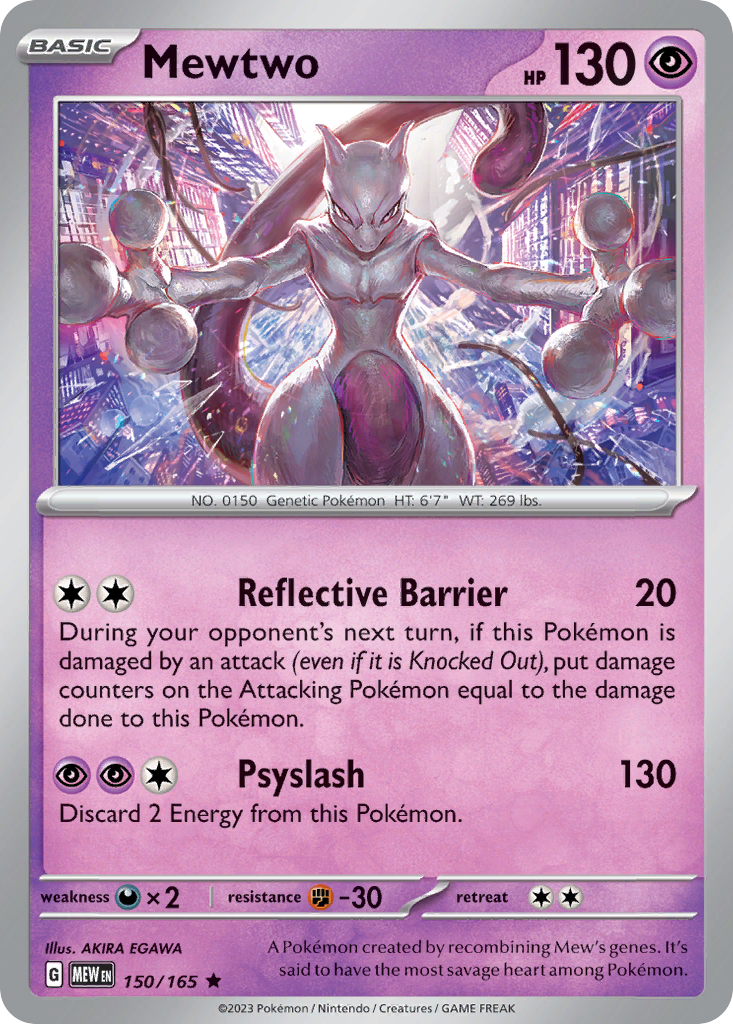 Mewtwo 150/165, Scarlet & Violet 151Holo $1.86, reverse holo $3.22 (18 Nov 2026)
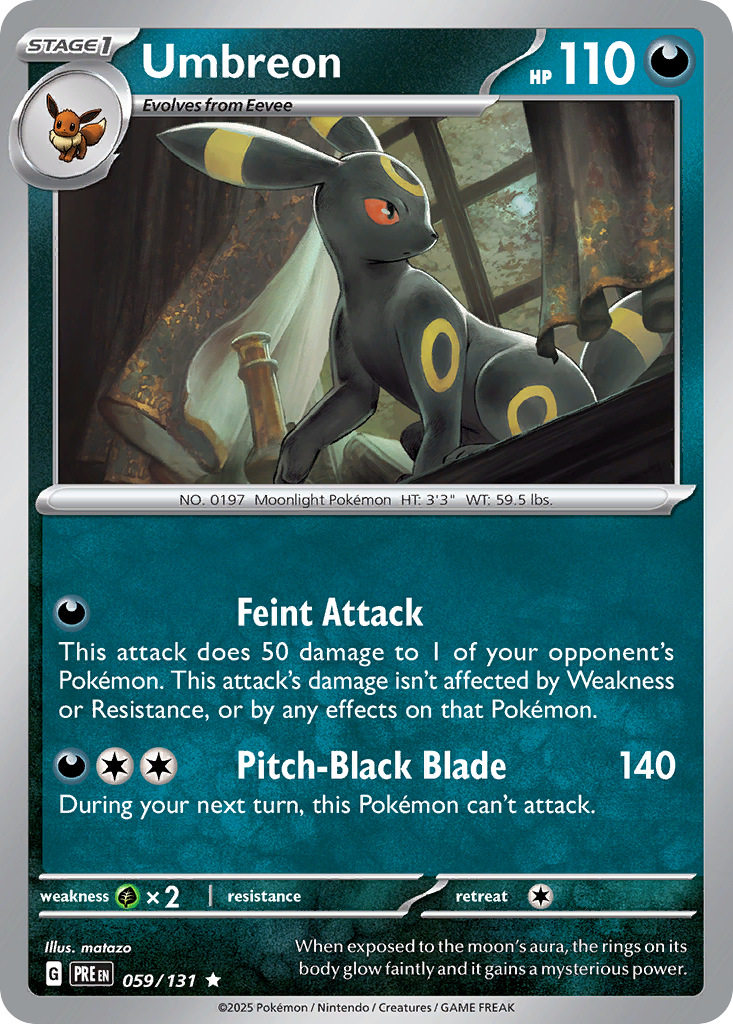 Umbreon 59/131, Prismatic EvolutionsReverse holo $0.49, Master Ball $49.55 (18 Nov 2026)
What the numbers say:
- Modern reverse holos add cents, not dollars. A 151 Pikachu goes from $0.25 to $0.81 as a reverse holo, and a Prismatic Evolutions Eevee barely moves. Two reverse holos per pack means there are a lot of them.
- For Rares, the reverse holo often beats the holo. Every Scarlet & Violet Rare is holo, so the holo is the default print, and the reverse holo is the scarcer one: 151 Mewtwo is $1.86 holo and $3.22 reverse.
- Master Ball patterns are the modern exception. A Prismatic Evolutions Master Ball Umbreon sells for about 100 times its plain reverse holo.
- Legendary Collection reverse holos are a different market. Venusaur's reverse holo is almost six times the holo's price. Charizard's reverse holo sells so rarely that TCGplayer had no market price for it; the cheapest listing was $3,000. Few copies change hands, so treat these as rough guides.
None of these regular-slot cards are the reason people open packs; the money is in the ultra rares. Our list of the best Pokémon cards covers those.
Cosmos Holo and Other Foil Patterns
"Holo" isn't one look. Bulbapedia names a different standard holo pattern for each era:
| Pattern | What it looks like | Where you see it |
|---|---|---|
| Starlight | Blurry starbursts of different sizes | Base Set, Jungle, Fossil holos |
| Cosmos | Dots and circles of different sizes | All holos from Base Set 2 to Call of Legends; many promos since |
| Tinsel | Horizontal stripes | Black & White to Legendary Treasures holos |
| Sheen | A diagonal sheen across the art | XY-series holos |
| Water Web | A wavy, flowing-water pattern | Sun & Moon to Cosmic Eclipse holos |
| Line | Thin vertical lines | Sword & Shield to Crown Zenith holos |
| Mirage | A horizontal sheen, with foil silver borders | Scarlet & Violet holos |
| Cracked Ice | Irregular shards like broken glass | Theme deck and blister promos |
Cosmos holo is the one collectors ask about most, because it keeps coming back on promos. Bulbapedia lists cosmos reverse holos in Costco's 151 Mini Tin 5-pack and cosmos holo Basic Energy cards in 151 packs. A cosmos version of a card is a separate promo print, not the version you pull from the set's own reverse-holo slot.
Mirror foil is a related term. Bulbapedia notes that Sword & Shield and Scarlet & Violet reverse holos are technically mirror foil, without the rainbow scatter of true holofoil, and that the Mega Evolution set brought back Mirror Holofoil variants last seen in Black & White.
Conclusion: Look Where the Shine Is
Holo means the artwork is foil. Reverse holo means everything except the artwork is foil. That's the whole difference, and a tilt under a lamp tells you which one you have.
Reverse holos have been in every pack since Legendary Collection in 2002, two per pack since Scarlet & Violet. Modern ones add a little value; Master Ball patterns and early-2000s reverse holos are where they get expensive. To price the card in your hand, our Pokémon card value checker guide walks through it step by step.
Citations & Resources
- Bulbapedia: Holofoil (holo patterns, reverse holo history and patterns by era)
- Bulbapedia: Booster pack (TCG), Scarlet & Violet pack structure
- Bulbapedia: Legendary Collection (TCG), released 24 May 2002
- Bulbapedia: Prismatic Evolutions (TCG), Poké Ball and Master Ball variants
- Bulbapedia: Black Bolt and White Flare (TCG)
- Bulbapedia: Ascended Heroes (TCG), ball and Energy pattern variants
- Bulbapedia: 151 (TCG), English and Japanese reverse holos
- Pokémon: Scarlet & Violet—Prismatic Evolutions (release date 17 January 2025)
- Pokémon: Scarlet & Violet—Black Bolt, "parallel cards with Poké Ball patterns" (18 July 2025)
- Pokémon TCG API: card data and images
- TCGCSV: TCGplayer market prices (18 November 2026)
Related Guides
- Pokémon Rarity Symbols: the circle, diamond and star, and the full rarity chart
- How to Read a Pokémon Card: every part of the card explained
- What Is an SIR in Pokémon?: Special Illustration Rares and the other top rarities
- Best Pokémon Cards: the cards worth chasing
- How to Tell If a Pokémon Card Is Fake: ten checks ranked by reliability
- Pokémon Booster Box: what's inside a box and what it costs