
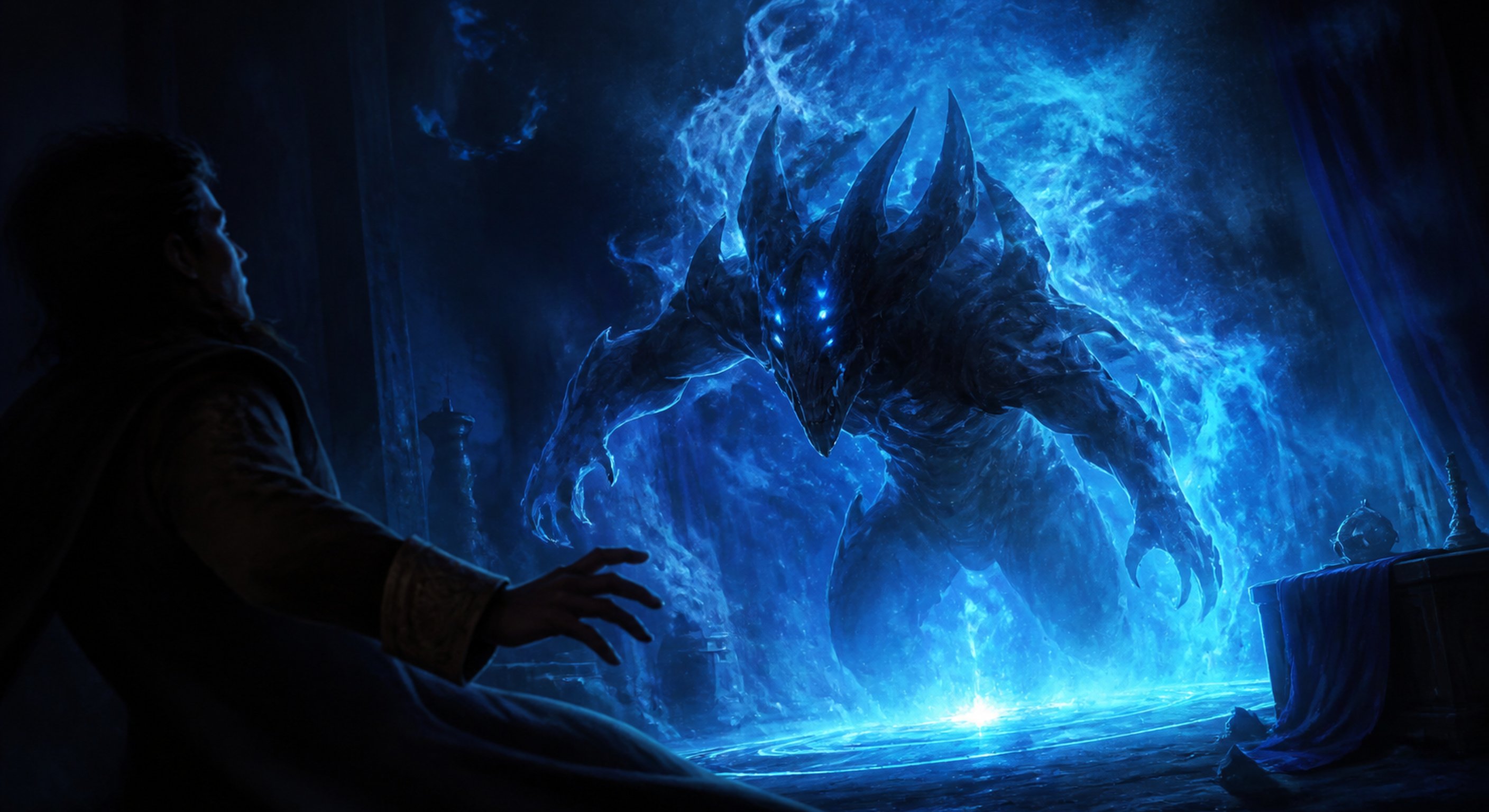
Quick Verdict
Flash is a static ability meaning you may cast the spell any time you could cast an instant. It changes when you cast, never what the card does once it resolves — a creature with flash still has summoning sickness and still cannot attack the turn it arrives. There is also a separate card literally named Flash, from Mirage, which is banned in Legacy and Commander and restricted in Vintage for enabling a turn-one kill with Protean Hulk.
Flash in MTG is a keyword: you may cast this spell any time you could cast an instant. So you can play a creature at the end of your opponent's turn, during combat as a surprise blocker, or in response to a spell. It doesn't give haste.
Search for "flash Magic: The Gathering" and you get two unrelated answers.
One is a keyword — a small piece of text on hundreds of cards meaning "you can cast this at instant speed". It is one of the most quietly powerful abilities in the game, because it converts a creature into a decision you get to make later.
The other is a card, printed in Mirage in 1996 and named simply Flash, which is banned in Legacy and Commander and restricted in Vintage for enabling a turn-one kill.
This guide covers both, starting with the keyword — and with the mistake almost every new player makes about it.
The rule in one line: flash changes when you cast a spell, and nothing else. It never changes what the card does once it is on the battlefield.
Flash Rules in MTG
Flash is a static ability, and its full rules text (CR 702.8) is short:
Flash means "You may cast this spell any time you could cast an instant."
That covers:
- During an opponent's turn, at any point they give you priority
- In response to a spell or ability on the stack
- During combat — including after blockers are declared
- During either player's end step
It is worth stressing what this does not change. A creature with flash is still a creature, not an instant. It does not go to the graveyard after resolving. It is targeted by creature removal normally. Nothing about the permanent is different — only the moment you were allowed to cast it.
Flash also functions in any zone you could legally cast the card from. If some other effect lets you cast a card out of your graveyard, and that card has flash, you may do it at instant speed. Flash does not grant permission to cast from unusual zones; it only changes timing once that permission exists.
Flash Does Not Grant Haste
This is the error worth building the whole article around, because it comes up in real games constantly.
Flash governs casting. Haste governs acting.
A creature cast with flash arrives with summoning sickness like any other creature. It cannot attack, and it cannot use activated abilities with the tap or untap symbol in their cost, until you have controlled it since the beginning of your most recent turn.
| Can a flash creature… | The turn it arrives | Why |
|---|---|---|
| Block | Yes | Summoning sickness never restricts blocking |
| Attack | No | Summoning sickness — needs haste, which flash does not grant |
| Use a tap ability | No | Tap and untap costs are restricted by summoning sickness |
| Use a non-tap ability | Yes | Only tap/untap costs are restricted |
| Have its ETB trigger | Yes | Entering the battlefield is not an action the creature takes |
The end step trick
There is a way to get the attack anyway, and it is one of the most useful pieces of timing knowledge in the game.
Cast the flash creature during your opponent's end step. Their turn ends, your turn begins — and now you have controlled that creature since the start of your most recent turn. Summoning sickness is already gone, and it can attack immediately.
Casting the same creature during your own turn gets you none of this. Same card, same mana, one turn of tempo difference depending only on when you cast it.
Why Flash Is Actually Strong
The raw effect looks minor. Its value is not in the ability itself but in what it does to decision-making.
It buys information. A flash creature lets you hold your mana open, watch what your opponent does, and decide afterwards. If they cast something worth countering, counter it. If they attack, ambush a creature. If nothing happens, cast the creature at their end step and lose almost nothing.
It turns a creature into removal. Flashing in a blocker after attackers are declared means your opponent committed to an attack without knowing about it. A well-timed ambush blocker eats a creature that would never have attacked into it.
It punishes sorcery-speed play. An opponent who taps out on their own turn has told you it is safe to act.
Flash's real cost to your opponent is not the card. It is that they now have to play every turn as though you might have it.
Classic examples worth knowing: Snapcaster Mage flashes in to rebuy an instant from the graveyard, Restoration Angel blinks a creature at instant speed, Vendilion Clique strips a card during an opponent's draw step, Brazen Borrower bounces a blocker and leaves a body behind, and Torrential Gearhulk recasts an instant while ambushing.
Granting and Denying Flash
Granting it to everything. Cards like Vedalken Orrery and Leyline of Anticipation read "you may cast spells as though they had flash", which applies to your entire hand. Expensive, but transformative in Commander — every sorcery-speed play becomes a response.
Shutting it off. The cleanest answer is Teferi, Time Raveler, whose static ability means each opponent may cast spells only when they could cast a sorcery. That removes flash, instants and everything else at instant speed in one line of text. Counterspells and taxes interact with individual spells; Teferi removes the timing itself.
Flash interacts closely with priority and the order things resolve — our guide to the stack covers why a flash creature cast in response resolves before the spell it was cast against, and MTG phases and turn structure covers exactly when in a turn you get to act.
The Card Named Flash
Separate from the keyword, and worth knowing about because the name collision confuses searches.
Flash is a blue instant from Mirage (1996). It puts a creature card from your hand onto the battlefield, and then that creature is sacrificed unless you pay its mana cost minus two.
Read plainly, that sounds like a drawback. In practice it was one of the most broken cards ever printed, because "put a creature onto the battlefield and then sacrifice it" is an advantage if the creature's value is in dying.
The Hulk Flash combo. Paired with Protean Hulk — a creature that searches your library for any number of creatures with mana value six or less when it dies — Flash put the Hulk into play and immediately sacrificed it, triggering the search and assembling a winning board. With Legacy's fast mana this was achievable on turn one.
| Format | Status | Notes |
|---|---|---|
| Legacy | Banned | Broke the format at Grand Prix Columbus in May 2007 |
| Vintage | Restricted | One copy permitted; Hulk Flash remains a real deck |
| Commander | Banned | Banned April 2020 |
| Modern, Pioneer, Standard | Not legal | Predates all three formats |
The card was legal in Legacy for roughly one month in 2007 after an erratum restored its original functionality. That month was enough. For where these formats sit relative to each other, see our complete guide to MTG formats.
The most-played flash cards in Commander
Ranked by how many Commander decks play them (EDHREC data, via Scryfall). Prices are for the cheapest printing on Scryfall in October 2026.
- Mithril Coat — about $29
- Orcish Bowmasters — about $44
- Hullbreaker Horror — about $6.03
- Faerie Mastermind — about $12
Common Misconceptions
"Flash lets my creature attack immediately." No. That is haste. Flash creatures have summoning sickness like everything else.
"A creature with flash is an instant." No. It is a creature that can be cast at instant speed. It stays on the battlefield.
"I can flash in a creature after blockers are declared and block with it." No. Blockers are declared once; a creature that was not on the battlefield at that moment is not blocking. Flash it in during the declare attackers step, before blockers, to block with it.
"Flash means it can't be countered." No. It is cast and uses the stack like any spell, and can be countered normally.
Conclusion: Timing Is the Whole Ability
Flash is the clearest example in Magic of an ability whose power is entirely positional. It adds nothing to a card's stats, changes nothing about what it does, and grants no protection. All it does is move the decision later — and later is almost always better, because later means more information.
The one thing to internalise is the boundary. Flash ends the moment the creature resolves. From that point it is an ordinary creature with ordinary summoning sickness, and if you want it to attack this turn you need haste, not flash.
Then learn the end step trick, because it converts that limitation into a tempo gain: cast at their end step, attack on yours. Same card, same cost, one turn faster.
Citations & Resources
- Wizards of the Coast: Comprehensive Rules — flash (CR 702.8)
- Wizards of the Coast: Banned and restricted list
- MTG Wiki: Flash — keyword and card
- MTG Wiki: Hulk Flash — the combo and its bans
- MTG Wiki: Summoning sickness
- Scryfall: Every card with flash
Related Guides
- The Ultimate MTG Keywords Glossary — every keyword, with a printable cheat sheet
- The Stack Explained — why a flashed-in spell resolves first
- MTG Phases and Turn Structure — when you actually get priority to act
- What Trample Means in MTG — the combat keyword flash blockers run into
- What Lifelink Means in MTG — another static ability in the same depth
- What Scry Means in MTG — the other half of holding up mana: knowing what is coming
- Complete Guide to MTG Formats — where the card Flash is and is not legal
- What Haste Means in MTG - the keyword flash is most often confused with
Frequently Asked Questions
🔗 Related Resources
More Reviews:
Related Articles
Flashback MTG: What It Means, Rules and Best Cards (2026)
Flashback in MTG lets you cast an instant or sorcery from your graveyard for its flashback cost, then exile it. Full flashback rules and the best cards.
The Ring Tempts You MTG: Rules, 4 Levels, Best Cards (2026)
The Ring tempts you in MTG gives you an emblem and a Ring-bearer that gets stronger each time. All four levels, the rules, and the best Ring cards.
Suspend MTG: What It Means, Rules and Best Cards (2026)
Suspend in MTG lets you exile a card with time counters and cast it for free in a few turns. Full suspend rules, the haste bonus, and the best suspend cards.