
Quick Verdict
Trample means that once you have assigned lethal damage to every creature blocking your attacker, the remaining damage carries through to the defending player, planeswalker or battle. The two things people get wrong are that it is not 'all damage goes through' — blockers must be covered first — and that 'lethal' is smaller than it looks, because it counts damage already marked and drops to 1 per blocker when the attacker also has deathtouch.
Trample in MTG means a blocked attacking creature can assign its excess combat damage to the player, planeswalker or battle it's attacking, once it has assigned lethal damage to all of its blockers. The trample rules turn a chump block from 'no damage' into 'most of the damage'.
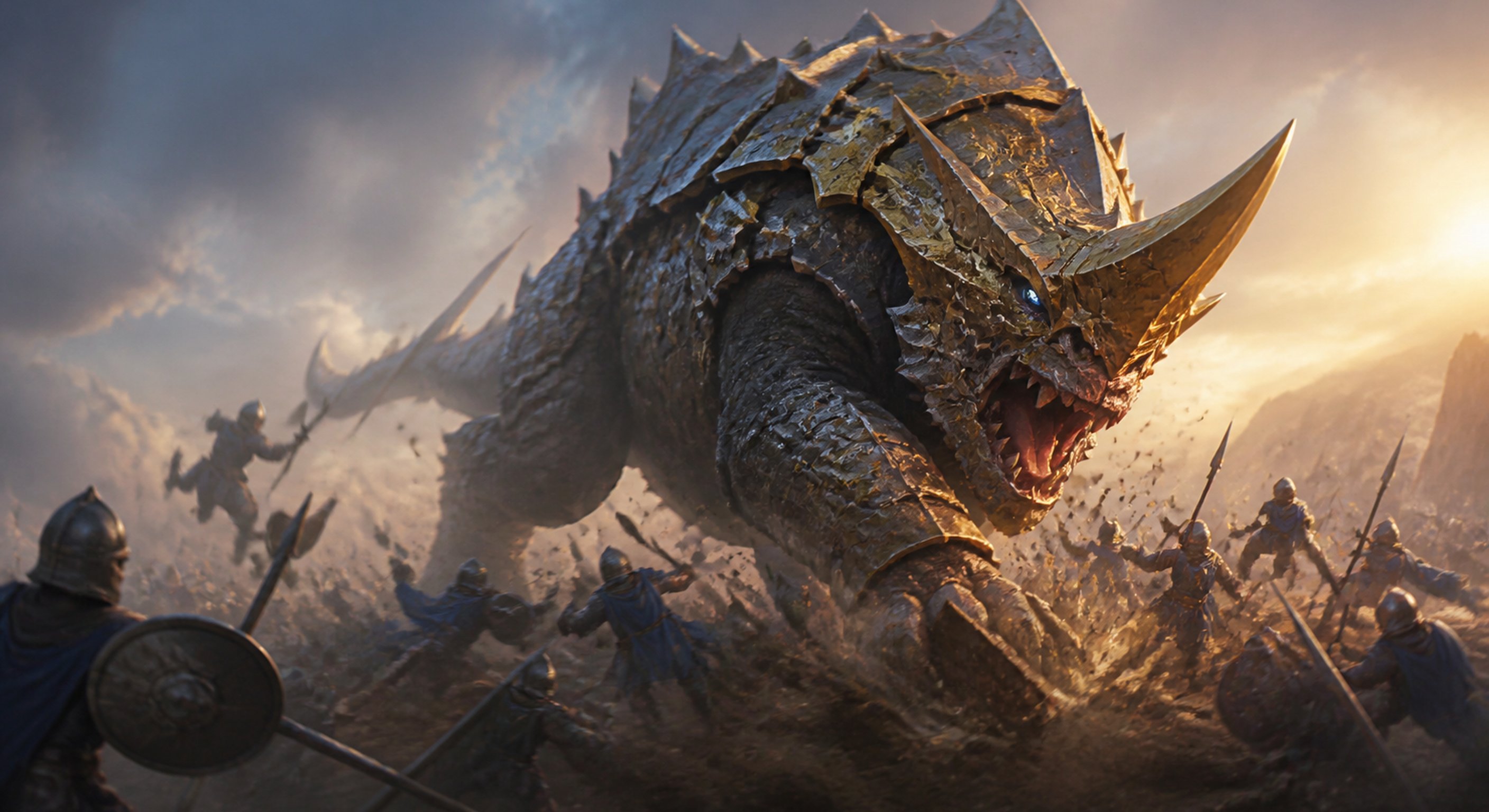
Magic's combat system has one structural quirk that shapes the whole game: a blocked creature deals all of its damage to its blockers, regardless of size. A 12/12 stopped by a 1/1 wall deals twelve damage to a creature with one toughness and nothing to the player. Eleven damage vanishes.
Trample is the answer to that. It is the reason big green creatures are threatening rather than merely large, and the reason a board stall involving a trampler is not really a stall at all.
But it is not "damage goes through". The rule is narrower and more interesting than that, and the difference between the two readings costs games — usually at the moment a player announces lethal and then discovers it is not.
The whole keyword in one sentence: cover every blocker with lethal damage, and whatever is left over goes to the player.
Trample Rules in MTG
Trample is a static ability that modifies how combat damage is assigned. It does nothing outside of combat, and nothing at all if the creature is unblocked.
The governing text is CR 702.19b:
The controller of an attacking creature with trample first assigns damage to the creature or creatures blocking it. Once all those blocking creatures are assigned lethal damage, any remaining damage is assigned as its controller chooses among those blocking creatures and the player, planeswalker, or battle it's attacking.
The critical second half of the rule, which is where the misunderstanding lives:
The attacking creature's controller need not assign lethal damage to all those blocking creatures but in that case can't assign any damage to the player or planeswalker it's attacking.
So it is a genuine either/or. Cover every blocker, or nothing reaches the player. You cannot choose to under-assign one blocker in order to push a little more damage through.
The mistake that loses games
Trample does not mean "damage goes through". A 6/6 trampler blocked by two 3/3s assigns 3 and 3, and tramples over for zero. Players announce lethal on this board state constantly and then have to take it back.
What "Lethal Damage" Actually Means
This is where the value is, because lethal is usually smaller than people assume.
Lethal damage = the blocker's toughness, minus damage already marked on it this turn.
That subtraction matters enormously:
- A 4/4 blocker that already took 3 damage this turn needs only 1 more assigned.
- A blocker that was hit by an earlier first-strike attacker needs correspondingly less.
- Damage marked by another attacker in the same combat counts too.
And the big one:
Deathtouch reduces lethal to 1. Any nonzero damage from a deathtouch source is lethal, so an attacker with trample and deathtouch assigns just 1 damage per blocker and everything else carries through.
| Attacker | Blocked by | Assigned to blockers | Tramples over |
|---|---|---|---|
| 6/6 trample | Two 3/3s | 3 + 3 | 0 |
| 6/6 trample | One 1/1 | 1 | 5 |
| 10/10 trample + deathtouch | Three 5/5s | 1 + 1 + 1 | 7 |
| 6/6 trample | A 4/4 already dealt 3 damage | 1 | 5 |
| 6/6 trample | A 2/2 with protection from green | 2 (prevented) | 4 |
| 6/6 trample | A 2/2, removed before damage | — | 6 |
Trample plus deathtouch turns every blocker into a 1-damage speed bump. It is the strongest keyword pairing in combat, and it is why cards granting both at once are priced the way they are.
The November 2024 Change
On 8 November 2024, with Magic: The Gathering Foundations, Wizards removed damage assignment order from the game entirely. It is the largest combat rules change in over a decade and it directly affects how trample plays.
Before. When multiple creatures blocked one attacker, the attacking player had to rank them during the declare blockers step. Damage then had to be assigned in that order — you could not touch the second blocker until the first had been assigned lethal.
Now. No order is declared at all. Once the combat damage step begins, the attacking creature's controller divides its damage among all blocking creatures however they choose.
What did not change is trample's own requirement. You still have to assign lethal damage to every blocker before any excess reaches the player. And trample plus deathtouch still means 1 damage per blocker.
Why this matters in practice
The old ordering rule mostly created bookkeeping and gotchas — a player who ranked blockers badly at declare-blockers could be punished later by a combat trick. Removing it made combat more forgiving without making trample stronger. If you learned Magic before 2024 and have not played since, this is the rule you are most likely to still be playing wrong.
Our ultimate MTG keywords glossary covers the same change across every other combat keyword it touched, and has a printable cheat sheet for the table.
The Interactions That Decide Games
Protection. Protection prevents damage being dealt, but trample checks damage assigned. Assign lethal to the protected blocker, the prevention stops it landing, and your excess still tramples through. Protection does not stop trample.
Indestructible. Same logic. Indestructible does not change what counts as lethal for assignment — you assign damage equal to its toughness, the creature survives, and the remainder carries over.
Blockers removed before damage. If every creature blocking your attacker leaves the battlefield before the damage step, your creature is still blocked — and a blocked creature with no blockers deals no combat damage at all. Unless it has trample, in which case all of its damage is assigned to the player. This is a real and frequently missed line: removal on a blocker is much better when you have a trampler.
Double strike. Damage is dealt in two steps. If the first-strike damage kills the blockers, they are gone for the second step and the entire second helping goes to the player. Even if they survive, the damage marked in step one reduces what counts as lethal in step two, so more tramples through either way.
Blocked by a 0-toughness creature. Lethal damage for a creature with 0 toughness is 0, so you assign nothing to it and everything tramples.
Planeswalkers and battles. Trample carries over to whatever the creature was attacking — a player, a planeswalker, or a battle. Excess damage assigned to a planeswalker removes that many loyalty counters.
Where Trample Lives
Trample is primarily green, secondarily red, and appears occasionally in black. It is essentially absent from white and blue, which is consistent with the colour pie — trample is the reward for building the biggest creature, and white and blue are not supposed to win that contest.
Its strategic role is narrow but important: trample converts creature size into a clock. Without it, a large creature is a defensive asset that opponents can chump-block indefinitely with 1/1 tokens. With it, every chump block costs the defender a creature and barely delays the damage.
That also defines when trample is bad. Against an empty board it does nothing at all — an unblocked creature already deals full damage to the player. Trample is a keyword you value in direct proportion to how many blockers you expect to face.
Cards worth knowing: Colossal Dreadmaw is the archetypal teaching card — a 6/6 trample common that appears in set after set. Ghalta, Primal Hunger is the payoff at the top end. Craterhoof Behemoth and Overrun grant trample to a whole board at once, which is how green decks convert a wide board into a single lethal attack. Rancor is the cheapest repeatable way to add it. Quilled Greatwurm from Foundations is the current Standard-legal example.
Common Misconceptions
"Trample means all my damage goes to the player." No. Blockers must be assigned lethal first, or nothing goes through.
"I can assign 1 to the blocker and the rest to the player." Only with deathtouch. Otherwise you must assign full lethal.
"Trample gets around protection, so protection is useless." Trample gets through a protected blocker, but the blocker still survives — protection prevented the damage. Both things are true.
"My blocker died to first strike, so the trampler deals nothing." The opposite. Dead blockers mean more damage reaches you, not less.
"Trample helps my unblocked creature." It does nothing whatsoever.
Conclusion: Assign, Then Trample
Trample is one of the oldest keywords in Magic and one of the most consistently misread, because the short version people remember — "damage carries over" — omits the condition that does all the work. The condition is that every blocker gets covered first, and there is no partial credit.
Once that clicks, the rest follows. Lethal is toughness minus damage already marked, which makes second attackers and first strike quietly valuable. Deathtouch collapses lethal to 1, which is why the pairing is so strong. And removing a blocker before damage does not waste your attack — it sends the whole thing through.
Since November 2024 you no longer have to rank blockers in advance, which removed the last genuinely fiddly part of the interaction. What is left is a clean rule: cover the blockers, then trample.
Citations & Resources
- Wizards of the Coast: Comprehensive Rules — trample (CR 702.19)
- Wizards of the Coast: Foundations Update Bulletin — the damage assignment change
- Wizards of the Coast: Foundations Release Notes
- MTG Wiki: Trample — history and rulings
- Scryfall: Every card with trample
Related Guides
- The Ultimate MTG Keywords Glossary — every keyword, with a printable cheat sheet
- What Lifelink Means in MTG — another static combat ability, in the same depth
- What Reach Is in MTG — the defensive counterpart
- MTG Vigilance Explained — attacking without tapping
- First Strike and Double Strike Explained — the keyword trample pairs with best
- The Ultimate Guide to MTG Counters — granting trample with keyword counters
- MTG Colors Explained — why trample is green
- MTG Planeswalkers — what trample damage does to loyalty
- What Menace Means in MTG - why forcing two blockers reduces trample damage
- What Deathtouch Means in MTG - why any nonzero damage is lethal
Frequently Asked Questions
🔗 Related Resources
More Reviews:
Related Articles

What Does Deathtouch Mean in Magic: The Gathering? Rules and Interactions (2026)
Any nonzero damage from a deathtouch source destroys the creature — including damage from fight, pings and abilities, not just combat. What it beats, what beats it, and why it is strongest on defence.

MTG Protection: What Protection Does and the DEBT Rule (2026)
Protection in MTG stops a creature being Damaged, Enchanted, Blocked or Targeted by the named quality. Full protection rules (DEBT) and every edge case.
Regenerate MTG: What Regenerate Means and How It Works
Regenerate in MTG replaces the next destruction this turn: tap it, remove its damage, take it out of combat. Full regenerate rules, and why it was retired.