
Quick Verdict
In almost any collection, well over 95% of the cards are worth close to nothing and a handful carry nearly all the value. The fastest way to find that handful is to sort by era and treatment rather than by card: cards with no expansion symbol at all predate 1999, anything on the Reserved List holds value permanently, and serialized or Secret Lair treatments are where modern money sits. Everything else is bulk until a scanning app proves otherwise.
PROTECT THEM BEFORE YOU SELL THEM
Almost every Magic collection follows the same shape. Thousands of cards, nearly all of them worth nothing, and somewhere in the middle a small number that carry essentially the entire value. The people who lose money on their collections are not the ones who sell too cheaply — they are the ones who never find the twelve cards that mattered.
The instinct is to look up cards one at a time. With three thousand cards that is a month of evenings, and it is the reason so many collections get sold as bulk with the good cards still inside.
There is a much faster method, and it works because value in Magic is not distributed randomly. It clusters into a handful of specific eras, card families and treatments. Learn to recognise those on sight and you can triage a whole box in an evening.
The rule that saves the most time: do not look for valuable cards. Look for the five markers below, pull anything that has one, and scan the rest.
Start With the Honest Baseline
In a typical collection assembled by a player rather than an investor, well over 95% of the cards are worth under a dollar, and unsorted bulk trades at roughly $2–$5 per thousand.
This is not a discouraging fact — it is the most useful one in this guide, because it tells you where to spend your attention. A long box of about 3,000 cards is worth $6 to $15 as bulk. If a single Reserved List card is sitting in it, that one card can be worth more than every other card in the box combined, several times over.
So the goal is not to price your collection. The goal is to find the small number of cards that break the pattern, as quickly as possible, and get everything else into a bulk pile without further thought.
The one mistake that actually costs money
Every experienced seller has a story about a card that left in a bulk lot. Once bulk is sold it is gone, unsorted and unrecoverable. Do the triage below before anything leaves the house — it is an evening's work against a risk that has no ceiling.
Marker 1: Era — Read the Expansion Symbol
The single fastest era test is the small symbol in the middle-right of the card, level with the type line.
No expansion symbol at all. The card is from Alpha, Beta, Unlimited, Revised, or a core set up to Fifth Edition — 1993 to 1997. Sixth Edition in 1999 was the first core set to carry one. These are the printings where the runs were tiny and nobody knew the game would matter. Every card from this era is worth checking individually, even commons, because this is where the genuinely scarce cardboard lives.
An expansion symbol that is not colour-coded. Rarity colour-coding began with Exodus in June 1998; before that, symbols were printed in a single colour and there was no way to tell a rare from a common by looking at it. A monochrome symbol therefore dates the card to 1994–1998, the second-best era to check.
A colour-coded symbol — black for common, silver for uncommon, gold for rare, orange-red for mythic rare from 2008 onward. This is everything from mid-1998 to today. Value here comes from the card being played or specially treated, not from its age.
| What you see | Era | What to do |
|---|---|---|
| No expansion symbol | 1993–1997 | Check every card individually, including commons |
| Single-colour expansion symbol | 1994–mid 1998 (expansions) | Check all rares; scan the rest |
| Gold or orange-red symbol | Mid 1998–present | Scan; value depends on play and treatment |
| Black or silver symbol | Mid 1998–present | Bulk unless it is a known staple |
Border colour helps too. Black borders on early cards indicate a first printing; white borders indicate a later reprint of the same card and are worth substantially less. A white-bordered version of an expensive card is a real card — just a cheaper one. Our visual guide to MTG symbols covers reading every marking on the card face in detail.
Marker 2: The Reserved List
The Reserved List is Wizards of the Coast's standing promise never to reprint certain cards in tournament-legal form. It was created in 1996 after the Chronicles reprint set collapsed the value of cards collectors believed were scarce, and while it has been narrowed it has never been abolished.
This is the strongest single value signal in the game, because supply is permanently fixed and can only fall as cards are damaged or lost. The categories worth knowing on sight:
- The Power Nine — Black Lotus, the five Moxen, Ancestral Recall, Time Walk, Timetwister. Four and five figures each depending on printing and condition.
- The original dual lands — ten two-colour lands from the 1993–1994 printings with no drawback text. Consistently valuable, consistently faked, and consistently mistaken for the gold-bordered reprints.
- A long tail of 1990s rares that look ordinary but cannot be reprinted, which is why a card you have never heard of from 1994 can still be worth checking.
If a card is old, black-bordered and you cannot immediately explain why it is not valuable, look it up. This is the category where a card sitting in a shoebox for twenty years turns out to be worth more than the car.
For the top end of this market — record sales, grading multiples, the 1-of-1s — see our analysis of the most valuable MTG cards in 2026, and our complete guide to Black Lotus for the card that defines the category.
Marker 3: Currently Played Staples
Age is not the only route to value. A card printed last year that appears in thousands of decks can be worth more than a 1995 rare nobody wants.
The formats that drive singles prices are Commander by volume, and Modern and Legacy by price intensity. What to look for:
- Fetch lands and shock lands — the manabase cards that appear in almost every serious deck. Reprinted regularly, still expensive, because demand scales with the entire player base.
- Commander staples — universal artifacts, tutors and ramp pieces that go in decks regardless of colour. Individually modest, but they add up fast across a collection.
- Recently banned or unbanned cards, which move sharply in both directions. A ban announcement can halve a price overnight.
The distinguishing feature of this group is that it is volatile. Reserved List value is structural; staple value is a snapshot of what people are building right now. If your collection is mostly staples, the price you get depends heavily on when you sell.
Marker 4: Special Treatments
Modern Magic generates value through manufactured scarcity rather than small print runs, and the treatments are visually obvious once you know them.
Serialized cards carry a stamped number on the card face — ###/500, ###/300, and so on. These are the modern high end and can run into four and five figures. They are impossible to miss once you know to look for the stamp.
Secret Lair drops are direct-to-consumer printings with alternate art, available for a limited window and never reprinted in that form. Value ranges from nothing to thousands.
Universes Beyond — the crossover sets with Lord of the Rings, Marvel, Final Fantasy and others — brought in buyers from outside Magic entirely, which supports prices differently from ordinary sets.
Foils, introduced in Urza's Legacy in 1999. Any foil from the first few years is worth checking. On modern cards the premium is usually small, but on a played staple it can be a multiple.
Misprints and oddities — miscuts, off-centre cards, inverted backs, printing errors. A genuinely unusual misprint on a desirable card has its own collector market.
Old and valuable are different questions. Scarcity is what pays — whether it came from a 1993 print run of eleven hundred or a 2023 stamp reading 003/500.
What Looks Valuable But Is Not
This section saves more disappointment than the rest of the guide combined.
Fallen Empires, Homelands and Chronicles. Printed in enormous quantities in the mid-1990s, and the direct cause of the Reserved List. The singles are worth pennies despite being thirty years old. There is a genuine curiosity here: sealed boxes of these sets do sell for hundreds or over a thousand dollars, because sealed product has its own collector market — but the loose cards inside a collection are bulk.
Gold-bordered cards. These come from World Championship deck reprints. They are not tournament legal and trade far below the black-bordered originals. A gold-bordered dual land is the classic version of this disappointment.
Square-cornered cards. Collectors' Edition and International Collectors' Edition, from 1993. Genuine 1993 Wizards printings, never tournament legal, worth a fraction of the black-bordered versions — and the historical raw material for rebacked counterfeits.
Cards that are simply damaged. Condition is not a minor adjustment at the top of the market. A creased, water-damaged or trimmed version of an expensive card can be worth a small fraction of a clean one, and trimming in particular destroys value entirely because it reads as an attempt at fraud.
"Shiny" cards that are not foils. Holofoil stamps, textured treatments and premium-looking frames appear on plenty of ordinary cards. The treatment does not create value on its own; the card underneath has to be wanted.
The gold border trap
If you have found what looks like an expensive card — a dual land, a Power Nine card — check the border colour and the corners before celebrating. Gold border means a World Championship reprint. Square corners mean Collectors' Edition. Both are real cards, and both are worth a small fraction of what the black-bordered original is worth.
The Practical Method
| Step | What you do | Roughly how long |
|---|---|---|
| 1. Era pass | Pull every card with no expansion symbol or a single-colour symbol | 30–60 minutes per long box |
| 2. Treatment pass | Pull every foil, serialized card, Secret Lair and obvious misprint | 20–30 minutes per long box |
| 3. Scan the pulls | Run the pulled cards through a phone scanning app for prices | Minutes |
| 4. Scan the rares | Scan remaining gold and orange-red symbol cards to catch played staples | An hour or two per box |
| 5. Everything else | Bulk — do not sort further, it adds nothing | None |
Steps 1 and 2 are visual and fast because you are recognising markers, not reading card names. Step 4 is the slow one and it is optional — it is worth doing on a collection built during an era you actively played, and not worth doing on a box of draft leftovers.
For the scanning apps themselves and the difference between market price and what a seller actually receives, see how to value Magic: The Gathering cards.
What to Do With What You Find
The triage produces three piles, and they go to three different places.
The bulk goes in one transaction to whoever takes it unsorted with the least shipping cost — usually a local game store, because bulk is heavy and postage can exceed the payout.
The playables — roughly $1 to $150 — are worth listing individually on a marketplace, where you keep meaningfully more than a buylist pays.
The high end needs individual handling, tracked and insured shipping, and in the case of genuinely expensive vintage cards, professional grading before it goes anywhere near a listing.
Our guide to where to sell Magic cards works through the fee structures for each venue and shows why splitting a collection across several of them nets more than sending everything to one.
Anything from the playables pile up should be sleeved the moment you find it. Condition is most of a card's price, and a scratched corner costs more than a pack of sleeves.
Protect them before you sell them
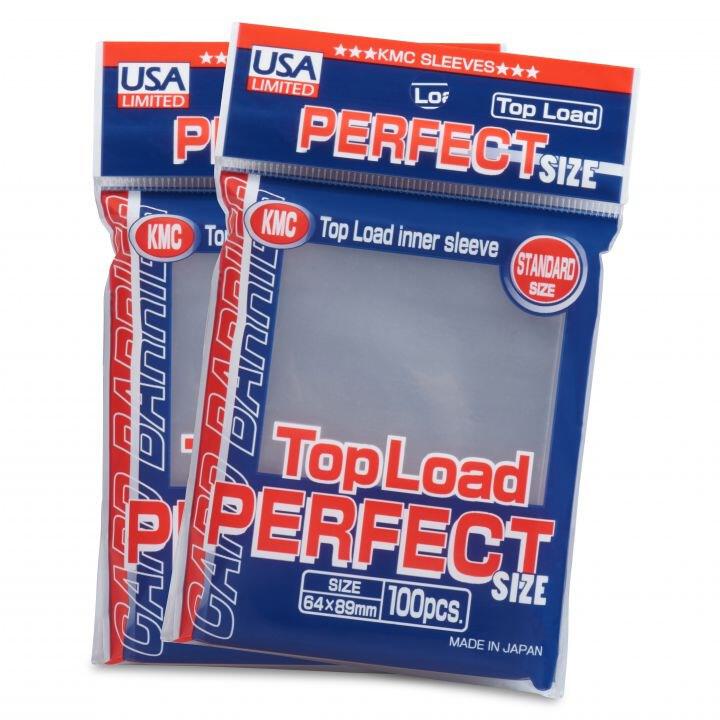
KMC Perfect Fit Inner Sleeves
- Seals out dust and moisture
- Goes inside a normal sleeve for double protection
- 100 per pack
Also on Amazon; the price there varies by seller.
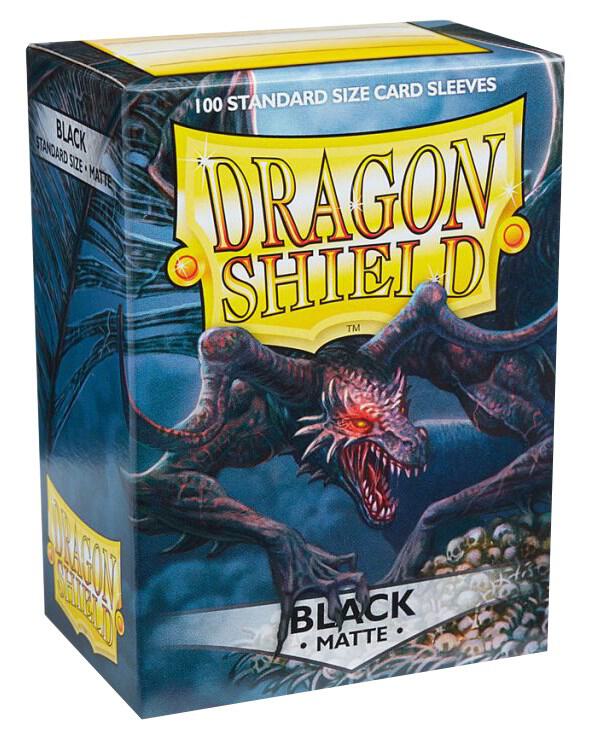
Dragon Shield Matte Sleeves (100-Pack)
- 100 standard-size sleeves
- Durable enough to ship cards in
- Fits over a perfect-fit inner
Also on Amazon; the price there varies by seller.
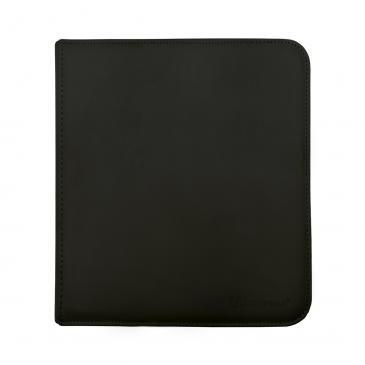
Ultra Pro Vivid 12-Pocket Zippered PRO-Binder
- Side-loading pockets so cards don't fall out
- Zipper closure
- Holds 480 cards
Also on Amazon; the price there varies by seller.
Conclusion: Look for Markers, Not Cards
The reason collections get undersold is that people try to evaluate them card by card, run out of patience somewhere around card four hundred, and sell the remainder as bulk. The cards that mattered were usually in the remainder.
The method that works inverts the problem. You are not trying to price three thousand cards. You are trying to find the twenty that break the pattern, and those twenty announce themselves through a small number of visual markers — a missing expansion symbol, a black border on an old frame, a serialization stamp, a foil from the wrong decade.
Pull on the markers, scan the pulls, bulk the rest without guilt. It is an evening of work, it finds essentially everything worth finding, and it is the difference between selling a collection and giving one away.
Citations & Resources
- MTG Wiki: The Reserved List — history and full card list
- MTG Wiki: Expansion symbols and rarity colour-coding
- MTG Wiki: Exodus — the first set with colour-coded rarity
- Scryfall: Card database with printing and legality data
- Wizards of the Coast: Buyer Beware — identifying counterfeit cards
Related Guides
- How to Value Magic: The Gathering Cards — the scanning tools and the listing-versus-buylist gap
- Where to Sell Magic: The Gathering Cards — which venue nets the most for each tier
- Most Valuable Magic: The Gathering Cards 2026 — what the top of the market looks like
- Magic: The Gathering Black Lotus — the card that defines the Reserved List
- MTG Symbols Explained — reading every marking on a card face
- MTG Card Size and the Card Back - dimensions, sleeve sizing, and the blue core light test
Frequently Asked Questions
🔗 Related Resources
More Reviews:
Related Articles

Black Lotus MTG: Every Printing, Price and How to Spot a Fake
Black Lotus in MTG: a zero-mana artifact that adds three mana once. Why it's banned almost everywhere, every printing, what each is worth in 2026, and fakes.
Where to Sell Magic: The Gathering Cards (2026): Every Venue, Ranked by What You Actually Keep
Buylists, TCGplayer, Mana Pool, eBay, your local game store or a Facebook group — the real fee math on each, and which one nets you the most for the collection you actually own.

How Much Does Magic: The Gathering Actually Cost in 2026?
How much does Magic: The Gathering cost in 2026? Free on Arena, $27–$50 for a Commander deck, and why prices rose in January. Real numbers for every way to play.