
Quick verdict
To proliferate, choose any number of permanents and players that already have counters on them, then give each one another counter of every kind it already has. It never adds a new type of counter and it never targets, which means hexproof, shroud and ward do nothing against it. That non-targeting clause is the reason proliferate is far stronger than its plain reading suggests.
PROLIFERATE DECKS YOU CAN BUY TODAY
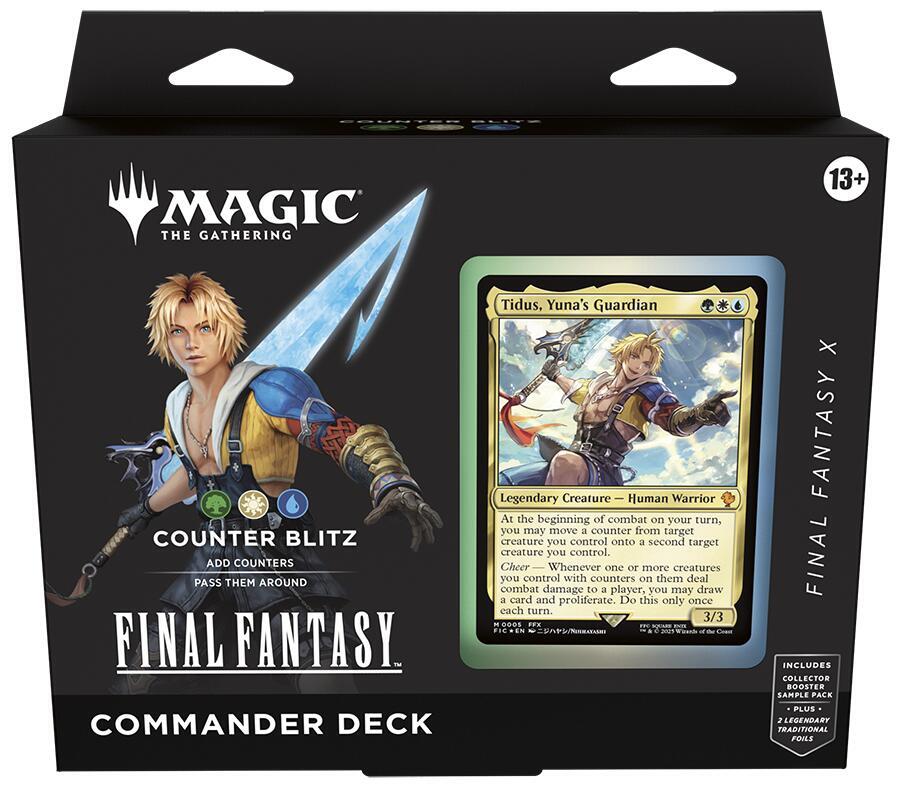
Final Fantasy X Commander Deck: Counter Blitz
A ready-made counters deck whose commander proliferates every time your countered creatures connect
- ✓Tidus, Yuna's Guardian moves counters and proliferates on combat damage
- ✓Green-white-blue counters deck, complete at 100 cards
Proliferate in MTG is a keyword action: choose any number of permanents and/or players, then give each another counter of each kind already there. It works on +1/+1 and -1/-1 counters, loyalty counters, poison counters, and anything else that uses a counter. And because it says choose rather than target, nothing that stops targeting can stop it.
Magic's protection mechanics are almost all built around one word. Hexproof stops targeting. Shroud stops targeting. Ward taxes targeting. Protection stops targeting. If your creature is hard to kill, it is usually hard to target.
Proliferate does not target. It says choose.
That single word means a hexproof creature with a -1/-1 counter on it can be ground down by an ability it has no defence against. It means a player collecting poison counters cannot hide behind any protection effect. It means the entire targeting-based half of Magic's defensive card pool simply does not apply.
Everything else about proliferate — the counter types, the engines, the Commander decks — follows from a mechanic that quietly ignores the game's most common answer.
The rule: choose any number of permanents and players with counters, then give each one more of every kind it already has.
Proliferate Rules in MTG
Proliferate is a keyword action. The current reminder text:
Choose any number of permanents and/or players, then give each another counter of each kind already there.
Four things that decide every proliferate:
"Choose." Not target. Nothing that stops targeting stops proliferate.
"Any number." Including zero. You are never forced to proliferate anything.
"Another counter of each kind already there." One more of every type present — a creature with a +1/+1 and a shield counter gets one of each.
"Already there." Proliferate can never introduce a new counter type. Something with no counters is not a legal choice.
| Before proliferate | After proliferate | Note |
|---|---|---|
| Creature with 3 × +1/+1 | 4 × +1/+1 | One more, not three more |
| Creature with 1 × +1/+1 and 1 × shield | 2 × +1/+1 and 2 × shield | One of every kind present |
| Creature with no counters | No counters | Not a legal choice at all |
| Planeswalker at 4 loyalty | 5 loyalty | Effectively a free tick up |
| Player with 5 poison | 6 poison | Players can be chosen too |
| Suspended card with 2 time | 3 time | This is worse for you — see below |
Proliferate can work against you
Two counters count down rather than up. Time counters on a suspended card are removed one per upkeep, so adding one delays your own spell. Stun counters keep a permanent tapped, so adding one to your own creature is a self-inflicted penalty. Proliferate is optional per permanent — the fix is simply not choosing them, but you have to notice.
Why Not Targeting Is the Whole Card
Set proliferate next to any other repeatable removal-adjacent effect and the difference is stark.
| Defence | Stops targeted removal? | Stops proliferate? |
|---|---|---|
| Hexproof | Yes | No |
| Shroud | Yes | No |
| Ward | Taxes it | No |
| Protection from a colour | Yes | No |
| Indestructible | Against destruction | No — -1/-1 counters kill by toughness |
| Counterspell on the proliferate spell | N/A | Yes — this is the real answer |
The indestructible row is worth pausing on. A creature reduced to zero toughness by accumulated -1/-1 counters is put into the graveyard by a state-based action, not destroyed. Indestructible does not help. Neither does regeneration. Counters kill through almost every protective ability in the game.
Proliferate is not a fast clock. It is a clock your opponent's defensive cards were not designed to read.
Every Counter Proliferate Touches
Proliferate is type-agnostic, which means its power scales with whatever the current standard is printing.
+1/+1 counters — the default. Any counters deck grows for free.
-1/-1 counters — proliferate turns a single shrink effect into a slow execution, and it works through hexproof.
Loyalty counters — a free partial tick on every planeswalker you control, every proliferate.
Poison counters — on players. Ten poison counters is a loss, and proliferate is the reason infect decks that stall out still win.
Charge counters — on artifacts. Everything with "remove a charge counter" becomes repeatable.
Time counters — on suspended cards. Counts down; do not proliferate your own.
Shield counters — one more free save every proliferate.
Stun counters — keeps opponents' permanents tapped longer.
Oil, rad, experience, and every bespoke counter — proliferate reads them all without being updated.
Our complete guide to MTG counters covers what each of these types does in full.
The first counter is the real cost
Proliferate does nothing on an empty board. Every proliferate deck is really two decks stapled together: cheap ways to place the first counter, and the proliferate engine that multiplies it. Cards like Contagion Clasp that do both — place a -1/-1 counter on entry, then proliferate on activation — are worth more than their stats suggest for exactly this reason.
The Engines
Atraxa, Praetors' Voice — proliferates at the beginning of your end step, for free, forever. The single most-built Commander in the mechanic's history, and the reason proliferate has a reputation.
Flux Channeler — proliferate on every noncreature spell. In a spells deck this is several proliferates a turn.
Evolution Sage — proliferate on every land drop, which turns landfall support into a counters engine.
Karn's Bastion — a land that proliferates for {4} and a tap. The activation is expensive, but it costs no card and no colour, which is why it turns up in decks that are barely counters decks at all.
Thrummingbird — proliferate on combat damage to a player, on a one-power flier that is hard to block.
Inexorable Tide — proliferate on every spell you cast, the enchantment version of Flux Channeler with no restriction.
Tezzeret's Gambit and Contagion Clasp — the cheap, colour-light ways into the mechanic.
Yawgmoth, Thran Physician — places -1/-1 counters and draws cards, and every proliferate multiplies the whole operation.
In Commander
Proliferate is a top-tier Commander mechanic for structural reasons.
Games run long enough for incremental to become lethal. A single extra counter per turn is nothing on turn four and decisive on turn twelve.
Planeswalkers survive longer in multiplayer. Every proliferate is a free half-tick towards an ultimate that a 60-card format rarely reaches.
Poison is a genuine alternate win condition. Ten counters, and the format's usual life totals of 40 do not apply. Proliferate is the fastest way there.
It ignores the format's most common protection. Commander is full of hexproof and ward commanders. Proliferate does not care.
The main caution is speed. Proliferate is a value engine, not interaction, and a deck that is all engine and no answers loses to the table before the counters get there.
History
Proliferate debuted in Scars of Mirrodin in October 2010, alongside infect, as the Phyrexian invasion mechanic — the flavour being corruption spreading outwards from wherever it had already taken hold.
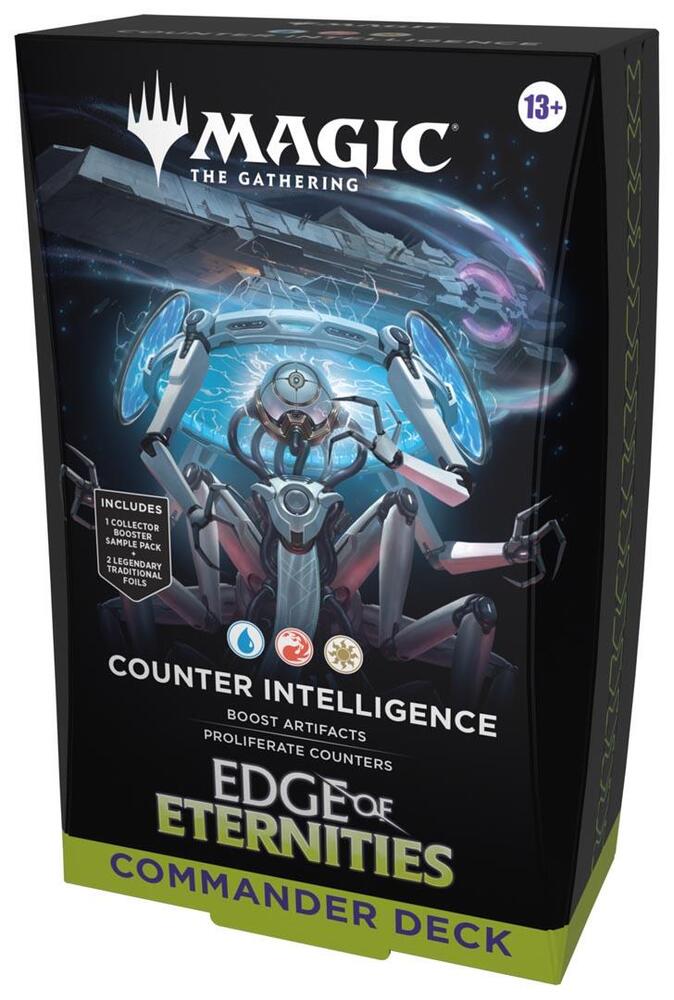
It has come back with every Phyrexian set since, most heavily in Phyrexia: All Will Be One in 2023, and has now escaped that flavour entirely — recent proliferate cards appear in Final Fantasy Commander and Edge of Eternities Commander in 2025, and in Lorwyn Eclipsed, Secrets of Strixhaven Commander and Reality Fracture in 2026.
Around 99 cards reference proliferate. The wording has been simplified once: the original text specified permanents and players with counters on them, which the current template leaves implicit. The behaviour is unchanged.
Common Misconceptions
"Proliferate doubles my counters." It adds exactly one of each kind.
"Hexproof stops proliferate." It does not. Proliferate never targets.
"Proliferate can add a counter to anything." Only to things that already have one.
"I have to proliferate everything." Every permanent and player is an independent optional choice.
"Proliferate speeds up my suspended spells." The opposite — time counters count down.
"Indestructible protects against -1/-1 counters." It does not. Zero toughness is a state-based action.
Conclusion: The Counter Is the Threat
Proliferate is a slow mechanic that reads as fair and plays as inevitable. One more counter is never the play that wins the game. It is the play that makes the next eight turns unwinnable for everyone else, quietly, without ever presenting a target for an answer.
If you are building it, spend your early slots on placing counters, not on multiplying them. An engine with nothing to multiply is a dead card, and a single cheap -1/-1 or +1/+1 effect is what turns the whole deck on.
If you are playing against it, stop reaching for creature removal and protection. The answer to proliferate is answering the engine — the enchantment, the land, the Commander — before the counters accumulate, because once they have, none of your usual defences read the board correctly.
Citations & Resources
- Wizards of the Coast: Comprehensive Rules — proliferate and counters
- Scryfall: Every card that proliferates
- Scryfall: Scars of Mirrodin — where proliferate debuted
- Scryfall: Atraxa, Praetors' Voice — the defining proliferate commander
Related Guides
- The Ultimate MTG Keywords Glossary — every keyword, with a printable cheat sheet
- The Ultimate Guide to MTG Counters — every counter type proliferate can multiply
- MTG State-Based Actions — why -1/-1 counters kill through indestructible
- MTG Regenerate Explained — the other protection that counters walk straight past
- Hexproof vs Shroud — the targeting defences proliferate ignores
- MTG Ward Explained — another targeting tax that does nothing here
- MTG Planeswalkers Explained — why loyalty counters make proliferate so strong
- MTG Suspend Explained — why adding a time counter delays your own suspended spell
Frequently Asked Questions
🔗 Related Resources
More Reviews:
Related Articles

Discover MTG: Rules, Best Cards and Discover vs Cascade (2026)
Discover in MTG exiles until it hits a nonland card of mana value N or less; cast it free or keep it. Full discover rules, and discover vs cascade.

Monarch and Initiative MTG: Full Rules Explained (2026)
Monarch and the initiative in MTG reward whoever holds them and pass on combat damage. Full monarch rules, initiative rules, and why initiative got banned.

MTG Protection: What Protection Does and the DEBT Rule (2026)
Protection in MTG stops a creature being Damaged, Enchanted, Blocked or Targeted by the named quality. Full protection rules (DEBT) and every edge case.