Quick verdict
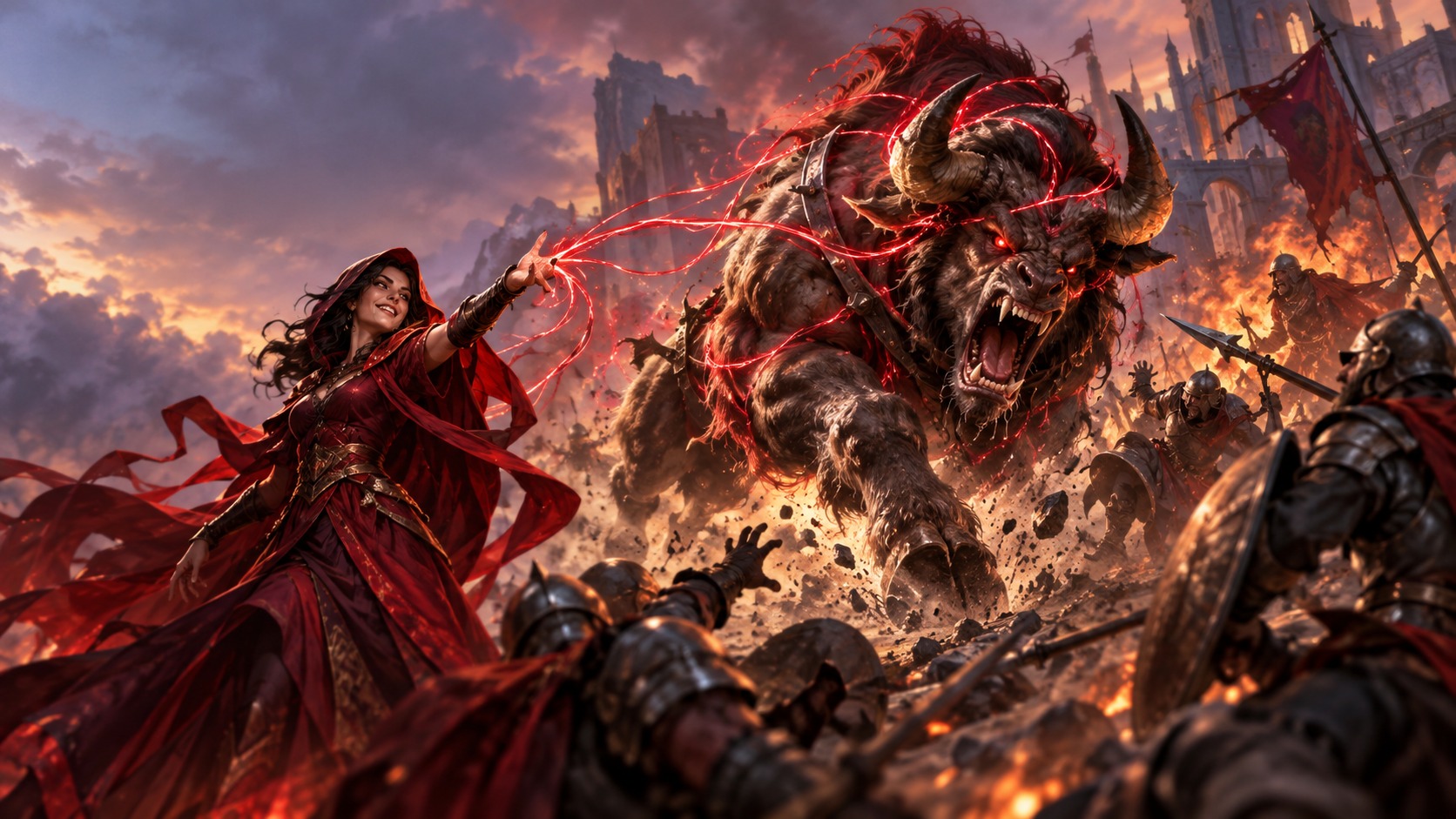
Goading a creature applies two separate requirements until your next turn: it attacks each combat if able, and it attacks a player other than you if able. Neither requirement can force an illegal attack, so a goaded creature that physically cannot attack simply does not, and a goaded creature whose only legal target is you will attack you. Goad is removal that costs nothing and leaves the creature on the battlefield, pointed at someone else.
Goad in MTG is a keyword action: until your next turn, the goaded creature attacks each combat if able, and attacks a player other than you if able. You can't pick who it hits. You just make sure it's not you, and that it can't stay home to block.
Every other answer in Magic removes a threat by changing where it is. Destroy it, exile it, bounce it, steal it. Goad does none of those. The creature stays exactly where it was, under its owner's control, at full size.
It is just pointed somewhere else.
For one mana in the right shell you can take the largest creature on the board — hexproof, indestructible, ward five, none of it matters — and guarantee it spends the next full round attacking one of your opponents instead of you. And because it has to attack, it is tapped, which means it is not blocking either.
Goad is the clearest expression of what makes multiplayer Magic a different game: the best answer to a threat is often not removing it, but making it someone else's problem.
The rule: until your next turn, it attacks each combat if able, and attacks someone other than you if able.
Goad Rules in MTG
Goad is a keyword action that applies requirements. The reminder text:
Until your next turn, those creatures attack each combat if able and attack a player other than you if able.
The critical detail is that this is two separate requirements, not one combined instruction:
Requirement 1 — attack each combat if able.
Requirement 2 — attack a player other than you if able.
They are evaluated independently, and either can fail on its own without cancelling the other. That is where every goad ruling comes from.
| Situation | What happens | Why |
|---|---|---|
| Two other opponents available | Attacks one of them, controller chooses | Both requirements satisfied |
| You are the only opponent left | Attacks you | Requirement 1 still applies; requirement 2 cannot be met |
| Creature is tapped | Does not attack | Requirements never force an illegal attack |
| Creature has summoning sickness | Does not attack | Same — it is not able |
| Creature has defender | Does not attack | Same |
| Attacking costs mana its controller won't pay | Does not attack | A cost they are not required to pay makes it unable |
The edge case that costs games
Goad does not mean 'this creature cannot attack me'. It means 'this creature attacks someone else if able'. Once the table shrinks to you and the goading target — after eliminations, or in a three-player game where the third player is already dead — a goaded creature comes straight back at you, and it is still required to attack. Goading late in a game can actively hurt you.
What Goad Actually Buys You
Three things, and only the first is obvious.
It removes the creature from their defence. A creature required to attack will be tapped. Tapped creatures do not block. This is often the real reason to goad — you are not defending against that creature, you are clearing your own attack.
It ignores every protective ability in the game. Goad does not destroy, exile, or target the creature's controller's ability to keep it. Hexproof, ward, indestructible, protection and regeneration are all irrelevant. Goad is one of the very few answers in Magic that works on a fully protected commander.
It manufactures a fight you are not in. Two opponents trading creatures and life while you develop is the strongest thing that can happen in a four-player game, and goad is the cheapest way to cause it.
Goad does not answer a creature. It answers the player holding it, by giving them a combat they did not want.
| Defence | Stops targeted removal? | Stops goad? |
|---|---|---|
| Hexproof / shroud | Yes | Only if the goad effect targets |
| Ward | Taxes it | Only if the goad effect targets |
| Indestructible | Against destruction | No |
| Protection from a colour | Yes | No, unless the effect targets |
| Being enormous | No | No — size is irrelevant |
| Vigilance | No | Partly — it can attack and still block |
Note the vigilance row. A goaded creature with vigilance still has to attack, but it does not tap, so it can still block on the way back around. Against a vigilant threat, goad only does half its job.
The Politics
Goad is the most socially loaded mechanic in Commander, and playing it well is mostly about reading the table rather than the board.
You do not choose the victim. You exclude yourself, and the creature's controller picks from whoever is left. That means goading is a suggestion with teeth, not a targeted attack — and the controller will often pick the player who is already losing, or the one they were going to attack anyway.
Goading creates real resentment towards you, not the attacker. Everyone at the table knows who cast the spell. Mass goad effects in particular tend to make you the archenemy for a turn cycle.
The best goad turn is one where the damage was going to happen anyway. If two opponents are already fighting, goad is nearly free. If the table is calm, goad is you starting a war and signing your name on it.
Time your mass goad for the crack-back
Disrupt Decorum and similar mass goads are strongest on the turn before you want to attack, not on your own turn. Every creature they force to attack is tapped in your opponents' combat phases, which means your own attack the following turn walks into an empty board. Casting it on your turn wastes most of that.
The Cards Worth Knowing
Disrupt Decorum — four mana, goad every creature you do not control. The single biggest political turn in the format.
Marisi, Breaker of the Coil — goads a player's entire board whenever any of your creatures connects with them, and stops opponents casting spells during combat, so they cannot even interact with the mess.
Agitator Ant — three mana, and it hands out counters to everyone and goads whatever took them. It looks generous and it turns the table against itself.
Grenzo's Ruffians, Fumiko the Lowblood and similar attack-requirement creatures — older designs solving the same problem before the keyword existed.
Goad also appears on plenty of modern Commander precon cards, and shares its home set with the monarch — see our guide to monarch and the initiative for the other half of what Conspiracy: Take the Crown gave Commander.
In Commander
Goad exists for Commander and almost nothing else.
It scales with player count. More opponents means more places for the creature to go and less chance it comes back at you.
It answers commanders that cannot be answered. A protected, indestructible, hexproof commander is unanswerable by conventional removal and completely vulnerable to goad.
It is cheap. Most goad effects cost two to four mana and affect multiple creatures, which is a rate that targeted removal cannot match.
The strategic caution is the arc of the game. Goad is at its best with four players and at its worst heads-up. As players are eliminated, every goad you cast gets closer to simply telling a large creature to attack you. Know when the mechanic has stopped working.
History
Goad debuted in Conspiracy: Take the Crown in August 2016, a set built entirely for multiplayer free-for-all play, and the same set that introduced the monarch.
Both mechanics answered the same design problem: multiplayer games stall because nobody wants to be the first to commit creatures to an attack. The monarch created a reason to attack. Goad removed the choice entirely.
It has since become a permanent part of the Commander product line, appearing in Commander precons through 2024 and beyond — Disrupt Decorum and Agitator Ant were both reprinted in Murders at Karlov Manor Commander. It has never been printed in a Standard-legal set, and almost certainly never will be, because in a duel it barely functions.
Common Misconceptions
"Goad means it can't attack me." It means it attacks someone else if able. If it cannot, it attacks you.
"Goad forces the creature to attack no matter what." A creature that is unable to attack does not attack.
"I choose who it attacks." You only exclude yourself. Its controller chooses from the rest.
"Goad steals the creature." It stays under its owner's control the whole time.
"Hexproof stops goad." Only if the goad card itself targets — many mass goad effects do not.
"Goad is good in one-on-one." It is close to blank there.
Conclusion: Point It Away and Let Them Fight
Goad is the mechanic that best understands what multiplayer Magic actually is. It does not pretend the biggest creature on the board is your problem to solve. It accepts that it exists, that you cannot kill it, and that there are two other people at the table who would also rather it was not aimed at them.
Play it as a tempo card as much as a political one. Every goaded creature is a creature that is tapped when your turn comes around, and an empty board across the table is worth more than the damage the goad caused.
And watch the player count. Goad is at its best with a full table and turns on you as the game shrinks. There is a point in every long game where the mechanic quietly stops being a defensive tool and starts being an invitation.
Citations & Resources
- Wizards of the Coast: Comprehensive Rules — goad, requirements and restrictions
- Scryfall: Every card that goads
- Scryfall: Conspiracy: Take the Crown — where goad debuted
- Commander Format: official rules and multiplayer structure
Related Guides
- The Ultimate MTG Keywords Glossary — every keyword, with a printable cheat sheet
- MTG Monarch and The Initiative Explained — the other Conspiracy: Take the Crown multiplayer mechanic
- MTG Myriad Explained — the Commander-first mechanic that works from the opposite direction
- MTG Vigilance Explained — why vigilance blunts half of goad
- What Menace Means in MTG — restrictions beating requirements, the same rule goad relies on
- MTG Phases and Turn Structure — when attackers are declared
- Best MTG Commander Decks — where Marisi and Disrupt Decorum live
Frequently Asked Questions
🔗 Related Resources
More Reviews:
Related Articles

MTG Protection: What Protection Does and the DEBT Rule (2026)
Protection in MTG stops a creature being Damaged, Enchanted, Blocked or Targeted by the named quality. Full protection rules (DEBT) and every edge case.
Regenerate MTG: What Regenerate Means and How It Works
Regenerate in MTG replaces the next destruction this turn: tap it, remove its damage, take it out of combat. Full regenerate rules, and why it was retired.
Myriad MTG: Rules, Multiplayer Math and Best Cards (2026)
Myriad in MTG copies the attacker for every other opponent, tapped and attacking, then exiles the copies. Full myriad rules, the math and the best cards.