
Quick Verdict
By every measurable metric Magic is not dying — it earned over $1.7 billion in 2025, up 59% year on year, its strongest year in a 32-year history, and it is now Hasbro's primary growth engine. The question persists anyway because commercial success and the feeling of decline share a cause: the Universes Beyond strategy that produced the record revenue is the same thing making long-time players feel the game's identity is being eroded.
"Is Magic dying?" has been asked continuously since the 1990s, and in 2026 it is being asked more loudly than usual.
The financial answer is unambiguous and points the other way: 2025 was the most commercially successful year in the game's 32-year history, by a wide margin.
The felt answer is different, and dismissing it as wrong misses what people are actually describing. Something has changed about Magic, measurably and on purpose. It is just not the thing the word "dying" usually means.
This guide separates the two, using the published numbers for the first and being specific about the second.
Short version: financially, no — record year, and it is not close. Culturally, something real is changing, and the record year is the reason.
The Financial Answer
Magic is not dying. It is the healthiest it has ever been on every published metric.
| Metric | 2025 | Change |
|---|---|---|
| Magic: The Gathering revenue | Over $1.7 billion | +59% year on year |
| Growth in Magic revenue | +$638.2 million | Strongest year in the game's history |
| Wizards & Digital Gaming segment | $2.19 billion | +44.7% |
| Segment operating profit | $1.01 billion | Up from $632.0 million |
| Share of Hasbro gaming revenue | Over 60% | Hasbro's primary growth engine |
| 2026 outlook | Mid-single-digit growth | Guided by Hasbro |
For scale: Hasbro's total 2025 revenue was $4.7 billion, and Magic alone accounted for over $1.7 billion of it. A single card game is now the most important product in a company that also owns Monopoly, Transformers and Dungeons & Dragons.
Hasbro's own filings name the cause directly: Universes Beyond. Final Fantasy, Marvel's Spider-Man and Avatar: The Last Airbender are cited as the drivers of the increase. Hold that thought, because it is also the answer to the second half of the question.
Why these numbers are trustworthy
Revenue figures come from Hasbro's SEC filings and earnings releases. A publicly traded company cannot overstate segment revenue in a 10-K. These are among the few genuinely reliable numbers in the Magic ecosystem — unlike player counts, which nobody audits.
The Player Count Answer (With Caveats)
This is where the data gets soft, and honesty requires saying so.
Wizards does not publish player numbers. Every figure in circulation is an estimate, a years-old press release, or a third-party extrapolation.
| Figure | Number | Confidence |
|---|---|---|
| Total players worldwide | 50+ million | Commonly cited, not independently audited |
| MTG Arena accounts registered | 13+ million | Cumulative registrations, not active users |
| Arena monthly active users (2023) | 5 million | Reported figure, now three years old |
| Arena monthly active (recent estimate) | ~7 million | Third-party estimate |
| Steam concurrent players | ~6,100 | Accurate, but one platform only |
The Steam number gets quoted as evidence of collapse — down roughly 66% from a peak of about 18,000 concurrent in June 2025. Two things about that.
Steam is one platform of several. Arena runs on PC, Mac, iOS and Android through its own client; the Steam version is a fraction of the whole. Concurrent players on one storefront is not a measure of a game's population.
Post-peak decay is normal. Every live game spikes on a major release and settles afterwards. A drop from a launch peak is what a release looks like, not what a death looks like.
None of which proves engagement is rising. It means the public data is too thin to support a strong claim either way — and that the confident numbers you see quoted in both directions are mostly estimates wearing a suit.
So Why Does It Feel Like It's Dying?
Here is the part worth taking seriously, because the people asking are not confused about the revenue.
In 2026, four of the seven Magic sets are licensed crossovers. Teenage Mutant Ninja Turtles, Marvel Superheroes, The Hobbit and Star Trek. Only three — Lorwyn Eclipsed, Secrets of Strixhaven and Reality Fracture — are set in Magic's own multiverse.
That is a structural change in what the game is. For a player who came for Dominaria, Ravnica and Zendikar, the majority of new product is now about someone else's characters. The complaint is not that the game is failing. It is that it is succeeding at something they did not sign up for.
Record revenue is not a rebuttal to the "Magic is dying" feeling. It is the cause of it. The strategy producing the money is the same strategy producing the sense of loss.
Wizards has acknowledged it. Head designer Mark Rosewater noted in his State of Design 2025 address that Universes Beyond sets draw ongoing complaints, and has publicly said that in-Multiverse Magic is getting more design attention than ever. Whether the release schedule bears that out is the actual argument, and it is a reasonable one to have.
The honest framing is that two things are true at once: Magic is commercially the strongest it has ever been, and the thing generating that strength is changing the game's identity in a way a substantial part of the player base does not want. Our guide to Universes Beyond catalogues exactly how far the line now extends.
What Would Actually Signal Decline
If you want to track this properly rather than by vibes, these are the signals that would matter:
Consecutive years of falling revenue. One down year is noise. Two is a trend. Currently the direction is sharply up.
Local game stores dropping events. This is the single best leading indicator and it is one you can check yourself. Paper Magic lives or dies on whether stores run Friday Night Magic and prereleases. If your local store cuts its Magic schedule, that is real data.
Secondary market collapsing broadly. Individual cards fall on reprints and bans constantly — that is normal. A broad decline across formats and eras would be different.
Retailers dropping the line. Big-box and hobby retailers reduce shelf space quickly when a product stops moving.
Reduced release cadence. Companies cut product when demand falls. Magic's 2026 schedule is seven sets, which is not the behaviour of a shrinking brand.
None of these are happening.
The Historical Pattern
It is worth knowing how often this question has been asked and answered.
1995 — the Chronicles reprint set flooded the market with cards collectors had been told were scarce, and was supposed to have permanently destroyed confidence in Magic as a collectible. It produced the Reserved List instead.
Late 1990s — Pokémon and Yu-Gi-Oh arrived and were supposed to take the audience.
2000s — the shift to digital play was supposed to kill paper.
2010s — the Commander boom was supposed to kill competitive Magic.
2022 — the $999 30th Anniversary Edition was supposed to be the moment Wizards lost the community for good.
Every one of those was a real controversy with real merit, and the game grew through all of them. That is not proof the current one is harmless. It is a reason to be sceptical of the strongest version of the claim.
Conclusion: Ask the Better Question
"Is Magic dying?" has a boring answer. It earned $1.7 billion last year, grew 59%, and is the most profitable thing its owner makes. By the standard the word implies, no — and it is not a close call.
The better question is the one people are actually asking underneath it: is Magic still going to be the game I liked? That is a genuine open question, and the answer depends on how you weigh a 2026 schedule with four licensed sets and three in-universe ones. Nobody can tell you that your answer is wrong.
What can be said is that these are separate questions with separate evidence, and conflating them helps nobody. The money is not in doubt. The direction is worth arguing about.
Citations & Resources
- Hasbro: Fourth quarter and full year 2025 financial results
- SEC: Hasbro Form 10-K, FY2025
- Hasbro: Investor relations and earnings archive
- Wizards of the Coast: Making Magic — Mark Rosewater's design columns
- Wizards of the Coast: The 2026 product schedule
Related Guides
- Every Universes Beyond Set — the full crossover catalogue and where each is legal
- Complete Guide to MTG Formats — the 2026 release calendar in context
- How Much Does Magic Actually Cost? — including the January 2026 price rises
- How to Get Into Magic: The Gathering — if the answer above encouraged you
- Most Valuable MTG Cards 2026 — the secondary market, and the Reserved List
- Where to Sell MTG Cards — if you decided otherwise
Frequently Asked Questions
🔗 Related Resources
More Reviews:
Related Articles
MTG Universes Beyond: Every Crossover and Collab Set (2026)
Every MTG Universes Beyond crossover, from The Walking Dead to Avatar and Marvel: which collabs are Standard-legal, which are Commander-only, and which to buy.
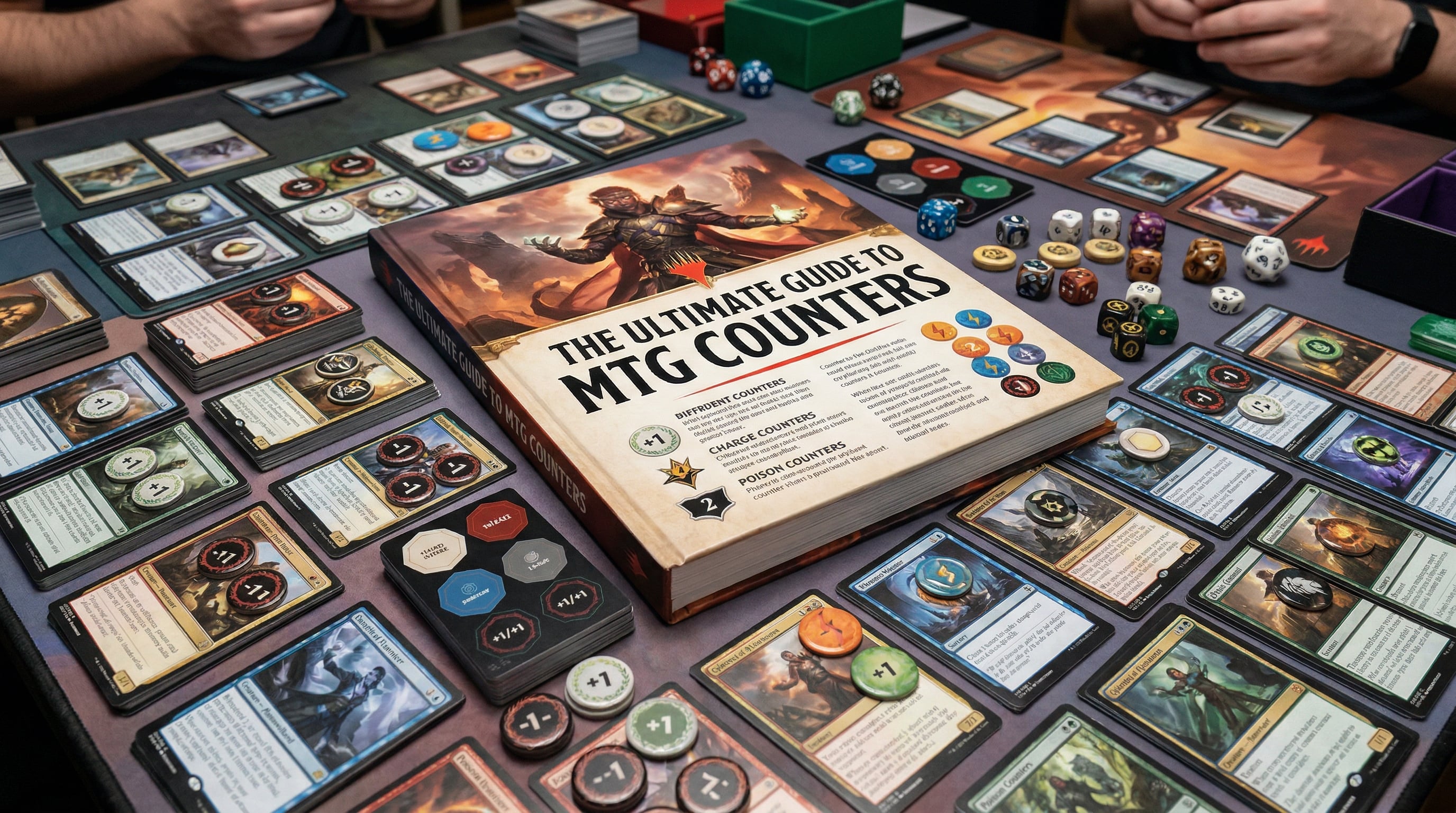
MTG Counters: Every Type Explained, From +1/+1 to Rad (2026)
Every MTG counter type explained: +1/+1 and -1/-1, keyword, shield, finality and rad counters, plus the CR 122 rules and the Doubling Season ruling.
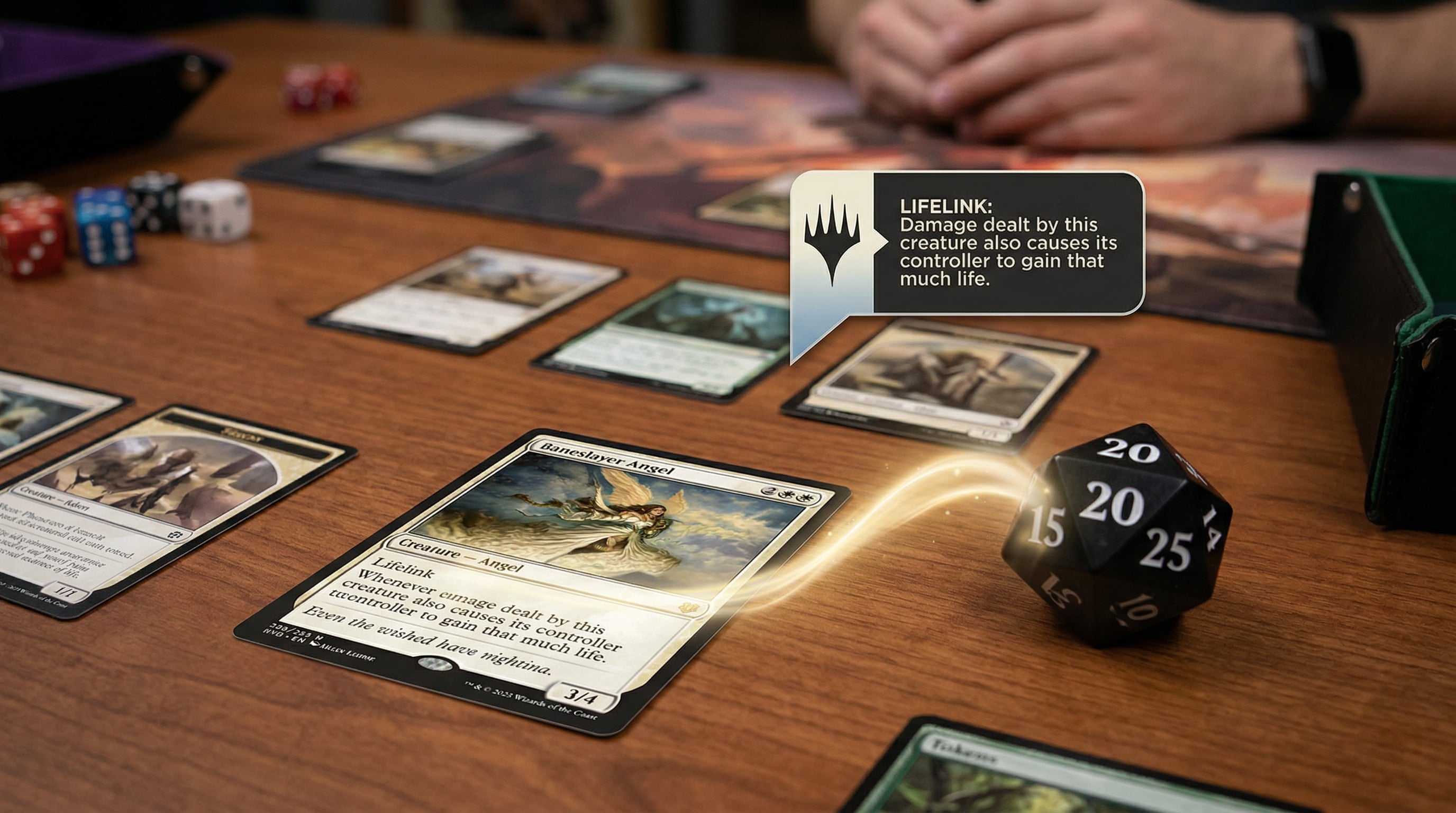
Lifelink MTG: What Does Lifelink Mean in Magic? (2026)
Lifelink in MTG: damage dealt by the source also gains its controller that much life, in combat or out. Full lifelink rules, common myths and the best cards.