

Quick Verdict
Universes Beyond is Magic's licensed-crossover line, and the single fact that matters is legality. Sets released from 2025 onward — Final Fantasy, Spider-Man, Avatar, TMNT, Star Trek — are legal in every constructed format including Standard. Everything before that is split: Lord of the Rings and Assassin's Creed are Modern-legal, Warhammer 40,000 and Doctor Who and Fallout are Commander-only, and the Secret Lair drops are Eternal-only. The change was forward-facing, so the older sets did not move.
UNIVERSES BEYOND PRODUCTS WORTH BUYING
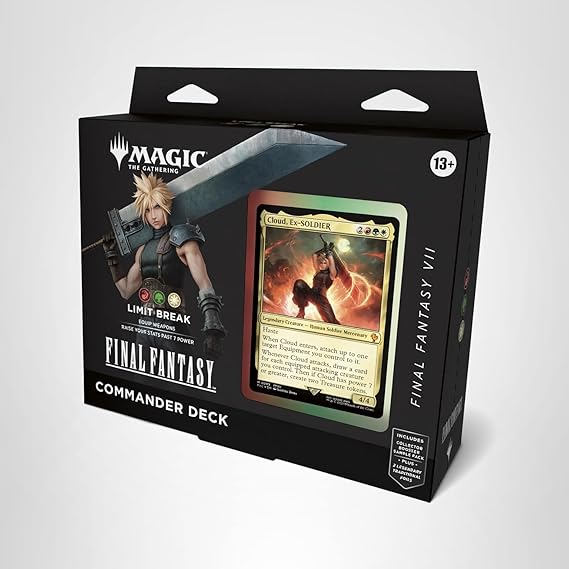
Final Fantasy Commander Deck: Limit Break
The most popular Universes Beyond precon, and still close to retail more than a year after release
- ✓Cloud, Ex-SOLDIER leads a red-green-white Equipment deck
- ✓Complete 100-card deck: no sealed-product gamble
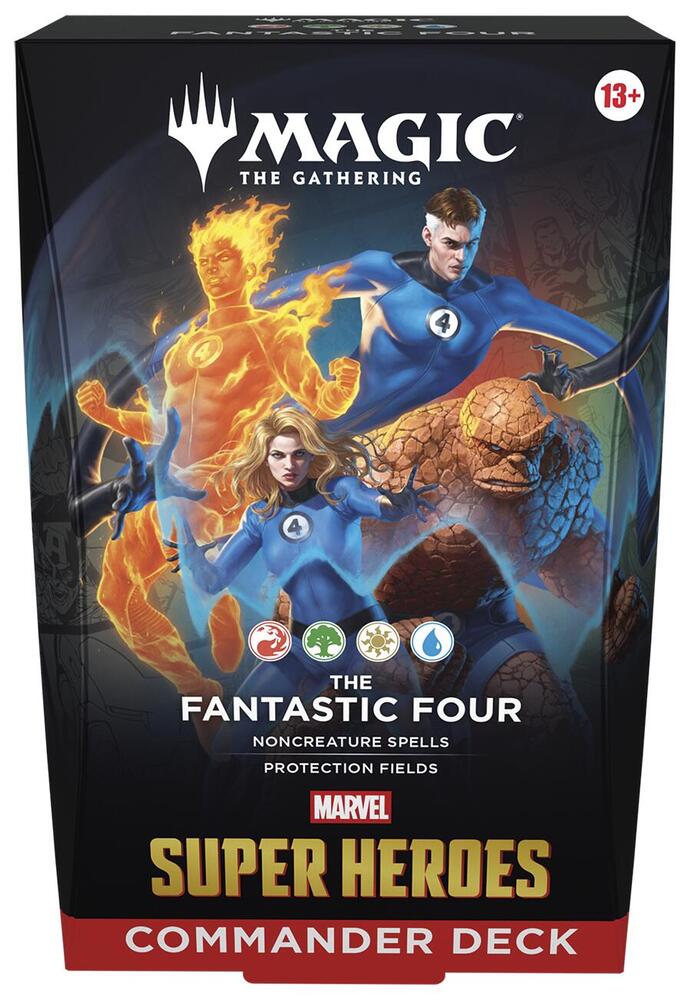
Marvel Super Heroes Commander Deck: The Fantastic Four
The cheapest of the four Marvel precons, and the easiest way into the largest licence in the line
- ✓Four-colour noncreature-spells deck from June 2026
- ✓Lowest price of the four Marvel Super Heroes decks
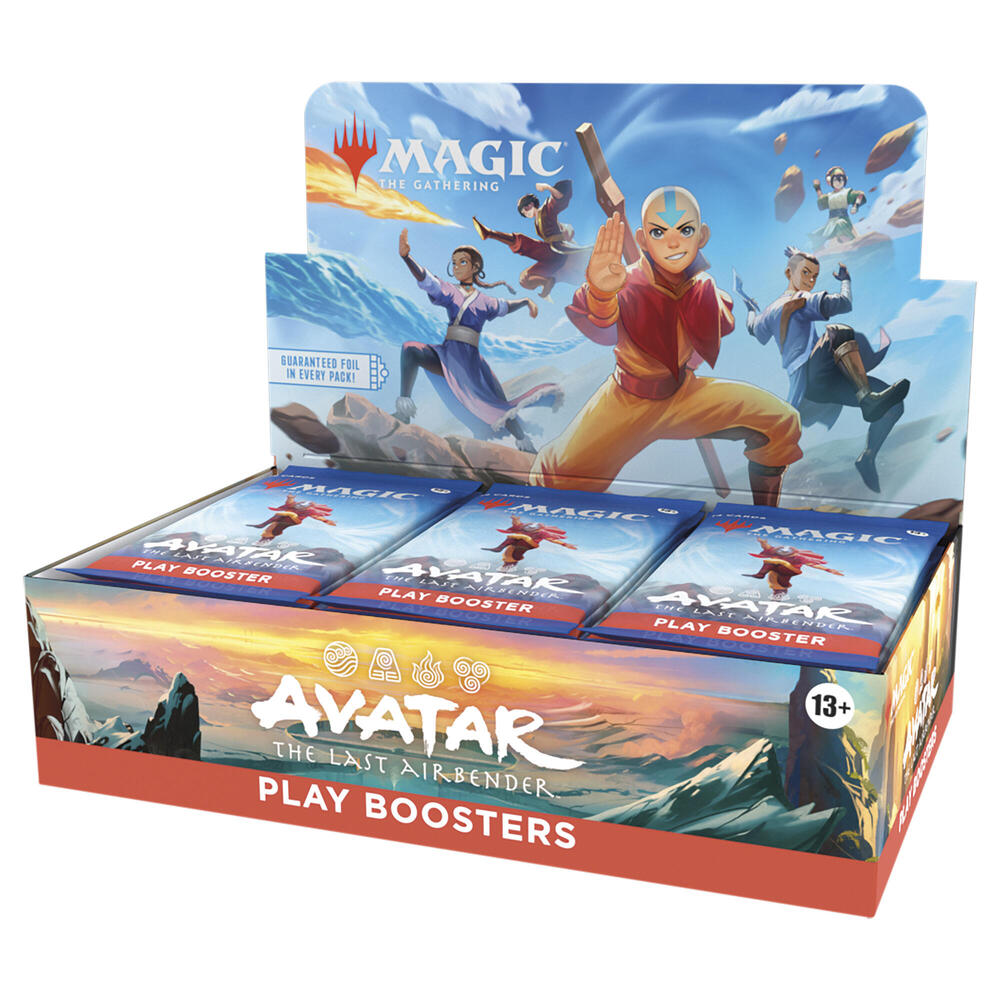
Avatar: The Last Airbender Play Booster Box
The Standard-legal crossover with the strongest competitive record - cards from it were in the 2025 World Championship-winning deck
- ✓30 Play Boosters, legal in every constructed format
- ✓All four bending mechanics
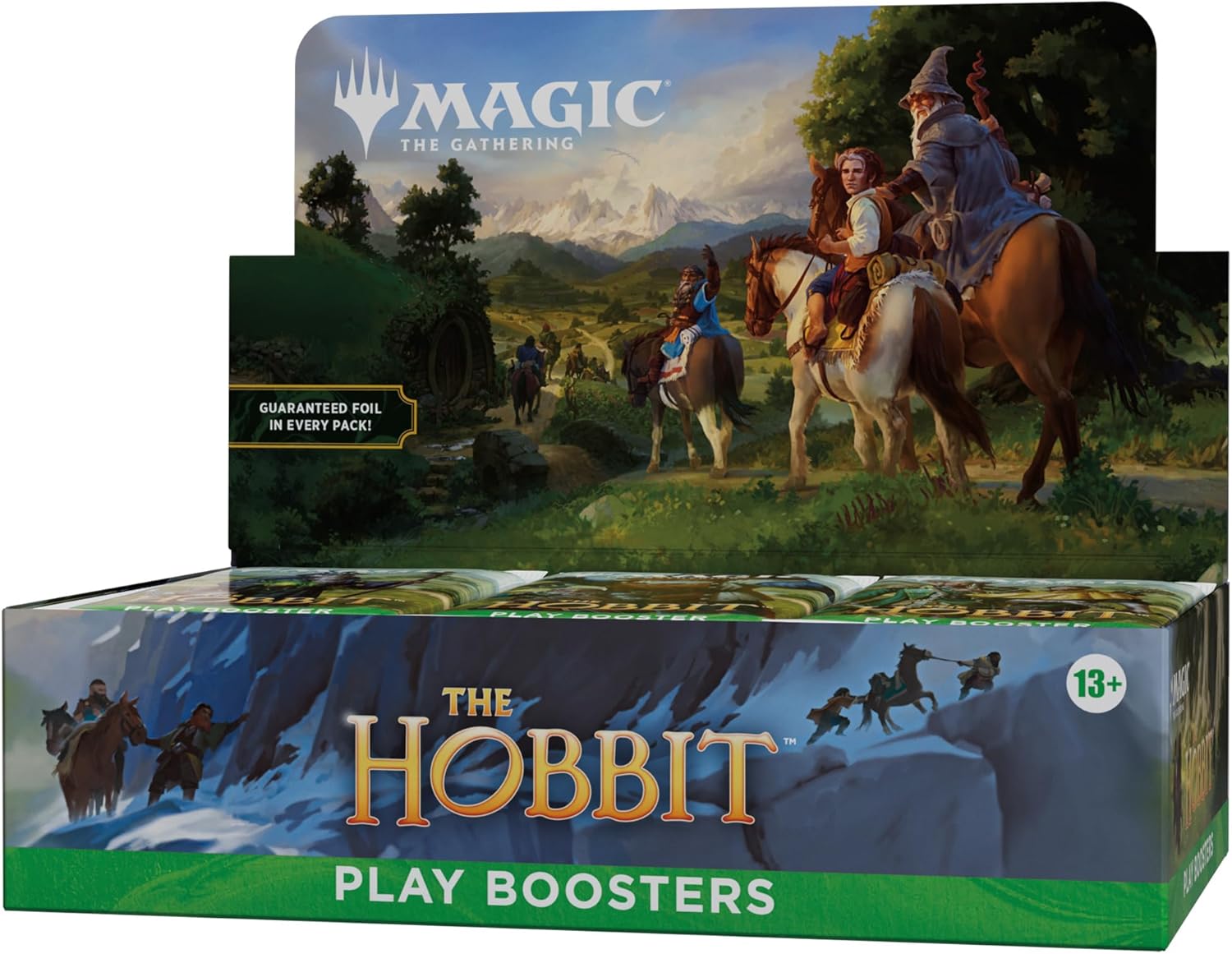
MTG Universes Beyond is Wizards' line of crossovers: Magic cards set in other franchises, from Warhammer 40,000 and The Lord of the Rings to Final Fantasy, Spider-Man and Avatar: The Last Airbender. Some of these Magic: The Gathering collabs are full Standard-legal sets, some are Commander-only, and some are Secret Lair drops. This guide sorts every one.
For four years Universes Beyond was something you could ignore. The crossovers were Commander precons and Secret Lair drops — fun, collectible, and irrelevant to anyone playing a competitive constructed format.
That ended in 2025. Wizards changed the policy so that new Universes Beyond booster sets are legal in every format, Standard included, and then released three of them in a single year. In 2026 four of the seven sets are licensed crossovers. A Standard player who wants nothing to do with Spider-Man now has to beat Spider-Man decks anyway.
The result is a catalogue split cleanly down the middle by a date. This guide is the map: every release, what kind of product it is, and exactly where each one can be played.
The one rule to remember: 2025 and later means Standard-legal. Before that, check individually — the change did not apply retroactively.
What MTG Universes Beyond Is
Universes Beyond is Magic's licensed-crossover line: characters, settings and items from other franchises printed as real, playable Magic cards rather than as art treatments on existing ones.
It began by accident. The Walking Dead Secret Lair in October 2020 predates the formal announcement, and it went badly enough to shape everything that followed — six mechanically unique cards, available only during a limited sales window, which meant tournament-relevant cards were locked behind a one-time purchase that would never be repeated. The backlash was severe. Wizards committed to stop printing mechanically unique limited promos, and in 2023 released Universes Within versions of those cards in Wilds of Eldraine — the same effects, reprinted with in-world Magic characters, obtainable normally.
The line was formally announced in February 2021 with Lord of the Rings and Warhammer 40,000, and has grown into the largest single strand of Magic's release schedule.
How to spot one
Universes Beyond cards carry a small triangle stamp in the bottom-left of the text box. It is a provenance marker, not a legality marker — it tells you the card is licensed, not which formats it is legal in. Our visual guide to MTG symbols covers the stamp alongside every other marking on the card face.
The 2025 Rule Change That Split the Catalogue
In its "Aligning the Universes" announcement, Wizards changed how Universes Beyond sets are designed and where they are legal. From 2025 onward, new Universes Beyond booster sets are legal in every constructed format — Standard, Pioneer, Modern, Legacy, Vintage, Commander — exactly like an in-world Magic set.
Two details do the work:
It applies to booster sets, not to everything. Commander precon releases and Secret Lair drops are a different product category and are not covered by it.
It is forward-facing only. Lord of the Rings and Assassin's Creed kept the legality they already had. A Modern-legal set did not become Standard-legal because the policy changed after it shipped.
The reasoning was design, not marketing: sets built with Standard in mind first are power-checked against a rotating format, where the earlier direct-to-Modern releases were not — which is how a card like The One Ring ended up reshaping Modern on arrival.
Everything about a Universes Beyond card's legality is determined by two things: what kind of product it came in, and whether that product shipped before or after 2025.
Tier 1: Standard-Legal Booster Sets (2025 onward)
Full sets, drafted and played like any other, legal everywhere.
| Set | Released | Legality |
|---|---|---|
| Final Fantasy | June 2025 | All constructed formats |
| Marvel's Spider-Man | September 2025 | All constructed formats |
| Avatar: The Last Airbender | November 2025 | All constructed formats |
| Teenage Mutant Ninja Turtles | 6 March 2026 | All constructed formats |
| Marvel Superheroes | June 2026 | All constructed formats |
| The Hobbit | August 2026 | All constructed formats |
| Star Trek | November 2026 | All constructed formats |
Final Fantasy was the bestselling Magic set of all time before it even released, and it set the commercial template the rest of the line now follows.
Avatar: The Last Airbender proved the competitive case rather than the commercial one — cards from it featured heavily in the deck that won the 2025 World Championship, which is the moment Universes Beyond stopped being a side product in any meaningful sense. Our Avatar crossover guide covers the Bending mechanics in full.
Marvel now spans two releases: the 2025 Spider-Man set and a broader Marvel Superheroes set in June 2026. See the Marvel crossover guide and, for the set's signature mechanic, web-slinging explained.
Tier 2: Modern-Legal Sets (pre-2025)
Full booster sets released before the policy change. Legal in Modern and every format below it, but not Standard or Pioneer.
| Set | Released | Legality | Why it matters |
|---|---|---|---|
| The Lord of the Rings: Tales of Middle-earth | June 2023 | Modern, Legacy, Vintage, Commander | The One Ring became a Modern staple; the serialized 1-of-1 sold for ~$2M |
| Assassin's Creed | July 2024 | Modern, Legacy, Vintage, Commander | Serialized historical figures; a smaller set with a collector focus |
These two are the reason the policy changed. Designing directly into Modern meant no rotating format checked the power level first, and Tales of Middle-earth demonstrated the consequences immediately. The Assassin's Creed collector guide covers the serialized cards from the second of them.
Tier 3: Commander-Only Sets
Released as preconstructed Commander decks rather than booster sets. Legal in Commander, Legacy and Vintage — never in Standard, Pioneer or Modern.
| Set | Released | Product shape |
|---|---|---|
| Warhammer 40,000 | October 2022 | Four Commander decks — Imperium, Tyranids, Necrons, Chaos |
| Doctor Who | October 2023 | Four Commander decks |
| Fallout | March 2024 | Four Commander decks — rad counters, junk tokens |
This tier is the most player-friendly of the pre-2025 catalogue: a precon is a complete, playable deck for a fixed price, with no sealed-product gamble. Our Fallout guide breaks down all four of its decks, and the best Commander precons of 2025 shows where crossover decks sit against the in-world ones.
Tier 4: Secret Lair Drops and Bonus Sheets
Limited-window drops and cards folded into in-world sets. Eternal formats only — Commander, Legacy, Vintage.
| Crossover | Form | Note |
|---|---|---|
| The Walking Dead | Secret Lair (Oct 2020) | The first, and the controversy that reshaped the line |
| Stranger Things | Secret Lair | Mechanically unique cards |
| Street Fighter | Secret Lair | Mechanically unique cards |
| Fortnite | Secret Lair | Reskinned reprints of existing cards |
| Arcane | Secret Lair | Reskinned reprints |
| Transformers | Bonus sheet in The Brothers' War | 29 cards with a transform mechanic |
| My Little Pony | Secret Lair (multiple drops) | Originally charity; later drops include full-art lands |
| Hatsune Miku | Secret Lair (four seasonal drops) | Encore Electromancer bonus card drove the market |
| SpongeBob SquarePants | Secret Lair (March 2025) | SpongeBob as Jodah, the Unifier |
| Godzilla | Alt-art treatment in Ikoria | 19 art styles over existing cards — not separate cards |
| Jurassic World | Themed collection in The Lost Caverns of Ixalan | Licensed treatment within an in-world set |
Two distinctions in that table matter more than the rest.
Reskin versus mechanically unique. Fortnite and Arcane took existing cards and repainted them — the card already existed and still does. Stranger Things and Street Fighter printed genuinely new cards, which is what made their limited availability a problem worth fixing. Guides to the Stranger Things drop, the Hatsune Miku series, the Transformers cards and the SpongeBob drop cover each in detail.
Alt-art treatments are not crossover cards. The Godzilla cards in Ikoria and the Jurassic World collection in Lost Caverns of Ixalan are licensed art applied to cards that exist independently. Rodan is Vadrok. You are buying a skin, not a card — a distinction covered further in our tribal decks guide, where "build a Godzilla deck" turns out to mean something other than what people expect.
A crossover people search for that does not exist
There is no South Park Magic: The Gathering product. It appears in search suggestions next to genuine crossovers, but unlike SpongeBob, My Little Pony, Fortnite and Street Fighter — all of which had real drops — nothing has been announced. Anything sold as a South Park Magic card is either a proxy or a fake.
Which Ones Are Worth Buying
| If you want to… | Buy | Avoid |
|---|---|---|
| Play competitively | Standard-legal sets from 2025 onward — singles, not sealed | Commander-only precons; they cannot be played in your format |
| Play Commander | The precon sets — Warhammer 40K, Doctor Who, Fallout | Sealed booster gambling for a deck you could buy complete |
| Collect a specific franchise | Collector boosters or the Secret Lair drop directly | Play boosters, which cannot produce the treatments you want |
| Hold value | Cards that see competitive play, whatever the licence | Buying on the strength of the logo alone |
The value pattern across five years is consistent and slightly unromantic: the crossover cards that held value are the ones that got played. The One Ring is expensive because it is a Modern staple, not because it is Tolkien. Cards that were only ever collectible track the fandom's attention and fall when it moves.
For how that plays out across the whole market, see the most valuable MTG cards of 2026; for pricing your own, how to value MTG cards.
Following the table above: precons for Commander players, and a play box only if you want to draft. Prices from TCGplayer on 6 October 2026; the picks at the top of the page compare TCGplayer and Amazon side by side.
Universes Beyond products worth buying now
Final Fantasy Commander Deck: Limit Break
Final Fantasy VII
- Cloud, Ex-SOLDIER: a red-green-white Equipment deck
- Complete 100-card deck
- Still priced near retail a year after release
Marvel Super Heroes Commander Deck: The Fantastic Four
- Four-colour noncreature spells deck
- Complete 100-card deck from June 2026
- Cheapest of the four Marvel precons
Avatar: The Last Airbender Play Booster Box
a Standard-legal crossover set
- 30 Play Boosters of 14 cards
- Trading close to its $130 MSRP
- All four bending mechanics
See our Final Fantasy products guide and Avatar guide for what's in each line.
Conclusion: Check the Date, Then the Product
Universes Beyond is confusing for one reason: it is four different kinds of product wearing the same badge. A Commander precon, a limited Secret Lair, an alternate art treatment and a full Standard-legal booster set are all "Universes Beyond", and they behave nothing alike.
The shortcut is the 2025 line. A booster set from 2025 or later is legal everywhere and can be treated exactly like any in-world set. Anything older needs checking individually, because the change did not reach backwards — and the difference between Modern-legal and Standard-legal is the difference between a card you can build with and a card you cannot.
With four of the seven 2026 sets licensed, this stopped being a side attraction. Whether you like the direction or not, Universes Beyond is now simply where a majority of new Magic cards come from.
Citations & Resources
- Wizards of the Coast: Aligning the Universes — the 2025 legality change
- MTG Wiki: Universes Beyond product history
- Wizards of the Coast: Official banned and restricted list
- Wizards of the Coast: Collecting Ikoria — the Godzilla Series treatment
- Scryfall: Set and legality database
Related Guides
- MTG Final Fantasy Products Guide — every Final Fantasy box, bundle and precon, with current prices
- MTG Infinity Stones — the Soul Stone and the Mind Stone from the Marvel sets
- Complete Guide to MTG Formats — what each legality tier above actually allows
- MTG x Lord of the Rings — the set that forced the policy change
- Marvel MTG Crossover Guide — the largest licence in the line
- Avatar: The Last Airbender Guide — the crossover that won a World Championship
- MTG Fallout Guide — the Commander-only model
- MTG Assassin's Creed Guide — the other Modern-legal set
- Transformers MTG Guide — the bonus-sheet model
- Most Valuable MTG Cards 2026 — which crossover cards actually held value
- Is Magic: The Gathering Dying? - what the 2026 revenue and player numbers actually say
Frequently Asked Questions
🔗 Related Resources
More Reviews:
Related Articles
Hatsune Miku Secret Lair: Every MTG Miku Drop Explained
The Hatsune Miku Secret Lair: all four seasonal Miku MTG drops, the Encore Electromancer lottery card, what each card reprints, prices and deck ideas.
Marvel Magic: The Gathering – The Ultimate Guide to the Crossover of the Century
Complete guide to Marvel Magic: The Gathering crossover sets. Explore Secret Lair drops, Spider-Man set mechanics, Marvel Super Heroes 2026 previews, Soul Stone chase cards, and Commander deck strategies.

How Much Does Magic: The Gathering Actually Cost in 2026?
How much does Magic: The Gathering cost in 2026? Free on Arena, $27–$50 for a Commander deck, and why prices rose in January. Real numbers for every way to play.